Broken Trust

trust torn header
I’ve talked before about my love of basketball, and in the news recently there was an incident that hit headlines.

Although they are terrible these days, the Los Angeles Lakers are still one of the “glory” franchises in the NBA. They hit headlines though because a video was leaked where one of their top newcomers (D’Angelo Russell) was talking to another player (Nick Young) about his relationship, and in it Nick Young apparently admits to cheating on his fiance.

Interestingly, the furor over this video has nothing to do with Nick Young cheating on his fiance. Instead, it has been about the actions of D’Angelo Russell – filming and then purportedly posting this video (he denies posting it, and insists he doesn’t know how it got out).

See, regardless of what was being said the discussion between Young and Russell was private. And in letting it out there, Russell has violated his trust.

In the sports world the outcry against Russell has been considerable, with some even going so far as to say that Russell (who is a rookie) will never be able to recover from this, because his teammates will never be able to trust him again.

A sports team in many ways is the same as any other team. The players don’t necessarily have to be friends, and they don’t even have to like each other. But to be successful they need to be able to effectively work together. And that requires a degree of trust. When that trust breaks down, it damages the chemistry between players. And trust once gone, is very difficult to rebuild.

Breaking Down Trust

I’ve written before about honesty in relationships, and although I don’t believe anyone is always honest I do feel it’s important that our actions toward each other are characterized by empathy and respect.

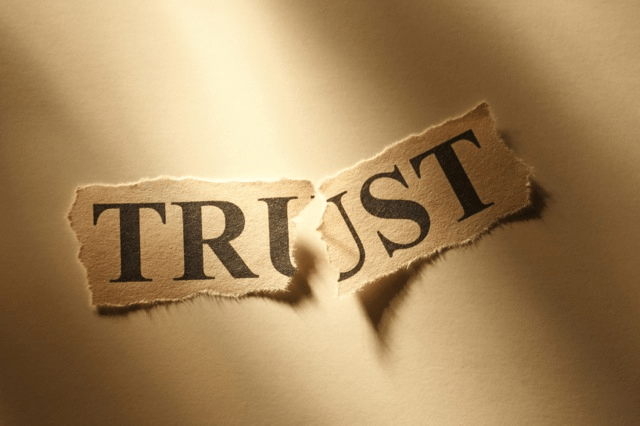
In relationships trust can break down in different ways. Sometimes it is big events, and other times it is an accumulation of smaller events over time. At the end of the day though, trust is about the questions “can I count on you?”, and “will you be there for me when I need you?”

When the answer is no or there is significant doubt, then trust has broken down. When this happens, often our entire perception of the other person changes. They aren’t the person we thought they were. And this realization can leave us feeling betrayed and hurt.

If trust has broken down, can it ever really be rebuilt? Or is it something that once broken is gone forever?

Trust2-perfect again

Making Mistakes

Are you perfect? Have you made mistakes?

We all make mistakes, both big and small. And it doesn’t matter how kind, or caring, or devoted you are – we all have days and moments where we are tired, frustrated, or selfish.

At some level we know this, but we still expect more from the people we care about the most. After all, we care about them – and we expect them to care about us. So we don’t expect them to be the ones who hurt us. We expect better from them.

However the ones we care about the most are often the ones we hurt the most. When I look at my life, overall I think I’m a pretty good guy. Yet I know I’ve done things that have hurt those closest to me.

It’s the law of averages – for the people who see us the most, they are more likely to see us at our worst moments. While being around people more gives us more opportunities to “be on our best”, it also provides more opportunities to hurt them.

Unfortunately, it’s often the bad stuff that people remember the most.

There’s No News Like Bad News

Take a look at any newspaper, or any media outlet. Sure, sometimes there are “feelgood” stories that get traction. But by and large it’s the bad news that sells. And it’s the bad news that sticks with people.

That’s just human nature – and unfortunately it’s bad news for relationships.
In his work on relationships John Gottman talks about this – and he even has a formula for what it takes to have a successful relationship. According to him, healthy relationships need 5 positive interactions for each negative one.

We remember what affects us more, and the bad often outweighs the good.

Trust1

Letting People In

As the saying says, trust takes years to build and moments to break.
There are definitely different degrees of bad choices, but if a person has done a lot of good for a long time and then does something bad, does that make them a bad person?

Some would argue that it depends on the severity of the bad choice, and there’s truth to that. Some choices are so terrible that it’s hard to ever accept. I still think history matters though. As does a person’s reaction after the fact.

If someone continually exhibits selfish or disrespectful behavior then that’s one thing. But if someone takes ownership for their actions, shows contrition and demonstrates changes in their behavior, we should be able to rebuild trust over time.

When we can’t?

I think that often issues with trust aren’t only issues with the actions of the person we are struggling to trust. Instead, they are issues with us being unable to let go and being unable to forgive.

When we’ve been hurt it’s good to be cautious, and it’s good to try to protect ourselves. But it’s important to remember that building walls and not letting the other person back in will ensure the relationship is never able to move forward.


D’Angelo Russell made a mistake, and that mistake cost him the trust of his teammates. Does that mean he’s untrustworthy?

I don’t actually know anything about the guy in question, but I would say no, one mistake no matter how big does not mean someone is untrustworthy. Right now all it means is that he made a selfish decision that hurt his teammate. If that mistake is part of a pattern of behavior, then I would say yes.

That’s not to say the affected teammate should just forget it and trust him blindly moving forward. Some mistakes are bigger than others, and Nick Young needs to decide if he is willing to even consider trusting Russell again.

Trust isn’t just about one person though. So if they do want to move forward as teammates Russell needs to consistently show he’s worthy of that trust, and Young also needs to let him back in. If Young doesn’t, then nothing Russell does will ever be enough, and trust will never be rebuilt.

What If?

what-if header

When I was a kid I used to read comics, and although I didn’t read it on a regular basis I always enjoyed a series called “What If”.

The premise of the series was great. Comics have their own history and continuity, so the “What if” series was a way to explore alternatives to that history. It allowed writers to imagine how the current comic world would look if just one event happened differently, or one decision was made differently.

For example, the Hulk is the typical Dr. Jekyll and Mr. Hyde story. He’s a brilliant scientist to transforms into a powerful yet relatively mindless creature. What would happen if he could maintain his brilliant mind while adding the power of the Hulk? How would that change that character, as well as the universe he lives in?

WhatIf

These stories imagining alternate realities in the world of comics were usually fairly silly and often a lot of fun.


I think in some capacity, we all play the “what if” game with our own lives. What if we had made a certain decision differently, or what if one event happened differently.

What would it mean to us today?

How would it impact our lives?

Usually if we are having these thoughts, it’s because something about how are lives are “today” hasn’t worked out quite the way we thought it would. After all, there’s not a lot of need to look back and imagine what things would be like if you are happy with where you are now.


I recently saw the Disney/Pixar movie Inside Out (great film by the way), and there is bit about this thinking that becomes a recurring joke. There’s a scene where a family is having dinner and the mom is concerned about how their daughter has been behaving. She turns to her husband for support with their daughter, and is disappointed by how he handles things. In her disappointment, she has a memory about a Brazilian helicopter pilot who appears to be straight out of a romance novel.

At the moment the mom seems to be thinking, “I chose you when I could have had him”.

InsideOutHelicopterPilot

As comedy relief, it was a funny scene.

But really, “what if” is a very destructive form of thought.

It’s an exercise in mental futility, because you can never know how any other scenario would have played out. If today hasn’t worked out the way you thought it would, what makes you think any “what if” scenario would have worked out the way you think it would have?

Sure, you can tell yourself “things would have been better if…”. But you will never know. It may have been better and it may have been worse. At the very least, you wouldn’t be the same person you are today.

What would have happened if the mom from Inside Out had gone with the Brazilian Helicopter Pilot?  Her life would have been completely different.  Chances are there would have been good, and some bad.  The relationship would have had some excitement, and some struggles.  Plus, any good experiences she has shared with her husband would never have happened, and that includes their daughter.


I know, I know.  It’s a cartoon.  But we all think this way from time to time.

I’ve imagined, what if I stuck with drawing?  What if I started playing basketball at an earlier age?  What if I would have been willing to leave town to go to school?

There are always “what if’s”.  Truly though, they don’t matter.

Sure, maybe X or Y would have happened if you had made certain choices differently, or if events had worked out differently.

But they didn’t.  Where you are today is where you are.  And the past can’t change that, only the future can.


“What if” is a waste of time, and it can cripple people. It can not only trap you in re-examing past decisions, but it can also prevent moving forward with current decisions. After all, if you are ruminating over past decisions what if your next decision doesn’t turn out the way you want?

What really matters is where we are today, and what we are going to do with our present state.

Are you happy with where you are, and is your level of happiness enough? There are so many different aspects to life that I don’t believe anyone will ever be totally happy, and that’s alright. Are you content though?

If not, what are you doing about it?

If you are dissatisfied with your current situation, getting caught in the past accomplishes nothing. What matters is how you move forward. How do you improve upon your current situation? Does the situation need to change? Or is it enough to change your thinking and your level of acceptance of the current situation?

I truly believe that is what life is really about. Making decisions, and then doing the best with the decision you have made. If you aren’t happy, change your situation.

And accept that no matter what road you have taken in the past, or whatever road you take in the future, there WILL be surprises. There WILL be disappointments. Things aren’t going to work out exactly the way you had planned, and that’s alright.

We adapt, we adjust, and we keep going.

Because often the most important part about happiness is not worrying about disappointment. Not worrying about what is missing. Instead, happiness is about focusing on what you do have, and appreciating the little moments each and every day.

Independence and Interdependance

puzzlepieces

I was talking to a buddy recently, and he told me that there was something he wanted to buy for himself. It was around a $500 item (not cheap, but not crazy expensive), so he asked his wife if she minded if he bought it. She said yes she was fine with it, so he went out and bought the item.

When he told me this I asked him what he would have done if she had said no.

After thinking about it a bit, he responded that he really didn’t know. Thankfully, that hadn’t come up.

I didn’t ask the question to be a jerk, and I don’t think there’s really a right or wrong answer. But the scenario illustrates to me one of the most difficult aspects of a relationship; the balance between “we” and “me”.

We are all individuals first and foremost, with our own needs and wants. When we become part of a couple though, we become something more. That’s not to say that you cease to be an individual when you become part of a couple. But it does raise the question of how these two identities co-exist.

Where does the individual end and the couple begin?

Doing What You Want

To me that is at once the biggest change and biggest sacrifice in a relationship. You are building your life with another person, so you can no longer act like you are single.

You can’t just “do what you want” anymore. Yet at the same time, what you want still matters.

That’s not a problem when your needs and wants line up with your partners. But in any relationship there will be times that they don’t.

This can present a conundrum, and it’s not easy to find the balance between independence and inter-dependence.

To anyone who says they can do whatever they want in their relationship, I say you are either kidding yourself or you are selfish. And if you’re being selfish? Well, that goes against one of my 3 rules/guidelines for a successful relationship; and when you act that way over an extended period of time I believe your relationship will suffer for it. So it’s probably not a formula for long term success.

I suppose it may feel like you can do whatever you want if your wants happen to always line up with that are beneficial to the couple; but I doubt that ever happens all the time.

You shouldn’t feel constantly restricted in your relationship, and if you do it’s probably not a healthy relationship for you. But I think it’s safe to say that in a relationship there will always be times when you need to sacrifice what you want for the benefit of the couple.


Seeking Permission

Going back to my buddy’s scenario, did he really need to get her permission? If it’s something he wanted, should he have had to ask her to buy something for himself, or should he have just gone out and done it? And if he really wanted it, what should he have done if she had said no?

I’ve seen different opinions on this kind of thing before. Sometimes I see people get angry at the thought of having to “ask for permission”. Taking the approach that it’s their money and they can and should be able to do with it what they want.
Others belittle someone for “asking for permission”, as if it’s a sign of weakness. Sadly this is normally men, making macho statements and questioning the “manhood” of someone who asks for permission from their wife.

Here’s my stance:

Did he need to ask her permission? No, of course not. He’s an individual who is capable of making his own decisions. However asking her, or at least saying something like “hey, I’m thinking of doing this – any concerns?” is a way of being respectful and including her in the decision making process. And in a relationship, that’s pretty damned important.

Should someone have to include their partner in every decision? Of course not. Some decisions yes, and it’s really a judgement call as to which decisions warrant some level of discussion vs. which ones you just do on your own.

For example, you probably wouldn’t even think about mentioning to your partner that you are meeting a buddy for lunch. You may mention it in passing, but if so you probably are not looking for their input. However it’s *probably* best to get input before you do something like come home with a new car.

It really comes down to whether or not your decision impacts the other person, and how much.

I recently wrote a post about the idea that what affects one person often affects both. In it I used sex as an example of something that affects both people, but the post was never really about sex. It was about relationships, and how you really need to take the other person into account and consider how your decisions and actions impact them.

When you are in a committed relationship, life isn’t just you anymore. So for the health of your relationship you probably shouldn’t act like it is. One person should never dictate the terms of the relationship.

Unfortunately we often misjudge and underestimate how our choices can impact our partners. That’s probably one of the biggest problems that leads to hurt and resentment in relationships. People make decisions they think only impacts them (and therefore shouldn’t be a big deal); when the other person feels they should have been involved. When you don’t feel involved, you don’t feel valued. And it can breakdown closeness and connection between a couple.

I think it’s always important to consider your partner when making choices. If you don’t think your decision will impact them, go ahead and do it. But if you know it will, or even if you aren’t sure, then discuss it with them first.

Yes, it lessens your autonomy. Really, that’s the trade off in a relationship – you aren’t just you anymore. And for those questioning the manhood of someone who involves their partner in decisions, I fail to see how trying to be respectful and inclusive makes someone any less of a man (or woman).


When You Can’t Agree

Now what if you really want something, and when you discuss it with your partner they say no?

In that case, I think it really depends on the reason given.

Are they saying no because it will impact other things and goals you are working towards? If so, is it really “no”, or is it a case where now isn’t a good time? Or are they saying no because they don’t like the idea, or they feel it’s frivolous?

In relationships I think one of our primary roles is to be each other’s cheerleaders. To support each other and help each other grow. Just because you don’t understand why something is important to the other person doesn’t mean it isn’t. So saying no because you feel something is frivolous isn’t very supportive.

On the other hand, saying no because it’s frivolous AND you need a new car and you are saving for braces for little Johnny or little Sally is a bit more understandable. Although it’s great to be your partners cheerleader, sometimes we also need to be their conscience when they aren’t seeing the bigger picture.

Of course, if it’s something that’s truly important to you even in spite of those things, you should be able to explain that and make a case why and do it anyway. It may cause some conflict for a while, but if it really is important to one person the other person should be able to understand.

So I guess my take on this is, yes you should be able to do what you want.  But at the same time what you want should definitely be influenced by your consideration and caring for your partner and how your choices impact them.


interdependance


Your Most Important Relationship

When you think of all the roles we play in life, we have different relationships with many different people.

All these different relationships make up different facets of our life, and have varying degrees of importance. Often the most important relationships in our lives are the ones we have with our children, our partner, our parents/siblings and our closest friends.

These relationships are all important, and shape us in different ways. Because they all affect is, is it fair to say that any of them is more important than others? If you had to pick one relationship in your life and say it was the most important one, what would it be? Your partner? Your children?

In some ways it’s an impossible question. But at the same time, I do think there is only one correct answer.

The most important relationship you will ever have in your life is the one you have with…

You.

Who are You?

When thinking about relationships, the one we have with ourselves is often ignored. But it’s very important because it sets the tone for virtually everything in your life.

Think of the following:

    • How well do you know yourself?
    • How well do you understand yourself?
    • How honest are you with yourself on your strengths, weaknesses, and insecurities?
    • Do you love, and value yourself?
    • Do you believe in yourself?

In many ways I believe your success in life (however you define that) and even your own happiness depends on the answer to these questions.

In the past I’ve asked do you love yourself?, but in this post I want to approach this in a different way.

Knowing who you are, being honest with yourself about your strengths, weaknesses and insecurities but still accepting and loving yourself in spite of them is perhaps the most important thing you can do.

A Distorted Lens

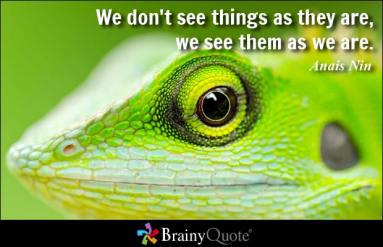
One of my core beliefs is that we are the sum of our experiences. Everything we go through in life affects us. Sometimes in small ways, and other times in larger ways. And as a result of this, we are incapable of seeing things objectively. Everything we see is filtered through the lens of our own beliefs and experiences.

what we see

That’s not to say that the same experiences will affect two different people in the same way.

Take an affair for example. When people have affairs, common reasons are that they weren’t happy, or they were looking for something that was “missing” in their relationship (At least that’s what they say.  To their partners it usually seems like they are narcissists who don’t care if they hurt others in pursuit of their own hedonistic urges).

I’ll acknowledge that there are a narcissists out there, but I would like to think that for most affairs people really were unhappy and trying to fill a gap of some sort – just in a very selfish and unhealthy way.

However many people aren’t as happy as they could be, and feel they are missing things in their relationships – and they don’t all have affairs.

So what will cause one person to do this and another person not to?

Psychologists say that affairs (and other behaviors like this) aren’t really about what is wrong with the relationship or their partner. Sure, there are likely issues that contributed. But really they are all about the person who engages in the activity, and what they are lacking inside.

I truly believe this comes down to a person’s relationship with themselves. We often can’t control the things that happen to us in life. But we DO have control over how we respond to these things.

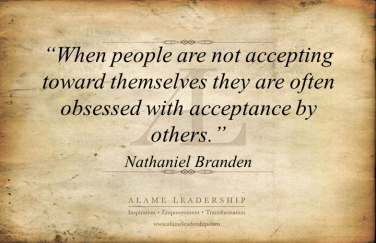
So when you accept yourself (flaws and all) and are at peace with who you are, you are better equipped to deal with adversity. When you can’t accept yourself, then you look for that acceptance through validation from others.

needingValidation


Self-Acceptance and Happiness

Why is this relevant? Because it has everything to do with your relationship with yourself.

When you can’t accept yourself for who you are and instead need to find validation of your worth from others, it leads to unhappiness. And when you can’t accept yourself, it is easy to look for reasons why you are unhappy.

But when someone is chronically unhappy it has more to do with them then it does with anything external.

We all have fears and insecurities, and it’s natural to build up walls and try to hide them.
To be truly happy and authentic to ourselves, we need to be willing to face the mirror and accept all of ourselves, both good and bad.

That’s not to say we have to accept the parts of ourselves that we don’t like. Change may not be easy, but it IS possible. However it’s impossible to change when we hide our insecurities and blame others for our own problems. It’s only when we can accept who we actually are that we can truly change.

ChangeParadox


Impacts on Relationships

I usually write about relationships, and I think the success or failure of relationships is greatly impacted by a persons identity, or sense of self.

The idea that you have to love yourself before you can love someone else is very true, as how you treat others is often a direct reflection of how you feel about yourself.

treatingothers

I have heard countless stories where a relationship fails not just because because of an incompatibility between the couple. But because one person never really knew who they were or loved themselves.

So they sublimated who they were and presented the “self” they believed was expected of them.

Over time this causes strain, as they aren’t being true to themselves and may come to resent playing a role.

Their partner has never seen their authentic self; but that’s not the partners fault, it’s because of walls they have built and what they have allowed them to see. And those walls were built out of fear. In some ways it’s due to fear of being rejected by that other person. But that fear is truly driven because they were unable to accept themselves.

Facing the Mirror

I think the strongest relationships are ones that are built on truth and authenticity. Where you have allowed yourself to become vulnerable and let the other person in. Where you have allowed them to see all of you – good and bad; and you know that they accept you and love you all the same.

That involves allowing them to truly see the authentic you, and for that to happen until you must first accept and love yourself.

self love

What Affects One Person Affects Both

frustrated-couple

I recently read an article on differing sex drives in a relationship, and while the article wasn’t anything new I thought the comment section was fascinating.  In the comments there were women talking about the changes their bodies go through after childbirth and the toll that being a mother takes on their sex drive and desire for any physical intimacy in their relationship – often extending to cuddling, hugging and basic touch.

There were a number of women commenting (at least I assume they were women, you never know online) and a few guys chiming in as well.  What struck me was a particular back and forth.

One lady mentioned that her husband wanted sex as part of the relationship, and that she just had no interest any more.

Another lady replied she had been through the same feelings, and she recommended the first lady “just do it”, as from her experience it was something her husband needed and cutting it out completely would put additional stress on the relationship.

The first lady was pretty incensed by this, saying that feeling like she needed to do something she didn’t want to felt like “emotional rape”, and that it wasn’t something her husband “needed”.

I have written in the past about the benefits of sex in a relationship. I have also written about the importance of sex to a relationship (from a guys perspective), and how sex isn’t really about sex. So yes, I’m definitely in the camp that feels sex is an important (and even necessary) component of a relationship – for both the physical and emotional benefits that it brings to the individual and the couple.

That said, I completely understand the first lady’s perspective. She’s right to say that she shouldn’t feel she has to do something that she doesn’t want to. Yeah, sometimes there are things in life you “have to do”, but doing so can breed resentment. Sex is supposed to be a form of connection and communication for a couple, and having it feel like a “duty” can destroy the connection that it is supposed to bring.

But although I believe I can understand her perspective, I think she’s overlooking one very important point.

Sex is not an individual act.

Making Choices

A marriage (or any relationship) is a partnership, and one member should never unilaterally make choices that affect both members of the relationship.

Imagine you are in a relationship and a great job opportunity comes up in another city or country. In a healthy relationship, you don’t just take the job. Instead you probably discuss it with your partner, and try to get their buy in. If you really want the job you try to sell your partner on it. Your partner needs to understand and agree with the move, and see how it benefits either them or the relationship in the long term. If, after discussion they don’t want to make the move you have a decision to make. You either don’t make the move (because although it may be what you want, it’s not right for the relationship); or you do it anyway. But if you do it anyway, there needs to be an understanding that it may cost you the relationship.

This applies to all sorts of things, and really is the primary “limitation” in a relationship.

When something affects both people, no one should expect to just do what they want. The wants and needs of the other person HAVE to matter. If they don’t, it’s not a relationship.

And I’m pretty sure sex affects both people.

So it’s not fair for one person to simply say that sex (or anything for that matter) is something that their partner doesn’t need. They can say that they don’t need it. And they can say that they don’t understand why their partner feels they need it. That’s all.

Differences in sex drive are normal, and are something most relationships find a way to navigate. Usually this results in one person having it a bit less than they would like, and the other person having to “just do it” sometimes when they might not really want to. As long as there is empathy and kindness for each others needs and some kind of compromise can be found, it isn’t a huge issue for most couples.

If a compromise that works for both people cannot be found however, then the relationship is very much at risk of failure.


Fidelity in Relationships

Most relationships have an expectation of monogamy. Personally I feel that’s a good thing; and when people step outside the relationship and have affairs or open relationships, I think they are kind of missing the point of sex. Sex isn’t just a physical act and it’s not just about your own pleasure. It is an act of intimacy, sharing, vulnerability and trust; and is symbolic of a special connection that a couple has.

Casual sex reduces it to a physical act, while in a committed relationship it is something more.

So monogamy is valuable component of a relationship (to me at least). But a sex drive is also a physical urge that differs from person to person. And for many, its presence in a relationship IS seen as a need.

When someone commits to monogamy they are committing to their partner, and from that point on their partner is the only person they will have sex with.

The unspoken part of that agreement is that sex will be part of the deal. It’s supposed to be a vow of monogamy – not a vow of celibacy.


Communicating and Caring

This brings me back to the lady who said that she doesn’t feel she should have to do something she doesn’t want to – especially something like sex.

She’s 100% right. Sex is something that should have connection and intimacy (at least most of the time). So if she’s not “feeling it”, she shouldn’t have to do anything to “appease her husband”.

At the same time, it’s perfectly reasonable for her husband to want and expect sex as part of the relationship.

Both people are right in this case.

This problem has a few layers to it. How big is the gap between what they want? What is the husband expecting? How often does he want/expect it? And how often does the wife want sex?

If one person wants it as a daily occurrence while the other person wants it weekly, that may be a problem they can figure out. If one person wants it daily and the other person want it…

…never. Well, that’s a bigger issue.

And truthfully, it’s probably not even an issue about sex.

It’s an issue of communicating, and listening to each other. And caring about and respecting each others needs. As a member or a relationship, you should care about your partners wants and needs – even when they don’t line up with your own.

That doesn’t mean you always have to meet them. But you do have to meet them sometimes, and you have to find a balance where each of you feel valued and respected.

MoreThanSex

If someone no longer wants to meet their partner’s needs, then that indicates something has broken down. Either they don’t feel valued and respected themselves so it’s a form of punishment (he/she doesn’t do things for me, so why should I do things for him/her). Or the connection in the relationship has broken down to the point that they simply don’t feel enough for their partner to care about their needs.

Either way, if the relationship has hit that point the question has to be asked – why is the couple still together? If someone either no longer cares about their partners needs, or they feel that withholding affection as a form a punishment is acceptable, then the partnership has broken down.

A relationship has to be about more than just two individuals looking out for themselves.


Meeting in the Middle

A while back I wrote about the three keys to a successful relationship. Love each other, don’t be selfish, and communicate.

If someone wants sex on a daily basis and they expect their partner to meet their needs in that way, I see that as being selfish and not very loving.

However, I also feel the same way about someone saying sex isn’t a need and they should never have to have it if they don’t want it. If there is a large gap in sex drives that stance not very loving and is just as selfish.

If you want to be loving and unselfish, you communicate and find something that works for both people. One person should never be dictating terms of anything that impacts both people.

That’s not what a partnership is about. The couple needs to communicate, show empathy and caring for each other’s needs, and try to find a compromise.

Everyone has their own beliefs and boundaries; and establishing your own boundaries and sticking to them is important. So I understand the idea of never having to do anything you don’t want to.

But when those boundaries put a couple in continuous conflict, something has to give. They either find a way to make their boundaries overlap, or they need to accept that their relationship will not work.

To the lady who said she should not have to do anything she doesn’t want to – she’s 100% right. But that doesn’t mean she can expect things to be her way and also expect to hold onto the relationship. That’s a fairly one sided approach to relationships.

To hold onto the relationship, both she and her husband need to find a way that they can both be satisfied. He could accept things only on her terms (which will likely cause resentment). She could accept things on his terms (which will also cause resentment).

Or they could both love each other, not be selfish, communicate, and try to find a path that works for both of them.

sacrificetorelationship

Relationship Doubt


Conflict between the man and the woman

Most single people hope they will one day find someone that they will be able to share their life and grow old with. And most people in relationships hope they have already found that person.

I think this is a natural desire for people. And it’s understandable, as relationships can be great. Ideally they are places of safety and trust; where you are partners who care for and support each other, while simultaneously growing individually and as a couple.

They are also full of challenges though, as you are two different people trying to build a life that works for both. And this will naturally give rise to highs and lows.

Beyond the normal challenges and conflicts though, there is one thing that can completely derail a relationship:

Doubt.

Doubt can come in many forms, such as doubt that the other person really loves you, doubt that you can trust the other person, doubt that you still love the other person, and doubt that they are “the right person” for you.

It doesn’t matter if the couple has been together 2 months or 10 years. No relationship is immune to these feelings.

If and when this happens, it’s important it is discussed and addressed. Because when it isn’t, doubt can often cause the relationship to fail.

In life, belief or “buy in” is very important.

When people buy into something they understand the value of it. They understand its place in their life and their place with it. This is always valuable, and especially so in relationships.

Doubt is corrosive to buy-in, and puts a relationship in limbo, preventing it from moving forward in a positive manner.

doubt

The One?

I believe one of the leading causes for doubt in a relationship is unrealistic expectations and understanding of what a relationship is; or an immature understanding of love.

We are frequently exposed to the idea of a soul mate, or “the one”, the idea that every person out there has a perfect match somewhere. This idea may seem romantic at first, but it is ultimately destructive.

An unspoken extension of the idea of “the one” is that if/when you find this person, the will complete you and everything will be happy and wonderful.

This becomes an issue when relationships invariably run into problems or conflict, or when they fall into a rut where the spark has faded. When this happens, it’s easy for the attitude to become:

Hmm, we have problems. Maybe he/she isn’t the one. Maybe this isn’t the right relationship for me. Maybe I would be happier with someone else.

This sort of thinking can create doubt about the existing relationship.

doubtsandspark.jpg

Newsflash for you – there are millions of people out there in the world, and you have varying degrees of compatibility with every single one of them. Even if you filter this list down to your gender or preference, age (plus or minus some sort of tolerance level), and some sort or radius from where you live; it’s a pretty safe bet that no matter who you are with, at any given point in time there is *someone* out there who is a better match.

To that I say, so what?

Who really cares if there is someone out there that is a better match?

The question I have is, are you largely happy in your current situation? If you are having doubts, then probably not. But if not, what are you doing about it? Is your partner aware of your concerns, and are they taking actions to improve things? Or are you just letting the doubt fester?

When you doubt, it impacts your buy in. And over time, this impacts your body language and the effort you put in. Sometimes the mere seed of doubt can actually be the catalyst that causes the relationship to fail.

Reasonable Doubt

If you have doubts, you need to be able to articulate what the source of the doubt is.

There are reasonable doubts. Things like your partner being controlling, cruel, aloof, coming home at odd hours or being inconsistent or not forthcoming in what they say. There are all sorts of “warning signs” for relationships, and it’s important to not turn a blind eye to them when they occur.

But doubts can also be of your own making.

We all have our insecurities, and it’s important to understand ourselves and our insecurities in order to get a handle on them and prevent them from poisoning our relationships. Especially when we carry the hurts of past relationships into new ones.

For example, someone who has been cheated on in the past may be hypersensitive to any actions that could suggest an affair, and they may see things that aren’t there.

It’s important to communicate these things to your partner. If they understand where you are coming from, they may be a bit more conscious of how their actions appear. But over time trust needs to build. If someone is constantly doubting a person who hasn’t given them cause to doubt, this will damage the relationship.

One of the big problems with doubt is that it can become a self-fulfilling prophecy. Someone has doubts, and as a result they start to hold back and build walls. Often this is done as a way of “protecting” themselves from potentially being hurt.

However building walls and holding back creates distance, and this distance will take a toll.

doubts.jpg

Making a Choice

It’s one thing to doubt if you are compatible, or doubt if you will make it. These are normal doubts that can crop up from time to time.

But if you are having doubts about whether or not you really want to be with the other person anymore, I believe you need to make a choice.

You need to choose to accept them for who they are, and commit to making the relationship the best that it can possibly be; or get out of the relationship and move on.

Some people stay in a relationship they “aren’t sure about” because they are scared to be alone. Or they feel they have invested a lot of time into the relationship, and they don’t want it to have been wasted.

But being in a relationship where you are not fully committed (and likely holding back) due to doubt is completely unfair to the other person.

If you have doubts about your relationship ask yourself this; what is the one thing you never get back?

Time.

Time wasted on doubt is just that.  Wasted time.  And it’s time you never get back.

Sometimes people have doubts, and they want space or they want time to figure things out. And to a degree that is reasonable request for someone to make.

But it needs to come with a limit.

If someone has doubts – they don’t know what they want. So for the person who is “waiting”, the person they are waiting for is trying to figure out if they want a life with them or not.

Taken another way, they are an option to this person, and not a priority.

So why? Why should someone wait?

Why would someone possibly want to waste of their life – time they will never get back, over someone who isn’t able to commit to them?

There’s a saying, Get busy living, or get busy dying. And in the case of relationship doubt I think it’s very relevant.

Doubt destroys relationships. So the person who has the doubt needs to make a choice. They need to get busy living, or get busy dying. They need to either accept their relationship and make it the best it can be, or they need to let it go and move on.

Either way, they need to make a decision and then take action.

Limbo helps no one. It just results in people wasting their lives. And life doesn’t magically get better on it’s own.

So although doubt can be normal, if you have doubts you really need to make a choice. You need to be able to commit in spite of the doubt, or you need to move on.

DoubtingLove.jpg

Letting Go

handsLettingGo

When feelings are gone, how do you (and your partner) convince yourself to like one another again?

This question was posed to me recently by a buddy, it’s a loaded one.

He’s married, and longs for the “old days” when there was love and passion and the time they had together was special.

He and his wife have been together for many years, and one day he woke up and realized things weren’t the same. They were friends, and companions; and although there was a lot of good in the relationship still, his feelings for her just weren’t there anymore.

This lack of “feeling” led him to question what was wrong, and to start distancing himself from her (which in turn just increased tension in the relationship). He felt they had become a couple who were just going through the motions of day to day life; and although he felt it *could* get better, his heart wasn’t really in it.

And that recognition hurt.

I wish I could help him, I really do.

I wish there was a surefire answer that could solve his problems and make him fall in love with his wife again (and she with him if she’s feeling the same way).

Of course if I knew the answer to his problem, it’s a pretty safe bet I wouldn’t be writing this blog anymore. Or maybe I would be but it would look a lot more professional, and be full of product placement for my “revitalize your marriage with these quick steps” self-help program.

How Do We Get There?

My buddy’s problem isn’t unusual. He’s in a spot I think many, many people find themselves in. And often these people wish things were different, but don’t know what to do. They don’t necessarily want out of the relationship. But they aren’t happy in the spot that they are in, and they don’t know how to make it better.

I’ve spent a lot of time over the past few years thinking and writing about this type of thing, and although there is no “one size fits all” explanation for how people get there I think there are some common patterns that emerge.

Unrealistic view of love

I believe part of the problem comes from an unrealistic view of love. Love as depicted in the movies/media is all about passion; and when people remember back to the “old days” there’s a pretty good chance they are remembering those passionate times.

Here’s the thing though – excitement is based on unpredictability. When you are still learning each other there’s naturally more of a sense of excitement, because everything is new. One of the strengths of long term relationships is a sense of security, of knowing the other person will be there. There is comfort in knowing the other person completely, but comfort often comes at the cost of excitement.

That’s not to say anyone should ever accept the loss of passion. It should never completely go away in long term relationships, but it changes. And it’s up to both people to keep it alive.

More than a Feeling

Related to the above point, another problem people face is searching for a feeling.

I’ve always hated this one, because to me thinking of love as a feeling is saying that love is a passive thing. It’s something that just happens to us (or doesn’t). So if it fades, you are left feeling lost. After all, what can you do if you have no control over it?

I’ve never viewed love as just a feeling. Yeah you start with feelings, but it’s your actions that determine how well your love will be sustained. It helps when you partner is kind, caring and shows affection. But ultimately, staying in love is your own responsibility. Love isn’t passive, and keeping it alive is based on our actions.

ChoosingFeelings

Learning to Love

I’m a big believer in continuous improvement, and I think that’s another area where people get love wrong. Love isn’t just a feeling or a choice. It’s also a skill. We may have some inherent capacity to love, but we can always improve on it. We can always strive to understand each other better, and learn new ways to show and express that love to each other.

Learning to love each other is important, and we should never think that because we’ve been together for a while, we “get it”.

When I think back to what I though “love” was at 18, 20, 25, I’m struck by how little I understood it. I’m not saying I get it now, but I definitely have a better understanding of love now than I did a few years ago. And most importantly, I accept that I still have a lot to learn, and I can be better tomorrow than I am today.

Making Time

A huge issue relationships face is taking each other for granted. I think every couple probably goes through this, and some never get out of it.

Repeat the following after me:

Your relationship is important.

Seriously, it should be. And if it isn’t, why are you in one? Yet couples continually find ways to take their relationship (and each other) for granted. And we do this by not spending enough time on it, and not making it a priority.

Life will always get busy. There are always other stresses that can get in the way of taking time to focus on each other if you let them. And because they know their partner “will always be there”, many couples let their relationship slide while other things take precedence.

And then they end up surprised and saddened when they start to realize the connection has broken down. I mean, really? What do you expect?

If your relationship is truly important to you, show it. Make it a priority and put in a bit of time each and every day.

Not Accepting Each Other

In my mind, a relationship should be a partnership. Both people should feel valued, and appreciated, and feel like they are contributing to something larger then themselves.

But behind the scenes there are often power struggles. People often need to be right, or to have things work “their way”. After all, their way is clearly the best. So they put their opinions and beliefs above those of their partner.

Here’s the thing though – we’re all different. We all have different backgrounds and experiences. And what works for one person necessarily work for the other.
It’s possible for two people to walk away from the same experience with completely different understandings of it, and when that happens it’s also possible that both people are right.

Power and control have no place in a relationship, and insisting things need to be a certain way is guaranteed to cause conflict.

All of these issues contribute to couples finding themselves in a bad spot. And like my buddy, many one day wake up and ask themselves what went wrong, and where the love they once felt has gone.

Where Do We Go From Here?

One of my core beliefs is we are the sum of our experiences. If your relationship is currently in a bad spot, it is there because of whatever has come before.

Maybe you’re hurting. Maybe you’ve felt ignored and not valued for a long time. Maybe bad things have happened – apathy, cruelty, cheating, whatever.

No matter what the past is, if you want to move forward you need to let go.

lettingGo

When people talk about letting go they often talk about letting go of the relationship. Walking away, and starting fresh.

That’s one option. And truly, sometimes it’s the best one.

But it’s not the only one.

Accepting Who You Are Today

My buddy longs for the old days, when he and his wife were younger and everything was better. He needs to accept that those days are gone. Things will never be the same as they were when they first met. He’s not the person he was then, and neither is his wife. They are the people they are now, today. A little older, and perhaps a little more disillusioned.

That’s not to say he needs to accept the emotional disconnect between them and say it’s just part of getting older. They can rebuild closeness and connection. But it’s only when they accept their current reality that they can truly move forward.

Letting Go of Past Hurts

A big part of moving forward is allowing your past to remain in the past. Couples go through a lot of different things, and often they hurt each other very badly, and do things that break down trust. Sometimes those things cause relationships to fail, and I totally understand that.

But if someone truly wants the relationship to work out, no matter has happened they need to let it go. Holding onto anger and resentment will never allow a couple to heal, and move forward.

Think of your past hurt like a physical wound. The human body is an amazing thing, and left alone it will try to heal. Over time it will form a scab, and eventually that scab will fall away leaving a scar as a reminder of what happened.

Holding onto anger and resentment is like picking at the scab. When you pick at it, it can never truly heal. And worse, the constant irritation can cause the wound to fester and become infected, making the problem worse.

resentmentquote

Letting People Back In

A while back I came across an interesting study that found one of the biggest roadblocks for couples in trying to rebuild their relationship came not from a lack of effort or desire to rebuild. Rather, it came from an unwillingness to recognize and trust genuine attempts at rebuilding.

When you’ve been hurt, it’s natural to try and protect yourself from being hurt again. And if your trust has been broken, rebuilding that trust is something that takes time. But putting up walls and not letting your partner back in ensures that any attempts to improve the relationship will fail.

Accepting Differences

Another way to let go is to accepting that you (and your partner) are both different, and that’s alright. Your partner will likely have traits you don’t like, and they will likely do things differently than you would.

Maybe you’re a neat freak and they are a slob (to you). Maybe they like to live for today while you like to plan for the future. There are countless ways that people are different.

Accepting differences is about letting go of control. Accepting that “your way” is not the only way, and that different doesn’t mean less or worse. In fact sometimes differences are complementary, and accepting them can allow each of you to grow in different ways.

Holding On by Letting Go

My buddy believes he has lost the feelings of love for his wife. My guess is, he probably still loves her but his love is buried under feelings of hurt, resentment and neglect that have built up over years.

He needs to decide if he wants to make it work, or if he wants to move on. Every situation is different, and there is no right or wrong answer. Well, other than waffling forever and trying to avoid making a decision – that’s not fair to anyone.
If he decides he truly wants the relationship to work, then he’ll have let go in order to give it a fair chance.

For anyone in a bad spot, the past may be what brought you to where you are today and there may be a lot of hurt. But to truly move forward you need to let go.

The past can’t be changed. Learn from the past, but don’t let it define your present.

What Do You Want?

Wishlist
Every day businesses undertake projects that are intended to guide and shape their futures. Considerable effort is put into these projects – countless person hours and dollars.
But studies show that these projects often fail. And for those that don’t fail, a relatively small percentage can truly be considered a success.

Most projects fall into this “other” category where they aren’t outright failures; but they didn’t really achieve what they had set out to do. For these projects, their success is measured in relative terms.

Because of the costs involved, a lot of time and effort has been spent trying to understand this problem.

Why do projects not have a higher level of success? Is it due to shortcomings in the people involved? Is it the approach organizations take? And what can we do to try and improve the level of success in the future.

Often the failure of projects can be boiled down to one basic problem:

The business didn’t know what it wanted, or what it was trying to accomplish. It had a pretty good idea of what it wanted; but it didn’t truly understand its own needs, or requirements.

What exactly is a “Requirement”?

A requirement can be thought of as an action or property that something must have in order to have perceived value.

This definition of a requirement came from a business book. But really, it applies to anything.

When you buy a car you expect certain things from it. There’s an assumption that at the very least you will be able to start, stop and steer a car. If it doesn’t meet these criteria, then it doesn’t perform the activities we expect and therefore you wouldn’t buy it (it doesn’t have perceived value).

Of course you may buy a broken car as a hobby project or as a collector. But if either of those are your intent then you come in with a specific set of requirements for what you are looking for.

Going back to the business world, it is estimated that as much as 60% of (business) problems come from incorrectly identifying requirements. From not truly knowing what it is that a business wants, or is trying to accomplish.

See, businesses often don’t actually know what they want. And to actually achieve success in getting to what you want, having a *pretty good idea* isn’t nearly enough.

Can You Describe What You Want?

Not knowing what you want is a common business problem, but it’s also a common people problem.

I see this as something we all face, in all aspects of our lives. And like business projects, this is probably one of the main causes of failure people have in their personal relationships.

Not knowing what you want happens in a few different ways.

First, like businesses people often only have a general idea of what they want but they don’t really understand the specifics of it.  To a degree this is understandable, but it makes it very difficult to know if something has actually achieved its requirements. How can we determine if something is successful if we don’t even know the criteria we are measuring something against?

In relationships people often use “happiness” as their measure of success, and I constantly see/hear things like “I just want to be happy”, or “people deserve to be happy”.

Fair enough. But what does that mean?

Saying you want happiness is like saying you want to go on vacation somewhere; and then jumping in your car and driving randomly figuring you’ll see where you end up. You could do it, and it might even be kind of fun. You’ll definitely end up “somewhere” and will probably have some new experiences along the way (of course, some of them may be experiences you later wish you never had).

Something like happiness can be elusive if you don’t know what it means to you.  People seem to figure they will know it when they find it; but that’s kind of like driving randomly without a map and expecting to get where you want.

It *may* happen. But if it does it’s probably more luck than anything.

One problem is, it’s very difficult to say what constitutes happiness.  It’s not status, beauty or wealth – as many who seem to have everything are miserable while many who seem to have nothing profess to be happy. And it’s not just something you can “feel”, as there are a number of things and conditions that can make people depressed and struggle with the feeling of happiness.

So chasing happiness doesn’t work.

But you can have other things you want out of life. You can try to accomplish things for yourself, and for those around you (such as wanting to support your loved ones in the things they do).

To truly be happy in life and in love, you need to have a pretty good idea of what you are looking for.  And you need to be able to articulate those things.  Because if you can’t, how will you ever know if you find them?


A second problem is that sometimes people believe they know what they want. But once they get it, they realize it’s not actually what they were looking for.

This happens all the time, and I think it is an important and valuable experience. It happens when people think they understand their problem, while in reality they have come up with a possible solution. And it turns out not to be the solution to the right problem.

There are countless stories where someone wasn’t happy, and they attribute this unhappiness to *something*.  Maybe their job, or their appearance, or their relationship, or…

…the list can go on.

So they change things. And often find they aren’t any happier. In fact, sometimes they are even less happy, because they threw out one of the positives in their life in an attempt to find what was wrong.

When this happens, they thought they knew the solution to their problem.  But they were searching for a solution to a problem they didn’t truly understand.

Knowing Yourself

I titled this post “What Do You Want?”

We all have things we want out of life and love; and if we don’t, we should. But often, we aren’t really sure what those things are.  And when we do, it’s sometimes viewed as a negative thing.

It’s easy to say you have goals in life.  But love involves two people (generally). So wanting something out of love means that you actually have expectations of the other person.

And this can cause resentment.

Often I see people saying things like:

Why can’t someone just love me without expecting anything in return?

We seem to live in a world that thinks it’s bad to expect things from people. There are all sorts of sayings like “the best way to avoid disappointment is to not expect anything from anyone”, or “true love begins when nothing is looked for in return.” I understand the sentiment behind these sorts of statements, but feel it is a dangerous way of thinking.

Love has expectations. To me that’s a simple truth.

If it didn’t, people could marry and be happy with anyone, and clearly that’s not the case. Somehow it’s alright to say that people can have standards, but expectations are “bad”. Is there really a difference?  Expectation is an important aspect of any healthy relationship, as they are simply a way of articulating your requirements – the actions and properties you feel you need as part of the relationship.

Of course it is important that expectations are realistic, and there is a difference between expectations and entitlement.

We all have things we need from our friends, our families, our careers, and yes – even our partners.  And understanding yourself and what you want is extremely important for your own happiness.

Often the people who are chronically unhappy are people who just kind of slide through life, rarely making decisions, and rarely having goals. They’re like the person driving randomly, hoping to find a place to end up.

Personally, I don’t want to be happy. I mean I do, but I don’t see it as a goal.  Happiness is really part of an experience, or a process.  But the journey is the important part.

There are things I want out of life, and out of love, and I have expectations for all the people I care about. My parents, siblings, friends, children, and my partner. And I think it’s only fair that they in turn have expectations of me. But most importantly, I have expectations of myself.

The people in my life won’t always be able to meet my expectations, so yes at times I will be disappointed in them. And I’m sure there will be times that they will be disappointed in me.

That’s life though.

I won’t always be happy, and that’s alright. When I’m not, it’s not necessarily a reflection on the quality of my life, or of the people around me.

Instead of happiness, I want a life where I can be both happy and sad. Joyful, and angry. Curious and afraid. I want to live a life that combines the mundane aspects of day to day life with the bigger experiences, those moments you look back on and remember.

Sadness is part of that. So is anger, hurt and disappointment.  I’m not saying I look forward to them, but I accept them as part of my journey.

In the end, all I hope is that the good moments outweigh the bad.

The Last Mistake

brokenRock

I’ve played a lot of basketball over the years, and during that time I’ve been part of many wins and loses.

Often the losses that hurt the most are the close ones. The ones where we gave up a lead in the last seconds, or the ones where we made a run that just felt short. For those games, I can still remember some of those closing moments. I can remember the mistakes made either by myself or other teammates, and I can remember the feelings of loss and disappointment that came with it.

When you lose like that, it’s easy to look for what “cost you” the game. And often the things you remember are the mistakes made in those final moments, when it all fell apart.

The thing is, those mistakes are really just the last mistakes. The final ones. They may hurt the most, but in a close game they were never the deciding factors.
Basketball is a game with many possessions. And with all these possessions one of the things that often gets lost is this – every moment you are on the court, whether you are looking to score or looking to defend, you are influencing the outcome of a game.

Every. Single. Moment.

The final score is really just the sum of all the decisions made in the whole game. Positive or negative, each one counts.

So in a close loss, was a missed shot at the end of the game really more important than a miss that happened at the beginning?

Not really.

The final mistake often takes on more meaning because you know time is running out. When you are down two points with thirteen seconds left, you can feel the weight of your decisions in those seconds. You know this is your last chance.

If you are down two with six minutes left, it doesn’t seem as real, or as immediate. You can tell yourself “there’s still time”. And one unfortunate side effect of feeling there’s still time is a tendency not to take those early mistakes seriously, and to treat them like they aren’t as important as the later ones.

But no game is ever won or lost in the last moments. And on a team, no one member is ever entirely at fault.

Breaking Down Over Time

Often when relationships either struggle or fail, there are strong feelings of loss and disappointment. So we search for answers.

What happened? How did it go wrong? When did it go wrong?

In those moments it’s easy to focus on the latest mistakes. With the immediacy of “the game running out”, they often take on greater meaning for us. But although the final mistakes can be big ones, with people checking out emotionally, and displaying selfish and destructive behaviors, no relationship fails due to the final mistakes.

stone-cutter-quote

Like the stone-cutter hammering away at a rock, the final mistake seems to be the one that causes a relationship to fail. But the failure was being built in slowly, with hundreds of little decisions and mistakes over time. All the little times someone was hurt, or didn’t feel valued or appreciated. Taken individually these instances may seems small, but when you add them all up, the relationship has really suffered death from a thousand cuts.

It’s important to understand that for good or for bad you are influencing your relationship every single moment.

When relationships fail, it’s usually due to years of little problems and neglect, combined with poor communication leading to resentment. When this happens, instead of being a place of safety and security relationships become sources of tension and struggles for control.

Sometimes I read other blogs, and I hear people talk about withholding things from their partner. Whether conscious or subconsciously, this is a passive aggressive form of punishment. Sex is a big one, but often kindness, caring and even basic signs of affection and respect are held back.

At some level I understand this. When you are upset with your partner, you probably aren’t feeling loving or affectionate. But at the same time, when this happens I mourn for the people involved. Withholding is a form of control, and love and control do not go together. When a relationship hits this point, it seems it’s just waiting for that final mistake. And that final mistake will not be the one that caused the failure.

Winning and Losing

Thankfully, while a series of mistakes over time will cause anything to break, the opposite is also true. The initial bond of a relationship may be forged in the years when you are first getting to know one another, but to keep that relationship strong you have to work at it and maintain it over time.

In one of my favorite posts I talk about using this idea that every single decision matters, and applying it in a more positive way. If you truly want your relationship to last forever, it doesn’t just happen. You need to work forever into your life with the actions you take each and every day.

Time-decides-your-life

Behaviour. Decisions. These are choices that we make.

Don’t wait until your relationship is in the brink before you start fighting for it. Fight for it by not letting the little things go unsaid. Fight for it be accepting that no matter where things are, they can always get better. Fight for it by trying to let go instead of holding onto hurts and withholding affection. Fight for it with consistent effort, each and every day.

Every moment counts.

And it’s up to you to decide what you want to do with them.

Communication Is Hard

In life, communication is probably one of the most important skills we can learn.

But it’s also one of the hardest.

I recently had a bit of a back and forth with my sister, and it became clear that we were not “getting” each other. The communication was through email, and while written communication allows people an opportunity to get their thoughts out in an organized fashion, it is also prone to misinterpretation.

See, we all have our own triggers and filters. So no matter how clear one person *thinks* they are being, they can’t control how the other person will receive the message. This idea is summed up pretty well here:

what we see

It’s true, we don’t see things as they are presented. We see things as we interpret them. These interpretations are based on our own experiences, and sometimes they can be quite different from the initial intent.

This concept was definitely played out in our interaction.

She had some thoughts and ideas she wanted to share, I received them, interpreted them in a different way then what was intended, and responded accordingly. Sadly, this sort of thing happens all the time.

What makes matters worse though is that when she saw my response, she thought she had offended me. And because she thought she had offended me, she felt it was best to apologize and not address the issue any further.

How We Can Help

Maybe it’s just me, and my own poor communication skills – but I see this everywhere. We all have moments where we are scared to say the wrong thing, or do the wrong thing, and hurt someone we care about. So often, we say or do nothing.

It’s natural, and understandable. But I feel this approach is very broken.

When you care about someone, you will hurt them sometimes. You will piss them off sometimes.

And that should be alright.  That’s part of what a relationship is about.

When you genuinely care about someone, you care when you see them hurting. And you want to support them and help them however you can. Thing is, you can’t actually “do” anything. With the people we love, we can be there to listen and support them. And we can try to make suggestions and advise them. But that’s about it.

Incidentally, this is one area that guys seem to get themselves in trouble. Guys are “fixers”. We have a hard time listening without thinking solution. Not sure why, but it seems to be something that’s hardwired into us. And from what I read/hear/see, women don’t actually like that. Sometimes they want to talk and have us guys just listen and not say anything. Ladies, I have to tell you – sometimes it’s really freaking hard to do that.

In any case, everyone has their own battles to face, and only they can face them. So even when someone you care about is hurting, or you think they are making poor decisions, or you think you can help them – you can’t actually do anything more than listen, support and advise.

It’s the advising part that gets us in trouble though.


Dealing with Advice

When offering advice, how you do it is very important. It always has to be done in a way that is about the issue or behavior at hand, and not the person. No matter how careful you are though, you still have no control over how the other person will interpret what you say.

And sometimes the recipient will not to be receptive to what you have to say.

People don’t like being criticized, told they are wrong, or feel they are being told what to do.  And advice can often feel like all of those things.

It’s important to remember advice is often an attempt at constructive criticism, and not the same as being critical of the other person. It’s only when it is poorly presented or when we are oversensitive that they things can appear the same.

If you are someone who can’t take criticism (constructive or not), consider this. People often provide advice for two different reasons:

  • they feel they know everything, and they are more than happy to share their opinions (solicited or not). Often trying to force their ideas on someone else
  • they feel they may have experiences/knowledge that gives them insight into what someone is going through, and they want to share that to try and help the other person

These are two very different approaches. And when in doubt, it’s probably a good idea to assume that someone is giving advice because they do actually care, and want the best for you.

Learning to accept criticism is very important.

Everyone’s experiences are different, and no two situations are exactly the same. Even if they were, we are all different so what works for one person won’t necessarily work for another. But we can still try to learn from each other. Learning is all about doing things, seeing flaws in our approaches and learning from them.

We can’t learn unless we accept the flaws and limitations in how we do things. And sometimes we are blind to those flaws, and need some guidance from the people who care about us.

criticismImprovement

If someone can’t take criticism, often this is more an issue with them and their own insecurities.  But it means they often remain stuck, and unable to improve on where they are.


Afraid to Offend

When people care about each other, they shouldn’t be worried about hurting each other. They should be careful about what they say and not hurt the other person intentionally, but hurting each other is part of caring about the other person. They tend to go together.

It’s only when you do care about someone that they have the capability to hurt you.

I think good communication is about being able to say what you feel is right without fear of how the other person will interpret it. And also being able to accept that your thoughts may or may not be accepted the way you want, and that’s alright.

A big issue with communication is that people worry too much, and end up scared to say the important things because they feel the other person will not see it as information/advice, and will instead take it as an attack.
So instead they say nothing.

When it comes to the people we love and the people we care about, I think one of the most important things we can do is learn to say “no”, or to say “I disagree”. If I’m being selfish, a jerk, or an idiot – I WANT the people I care about to call me out, to tell me that how I am acting or what I am doing is not acceptable.

It may hurt, and it may piss me off. But that’s alright.

To my sis, I know she cares. We won’t always see eye to eye, and that’s alright. If there’s something she wants to say, I don’t want her to ever be scared to say it. If I think she’s out of line I will tell her. But I’ll also listen, and consider what she has said.

And to me, that’s a big part of what relationships are about.

avoidingCriticism