Happiness is Overrated

asian young Couple not talking after  fight  in living roomThere seems to be a huge focus on happiness these days, specifically in relationships.

I’m at an age now where a lot of long term relationships/marriages are failing, or people are starting new relationships (after their marriage has failed).  And in these failed relationships, unhappiness is almost always cited as the main reason.

I hear things like:

  • I just want to be happy
  • Everyone deserves to be happy
  • Lifes too short to not be happy
  • I’m happy now (in the new relationship)

This focus on happiness worries me a bit, and in fact I think happiness is kind of a dangerous and even subversive concept.  And although I understand what people are getting at, I think they’re often missing the point.

Of course people “want to be happy”.  Really, does anyone actually go around and claim the opposite?  Unless you’re Grumpy from the seven dwarves, I don’t think anyone really wants to be unhappy (though I will admit there are some people who almost seem to thrive off negativity).

Yes, there are different emotions and generally the positive emotions are seen as preferable experiences to negative emotions (which is probably why some are classified as positive and others as negative).

I totally get all that.

Here’s my problem – what exactly is happiness?

Do you know?  Because I sure don’t; and I spend a lot of time thinking and writing about this stuff.  I do however know that happiness is more than just a feeling.  Further no one is always happy, and even when someone IS happy, they aren’t going to be happy in every aspect of their life.

Happiness is not like a light switch that is “on” or “off”.  You can be happy at home, but not in your job.  Or happy when you get a bit of down time, but feel overwhelmed when faced with all the things that need to be done as part of domestic life.

Happiness is complex, and the aspects and levels of it aren’t consistent over time.


“Unhappy” Relationships

So what does this really mean to relationships?

When people leave (or thinking about leaving) a relationship because “they aren’t happy”, I don’t think it’s really about happiness.

Instead, I think it’s about conflict that a couple has been unable to resolve.

Over time, unresolved conflict creates an environment of hurt, and likely resentment.  That in turn creates tension in the relationship, as one or both members feel their needs aren’t being met and they aren’t being heard.  A few posts ago I talked about connection, and a big component of connection is feeling valued, heard, and seen.  So if you feel you aren’t being heard, this will cause the connection to break down.

Over time this leads to a perpetual state of tension within the relationship, which is emotionally draining.

With broken connection and a state of tension, a couple will have a harder time finding joy even in the good parts of the relationship and instead will often focus more on the problems as they become magnified.

And THIS will result in…

(ready for it?)

…unhappiness.


I know what you’re thinking –“but ZombieDrew, isn’t that the same thing?  Doesn’t it still boil down to the couple being unhappy?

Nope, and the distinction here is really important.


First, it’s important to remember that having conflict doesn’t mean you have a bad relationship.  It means you’re normal.  Conflict is as unavoidable as death and taxes, and is a byproduct of two different people building a life together.  You won’t always agree and you won’t always get along, and that’s alright.

Another important thing is unhappiness isn’t the problem, it’s a SYMPTOM of a different (and truly, a larger) problem.

And understanding that?  THAT really matters.

Because you can’t solve a symptom, you can’t solve unhappy.  You need to understand the actual problem.  And if you can understand the actual problem, THEN you can do something about it!!!


The Search for Happiness

My issue with people leaving relationships because they are unhappy (or searching for happiness) is that often they don’t really know WHY they were unhappy.  They stopped at the symptom, the feeling.

They knew they were “having problems”, and found themselves in a situation where they were unhappy for so long they believed the only way out was to leave the relationship.

They want to be happy again (after all, everyone “deserves” to be happy, life is too short to not be happy, blah blah blah).  So they leave, in order to find that feeling again.

(Actually often they go in search of the feeling before leaving the relationships, having emotional and or physical affairs that provide the “feeling” of happiness, which only solidifies their belief that there was something wrong with the relationship they are/were in.  But that’s a topic for another day.)

In any case, pursuit of a feeling leaves them looking for something they will likely never find.


Building Relationships

One of the big fallacies of relationships is that you just need to find the right person.  I absolutely hate this thinking, because it absolves people of responsibility in relationships.

Oh, our relationship failed because he/she wasn’t the right person.  I just need to find someone more compatible.

Sorry, that’s a load of crap.  Don’t get me wrong, there is an element of compatibility involved in relationships (though I believe it’s a much smaller factor than most people would think).

But here’s the thing – relationships are a skill.  And like any other skill, we can always improve the skill side of a relationship.  No matter how bad (or good) your relationship is right now, it can get better.

And THAT should be good news.

The catch is, you need to be willing to work to develop that skill.  And both parties need to be willing to do this.

It doesn’t necessarily have to be equal (no relationships are), but both people need to be trying.  And if they are?  Then ANY issue can be improved upon.

Notice I didn’t say fixed, some things can’t be fixed.  But all problems can get better.


Believing Change Can Happen

Its really important to believe that all problems can get better, because sometimes a couple DOES look at why they are having issues, they start to understand the problems; and then they give up.  They feel overwhelmed by the issues and take the attitude that they are “too big to fix”, or they can’t be changed because “this is just the way I am”.  And as a result they don’t really try.

This approach of quitting without really trying is called Learned Helplessness, and unfortunately it is a common approach for people who struggle with conflict resolution, people with mental health issues, as well as people who just aren’t very happy.

It’s a belief that someone has no control over the situation they are in, so why bother trying.  But it’s a broken thinking pattern, because people ALWAYS have control over their own choices and their own actions.  As I said, ANY issue can be improved.  But you have to be willing to put in the work.

learnedHelplessness


Going back to the “unhappy relationship”, this is almost always a question of conflict resolution.  Problems can’t be ignored, avoidance never works.  And you are NEVER helpless to make change.

It’s may seem easier at first to ignore things and avoid them, because dealing with things has an emotional cost.  But avoidance is a short sighted approach, because nothing gets resolved and the long term emotional costs of trying to deal with things when they’ve hit a critical mass are always higher later.

Plus, even when you are “avoiding” issues, they are always there.  These issues find ways to come out, normally through passive aggressive behavior by one or both parties, and that will only deepen the environment of hurt and resentment (making things worse).


The way out of this mess is through communication.  REAL communication.

When people talk about communication being the key to successful relationships, they aren’t just referring to talking.  Communication is about actually listening, trying to understand each other, and dealing with conflict in ways that are beneficial to the team.

If you aren’t actively working on making things better, then you aren’t really communicating.

CommunicationIssue


Happiness is Mostly About You

One thing I don’t like about this focus on happiness is, it’s an individual act.  It’s a focus on what a relationship does (or doesn’t do) for YOU.  While that is obviously important, I personally don’t think any relationship can thrive if that’s the focus.

Relationships should never just be about what one person is getting out of it. Both people’s needs and wants have to be respected and valued, even when they don’t completely match up. There has to be compromise.

For relationships to be successful the focus needs to shift from what the relationship does for me to what it does for us.  It needs to be a partnership that is mutually beneficial; and where people are just as interested in what they can add to it as what they get out of it.
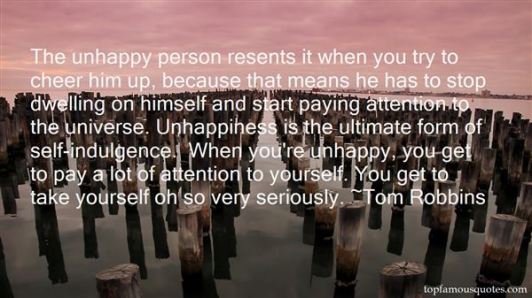
unhappy-person-quotes-1.jpg

Communicating and building your relationships skills is difficult, because it can’t just be about you.  It requires facing the mirror and accepting your own part in the relationship issues.  It also requires truly letting go of past hurts and resentment in order to move forward.

But although these skills are difficult to build, they are the most important skills you will ever build in your lifetime.  They are worth the effort, and worth the stumbles that will happen along the way.

In my mind, as long as both partners are showing consistent effort towards building them, and being conscious about sliding back into avoidance and passive aggressive behavior, ANY relationship can not only succeed, but thrive.


Built to Last?

Happiness is a feeling, and feelings come and go.

Healthy relationships on the other hand have a number of components to them; pleasure, joy, appreciation and contentment.

And importantly, an acceptance that negative emotions are normal, and that conflict is a natural and even needed part of trying to grow both individually and as a couple.

Sometimes happiness is missing, and that should be alright.  Because if you can communicate, and resolve conflicts together without holding on to anger and resentment you will always find it again.  In fact it’s working through these difficult times that ultimately brings a couple closer.


So when people leave a relationship because they aren’t happy, I think it’s a cop out.  An excuse.

I understand leaving the relationship because you had communication issues and unresolved conflicts that were creating a toxic environment, and you reached a point that you gave up hope that things would ever improve.

I even understand leaving a relationship because you realized that addressing the issues was scary, and you weren’t prepared to do the work to make things better.

At least those reasons are honest.

They involve a level of self-awareness, and a realization that there is no magic wand or perfect person out there.  That those issues will still come up again, and will need to be addressed in the future or they could happen again.


But simply saying it’s because you were unhappy without understanding why, and chasing that feeling?  That simply sets you up to repeat the same mistakes again, and all but guarantees more unhappiness in your future.


meantToBe

Avoiding Life

AvoidanceHeader

Over the last few years I’ve spent a lot of time trying to grow and improve as a person.  I would like to think I understand certain things a bit better, but for the most part I haven’t really changed that much.  There have been some changes I suppose, but they are largely small tweaks and refinements.

Really, the “new” me isn’t that different from the “old” me.

There is however one area where my outlook has changed considerably, and that’s in how I look at and approach conflict.


Conflict has become an area of interest for me, and it’s something I’ve written about in the past.  A few years ago I viewed conflict as a bad thing.  It was a sign that something was wrong.  And that’s bad, right?  Well, if that’s right then the absence of conflict must be a good thing.

That was how I viewed the world.

And that’s a viewpoint I’ve come to believe was completely wrong (like, totally and completely wrong).


You Aren’t Me And I’m Not You

Each person is an individual, with their own wants, needs and interests.  And this uniqueness is a part of our beauty.  However, because we have differences there are times our differences will collide.

My new(ish) viewpoint on conflict is that it is a natural and unavoidable part of any relationship.  Conflict is simply the collision of our differences and can actually be a very positive thing; as the process of learning to accept each other and work together in spite of these differences (because let’s face it, they aren’t going away) is the key to a healthy relationship.

So although there can be issues in how we “deal” with conflict, conflict itself isn’t bad.


Problem?  What Problem?

Currently I’m back in school, taking courses that will in theory help advance my career; and if not at least keep me somewhat current.  And one of the courses I’m taking has a section on conflict.

Reading over the course materials, I came across the following:

Of all the issues that people tend to avoid, managing conflict ranks at the top of the list, along with public speaking and swimming with sharks.

Most people see conflict as indicative of a problem because disagreement feels uncomfortable and threatening.

When there’s no open conflict we can carry on as though things are all right even if, really, we know they aren’t.


It’s the last line that really stands out to me – open conflict is the key.  If there is no  open conflict we all can carry on as though things are alright even when we know they aren’t.

People can be kind of stupid at times.  For whatever reason, sometimes we don’t see things that are right in front of our faces.

Sometimes its ignorance, or we misjudge the severity of something.  Or maybe we simply lack the context to truly understand what we are seeing.  For example I have a buddy that almost died from a heart attack a few years back, when he thought he had the flu.  That stuff happens, and is largely understandable.

It’s a VERY different scenario though when there is a problem and we KNOW it.  But we pretend it isn’t there.  When we ACT as though things are fine as long as we aren’t talking about it, and it’s not out in the open.

That approach is very destructive, to everyone involved.


When to Deal with Issues?

Conflict isn’t fun, and I think it’s safe to say most people don’t want to deal with it.

Imagine you’re at home and you notice a drip in your bathroom faucet.  Let’s imagine the progression of this problem faucet looks something like this (with some sort of time lapse between steps):

  1. We see the faucet dripping for the first time.
  2. We realize the faucet is still dripping over a period of time.
  3. We notice the drip is getting worse.
  4. Instead of a drip, we see that there is now a steady stream of water coming out of the faucet
  5. We notice that the room underneath the bathroom has water stains in on the ceiling.
  6. We notice that there is water streaming down the walls of our house.
  7. Sections of the ceiling below start to crumble and collapse
  8. We can no longer open the bathroom door, because the flow of water has gotten so strong that the water pressure is holding the door closed

Let’s face it, problems suck.  However although we don’t want to, most of us recognize that there comes a point in time when we HAVE to deal with them.

WHERE we draw that line differs from person to person.  For example, some people will get on an issue as soon as they see the first sign of trouble.

Personally, I would find that exhausting.  I would rather wait a bit to determine if it was an actual (recurring) problem.  If something happens once and then not again?  Well, it might not be worth worrying about.

Thing is, when small problems aren’t addressed in time they have a tendency to grow into much larger issues.  I would like to think though that most people wouldn’t allow the leaky faucet to get to step 8.  Hopefully somewhere between step 2 and step 5, people will accept that there is an issue and be willing to put in whatever work is necessary to address it.


Avoidance

Unfortunately some don’t accept that issues need to be dealt with – ever.  In fact some people will walk around their house in rubber boots with a diving mask and snorkel insisting that there’s no problem and everything is alright; as the faucets are pouring water and their house is rotting and crumbling around them.

In psychology this is known as Avoidance.

Psychology Dictionary defines avoidance as:

the practice or an instance of keeping away from particular situations, activities, environments, individuals, things, or subjects of thought because of either (a) the anticipated negative consequences of such or (b) the anticipated anxious or painful feelings associated with those things or events. Psychology explains avoidance in several ways: as a means of coping- as a response to fear or shame- and as a principal component in anxiety disorders.


Avoidant people are masters at pretending that things are fine, because as long as they don’t acknowledge a problem openly they can tell themselves everything is alright.

Thing is, avoidance brings with it a slew of problems.  Stealing another section from my course materials:

There is one main reason to engage in conflict, and that’s to reach a resolution. Without resolution, conflict merely becomes an opportunity to recycle old arguments, disagreements and opinions: nothing moves forward, feelings get stirred up and reinforced.


By denying problems and refusing to deal with them avoidant people actually make things worse.

They allow small problems to grow, and ensure there is never a resolution.  Nothing ever moves forward, and they end up stuck.


Misdirected Effort

One of my sons hates cleaning his room.  And when I ask him to, it always turns into a big production.  He talks about how he doesn’t want to, and how he thinks “it’s not that bad anyhow”.  Then he complains about how much time and effort it would take to clean it.

Usually it turns into some sort of power struggle where he refuses, and I’m forced to come up with some sort of consequence for not doing it as a way of getting him to clean it.

When he finally gets to cleaning it, I’m always struck by the fact that he will have spent WAY more time arguing over and fighting against cleaning his room than it actually took him.  He expends all this energy “refusing” to clean his room.  And if he would just DO it, a lot less time and energy would be wasted.

He’s 9, and I’m optimistic/hopeful that this is just a stage he’ll grow out of.


In many ways, his behavior is similar to avoidance.

An avoidant person will expend a tremendous amount of effort ignoring a problem, pretending it’s not there, and refusing to deal with it.

And to a non-avoidant person faced with this, often it feels as though the issue at hand (whatever it is) is actually resolvable.  And likely could have been easily resolved with considerably LESS effort than there seems to be spent ignoring the problem and maintaining a (broken) status quo.

It’s like they are trying to talk to someone while the other person is walking around with their hands over their ears chanting “la la la la la, not listening”.


Relationships with avoidant people can be difficult, because couples often get stuck with issues that often seem normal, or manageable.  However because the avoidant partner won’t acknowledge the issue they are unable to move forward and improve.

So every leaky faucet has the potential to cause the whole relationship to crumble down around them.

And let’s face it, we all have leaky faucets.


Admitting to issues in your relationship is never easy, but if you don’t you can never, EVER resolve them.  And you can never improve.

For any avoidant people, I ask you this – what is your goal?  What is more important to you?

Is it more important to create the illusion of a perfect relationship and not have to deal with issues (even when you know that the issues are there)?

Or it is more important to have the best relationship you can?


A while back I read an article on couples counselors, and in it the counselors talked about how their ability to help a couple is often hampered because couples frequently come to them YEARS later than they should have.  I suspect this is often due to avoidance, where a couple is refusing to deal with their faucets until the relationship is crumbling around them.

People can talk about priorities, but actions are much more important than words.  So if someone “says” they want their relationship to be better but they refuse to work to improve it?  Well, they are showing that they find the pain of a broken relationship to be less than the pain of trying to work on things.  THAT shows true priority.

And if pretending things are good even when you know they are not is more important that improving, remember that if the rot sets in too deeply there will be no way to pretend any more.


Conflict comes from differences and differences are just part of who we are.  Having a relationship with another person means there WILL be conflict.  And accepting that conflict as normal allows you to deal with it proactively, and make your relationship the best it can be.

Strength in a relationship isn’t built through the absence of conflict, it’s built through encountering obstacles and getting through them together.  So although we should never want conflict, we should always see it as an opportunity to improve on where we are.

A perfect relationship will never exist, no matter how much you pretend it does.  But your relationship CAN always get stronger.

IF you accept that there are issues.

IF you accept that conflict is an opportunity for improvement.

And IF you are willing to face your issues and work on them.

If you can do those things?  Then your relationship will never be perfect, but it will be as strong as you make it.

The “Secret” to Happiness

top-secret
Have you ever received a raise?

Let’s say you get a $1200 raise. Not bad, right? Well if you’re paid twice a month that’s around $50 per cheque before deductions; so let’s say it’s an extra $30 per pay period.

It’s an increase, but it’s not really that much. It’s not like you’ll be buying a new car or taking that vacation you wanted with an additional $30 every few weeks.

Now let’s change this up a bit and imagine you received a 10k raise. That would probably turn into around a $250-$300 increase per pay period, which is fairly significant. When that happens, you definitely notice it.

At first.

Here’s the thing. After a few months (and at most a year) you won’t even notice the increase; no matter how big the increase is.


This happens in all aspects of life. We get that new car we’ve been wanting and there are all these new features we didn’t have before. We get that new house, and it has more space or more rooms.

The new stuff is pretty cool, and pretty great.

But over a fairly short period of time, it stops being new. We become used to it. And it becomes our new “normal”.

Once something has become our new norm, we start to notice flaws we didn’t see at first (or flaws that didn’t seem important).  And more importantly, we stop appreciating the positives these new things have provided.

This is part of the human condition. We are hard-wired to take the positive things in our life for granted.


Hedonic Adaptation

I’ve been writing about happiness being negatively impacted by taking things for granted for a long time now, but it’s only recently that I found out there is a name for it. This phenomenon is known as Hedonic Adaptation (thanks Matt for pointing me to this).

Here’s a brief description from Wikipedia:

The hedonic treadmill, also known as hedonic adaptation, is the observed tendency of humans to quickly return to a relatively stable level of happiness despite major positive or negative events or life changes. According to this theory, as a person makes more money, expectations and desires rise in tandem, which results in no permanent gain in happiness.

Most of my writing is about relationships, and the implications of this for relationships are HUGE. I’ve often challenged the concept of soul mates, or “the one”. It’s a terrible concept that removes any personal accountability for building and maintaining healthy working relationships. After all, when things get tough why would you want to work on things? And why would you look at your own role in the breakdown of a relationship? It’s easier just to tell ourselves that this other person wasn’t the right one for us.

Hedonic adaptation tells us it doesn’t matter how amazing the person we find is. They can be “a perfect match” for us, and it STILL won’t matter. Because no matter how great they are, after a while that greatness will simply be the norm.

When you see it day after day, year after year is ceases to have any impacts on us. It will just be who they are, and we will stop seeing and appreciating the good.

Thing is, everyone has at least some flaws. And when we stop seeing and appreciating the good those flaws start to stand out.

CalvinComplain

Making Comparisons

This becomes an even bigger issue when it’s coupled this with another problem with human nature – comparison.

As people, we have an inability to judge something based on its own merits. Instead, we judge the value of something by comparing it to a similar item.

And when comparing, we almost always compare the flaws of the thing we are comparing to those characteristics in something else. But when we do this, due to hedonic adaptation we aren’t also comparing the positives, because we no longer see them.


I’ve got a pretty good career, and a pretty good job. It’s not what I initially wanted, but it provides a reasonably good life for my family without requiring long hours or high levels of stress.

Sometimes though I compare myself to others, to people I’ve known through school or through work. I see people I’ve known over the years that seem to have greater levels of career success then me, and in many cases they are people who aren’t any better than me.

In those moments I often feel like a failure, and question what I’ve done wrong.

In a vacuum, I have a lot to be grateful for. It’s only through comparison that I start to feel like things are lacking, or feel like a failure.

These moments usually pass quickly, because am aware that I am doing this, and I realize I am making selective comparisons.

First, there are different measurements of success. And looking selectively at someone’s title or salary doesn’t take into account all the other factors that I have no visibility on.

Secondly, in those moments I am picking and choosing WHO I compare myself to. There are a lot of people out there who I have known that haven’t had the same level of success I have had. During my personal self-pity parties I conveniently exclude those people from my comparisons, and only look at those people I perceive as doing better than me.

Falling Out of Love

I recently asked someone about the concept of falling out of love with your partner, and what was described to me was a perfect example of these concepts.

We meet someone, and there’s a pretty good chance there are good qualities that draw us to them. Over time though, things break down and we are left feeling tired, frustrated and not feeling valued. These items on their own cause the relationship to break down, and resentment to start to grow.

When the relationship has hit this stage, hedonic adaptation is one of the big culprits. Chances are, the good qualities of the other person haven’t really gone away. They are still there, but we no longer see them. Instead all we see is the flaws, and the problems. And when those flaws are no longer being offset by good (because we no longer see the good), it’s easy to question is it still worth it?

I don’t think that alone is usually the killer though. The REAL killer is once we add comparison.

In the description of falling out of love, a comment was made that when the relationship has hit a bad spot you start to think something like “maybe I should have married my college sweetheart instead”. Sometimes the comparison is to an old relationship. Sometimes you hear positive stories about things other people’s partners are doing (oh look, they just went on a trip, or had a romantic night out) and that creates a perception that other people’s partners are better than your own. Or sometimes you meet someone that “seems to have more in common with you” and start focusing your energy there (while reducing the effort in your relationship) because it makes you feel more alive.

None of these are positive, productive, or realistic (especially the last one). In all cases, you are comparing the issues and flaws of your current partner to strengths of someone else, while simultaneously ignoring the good parts of your partner that you have taken for granted and not seeing the flaws of the other person.

They are broken comparisons, rigged to make our partners look even worse than they really are.

What This Means for Happiness

So what does all this mean, and what does it have to do with happiness? Well, hopefully that’s fairly clear.

There’s no real surefire way to “be happy”, and we shouldn’t want that anyhow. I have always seen happiness as a journey, and not a destination. To me it’s not something we can achieve.  Rather, it’s a byproduct of the way we live and our outlook on life. And on any journey there will good and bad, happiness and sadness. Joy and pain.

But although we can’t make ourselves happy, human nature will cause us to do things that will minimize our potential happiness.
Hedonic adaptation tells us that over time the good in our life becomes our norm, and when that happens we stop seeing the good and we take it for granted.

Being aware of this phenomenon allows us to guard against it. And to guard against it we need to try to approach life with more of a sense of appreciation. We should regularly take stock of the good in our life, and the good qualities of our partner. When we do this, the flaws (which will always be there) often don’t seem as bad.

The second thing we can guard against is making comparisons. Stop comparing our partners to someone else (past relationships and potential partners) and stop comparing ourselves to other people.

The way we make comparisons is broken. We tend to only make comparisons when we see flaws in the thing we are comparing (ourselves or our partners), and we tend to compare those flaws (while overlooking the good) to an imaginary state that is usually only focused on the good in the other thing.

Hedonic adaptation and comparison can be fatal to us appreciating what we have in the here and now, and understanding them allows us to reduce their effects, maximizing our happiness. So the secret to happiness isn’t so much about searching for happiness. Instead it’s about not losing the happiness we already have.

I found this nicely stated on psychologytoday.com:

Human beings spend a lot of time trying to figure out what will make them happy, but not nearly enough time trying to hang on to the happiness they already have. In a way, this is like focusing all your energy on making more money, without giving any thought to what you’ll do with the money you’ve already earned. The key to wealth, like the key to happiness, is to not only look for new opportunities, but to make the most of the ones you’ve been given.

How Does Parenting Affect Your Relationship?

HappyFamilyHeader.jpg

A while back I read a post where someone was wondering how kids change your marriage. The guy who wrote it was fairly recently married.  He and his wife were thinking about starting a family and he was worried about how it would impact their marriage.

It was a thoughtful question.

What do kids do to your marriage?
Do they make it better, or worse?
Do they alter the bond between husband and wife?

I’m going to go out on a limb here and guess that most people don’t even consider this. They just think hey, we know we want to have kids one day (though they probably can’t say why they want them).

And so they do.

And then they find themselves woefully unprepared for what comes next.

At first, it would seem as though children should make the bond between a couple stronger; after all, children are a product of your love for each other, right? Fine, they may also be the product of one night of bad decisions; but let’s assume for the moment that they are wanted by the couple who decided to have them.

In that case, do they strengthen the bond?

Well, it seems the reality is a bit complicated.

In fact most studies state that relationship satisfaction decreases after kids are born. According to The Wall Street Journal:

About two-thirds of couples see the quality of their relationship drop within three years of the birth of a child, according to data from the Relationship Research Institute in Seattle, a nonprofit organization focused on strengthening families. Conflict increases and, with little time for adult conversation and sex, emotional distance can develop.

In theory a baby can help strengthen the bond between a couple. But for some reason when I think of “strengthening the bond”, emotional distance is not one of the things I think of.

So why does this happen? What changes?


Life Changes

When you go from being single to being part of a couple your life changes. But for the most part, you are still you. Yeah some people lose themselves too much in the relationship, but their identity is still as a person (who is fitting someone else into their life). When you need some “me” time, it’s usually not that difficult to do.

When you become a parent however, your life changes irrevocably. You are now a parent fulltime, 24-7, every day of the year.

And for the next however many years, the needs of the child will always trump your own.

It’s not better, or worse (though I suppose it could be argued that some aspects are definitely better while others are worse). Looking at it on the whole though, the best way to describe it is that it’s simply different.

And in addition to your life, it also fundamentally changes the nature of your relationship.

The needs of the baby/toddler/child don’t just trump the needs of the individual – they trump the needs of the couples as well.

So as a couple one of the biggest and most noticeable changes is that you no longer have nearly as much time for each other as you used to.

This seems obvious, and something people should know going in. I mean, it’s simple math. People only have so much time and energy, and kids take time and energy. So adding them to a relationship will reduce the amount of time the couple has to focus on each other.

But I don’t think most people really realize exactly how much it changes their “couple time”, or how much of a toll it can take.


Increased Stress

A while back I posted on stress, and on the impacts stress can have on relationships.

Basically, stress is corrosive to relationships.

When stressed, we tend to become inwardly focused. We see how the stress is affecting us and tend to forget that it is also affecting our partner as well. We are also more likely become more sensitive to and notice smaller things and allow them to become blown out of proportion. There are other issues, but basically high levels of stress can kind of make us selfish jerks.

Well, kids can be rewarding but they can also be a great source of stress.

First, they are a responsibility that doesn’t go away. In the early years they basically need us 24-7, and the weight of this responsibility can take a toll. We want the best for our kids, and we want THEM to be the best they can be. This leads to immense pressure on our ability to be a parent. When we are struggling, it can make us feel like we are failing our kids and this can make us feel like failures as parents.

Add in things like kids getting sick, fighting, trying to figure things out on their own and just being kids? Well, it can be at once stressful and exhausting.
All of which can make us less patient with our partners.

And this is even before you start looking at the breakdown of who is taking on the lion’s share of parenting duties (hint – it’s usually the woman).


Parenting Conflicts

Which brings me to the next fun part – parenting conflicts, which tend to come in a few different ways.

The first of these is the approach to parenting. It would be great if parents agreed on “how” they wanted to parent in advance, but chances are they haven’t even thought of it. Instead we often just go with what was modeled to us growing up without even thinking about it.

When we do this there are bound to be differences, and these conflicting parenting styles can cause serious conflict.

It’s usually pretty easy to accept that your partner is different from you and has different outlooks on the world. When those differences impact your children however, it’s easy to become possessive and defensive (mama/papa bear will ALWAYS protect their cub). Approaches to discipline is often a prime example of this

When we can’t agree on an approach to parenting, often each side is convinced that their way is right while their partner is wrong. This attitude is terrible for a couple, as instead of being a “we” it becomes a case of you vs. me.


Changing Roles

Perhaps the biggest change that happens when a couple becomes parents is a change in roles. Before they were both individuals and a couple – probably in fairly equal parts. This is not only a life change but also a role change, as the role of parent becomes the primary one.

As a couple you likely started as friends and lovers, but now you are primarily parents and this change can result in a sense of loss and cause conflict in couples.

Marriage counselors talk about how one of the biggest complaints couples have is that they don’t feel their partners make enough time for them anymore. While they understand that the kids are the priority, they don’t feel like they are a priority anymore.

Maintaining being a couple even after kids is extremely important, and many counselors talk about the value of ensuring there is still time for the couple by carving out time in the schedule for things like date night.

Although most couples seem to understand why that’s important it is still something that often goes ignored. It’s one thing to understand why it’s important, but actually making time is not always easy when there seem to be a million other things that need to be done.


Diminished Sex Life

Going hand in hand with the changing roles comes a diminished sex life. This is an unfortunate yet understandable side effect of having kids – especially in the early years. It’s hard to feel sexy when you are always exhausted or worried about the kids. Stress has huge negative impacts on sex drive, and as discussed earlier kids are a source of stress.

Many couples say that after the first few years of kids they see their sex lives bounce back somewhat. Likely not to the levels they were at before kids, but generally to a level both partners can accept.

In some cases however, the sex drive doesn’t come back at all.

This is usually (though not exclusively) an issue faced by women. Last I checked I’m not a woman, so I won’t pretend to understand all the reasons. But from what I know it can be a combination of things, from body and hormonal changes, to feeling solely like a mom instead of feeling like a woman, to sheer exhaustion and resentment from the unequal burden that is normally faced by women when it comes to child rearing.

Sexual problems are often associated with feelings of guilt and shame, so this is an issue that often goes ignored. Some couples convince themselves that it’s not that important, or that it’s just a natural part of getting older. Or things will just come back on their own if they give it time.

It’s only true that it’s not important if both people in the relationship agree with that, and a lost sex drive is not simply a natural part of getting older. If this loss of sex drive occurs it shouldn’t be ignored as it is often a significant factor in the breakdown of relationships.


Support Systems

In a relationship it’s always important to have time for “me”, and making time for yourself is even more important once kids are in the picture as it allows people to retain a bit of their own identity and not get completely lost in the role of parent.

It’s still very important to balance this with time as a couple (without kids) though.

A challenge here is that many couples don’t have a strong support system that allows them to get time as a couple. So each partner ends up taking turns, going out as individuals while the other partner watches the kids.

This time is valuable, and important. The danger is that without sufficient couple time as well, each persons only real break or “fun” time comes as an individual. And when you start to associate fun, and a freedom from the stress and responsibilities of kids as also being time away from your partner it can start to create doubt about the relationship.

Family time is not couple time. And couple time is not me time. Finding a working balance between all three is needed to keep the relationship alive and well.


Financial Impacts

Another challenge presented by kids is financial. Adding kids to a family adds a new expense center. Food, clothes, activities; all these things cost a fair bit. And maybe it’s just my job, but I don’t think people get pay increases to offset these costs. So the end result is couples have less money to do things.

They also have less freedom, as things like holidays soon are limited to times that they kids aren’t in school.

It’s not that you can’t do the things you did before. It’s just that it takes a lot more planning, and you probably can’t do them as frequently.


Adding It All Up

Reading over this it probably seems as though I have a negative view on having kids, and that’s not the case at all. I’m a father, and I love my kids and wouldn’t change a thing. In fact I believe my children have enriched my life considerably.

Kids do introduce all of these things though, and they all require adjustments and take a considerable toll. In fact, indirectly I’ll go so far as to say that the additional stresses caused by kids are probably one of the leading causes of divorce. Which is ironic, as they are a product of the love a couple shares.

Kids put additional stresses on relationships, but I want to be clear that I don’t think this has anything to do with the kids themselves. They aren’t to blame, ever. What IS to blame is that people generally don’t talk about these things, so couples aren’t prepared.

They run into these challenges, and they start to believe that something is wrong. And since people rarely walk away from their kids the relationship is often blamed, when what they are going through is actually fairly normal.

Being a parent is a fantastic experience, and it can be very rewarding. But it can also be very hard, and many couples can’t handle the strain it puts on their relationship.


Making it Work

I’ve heard a lot of couples who have “made it” confirm the challenges of being a parent. And often I will hear them say things like “stick it out, and things will get better”.

Sometimes couples that are having troubles stay together “for the kids”. 90% of me is completely against that. You need to stay together because you love each other, and want a life together. If you no longer love each other for whatever reason, then it does the kids no good to have a loveless relationship modeled to them as they grow up.

The remaining 10% of me thinks that if kids give you another reason to stay together and stick it out through tough times, then that can be as good a reason as any. But that’s only if you then use this time the kids have bought you to actively work on and improve your marriage. I’ve heard of some couples who stayed together “for the kids” who then learned to love each other again and rebuild, and were happy they had done so. I think that’s great.

Ultimately you need to be with each other because you still love each other, and still want to share your lives.  Not just because of kids.

More often though I think couples who split up do still love each other. And it’s really just the stress that comes with being parents that has put emotional distance between them. I think often they do still want to love each other, and have just lost sight of how. In being parents and not making time to be friends and lovers, they have lost each other.

Broken Trust

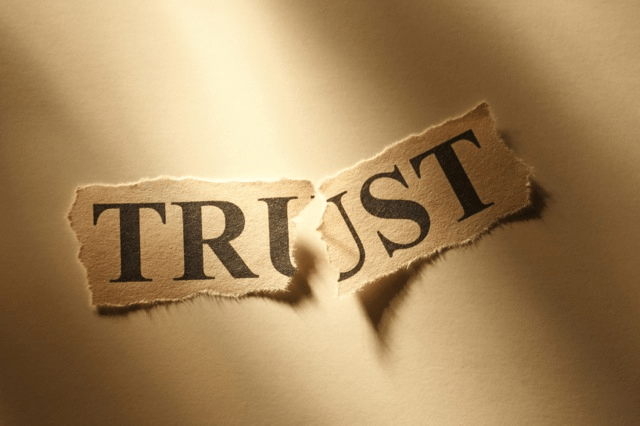
trust torn header
I’ve talked before about my love of basketball, and in the news recently there was an incident that hit headlines.

Although they are terrible these days, the Los Angeles Lakers are still one of the “glory” franchises in the NBA. They hit headlines though because a video was leaked where one of their top newcomers (D’Angelo Russell) was talking to another player (Nick Young) about his relationship, and in it Nick Young apparently admits to cheating on his fiance.

Interestingly, the furor over this video has nothing to do with Nick Young cheating on his fiance. Instead, it has been about the actions of D’Angelo Russell – filming and then purportedly posting this video (he denies posting it, and insists he doesn’t know how it got out).

See, regardless of what was being said the discussion between Young and Russell was private. And in letting it out there, Russell has violated his trust.

In the sports world the outcry against Russell has been considerable, with some even going so far as to say that Russell (who is a rookie) will never be able to recover from this, because his teammates will never be able to trust him again.

A sports team in many ways is the same as any other team. The players don’t necessarily have to be friends, and they don’t even have to like each other. But to be successful they need to be able to effectively work together. And that requires a degree of trust. When that trust breaks down, it damages the chemistry between players. And trust once gone, is very difficult to rebuild.

Breaking Down Trust

I’ve written before about honesty in relationships, and although I don’t believe anyone is always honest I do feel it’s important that our actions toward each other are characterized by empathy and respect.

In relationships trust can break down in different ways. Sometimes it is big events, and other times it is an accumulation of smaller events over time. At the end of the day though, trust is about the questions “can I count on you?”, and “will you be there for me when I need you?”

When the answer is no or there is significant doubt, then trust has broken down. When this happens, often our entire perception of the other person changes. They aren’t the person we thought they were. And this realization can leave us feeling betrayed and hurt.

If trust has broken down, can it ever really be rebuilt? Or is it something that once broken is gone forever?

Trust2-perfect again

Making Mistakes

Are you perfect? Have you made mistakes?

We all make mistakes, both big and small. And it doesn’t matter how kind, or caring, or devoted you are – we all have days and moments where we are tired, frustrated, or selfish.

At some level we know this, but we still expect more from the people we care about the most. After all, we care about them – and we expect them to care about us. So we don’t expect them to be the ones who hurt us. We expect better from them.

However the ones we care about the most are often the ones we hurt the most. When I look at my life, overall I think I’m a pretty good guy. Yet I know I’ve done things that have hurt those closest to me.

It’s the law of averages – for the people who see us the most, they are more likely to see us at our worst moments. While being around people more gives us more opportunities to “be on our best”, it also provides more opportunities to hurt them.

Unfortunately, it’s often the bad stuff that people remember the most.

There’s No News Like Bad News

Take a look at any newspaper, or any media outlet. Sure, sometimes there are “feelgood” stories that get traction. But by and large it’s the bad news that sells. And it’s the bad news that sticks with people.

That’s just human nature – and unfortunately it’s bad news for relationships.
In his work on relationships John Gottman talks about this – and he even has a formula for what it takes to have a successful relationship. According to him, healthy relationships need 5 positive interactions for each negative one.

We remember what affects us more, and the bad often outweighs the good.

Trust1

Letting People In

As the saying says, trust takes years to build and moments to break.
There are definitely different degrees of bad choices, but if a person has done a lot of good for a long time and then does something bad, does that make them a bad person?

Some would argue that it depends on the severity of the bad choice, and there’s truth to that. Some choices are so terrible that it’s hard to ever accept. I still think history matters though. As does a person’s reaction after the fact.

If someone continually exhibits selfish or disrespectful behavior then that’s one thing. But if someone takes ownership for their actions, shows contrition and demonstrates changes in their behavior, we should be able to rebuild trust over time.

When we can’t?

I think that often issues with trust aren’t only issues with the actions of the person we are struggling to trust. Instead, they are issues with us being unable to let go and being unable to forgive.

When we’ve been hurt it’s good to be cautious, and it’s good to try to protect ourselves. But it’s important to remember that building walls and not letting the other person back in will ensure the relationship is never able to move forward.


D’Angelo Russell made a mistake, and that mistake cost him the trust of his teammates. Does that mean he’s untrustworthy?

I don’t actually know anything about the guy in question, but I would say no, one mistake no matter how big does not mean someone is untrustworthy. Right now all it means is that he made a selfish decision that hurt his teammate. If that mistake is part of a pattern of behavior, then I would say yes.

That’s not to say the affected teammate should just forget it and trust him blindly moving forward. Some mistakes are bigger than others, and Nick Young needs to decide if he is willing to even consider trusting Russell again.

Trust isn’t just about one person though. So if they do want to move forward as teammates Russell needs to consistently show he’s worthy of that trust, and Young also needs to let him back in. If Young doesn’t, then nothing Russell does will ever be enough, and trust will never be rebuilt.

Your Most Important Relationship

When you think of all the roles we play in life, we have different relationships with many different people.

All these different relationships make up different facets of our life, and have varying degrees of importance. Often the most important relationships in our lives are the ones we have with our children, our partner, our parents/siblings and our closest friends.

These relationships are all important, and shape us in different ways. Because they all affect is, is it fair to say that any of them is more important than others? If you had to pick one relationship in your life and say it was the most important one, what would it be? Your partner? Your children?

In some ways it’s an impossible question. But at the same time, I do think there is only one correct answer.

The most important relationship you will ever have in your life is the one you have with…

You.

Who are You?

When thinking about relationships, the one we have with ourselves is often ignored. But it’s very important because it sets the tone for virtually everything in your life.

Think of the following:

    • How well do you know yourself?
    • How well do you understand yourself?
    • How honest are you with yourself on your strengths, weaknesses, and insecurities?
    • Do you love, and value yourself?
    • Do you believe in yourself?

In many ways I believe your success in life (however you define that) and even your own happiness depends on the answer to these questions.

In the past I’ve asked do you love yourself?, but in this post I want to approach this in a different way.

Knowing who you are, being honest with yourself about your strengths, weaknesses and insecurities but still accepting and loving yourself in spite of them is perhaps the most important thing you can do.

A Distorted Lens

One of my core beliefs is that we are the sum of our experiences. Everything we go through in life affects us. Sometimes in small ways, and other times in larger ways. And as a result of this, we are incapable of seeing things objectively. Everything we see is filtered through the lens of our own beliefs and experiences.

what we see

That’s not to say that the same experiences will affect two different people in the same way.

Take an affair for example. When people have affairs, common reasons are that they weren’t happy, or they were looking for something that was “missing” in their relationship (At least that’s what they say.  To their partners it usually seems like they are narcissists who don’t care if they hurt others in pursuit of their own hedonistic urges).

I’ll acknowledge that there are a narcissists out there, but I would like to think that for most affairs people really were unhappy and trying to fill a gap of some sort – just in a very selfish and unhealthy way.

However many people aren’t as happy as they could be, and feel they are missing things in their relationships – and they don’t all have affairs.

So what will cause one person to do this and another person not to?

Psychologists say that affairs (and other behaviors like this) aren’t really about what is wrong with the relationship or their partner. Sure, there are likely issues that contributed. But really they are all about the person who engages in the activity, and what they are lacking inside.

I truly believe this comes down to a person’s relationship with themselves. We often can’t control the things that happen to us in life. But we DO have control over how we respond to these things.

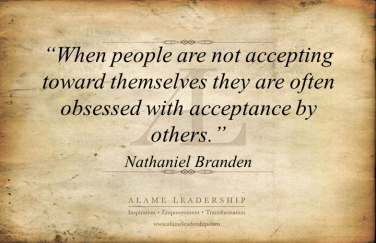
So when you accept yourself (flaws and all) and are at peace with who you are, you are better equipped to deal with adversity. When you can’t accept yourself, then you look for that acceptance through validation from others.

needingValidation


Self-Acceptance and Happiness

Why is this relevant? Because it has everything to do with your relationship with yourself.

When you can’t accept yourself for who you are and instead need to find validation of your worth from others, it leads to unhappiness. And when you can’t accept yourself, it is easy to look for reasons why you are unhappy.

But when someone is chronically unhappy it has more to do with them then it does with anything external.

We all have fears and insecurities, and it’s natural to build up walls and try to hide them.
To be truly happy and authentic to ourselves, we need to be willing to face the mirror and accept all of ourselves, both good and bad.

That’s not to say we have to accept the parts of ourselves that we don’t like. Change may not be easy, but it IS possible. However it’s impossible to change when we hide our insecurities and blame others for our own problems. It’s only when we can accept who we actually are that we can truly change.

ChangeParadox


Impacts on Relationships

I usually write about relationships, and I think the success or failure of relationships is greatly impacted by a persons identity, or sense of self.

The idea that you have to love yourself before you can love someone else is very true, as how you treat others is often a direct reflection of how you feel about yourself.

treatingothers

I have heard countless stories where a relationship fails not just because because of an incompatibility between the couple. But because one person never really knew who they were or loved themselves.

So they sublimated who they were and presented the “self” they believed was expected of them.

Over time this causes strain, as they aren’t being true to themselves and may come to resent playing a role.

Their partner has never seen their authentic self; but that’s not the partners fault, it’s because of walls they have built and what they have allowed them to see. And those walls were built out of fear. In some ways it’s due to fear of being rejected by that other person. But that fear is truly driven because they were unable to accept themselves.

Facing the Mirror

I think the strongest relationships are ones that are built on truth and authenticity. Where you have allowed yourself to become vulnerable and let the other person in. Where you have allowed them to see all of you – good and bad; and you know that they accept you and love you all the same.

That involves allowing them to truly see the authentic you, and for that to happen until you must first accept and love yourself.

self love

Letting Go

handsLettingGo

When feelings are gone, how do you (and your partner) convince yourself to like one another again?

This question was posed to me recently by a buddy, it’s a loaded one.

He’s married, and longs for the “old days” when there was love and passion and the time they had together was special.

He and his wife have been together for many years, and one day he woke up and realized things weren’t the same. They were friends, and companions; and although there was a lot of good in the relationship still, his feelings for her just weren’t there anymore.

This lack of “feeling” led him to question what was wrong, and to start distancing himself from her (which in turn just increased tension in the relationship). He felt they had become a couple who were just going through the motions of day to day life; and although he felt it *could* get better, his heart wasn’t really in it.

And that recognition hurt.

I wish I could help him, I really do.

I wish there was a surefire answer that could solve his problems and make him fall in love with his wife again (and she with him if she’s feeling the same way).

Of course if I knew the answer to his problem, it’s a pretty safe bet I wouldn’t be writing this blog anymore. Or maybe I would be but it would look a lot more professional, and be full of product placement for my “revitalize your marriage with these quick steps” self-help program.

How Do We Get There?

My buddy’s problem isn’t unusual. He’s in a spot I think many, many people find themselves in. And often these people wish things were different, but don’t know what to do. They don’t necessarily want out of the relationship. But they aren’t happy in the spot that they are in, and they don’t know how to make it better.

I’ve spent a lot of time over the past few years thinking and writing about this type of thing, and although there is no “one size fits all” explanation for how people get there I think there are some common patterns that emerge.

Unrealistic view of love

I believe part of the problem comes from an unrealistic view of love. Love as depicted in the movies/media is all about passion; and when people remember back to the “old days” there’s a pretty good chance they are remembering those passionate times.

Here’s the thing though – excitement is based on unpredictability. When you are still learning each other there’s naturally more of a sense of excitement, because everything is new. One of the strengths of long term relationships is a sense of security, of knowing the other person will be there. There is comfort in knowing the other person completely, but comfort often comes at the cost of excitement.

That’s not to say anyone should ever accept the loss of passion. It should never completely go away in long term relationships, but it changes. And it’s up to both people to keep it alive.

More than a Feeling

Related to the above point, another problem people face is searching for a feeling.

I’ve always hated this one, because to me thinking of love as a feeling is saying that love is a passive thing. It’s something that just happens to us (or doesn’t). So if it fades, you are left feeling lost. After all, what can you do if you have no control over it?

I’ve never viewed love as just a feeling. Yeah you start with feelings, but it’s your actions that determine how well your love will be sustained. It helps when you partner is kind, caring and shows affection. But ultimately, staying in love is your own responsibility. Love isn’t passive, and keeping it alive is based on our actions.

ChoosingFeelings

Learning to Love

I’m a big believer in continuous improvement, and I think that’s another area where people get love wrong. Love isn’t just a feeling or a choice. It’s also a skill. We may have some inherent capacity to love, but we can always improve on it. We can always strive to understand each other better, and learn new ways to show and express that love to each other.

Learning to love each other is important, and we should never think that because we’ve been together for a while, we “get it”.

When I think back to what I though “love” was at 18, 20, 25, I’m struck by how little I understood it. I’m not saying I get it now, but I definitely have a better understanding of love now than I did a few years ago. And most importantly, I accept that I still have a lot to learn, and I can be better tomorrow than I am today.

Making Time

A huge issue relationships face is taking each other for granted. I think every couple probably goes through this, and some never get out of it.

Repeat the following after me:

Your relationship is important.

Seriously, it should be. And if it isn’t, why are you in one? Yet couples continually find ways to take their relationship (and each other) for granted. And we do this by not spending enough time on it, and not making it a priority.

Life will always get busy. There are always other stresses that can get in the way of taking time to focus on each other if you let them. And because they know their partner “will always be there”, many couples let their relationship slide while other things take precedence.

And then they end up surprised and saddened when they start to realize the connection has broken down. I mean, really? What do you expect?

If your relationship is truly important to you, show it. Make it a priority and put in a bit of time each and every day.

Not Accepting Each Other

In my mind, a relationship should be a partnership. Both people should feel valued, and appreciated, and feel like they are contributing to something larger then themselves.

But behind the scenes there are often power struggles. People often need to be right, or to have things work “their way”. After all, their way is clearly the best. So they put their opinions and beliefs above those of their partner.

Here’s the thing though – we’re all different. We all have different backgrounds and experiences. And what works for one person necessarily work for the other.
It’s possible for two people to walk away from the same experience with completely different understandings of it, and when that happens it’s also possible that both people are right.

Power and control have no place in a relationship, and insisting things need to be a certain way is guaranteed to cause conflict.

All of these issues contribute to couples finding themselves in a bad spot. And like my buddy, many one day wake up and ask themselves what went wrong, and where the love they once felt has gone.

Where Do We Go From Here?

One of my core beliefs is we are the sum of our experiences. If your relationship is currently in a bad spot, it is there because of whatever has come before.

Maybe you’re hurting. Maybe you’ve felt ignored and not valued for a long time. Maybe bad things have happened – apathy, cruelty, cheating, whatever.

No matter what the past is, if you want to move forward you need to let go.

lettingGo

When people talk about letting go they often talk about letting go of the relationship. Walking away, and starting fresh.

That’s one option. And truly, sometimes it’s the best one.

But it’s not the only one.

Accepting Who You Are Today

My buddy longs for the old days, when he and his wife were younger and everything was better. He needs to accept that those days are gone. Things will never be the same as they were when they first met. He’s not the person he was then, and neither is his wife. They are the people they are now, today. A little older, and perhaps a little more disillusioned.

That’s not to say he needs to accept the emotional disconnect between them and say it’s just part of getting older. They can rebuild closeness and connection. But it’s only when they accept their current reality that they can truly move forward.

Letting Go of Past Hurts

A big part of moving forward is allowing your past to remain in the past. Couples go through a lot of different things, and often they hurt each other very badly, and do things that break down trust. Sometimes those things cause relationships to fail, and I totally understand that.

But if someone truly wants the relationship to work out, no matter has happened they need to let it go. Holding onto anger and resentment will never allow a couple to heal, and move forward.

Think of your past hurt like a physical wound. The human body is an amazing thing, and left alone it will try to heal. Over time it will form a scab, and eventually that scab will fall away leaving a scar as a reminder of what happened.

Holding onto anger and resentment is like picking at the scab. When you pick at it, it can never truly heal. And worse, the constant irritation can cause the wound to fester and become infected, making the problem worse.

resentmentquote

Letting People Back In

A while back I came across an interesting study that found one of the biggest roadblocks for couples in trying to rebuild their relationship came not from a lack of effort or desire to rebuild. Rather, it came from an unwillingness to recognize and trust genuine attempts at rebuilding.

When you’ve been hurt, it’s natural to try and protect yourself from being hurt again. And if your trust has been broken, rebuilding that trust is something that takes time. But putting up walls and not letting your partner back in ensures that any attempts to improve the relationship will fail.

Accepting Differences

Another way to let go is to accepting that you (and your partner) are both different, and that’s alright. Your partner will likely have traits you don’t like, and they will likely do things differently than you would.

Maybe you’re a neat freak and they are a slob (to you). Maybe they like to live for today while you like to plan for the future. There are countless ways that people are different.

Accepting differences is about letting go of control. Accepting that “your way” is not the only way, and that different doesn’t mean less or worse. In fact sometimes differences are complementary, and accepting them can allow each of you to grow in different ways.

Holding On by Letting Go

My buddy believes he has lost the feelings of love for his wife. My guess is, he probably still loves her but his love is buried under feelings of hurt, resentment and neglect that have built up over years.

He needs to decide if he wants to make it work, or if he wants to move on. Every situation is different, and there is no right or wrong answer. Well, other than waffling forever and trying to avoid making a decision – that’s not fair to anyone.
If he decides he truly wants the relationship to work, then he’ll have let go in order to give it a fair chance.

For anyone in a bad spot, the past may be what brought you to where you are today and there may be a lot of hurt. But to truly move forward you need to let go.

The past can’t be changed. Learn from the past, but don’t let it define your present.

Passive Aggression

gasmask_header

In my last post I talked about Avoidance, and how avoidance is one of the most destructive things you can do. It limits quality of life and personal happiness while also doing damage to relationships.

Relationships require communication – even (perhaps especially) about the difficult things in life, while avoidant people withdraw or check out when confronted with anything difficult or uncomfortable.

The avoidant approach is, why deal with something if you can ignore it? After all, if you ignore something long enough it will just go away on its own right?

Spoiler alert – it doesn’t. Actually, things just get worse. And here’s one of the main reasons why…

Avoidant people may do their best to avoid conflict, and they may “think” they are succeeding. But everyone has emotions, and feelings; and eventually these frustrations find a way out. But since they have never developed healthy ways to express and deal with emotions and feelings, they find “subtle” ways to express them.

Ways that are very, very damaging.

The Four Horsemen

In his book The Seven Principles for Making Marriage Work John Gottman says he can predict with a fairly high degree of accuracy whether or not a couple will succeed or fail. And one of his beliefs is the existence or amount of conflict itself has nothing to do with the success of a relationship.

What matters is HOW a couple fights.

He describes the following “corrosive negative behavior patterns” as being the strongest predictors of divorce, or as he put it – “The Four Horsemen of the Apocalypse”.

  • Criticism: No relationship is perfect, and we all have things about our partners that make us unhappy. Complaints are fine and are about behaviors you want to change. A criticism is a way of expressing the complaint that becomes an attack on the other person. With criticism, the issue isn’t the behavior – it’s the other person.
  • Contempt: This is the use of things like threats, name calling and insults. Contempt is when there is an air of superiority, and the offending person focuses on their partners mistakes instead of appreciating them and seeing the good. The existence of contempt is the highest predictor or divorce in a marriage
  • Defensiveness: This is when any attempt at discussion of issues becomes interpreted as an attack. When people get defensive, they attempt to “protect themselves” by doing things like counter-attacking, denying, or re-directing the conversation away from the topic at hand. There is no acceptance of the issue, or acceptance of responsibility. If you think back to my post on accountability, defensiveness is the first few steps – denial, blaming/justifying
  • Stonewalling: This is when in a discussion the listener emotional withdraws or “checks out” on the discussion. They likely are feeling emotionally overwhelmed, or flooded by the discussion; so they don’t engage. They may listen, but they don’t focus or give any clues they are actually paying attention. For the person trying to have a discussion, they feel ignored.

The first two are predictors of early divorce (supposedly 5.6 years after the wedding), while the next two predict later divorce (16.2 years after the wedding). Defensiveness and Stonewalling are the hallmarks of avoidance, and they are classic signs of passive aggressive behavior.


What is Passive Aggression?

Passive aggression is perhaps the worst thing you can do in a relationship. If you aren’t familiar with passive aggression, here’s another term for it – treating your partner like crap (I’m not sure if that’s the official scientific term. If not it probably should be).

What does passive aggression look like?

I found a great description of it at this site:

Passive Aggressive behavior can be defined as conduct which is conflict avoidant. Anger is not openly expressed but manifests itself by way of covert resistance, procrastination, withdrawal, sarcasm and more.

Broken agreements, withholding emotional support and/or sex, sabotage, sulking and silent treatment are all common features of passive aggressive behavior.

Many Passive Aggressive people simply refuse to contemplate that they might be doing anything wrong and simply do not believe their conduct to be anything untoward.

Basically it’s “conflict avoidant” behavior, where the real feelings of conflict (anger/frustration/resentment) leak out in other ways.

Passive Aggressive Behaviors

Here are a number of common passive aggressive behaviors (cobbled together from a number of sources):

Refusing to say what you mean. This is when someone will say one thing (usually what they believe the other person wants to hear) even when they don’t actually mean it. Sometimes they will say Yes when they really mean No. Or they will say “We’ll See” instead of saying No outright. But then they show what they “really mean” through their behavior.

Putting on a false face. This is similar to the previous one, but at a bit different. Passive aggressive people will often appear to be kind and agreeable, while inside they are actually hurt, angry or resentful.

Afraid to be alone, but also afraid of being dependent. There are difficulties with communication due to a fear of rejection that make relationships difficult. At the same time emotional walls are built to keep close relationships at a distance because there is a fear of dependence. Passive aggressive people do want relationships, but only on their terms. There is a strong need for control.

Learned Helplessness/Victimization. When conflict arises (which it will), the inability to deal with it often leads to anger and resentment. However instead of recognizing the problem is due to a lack of communication, it is perceived as being the other persons fault. “They” did this, or that. They caused the conditions that led to the anger (which of course is seen as justified). There is no ownership by the passive aggressive person. They are a victim of others being hard on them, unreasonable or expecting too much.

Resenting Demands/Expectations of others. Relationships have expectations, and these expectations form the boundaries of relationships. Passive aggressive people will often view others demands/expectations as unfair or unjust. But rather than expressing this and trying to find a path that works for both people they will hold things in and allow resentment for the other person to build.

Procrastination. Everyone procrastinates sometimes, but for a passive aggressive person procrastination is a form of control and punishment. They don’t like “having” to do things, especially when this is related to the expectations of others. So they won’t. But instead of saying they won’t, they make them wait and come up with excuses on “why” they haven’t been able to. When someone calls them out on their lack of follow through on things they either promised of agreed to, the passive aggressive person will often find ways to turn it around and blame the other person for why things aren’t done.

Not giving honest answers. When dealing with uncomfortable topics passive aggressive people will usually try to change the subject. When they can’t, they often say a lot of things without actually saying anything. Often no real answer is given. Or instead of being truthful, they will withhold information, and be selective in what they say and how they respond. They may not “lie”, but honesty is not just about the words you say. The ones you don’t say are often just as important.

Sulking/Withdrawing/Pouting. When things aren’t going their way, or they are unhappy about a situation passive aggressive people will shut down emotionally and withdraw. They will withhold affection, kindness (and empathy really) as a way of “showing displeasure”. Again, this is about punishment and control. Silent treatment and “walking away” are common ways of “dealing” with issues. This may sound a lot like tantrums. Well guess what, they are. This sort of behavior is basically an adult tantrum by someone who has never learned to communicate and deal with emotion in a healthy way.

Keeping Score. Passive aggressive people have a very difficult time letting things go. We all have times people hurt or disappoint us. Instead of confronting the issues, dealing with it and letting it go; passive aggressive people will hold onto things. Not only do they not let go, they also often feel someone doing something to them entitles them to do something in retaliation/response. In relationships (especially ones that matter to us) taking this approach is destructive, and will only escalate things.

Silent Treatment. This is one of the hallmarks of passive aggression, as well as being one of the great killers of relationships. When someone is upset they withdraw – emotionally and/or physically. Passive aggressive people often tell themselves they do this to ensure they don’t “say something they will regret”, and there is some truth to that. But they never return, and never deal with the issue at hand. They avoid it, and this becomes both a way of dealing with things as well as a form of punishment and control.

passiveaggressivequote

Take a good look at the items in the above list.

I’m pretty sure any rational person will accept these are all COMPLETELY TERRIBLE things to do to your partner. Hell, they’re terrible ways to treat people who you DON’T like; never mind ones you are supposed to be building a life with.

That said, we ALL do these things once in a while. But people with healthy communication and conflict skills realize they are being an asshole when they do it, while passive aggressive people don’t seem to see a problem with it – or they have a long list of excuses and reasons (usually someone elses fault) as to “why” they are doing it.

At least at some level though, even the people exhibiting these behaviors have to KNOW these are self-destructive behaviors that are damaging their relationships; as many of these behaviors are selfish, petty and cruel. These behaviors don’t belong in a “loving relationship”.

So why?

Why willfully engage in behaviors that at some level they know are destroying their relationships?

Why do it?

An Inability to Cope

There are two main reasons people are passive aggressive.

  1. They don’t realize they are doing it
  2. They don’t know any other way.

One thing to be clear on…

…when you look through these behaviors it can make it seem like passive aggressive people are horrible monsters. They’re not.

Often they are good, kind people “most” of the time. They simply been taught conflict is bad, so they have spent their lives repressing feelings and negative emotions, and have never learned how to effectively communicate and deal with conflict. As a result they are emotionally crippled, and shut down in the face of negative emotions.

Passive aggressive behavior often goes hand in hand with anxiety and avoidance, because at it’s root it is about a fear of conflict, and a feeling of powerlessness and helplessness that comes with being unable to deal with conflict.

Conflict happens though. It’s a natural (and needed) part of life. So passive aggressiveness is really about an inability to cope with the reality of life. This is why many passive aggressive people try to present an image of perfection. It allows them to create and escape to a fantasy world where conflict doesn’t exist.

Healthy Conflict

At the beginning I talked about John Gottmans book, and how he believes there are behaviors that are good predictors of divorce. Passive aggression is one of the biggest ones.

Well, what does a “healthy” relationship look like according to him? Gottman says the signs of happy couples are:

  • Couples who behave like good friends and handle their conflicts in gentle, positive ways.
  • Couples who are able to repair negative interactions during an argument, and are able to process negative emotions fully.

See the key words in those two things?

Handles conflict.
Deal with negative emotions.

These are things the avoidant and passive aggressive person either can’t or won’t do.

There is good news though.

People are not avoidant or passive aggressive by nature. It is a communication and coping style that is learned. Because of this, it is also something that can change.

I’ve written on change in the past, and although it’s not an easy thing to do is CAN happen. But for it to happen, the person making the change needs to truly understand how their behavior is hurting them. They need to face the mirror, and realize the way they have approached things has not been working.

If you are someone who defaults to avoidance or passive aggression as your default coping mechanisms, here’s something to consider:
Avoidance and Passive Aggressive behavior are among the most damaging behaviors one can have. When you look up “Toxic Behavior” the behaviors listed are usually lists of both passive aggressive and avoidant behavior.

If having your default coping mechanisms defined as “toxic” doesn’t convince someone to try and change, I not sure what will. However avoidance and passive aggressive behavior ARE toxic. They are behaviors we all should be aware of, try to recognize when we do, and try to minimize.

For our relationships, our happiness and for those around us.

Escape With Each Other

Hug

In my last post I presented the idea that relationship issues are frequently (and perhaps usually) not actually issues with the relationship. Rather, they are issues with stress management.

I think it’s safe to say the following is true:

  1. people have different amounts of stress in their lives
  2. we are different in how well we manage the stresses we do have
  3. some ways of coping with those stresses are healthier than others

We all have stress in our lives, and studies show just how damaging stress is. It’s extremely bad for your own health, and it’s also extremely bad for relationships. In fact, high stress jobs tend to also be associated with high divorce rates.

So stress management is pretty important for both your own health and the health of your relationship. We all have things we do to de-stress. Ways to escape, however temporarily, from the stresses of life.

My idea in my previous post was that over time, in our heads our partner comes to represent our stress. We start to incorrectly see them as the source of our stress instead of seeing them as someone who is dealing with the same (or at least similar) stresses as us at the same time.

In a healthy relationship, our partner is our shelter in the storm of life. They are the first person we go to in order to let go, or relax. So once we’ve started to associate them with the stresses of life, our relationships get into trouble.

It is often said that bad relationships cause stress. That may be true, but stress doesn’t only happen in “bad relationships”. People can have relationships that have all the ingredients to be amazing, but they can still be destroyed by stress.

Allowing Escapism

In my last post I talked about escaping from stress, and how many forms of escapism are unhealthy ways of dealing with stress. For example, I believe this sense of escapism is actually one of the leading causes of affairs. But there are also healthy forms of escapism.

One reader (bac4sccr) made the following comment:

I believe the trick (I am no expert though) is to allow the escapism. You may think I am crazy but if it is allowed you can get away from the stresses of life. The catch is can you do the escapism together as a couple. Zombiedrew2 already used sex as an example of escapism. I agree that it can be used but it cannot be the only form. It could be weekly dates where you are not allowed to talk about money or kids or your car breaking down. You do something with your partner to escape. You associate this escapism (positive) with your spouse and then your relationship grows because you associate it and your partner with positive thoughts and feelings.

I absolutely love this comment, and wanted to expand on it a bit – stealing some of my reply to his comment.

As a side note, many thanks for the people who write in and leave comments. I try to respond to every comment I get, and feel it is the interaction between bloggers and readers that really drives a site. If you have any thoughts on any of my posts I encourage you to write in. I am always interested in different ideas and insights, and believe we can learn a lot from each other as well as provide a bit of support for each other at the same time. Plus when you comment (or even just hit the “like” button) it lets me know someone is actually reading – which is always nice.

Back on topic, I think escaping together is probably the lifeblood of a relationship. And it’s also the area that MOST couples fail.

Miserably.

Escaping Alone

The hardest part of a relationship is balancing the “me” and the “we”. It’s not healthy to completely lose yourself in your relationship, but at the same time you don’t want to be roommates who simply share bills and sleep in the same bed.

It’s important that you maintain the couple. You should never use the excuse of there being “not enough time”, because it’s pretty damned important. Important enough that you need to MAKE time. And when you actually do have time, you need to let go of the distractions of life. Turn towards each other and focus on each other.

Yeah, you still need to do things as an individual. It’s important to have time to yourself, away from your partner. But when most or all of your escape time is as a “me”, here’s what happens…

Your escape time is when you can let go of the stress of life. So when your escape time is usually on your own (or at least away from your partner) at a subconscious level you start to associate the feelings of being relaxed, and being free from stress with the times that you are away from your partner.

If you had already started to associate the stresses of life with your partner, this just deepens it.

And if those stresses have led you to have any doubts about your relationship? Well, this will just “prove” those doubts to you.

I think this happens to couples with kids more than couples without, and there’s a reason for it that is at once sad and ironic.

Kids are awesome, but they require a lot of care and attention. Often it can be hard to find care, so one parent ends up home with the kids while the other is off having “me” time. So they are able to relax on their own.

Why?

Because they actually trust their partner with the kids.

They can relax because they know that their partner will take care of the kids. This sense of trust allows them to relax. But if they only relax when they are away from their partner, over time that negative association is made.

Hmm, I have fun and I can relax on my own. But when I’m with my partner I’m stressed and can’t relax. Shouldn’t I feel differently? Maybe this indicates a problem in our relationship? Maybe I’m better off on my own?

Yeah, when it comes to the health of the relationship that’s not really a good association to make.

Trends in Divorce

Divorces can happen to couples at any time, and for any number of reasons. But if you look at stats on divorces you will see that there are a few trends, and times in life and marriage where they happen more frequently.

The first group are marriages last less than two years. Chances are those are couples who were simply a bad match, and they couldn’t get along.

The next group is probably in their late 30’s to early 40’s. They are hitting midlife, and are probably at one of the hardest stages in life for dealing with the stresses of “day to day” life. This is when people are most likely to have young kids and tighter cash flow. But it’s also when they are most likely to question “is this it” about their relationship and life in general. If your marriage is going to fall apart, chances are this is when it happens.

And the last is after the kids have grown up and moved out. This couple was probably in trouble when they hit group 2, but due to the kids they were able to hold on and get by. Suddenly they look at each other and realize they have grown apart and the only thing they had in common over the past 15-20 years was the kids. Some stay in the marriage and live largely independent lives. Probably because they’ve invested so much time and they don’t want to start over.

Holding On

I guess my point in all this is that you start a relationship because you saw something in each other once.

Something wonderful.

Something beautiful.

Something you wanted to hold onto, forever.

But a lot of us screw things up. We lose the very things that brought us together, and we don’t realize it until things are in a bad spot – and for many it’s too late.

And when it fails, often it wasn’t the relationship that was the problem. It was the stress of daily life, and the fact that instead of tackling it together stress caused us to retreat into ourselves and focus more on being an individual.

Finding time as a couple and making it a priority is the ONLY way out in my opinion. But to do that you need to recognize the difference between relationship stresses and life stresses. The life stresses are ones you are both experiencing at the same time, and changing the relationship won’t make them any better.

So yeah, you will need to escape sometimes.

But do it together.

Focus on each other, and always make time to connect (or reconnect if need).

Remember that you are supposed to be each others shelters from life. When times are hard, don’t turn away from your partner.

Turn towards each other, and just love each other.

Coping With Life

coping

A few weeks back I had a post chronicling one guys story as his marriage broke down and he started an affair.

It’s a common story. A couple in a long term relationship gets in “a rut”. Their relationship feels stagnant, and one or both parties don’t feel particularly appreciated or valued. Then someone else shows up on the scene who shows an interest in them, and the attention feels great.

They feel valued.

They feel “alive” again.

So they start to spend more time and energy on this new person while simultaneously emotionally pulling out of their relationship.

It’s easy to see how it happens. And it seems the obvious solution to prevent this from happening is to take care of your own relationship.

But for some reason, it doesn’t seem that easy. Why can it be so hard to turn around your relationship when it’s in a bad spot?

As I was thinking about this, I had one of those “aha” moments, where it feels like a bunch of disparate pieces of a puzzle have come together in a way that I had never seen before.

Here’s my theory:

In the vast majority of cases, relationship problems and affairs are not about the relationships at all!!! Rather, they are about coping mechanism.

Let me explain…

Life Sucks

Here’s the thing. Life sucks.

Alright, not really. Life doesn’t suck – but a lot of the *stuff* we need to do sucks. Jobs, groceries, chores, bills, diapers, whatever. This is no surprise, and is something I’ve talked about before.

My idea at the time was that we get so caught up in day to day life that we stop making time for the relationship; so OF COURSE the relationship will suffer.

To turn things around, it stands to reason that you just need to start making time for each other and start having fun together again. Doing this should let people rebuild, while also strengthening the relationship against future breakdown.

Simple, right?

It seems like it should be, but for some reason it isn’t. Many couples get caught up in negative momentum, and have a hard time digging out.

You loved each other once. How hard should it really be to nurture that love?

Harder than it seem it should be.

Why?

Getting Drunk

Let’s think about drinking for a moment.

Why do people get drunk? I’m not exactly an expert on being drunk, but I can ask questions and do Google searches just as well as the next guy.

There are all sorts of reasons people give for getting drunk, but here are a few:

  • I like how it makes me feel
  • It makes me feel confident
  • It’s fun
  • I feel carefree
  • There’s no stress
  • It makes me feel like anything is possible

Looking at those answers, it seems pretty clear that getting drunk is a form of escapism. It’s a way of forgetting your worries and the stresses of everyday life. It’s a temporary escape from the real world and a way of coping with life (though perhaps it’s more accurate to say it’s a way of not coping).

There are all sorts of things people do to cope with and escape from the stresses of everyday life.

Some people get drunk. Some self-medicate. Some work out, play an instrument, a sport. Some of us read and write blogs.

We all do something. It’s just that:

  1. people have different amounts of stress in their lives
  2. we are different in how well we manage the stresses we do have
  3. some ways of coping with those stresses are healthier than others

Which brings me back to affairs…

Affairs

In many ways affairs perplex me.

Getting attention from someone feels good. I get that. Sex feels good. I get that too.

But when you read stats on affairs you hear things like he/she didn’t find the other person more attractive. They are often someone completely different from their partner – often in ways the cheater professes they do not prefer. And oh yeah, the person who cheated often still loves their spouse.

So why have an affair?

While reading the comments section of another blog recently I read the following:

Does the affair partner really listen more? Value our spouse more? I really don’t think so. I think it is the illusion of a new, illicit relationship. Two broken people, feeding each others’ egos. Sharing stories with fresh ears that haven’t heard it a dozen times already or more. Their relationship exists in an artificial bubble. They steal time from us, and when they are together with the affair partner, there is no pressure, no responsibility

Note that last bit – no pressure. No responsibility.

I think that’s the key.

Previously I thought that affairs were all about the “excitement of the new”. And I’m sure that IS part of it, but I suspect it’s really the escape from reality that is the biggest part.

Like other escapes, it’s a way to temporarily get away from the problems of life. Work, bills, the kids, all of it.

Thing is, like getting drunk affairs are illusions. They are temporary escapes. They are ways of escaping to an imaginary world where love is all about passion, your emotional and physical needs are being met, and you don’t have to deal with the “hard parts” of life.

And while they may give you a temporary escape from your troubles into the arms (and bed) of another, they sure as hell aren’t going to do anything to reduce the levels of stress that someone is trying to escape from.

Maybe I’m crazy here, but I’m pretty sure they are going to make someones stress levels worse.

A lot worse.

Long Term Love

Long term relationships are about a hell of a lot more than just love. They aren’t just going on dates and having fun together.

They include other fun things such as managing a household, balancing a budget, and potentially raising kids. All of these things add responsibility and are potential sources of stress.

One thing about stress – it breaks down empathy. When people are stressed it is a natural defense mechanism to turn inward, and focus on “me”, instead of “we”.

When relationships run into issues I think it’s frequently the responsibility and stress (and how it is managed by each person) that is the problem, and not really the relationship itself.

The problem is, over time is becomes very difficult to separate the two.

An increased focus on “me” just accentuates the stress when you are together as a “we”. So like Pavlov’s dog, your partner comes to represent all these other things. Your partner is seen as the source of responsibility and stress, instead of being seen as a person who is also dealing with the same stresses with you.

What would really happen if you took them out of the equation? Would the stress actually decrease? Would you have less responsibility?

If you constantly fight about *how* to deal with the stresses in life, then sure, that type of conflict would be removed. You would now be able to deal with the stresses of life in whatever way you felt was appropriate.

But the responsibilities and stresses remain.

Actually, one could argue that they would now increase – because instead of having someone there to offload some of the stress onto when you need, you would now have to manage it entirely on your own.

stressquote

For those having or contemplating affairs, guess what. The other person seems “perfect” because the person you are seeing isn’t real. If the relationship were to ever become serious and long term, you would have all the same responsibilities with the new person.

Well, unless they are completely rich and you are having your every whim catered to. Then maybe there’s less stress. Of course if you’re doing that you’re pretty shallow. And you’re also just putting a nice diamond and gold encrusted band-aid on a difficulty in dealing with the stresses of life. But you can always just pay someone to deal with your problems for you, so I suppose there’s that.

As a side note – I think maybe this is one of the real purposes of sex. It’s a release valve from the regular stresses of life and a way for a couple to have a temporary “escape” from the pressures of life, in a way that they can only do together.

Coping Together

Lets face it. Life is full of highs and lows. It can get really busy and stressful, and it sucks sometimes. But that’s life. You deal with it. You do your best to get by.

To me that’s actually one of the strengths of a relationship. You aren’t doing it alone anymore. You have someone with you, and side by side you are going to support each other and help each other get through these hard times.

In good times and in bad.

So one of the best ways to improve your relationship is to try and reduce your stress levels, while simultaneously improving your ability to cope with the stress you do have.

Additionally, try to separate the stresses in life from your partner.

It can be hard to realize it sometimes, but try to ask yourself if the problems are really due to your partner. If they were replaced with a newer shinier model, would things really be better? Or would most of the same problems exist?

I think this notion of associating the responsibilities and stresses of life with the other person is probably one of the biggest contributors to unhappiness in relationships.

If you can accept that it’s often NOT the other person, try to remember that your partner is in the same situation you are.

Try to bring back the idea of “us”. And try to support each other and cope with things together.