Life Without Self-Love – Part 1

self-acceptance (1)

Of all the things you can do, loving yourself is perhaps the most important. It is probably THE key to happiness, affecting both personal happiness and happiness in a relationship. Unfortunately we don’t all love ourselves.

Over the next few posts I will be examining a lack of self-love, anxiety and depression with the help of my buddy Gandalf who has been down the rabbit hole of anxiety, depression and self-loathing. He struggled for years with self-love, and found that anxiety was central to his problem (as anxiety disorders break down the very fabric of what is needed for loving both yourself and those around you).

One important note about my buddy’s situation is that at the time he didn’t know he had a problem. For him, this was just how he was, how he behaved and how he viewed the world. It was horribly broken and unhealthy, but it wasn’t until he hit rock bottom and was able to get better that he was able to look back and see how much damage he was doing to both himself and those around him.

In my last post I talked about how self-love can break down. Today’s focus is on how it impacts day to day life. It may not be the same for everyone, but I suspect my buddy’s experiences are not uncommon. In this post I’ll introduce different areas, with Gandalf’s insights in blue.

Body Image

One of the biggest ways not loving yourself manifests is in body image. You may be able to build up mechanisms to hide the emotions or deadness that you are feeling inside. But you can never escape yourself.

For people who love themselves, when you look in a mirror you see yourself fairly objectively. Yeah, you may have flaws (we all do), and as you age there may be more grey/wrinkles/sagging skin/whatever then there used to be, but that’s just part of you. For someone who doesn’t love themselves, often when they look in a mirror they don’t see the good. All they see are the flaws, and worse, those flaws are magnified in an unrealistic way.

When I first started therapy, I talked to my psychologist over the phone and I said that I was an obese person and he should expect a fat person when we meet.

To put this into context, I had been exercising for several years, so I was a healthy weight at the time. When we met, he was surprised to see me because he thought I was in good shape, which I was. The problem was that I couldn’t see myself like that because I loathed who I was. That self-loathing not only affects your mental self, but your physical self too.

Now, when I show my girlfriend pictures from when I was really fat, she says, “you don’t look fat at all. You look great”. Part of it is because she loves me, but part is because I really wasn’t that fat, just a bit over weight. She can see me in a more realistic light than I can.

Even now, I’m in better shape and some days I have to fight the thoughts that I’m fat or over weight. But it hasn’t happened since I started doing my mindfulness exercises twice a day.

Similarly I was also camera shy as I thought I’d ruin a picture if I was in it, so I tried to avoid photos. Now, I’ll gladly pose for a picture and be in a photo, either by myself or with others.

A Negative Outlook

One of the main characteristics of people who don’t love themselves is a negative approach to the world, which leads to taking things personally.

We have all been around “negative people” and you can usually tell who they are in a short period of time after meeting them. Negative people often have a negative energy around them that can bring others down.

But not all people are overtly negative. When I met my buddy, I had no idea that he had a negative outlook. He projected a fairly placid exterior, while inside him there was considerable emotional turmoil.

I only looked at the negative side of a situation, and never the good. Because I expected the worst, when there were no negatives I would manufacture one. Gifts always came with a catch, a complement had a hidden meaning that usually was an insult, and anything good that a person did to or for me was explained that they just wanted something from me.

Everything in life was bad, and when something good happened it was a fluke, easily dismissed, or the bad was waiting to happen.

Losing Perspective

In addition to the negative outlook there is a tendency to blow things out of proportion, and turn little things into big issues. Events are misinterpreted through a broken lens, so offense is taken even when none was intended.

My anxiety disorder caused little incidents to become massive life altering events in my mind, and I took every negative action in life as a personal attack.

If the bus started driving away from the stop I arrived, I would think that the bus driver hates me and is laughing at me. If my line at the store is slower than the others, the clerk and customers in front were slowing down the line on purpose just to spite and annoy me.

In my mind the entire universe was out to get me and make my existence miserable every single day.

Avoidance and Blaming

I talked a bit about avoidance in my last post, but it warrants looking at again as it’s one of the key components. Avoidance leads to a refusal to acknowledge and deal the real problems, as it’s easier to blame something else.

Sure, you may not be happy – but it’s because of this, or because of that. If you could only change those things then everything would be better. There is a tendency to look for magic wand solutions to life, or a belief that if you wait things out then problems will magically get better.

When you have anxiety, over time feeling anxious becomes normal and the only thing that changed was the amount of anxiety that I felt. I started to view anything that caused my anxiety to increase as bad. New, changing, or uncomfortable situations caused anxiety, so if I avoided them then my anxiety reduced. In my mind new/change came to be seen as bad.

Any discussion of issues caused my anxiety to rise so I would deflect the conversation to something else instead of the real problem. I came to believe that the events in my life were the problem, and think “If only these events weren’t happening then I wouldn’t be stressed or anxious.” My coping mechanism was to try to avoid a problem (any problem) instead of confronting it.

Anything that I couldn’t avoid, I’d just endure. But I would never take action to reduce my anxiety or improve my situation. I’d just wait, do nothing, and hope it would go away.

Putting in effort either meant something was new or changing, and to me that led to more anxiety. Contributing to my own anxiety was like inflicting pain on myself, and I tried to avoid that at all costs. So I did nothing.

However the real issue was never the event or problem, it was my ability to handle the stress these events caused.

Physiological Impacts and Insomnia

Beyond the negative self-image, there can also be actual physiological effects. People may be more prone to headaches, or constipation. But the most difficult part is hypersensitivity to the world around them. There is a constant state of “alert” which leads the body to be in a constant state of stress, often leading to muscle tension.

Incidentally it is this stress state that often leads to clinical depression, as constant stress can lead to biochemical imbalances.

With my heart racing all the time due to perceived threats, my blood pressure was always elevated. I couldn’t relax even if I wanted to. My mind was always racing, and this led to insomnia as I just couldn’t stop thinking when going to bed. I would keep thinking random thoughts which would lead me to worry and cause my heart to continue racing.

I was so nervous going to bed that my heart was still racing even after going to bed. After about one to two hours, my body would calm down just enough to fall asleep.

The best description that I have is driving a car at 60 km/h then jamming the transmission into Park. That’s what going to bed and trying to sleep was for me.

Weekends were my only reprieve as I was able to sleep until noon, which was 9 to 11 hours of sleep. Every night, sleep was a battle.

Hopelessness

Another common characteristic of people who don’t love themselves is a pervasive sense of hopelessness. This is something often associated with depression, and self-loathing and anxiety commonly lead to depression. But the sense of hopelessness comes first.

I cannot describe the feeling of despair that I woke up to each morning. It was a battle to get out of bed and get to work as I felt to the core of my being that it was totally and completely meaningless to do anything, including work. All personal items and duties seemed equally meaningless. Why clean the house when it would just get dirty again? Why do anything at all in life when in the end, you’re going to die and be forgotten? Yes, I was depressed and only those who have suffered from depression know of the hopelessness and despair that you feel.

Compulsion and Numbing Behaviors

Compulsion and Numbing behaviors are similar in that they both are forms of “escape”. The difference is people turn to compulsions because they provide a positive feeling, or a temporary relief from the sense of hopelessness and self-loathing; while numbing behaviors allow someone to dull the pain, and not feel anything at all.

These behaviors sometimes appear benign or even healthy, such as working out, watching TV or reading books. Or they can be things like turning to alcohol, drugs, gambling, overeating or even sex.

Other than drugs, none of these things are inherently bad (yeah, I consider drugs bad – you’re welcome to disagree). But any behaviors are indicative of a problem when they become compulsive.

This one is the most destructive of them all. Life seemed to have no meaning, so when I found something that I thought made me happy, I held on to it like a dog with a bone. For some, it’s gambling, or work (workaholics), but for me, it was video games. I played games as if my life depended on it. To me, video games WERE my life. They gave me meaning, tasks to accomplish, and recognition for completing a game

I didn’t realize that it was a problem, but in hindsight it was. I couldn’t stay away from video games. I would constantly be thinking of games and wishing that I was playing them. It was my entire life, I felt that my existence was validated when playing, and I couldn’t stop.

I mentioned I had a negative self-image. That led to exercise becoming another compulsion for me. When I was exercising compulsively I remember how I’d get when life interrupted it. I would get *mad* and immediately think that I’d get fatter if I missed just one exercise session, as exercise was linked to my self-image, which was negative at the time.

Now, I’m fine with missing a day or two as I know it won’t cause me to get fat.

Making Choices

Anxiety goes hand in hand with avoidance. Avoidance has a number of negative side effects, but one of the ways it manifests itself is in decision making. Decision making becomes HARD. And often, it’s easier just to not make a decision and force someone else to make the decision for you. That way you don’t have to make it, and you aren’t responsible for it if things don’t work out.

In addition, there is a tendency to second guess decisions that you have made and focus on the past. “What if I had just done this or that differently? Maybe then things would be different today.”

Decision making was hard because I was so scared of making the wrong decision that I would freeze mentally and not make a decision. Every decision that I made felt like the fate of the universe was hanging in the balance and that a wrong decision would be the end of the world. The reason for this was that I would ruminate on every wrong decision that I made, and most seemed wrong as I only looked at the negative side, and mentally beat myself up over it.

As you can see, the impacts are wide and varied, but they all add up to an individual with an unhealthy outlook on the world, themselves, and those around them. Next I’ll be looking at how a lack of self-love impacts relationships.

The Breakdown of Self-Love

Balance_Rocks-500x3461

Of all the things you can do, loving yourself is perhaps the most important. It is probably THE key to happiness, affecting both personal happiness and happiness in a relationship. Unfortunately we don’t all love ourselves.

Over the next few posts I will be examining a lack of self-love, anxiety and depression with the help of my buddy Gandalf who has been down the rabbit hole of anxiety, depression and self-loathing. He struggled for years with self-love, and found that anxiety was central to his problem (as anxiety disorders break down the very fabric of what is needed for loving both yourself and those around you).

One important note about my buddy’s situation is that at the time he didn’t know he had a problem. For him, this was just how he was, how he behaved and how he viewed the world. It was horribly broken and unhealthy, but it wasn’t until he hit rock bottom and was able to get better that he was able to look back and see how much damage he was doing to both himself and those around him.

Issues with self-love usually originate in childhood. I’m a parent, and I’ll admit that although we usually have the best of intentions we rarely have any idea what we are doing. We make mistakes, and can inadvertently harm the very people we care the most about.

Sometimes it’s not showing children sufficient affection, berating them for their faults or continually comparing them to others (why can’t you be more like…). Sometimes it’s because we don’t love ourselves, and without a strong model of love this issue is perpetuated from parent to child.

Although each person is different, there are often commonalities across situations. My buddy didn’t just struggle with self-love, he hated himself.

Trying to understand this, I asked him if he had any idea where this self-loathing originated. From reading on Attachment Theory, my guess was it had something to do with avoidance and anxiety at these traits are closely linked to chronic unhappiness.

Here was his response:

Yes, I know exactly how my self-loathing occurred, and you are correct that there is a relationship between anxiety, attachment, and avoidance. For me to understand, I had to work backwards as I started at the end of the list and uncovered the different steps along the way. Here is how it happened for me:

Stage 1 – Hyper-active arousal

This is the stress arousal, or fear response, that everybody is born with. In about 20% of all babies, this stress reaction is hyper-sensitive and everything causes a stress, or fear, response.

This is how I started. Even as a baby I was fearful. I don’t have memories of this, so I heard this from my mom. But I was hyper-sensitive to any new or novel stimulation (person, place, toy, etc.)

Stage 2 – Poor attachment

For a child where the entire world is scary, you need a place where you feel safe, loved. Parents provide this through unconditional love, and lots of touching, of all things. Touching calms the stress response, provides comfort to the child, and signals that they have a safe haven to explore from.

Without this “safe haven”, the world remains scary, home and parents provide no comfort, and the child is actually more stressed at home than away. It’s ironic that the environment where a child should feel most safe and secure ends up being where the child feels most stressed and scared.

I was never “loved” as a child, and I can’t recall my parents ever hugging me or comforting me. My dad would sit in front of the TV all evening and my mom would make the meals, and clean the house. They were very hands off and fend for yourself parents. I ended up being the teacher’s pet as that was my only outlet for attention and affection. But this did damage as well, as I ended up linking my self-esteem to my school work.

Stage 3 – Anxiety

From here, everything is now scary and induces a stress response that the child cannot control. Going to school is a daily ordeal of stress and fear. Activities are not fun, sports are difficult as the child cannot coordinate themselves properly as they are paralyzed with fear, and making friends is difficult as you are tongue tied and stumble, or stutter, words in the conversation.

The fear response is triggered from new/novel situations and people, and without a “safe haven” to start from, the child does not learn how to control this reaction. This is now full-blown anxiety.

It didn’t start out that I was scared of everything right away. I tried to make friends, and I tried to be involved in school activities, but without a supportive adult helping you, it’s difficult. At first I tried, but eventually, I stopped trying all the time and that’s when I started to avoid life, which is the next stage.

Stage 4 – Avoidance

Avoidance is when you stop doing things. I would think “If I just avoid doing this activity, then I won’t feel stressed”. The issue is eventually you apply it to everything in life, including life itself.

It becomes a natural response to any situation. You don’t explore, take chances, engage with other people, or do activities as all of these are new (and therefore scary). Just avoiding everything that causes discomfort, stress, annoyance, and anxiety become so easy and was the solution to all of my problems. Or so I thought. What I didn’t realize is that I disengaged from life. I was there, existing, but not really living.

Avoidance is the most common coping mechanism for dealing with things, and becomes part of your personality. But there are others. For me, computers and games became that “safe haven” for me where I felt loved, accepted for who I am, and safe. The problem with coping mechanisms is they prevent you from getting at the root cause of the problem and dealing with it.

Stage 5 – Negative thinking, Narcissism, and Self-Loathing

I have lumped these together as they occurred together for me and are linked.

Negative thinking directly comes from the avoidance coping mechanism. As I avoided people and situations, I started to think that I wasn’t good or that I can’t do it, but what I really was doing was rationalizing why I was avoiding people and situation. If I convinced myself I couldn’t do something, then I wasn’t avoiding it out of fear. I built up this negative persona of myself to protect me from my anxiety and to rationalize my avoidance. However from a mental health perspective, this is horrible.

Narcissism is an ironic effect from anxiety and not one most people think is part of it. Anxiety sufferers become hyper-vigilant to try and avoid any conflict as they don’t know how to deal with it. So they constantly scan the environment, including people, for signs of danger or trouble. This means anxiety sufferers are constantly scanning others for signs of anger/unhappiness/sadness/disappointment and evaluating if this will “hurt or affect me”.

This leads to what one book called “Nice Guy Syndrome”. I would try to please everybody all the time and pretend to be happy so nobody would be upset or angry around me. I did this by being hyper-vigilant to the people around me and trying to please them instead of myself. My thinking was that if I did this nobody would have any cause to be upset or angry at me allowing me to avoid conflict. On the outside, it look altruistic, but the motivation is completely self-centered.

As I avoided what I wanted to do and suppressed myself due to Narcissism, I started to hate myself, and I don’t mean just a part, but my entire core being. I really can’t describe how this self-loathing feels, other than to say that

I felt trapped in a prison that I had both designed and built. The worst part is that I knew I did this to myself, but I didn’t know how to get out of it.

Every time I suppressed myself to accommodate somebody else, I hated myself a bit more, but I didn’t connect this to my anxiety. It just became a coping mechanism for avoiding conflict.

Stage 6 – Behaviours

There are three behaviors that come out of Stage 5: Routines, Passive-Aggressiveness, Learned Helplessness, and Depression.

Routines became a way to minimize new situations in life. After all, if you’ve done something before and it didn’t hurt you, then it’s fine. Like an obsessive compulsive I would ensure that I stuck to my set routine every day as much as possible, and any deviation from my routine was met with anger, resistance, and childlike whining or tantrums.

Passive-aggressiveness was my only way to deal with conflict. I won’t say too much here as the article you wrote sums it up well, but I do want to say is that its roots are in avoidance. Passive-aggressive behavior is the mechanism that anxiety sufferers use to avoid conflict. When an argument can’t be avoided, then I would just avoid communicating to avoid further conflict.

Another part to passive-aggressive behavior is a belief on how other people should treat you. From my routines, I developed very strict and ridged rules on how people should interact and please me, but I never communicated them to other people. Instead of asking for what I wanted I would drop hints, like, “I really enjoy X”, which meant I wanted someone to got get or do X for me. I never clearly stated what I wanted, but if I didn’t get it I would still be upset with someone for a short time and then carry on like nothing happened.

Learned Helplessness became a way of life for me. The more I avoided, the more helpless I became. Eventually, it became my default behavior as I would say, “I can’t do it. Here, you do it.” I actually would not do anything new unless I was with somebody else to be there with me.

Eventually depression set in. The more you suppress, the more you loath yourself, the more I avoided, the more I deferred to others as I thought I was helpless, eventually leads to hopelessness. This hopelessness caused the depression. I saw all my dreams disappearing one by one as I did nothing to pursue them because I was helpless to do anything. Life became meaningless and all I did was go through the motions of my daily routine.

As a kid I had linked my self-worth to my school work. As an adult it was my job. My core self-worth and self-esteem was completely dependent and linked to my academic and career performance. Without being in school or in a meaningful job, my depression deepened as there was nothing to fill the emptiness inside. I was looking for external validation for my existence and self-worth, when it can only come from inside. The end result was a hopelessness and despair that I can’t explain. My life had no meaning, and there was no point to anything.

scars

Stage 7 – Acceptance

This step means that you have accepted the anxiety as a part of your core being. This is the final stage in the process. I really can’t say much of this stage as I didn’t reach this stage, but I’ve seen it in other people, and the result is that the person stops trying to fight the previous six stages, and gives up. They become set in their ways, and won’t, or can’t change.


I’m not sure I agree that it’s ever too late, but all of these stages led to a chronic unhappiness and a sense of self-loathing. Next I will look at the broken thinking patterns and toxic behaviors that arose from this, and how they impacted his life and relationships.

Do You Love Yourself?

i-heart-me

Do you love yourself?

As I’ve learned more about interpersonal dynamics and relationships, I’ve come to the conclusion that there are three things which significantly impact a persons ability to have a happy relationship.

  1. Your mindset. This is whether you believe your base traits and characteristics are largely fixed, or whether you believe they can change over time. I’ve touched on this in the past (and will deal with it in more depth in the future), but essentially EVERYTHING can change and everything can improve over time. When you don’t believe it can, then it becomes a self-fulfilling prophecy.
  2. Your ability to let your partner in. I recently wrote on this in a post on Emotional Walls. When we wall ourselves off from our partners, we create barriers to the intimacy or closeness we can have. Without closeness relationships suffer.
  3. How much you love yourself. This is about self-acceptance, and a sense of self-worth.

Of these, the ability to love ourselves is THE most important. And I suspect it’s related to the other two. If you don’t love yourself, you are less inclined to let your partner in. After all, if you don’t like you, and your partner were to see you as you see yourself, then perhaps they wouldn’t accept you or love you either. So why would you let them in? Instead people build facades and present the version of themself they believe their partner wants.

The problem is, when they do this they aren’t being authentic or true to themselves, and over time this will invariably lead to unhappiness (and potentially resentment).

Loving Yourself

What exactly does it mean to say you “love yourself”? At it’s core, I think self-love is about acceptance. You accept yourself for who you are. That doesn’t mean you can’t change, and can’t improve. You definitely can. It simply means that you don’t believe you have to as you are fine the way you are. Self-love means you believe in yourself and the person you are. You have self-confidence, and a positive self-image.

selfacceptance

This is not to be mistaken with arrogance, of being cocky. It also is not “self-love” in a narcissistic way. Loving yourself is healthy. Being in love with yourself of being full of yourself is not healthy.

Allow me to let you in on a little secret. The people who seem to love themselves most are often the ones who love themselves the least. When someone seems to love them-self it is because they are adept at self-promotion. They draw attention to themselves because they need external validation.

Self-love doesn’t require external validation, as it comes from within.

A Point of Reference

So I’ll ask again, do you love yourself? This can be a difficult question to answer.

A few years ago I went on a trip with a buddy and we shared a hotel room. Going in I knew he snored, but I had no idea how bad it was. His snoring kept me up at night, but worse than the snoring was the fact that it was broken up by long stretches where it seemed like he stopped breathing. After seconds (that felt like minutes) there were large gasps for air, and he would start snoring again.

I’m no doctor, but it was pretty alarming. I told my buddy that he should get it checked out and he insisted he was fine. I asked him if he always found himself tired or rundown, and he said no (even though he fell asleep when he was supposed to be navigating for me on the trip. Very helpful). To him, he was perfectly fine.

A while later I related this story to a co-worker who has sleep apnea, and he told me that it sounded familiar. When I mentioned that the guy insisted he was fine, my co-worker laughed and said that’s because it’s his normal state. He’s always tired, he’s always exhausted. And because of that he doesn’t understand how it feels to be rested.

He believes he’s not tired because he has no point of reference to compare himself to.

I see self-love as being similar. It’s not something you “know”. Sometimes people believe that they love themselves when they really don’t. We can’t get into other people’s heads, so if you have negative thoughts about yourself then you might think it’s normal. After all, it’s what you know.

Incidentally it’s been almost two years since that trip, and my buddy STILL hasn’t seen a doctor (and of course insists he’s fine). He’s not. Sadly the people who need the most help are often the last ones to see it as to them it’s just “the way they are”.

Signs You Don’t Love Yourself

To help understand self-love, let’s start with a looks at some signs and characteristics of people who don’t love themselves.

  • You are critical of yourself. This is one of the big ones. You second guess your decisions (or believe you made the wrong ones), your behavior, and you are unhappy with your body.
  • You spend a lot of time in the past thinking “what if…”. What if I had done this differently, or what if I had done that differently.
  • You become angry at yourself when you make mistakes
  • You don’t have dreams, or your dreams feel out of reach and you don’t see a way to make them happen.
  • You commonly operate out of guilt, or shame.
  • You worry about how you are perceived, or “what others will think”.
  • You believe things would be better or you would be happier if “X” were to happen. Maybe if you lost 10 lbs, got a better job, found a different relationship, etc…
  • You procrastinate.

It’s normal to feel all of these things occasionally. But when they are a pattern of thinking for you, then they are signs that you may not love yourself.

Signs You Do Love Yourself

So what do people who DO love themselves look like? The easy answer is, the opposite of the above characteristics. But as I mentioned earlier, if someone truly loves themselves (and has self acceptance) then it’s not easy to see.

One characteristic is that they tend to have a sense of calm. They are comfortable with who they are, and in their own skin.

They aren’t perfect, and they both know and accept that. They are also able to handle criticism fairly well, as they realize it’s not a reflection on them.

People who loves themselves tend to have a sense of personal accountability and a belief that they have control over their own lives.

They also can look at themselves naked in the mirror without thinking *too many* negative thoughts (regardless of body type).

Filling a Hole

One of the big problems with self-love is that it has to come from within. However, for people who don’t love themselves they often don’t see that. They know there is something wrong, but they can’t identify what it is. Because they don’t understand (or won’t accept) that the issues comes from within they start looking outside of themselves.

When acceptance and self-worth doesn’t come from within, they start looking for external validation. The problem is, validation from outside will never be enough.

self_acceptance_quotes

Everyone enjoys being complimented – it feels good to know that someone finds you attractive, or thinks you are good at something. But for people who stuggle with self love, often compliments are needed. But all the compliments in the world won’t help. If someone doesn’t believe it themselves that self-doubt shows through, and there is a continuous need for external validation.

This can result in all sorts of messed up behavior.

The Explanatory Gap

I’ll be the first to admit, I don’t understand what it’s like to not love yourself. I’ve tried, but I can’t. Loving myself is just part of who I am. See, I like me. I don’t think I’m cocky or arrogant, but I am confident in myself. Most importantly, I know I’m in control of my own life. Things don’t always work out, but they often do. And when things don’t I can always adjust accordingly and find a new path. I make decisions, and they may not always be the right ones. But that’s fine, because they seemed right at the time. When I screw up I try to use it as a learning experience, and a way to do better “next time”.

Understanding what it’s like to not love yourself is as foreign to me as it is to understand what it’s like to be a woman on her period. As a guy, it’s impossible for me to understand that. Yeah, I know the biology – the lining of the uterine wall has thickened in preparation of a fertilized egg, it doesn’t happen so the extra stuff (pretty sure that’s the scientific term) breaks down and is released. It’s accompanied by hormonal changes that can impact mood and how someone feels. Intellectually I get it (kind of). But I don’t understand, and I never will.

This lack of understanding is often referred to as an explanatory gap. Understanding the mechanics of something doesn’t mean I can understand how it feels. In the case of a menstrual cycle, I’m fairly confident I will never understand that. Likewise for self-love.

So to help me understand this a bit better and start to close that explanatory gap I turned to a buddy who has lived this. Someone who has been through the fires, and come out a stronger person for it. We’ll call him Gandalf (as his experiences have made him quite wise).

Because I believe self-love is an important component of happy relationships I had the idea that he could help me understand the mindset a bit better.

When I first approached him on the idea the exchange went something like this:

Me: I’m thinking about writing on self-love, and thought you might be able to help me with a post.
Gandalf: Errr, me? Self-love? Umm, how do you know… (starts blushing and looking at his feet)
Me: Huh? Oooohhh. Dude, I’m talking about self-love, as in “do you love yourself”. Not self-pleasuring!!!
*Awkward silence *
Gandalf: So, how about that ball game last night…

Alright, that never happened. Well in my head it did, and it make me laugh. And since it’s a fairly serious topic I figured it would be good to start with at least a smile.

My buddy Gandalf was unhappy for a longtime and he spent years blaming his unhappiness on everything around him, pushing away the people who loved him the most in the process. He eventually had a breakdown that led to him being diagnosed with an anxiety disorder that led to him falling into clinical depression.

Anxiety disorders are the most common form of mental disorder, and there is a strong correlation between anxiety and a lack of self-love. In the grips of anxiety, my buddy hated himself and it almost destroyed his life. But instead of accepting that this was just “the way he was” and allowing his anxiety to control him, my buddy decided to educate himself, learn as much as he could about it and try to regain control of his life.

Over the next few posts I will be doing something a little different. He will be my co-author, sharing his story. I think his story is at once fascinating and inspiring. Whether you love yourself or not, his experiences are ones that I believe we can all learn from.

You Only Live Once

yolo-board

When we are young we tend to think of ourselves as invincible. Or perhaps it’s more accurate to say we have no concept of mortality. Eventually however, this changes.

There can be any number of triggers. Midlife (and the realization that we are statistically closer to death than birth), serious injury or illness, or perhaps the death of a loved one. Anything can happen to make you realize that your time on this earth is limited.

YOLO

One of the relatively recent catch phrases/acronyms (whatever you want to call it) is YOLO, or “you only live once”. This has become a mantra for a whole generation, and it carries with it the following connotations:

  • Do what you want
  • Do whatever makes you happy
  • Live for today
  • Don’t worry about the future
  • Don’t care what others think about you, live the way you want

Do you notice a trend in those? Kind of like my post What’s in it for Me?, it’s all about you. It’s all about your own pleasure, happiness, and instant gratification.

Often when you hear people use the term YOLO it’s in response to behavior that most would consider immature. Calling in sick for work because you were out drinking with buddies during the week? YOLO. Cheating on your partner because a “better opportunity came along”? YOLO. Going into debt to live a lifestyle you can’t afford? YOLO.

In fact Urban Dictionary refers to YOLO as “The dumbass’s excuse for something stupid that they did”. That description seems a bit harsh, but when you see the way YOLO is used it’s actually a fairly accurate definition. The way many people use YOLO, it has become an excuse for a lack of personal responsibility.

What is Freedom?

In the YOLO mindset, freedom is the unstated goal. The freedom to do what you want, when you want, with who you want and how you want. “Responsibility” is treated as a bad thing, because it is viewed as the antithesis of “freedom”.

I struggle to understand how responsibility is a bad thing. Yeah, I’ll admit that it would be nice to not have to worry about a mortgage and bills. But guess what, that’s part of life. Unless you are living as a gypsy and living off the land, you kind of need some form of income.

When you’re 20 it’s fine to live at home with mom and dad. Maybe even when you’re 30 (depending on the situation). But when you’re much older than that, it’s probably a good thing if you are able to handle responsibility and support yourself. I don’t know about you, but I fail to see how living paycheck to paycheck while living with mom and dad, or just living day to day with no plans or direction for the future is a sign of “freedom”.

I would think real freedom comes from having some sort of control over your own life. You may not be able to do things on a whim, but if you set priorities and make plans you are often able to accomplish almost anything. How is that a bad thing? I see that as empowering, not restricting.

Living In The Moment

Another problem with YOLO is that it focuses on instant gratification. All that matters is the here and now. You only worry about the future when it comes. But that sort of short term thinking often means you don’t have a future. Or it means your future is much more limited than the one you hoped for. Impulsive decisions tend to have consequences, and some of those consequences aren’t pleasant.

Oh, I’m pregnant!!! Hey look, an STD!!! Oh snap, I killed someone while driving drunk. Ah well, it’s no big deal, I was living in the moment!!!

Yolo

Balancing the Future and Present

Short term thinking can cause all sorts of issues for people.

From a financial standpoint, it can lead people to spend their money on things they want (not necessarily need), or spend more than they have and go into debt. Credit cards and loans may seem a great way to get something, but they are less appealing when you are struggling to make payments.

It can also damage your future emotionally. This doesn’t always apply, but often affairs happen because someone is looking for something missing in their relationship, and the affair is easier than putting in the work to address the problems in the relationship. Often the thing people are looking for is something they could have had in their relationships, and they are just as guilty as their partner for the breakdown of whatever they feel is missing.

Some people go the opposite route and focus too much on the future at the expense of the present. I’ve been guilty of that, and I recognize it. I’m now making it a point to do enjoy today a bit more, and not worry as much about the future. Neither approach is healthy. You need to balance today with tomorrow.

I get that it’s easy to focus on today. What you need or want now seems immediate, and it is hard to make sacrifices today for a future that may seem out of reach; especially when there are no guarantees of the future. But although the future isn’t guaranteed you still need to prepare for it.

For me, setting goals for the future is something that gives me hope, and gives me something to strive towards. It gives meaning to the grind of the routines of day to day life.

Setting Priorities

Where YOLO does get things right is that it is true that you only get one life. Even if you believe in an afterlife, the life we have and know is finite – once its gone, its gone. But that doesn’t mean you should focus on yourself. I don’t think that’s what life is really about.

A family member was recently diagnosed with terminal cancer, and it’s been a reminder of my own mortality. My response has not been to go out and spend all my money on “wants”, or to feel that I need to accomplish all my goals “today”. I haven’t spent my days in a drug and alcohol induced haze and gone off seeking pleasure wherever I can find it.

Rather, I have re-examined my own life and looked at my own priorities and what is important to me. The most important things to me are my wife and my children. My family. The people who matter to me. They are infinitely more important than the car I drive, the house I live in, or what I did last night.

Sure I have goals and dreams. I have things that I want to accomplish in my life. For example, I love travelling. I love seeing new places, trying new foods and experiencing new cultures. There are a number of places in the world that I hope to see during my life. But to me, the experience means more when I share it with someone I love. What is the point of doing any of that if I lose the things that matter to me in the process?

ThinkingAboutPriorities

When I look at YOLO, I have a different approach. To me it means:

  • Do something that matters
  • Live how you want to be remembered
  • Make the most of it

I’m just one person and I have limited influence. But I still hope to leave the world a better place than I found it. The thing I can influence the most is my children, and hopefully raise them to live their lives with integrity. I try to involve myself somewhat in my community. Nothing major, but enough that I feel I have made some sort of mark.

Even this blog. I don’t know who reads it or if my words resonate with anyone. But if I can make one person actually think or give them some sort of hope, then I have accomplished something (though I will likely never know it).

That’s what YOLO is about to me. Its not about doing what I want when I want. Its not about avoiding responsibility. I only have one life, and I want to live it in a way that I can be proud of.

the-concept-of-yolo

Your Last Day

What if today was your last day? What would matter to you?

If today was my last day, I wouldn’t spend it getting drunk, getting high, or looking for a quick thrill.

I would want to spend it surrounded by the people I love, and the people who matter to me. I would want to play with my children, read to them and draw pictures with them.

I would want to spend the day outdoors with my family. I would take the time to enjoy the feel of the grass under my feet, and the warmth of the sun on my skin (well, not if it’s winter. I hate winter. I can’t say I enjoy the feel of my skin freezing).

Maybe I would have a dinner party with my closest friends and family, where we could enjoy a good meal, tell stories and just enjoy good company.

After I would put my kids to bed, and tell them I love them. Then I would spend my last hours with my wife, reminiscing about all the good we have had in our life, and trying to laugh about the times that weren’t so good. I would hold her, tell her that I love her, and we would make love one last time before drifting off to sleep in each other’s arms.

In retrospect that would probably be pretty traumatic for her to wake up with me dead, but hey, I’m assuming it’s my last day not hers. But that’s what my last day would look like.

You only live once. So make the most of it.

If Only Things Were Perfect

Cinderella-and-Prince-Charming-disney-couples

In a previous post I talked about a broken thinking pattern that is common in depression and anxiety known as “all or nothing” thinking (to learn more on broken thinking patterns found in depression and anxiety check this summary from Wikipedia).

All or nothing thinking is a mindset where someone tends to see things as black and white. Someone can be a wonderful person and do a bunch of great things, but as soon as they do something wrong or make a mistake, that mistake becomes magnified and somehow undoes all the good.

This thinking causes all sorts of problems in relationships, as all people have strengths and weaknesses, good sides and bad sides. In all relationships mistakes will invariably be made. But for someone with all or nothing thinking, any mistakes or flaws by their partner become magnified, and become “proof” that there is something wrong with the relationship or that their partner is not “the one”. A persons own mistakes and flaws also become magnified, leading to issues with self-love (but that’s a story for another day).

Perfectionism

An extension of this line of thinking is perfectionism. At first glance perfectionism doesn’t seem like such a bad thing. Doesn’t perfectionism just mean that someone has high standards and that they only want the best for themselves? If they do have high standards, isn’t that a positive?

All the literature you will find on perfectionism will lead to a resounding no. Rather than being a positive, perfectionism is actually very, very destructive to the person who holds these beliefs.

Perfection is an ideal, it doesn’t exist. Even perfectionists will acknowledge that. The difference is, in a perfectionist mindset the value of something is understood to be dependent on its inherent traits. It is a negative viewpoint that focuses and magnifies the bad points while ignoring the good points. Something is either good or it’s not. And any flaws that do exist in something are often magnified.

Interestingly, in a perfectionist mindset there is a concern not only with how much something appears to you, but there is also tendency to be very concerned with how things are perceived by others. Presentation is very important. Even when times are tough, maintaining the illusion of perfection is important.

Not surprisingly, this mindset is commonly found with people who suffer from chronic unhappiness.

Personal Responsibility

One of the issues with perfectionism and all or nothing thinking is that it absolves someone of personal responsibility. After all, your main contribution to your happiness in life becomes finding the right situation, the right job, or the right partner. When things aren’t working out or you find you aren’t as happy as you could be then there is a convenient reason. Sure, maybe you could have put in a bit more effort. But for the most part the problem was the situation. It’s simply not the right job. Or you are not with the right person.

“You” aren’t responsible. And there is no push to improve from within, because in order to find happiness you simply need to find the right situation.

A major problem with this approach is that someone will never be satisfied with what they have. Everything has flaws that will eventually reveal themselves. So the “perfect” match is always just out of reach. In relationships this results in someone either constantly jumping from relationship to relationship, or deciding to settle for their current situation.

A problem with “settling” is that it means they believe something better is always out there, they simply haven’t found it yet. And if you are settling, then your heart is never fully in your relationship. This becomes a self-fulfilling prophecy because if your heart isn’t in your relationship you won’t put in the level of effort needed to sustain it. As a result, you won’t be as happy as you can be. This unhappiness in turn becomes proof that the relationship is not the right one.

Perfection vs. Continuous Improvement

A different, healthier and more realistic approach to the world is one of continuous improvement. I’ve written about continuous improvement before, and I think it’s a very important approach to not only relationships but life in general (it also happens to be one of my least viewed posts, though I think it’s a good one. So follow the link, come on, you know you want to 🙂 ).

One thing differentiating perfectionism from a continuous improvement mindset is the approach to mistakes or flaws. In perfectionism, mistakes and flaws are signs of a problem. They are signs that something isn’t right, or it’s not good enough. Perfectionists may accept that things could potentially be improved, but they often believe it’s “not worth the effort”. After all, you end up with a relationships that is flawed, and not perfect.

In a continuous improvement mindset, mistakes and flaws are almost seen as a positive thing. Identifying problems shows you areas that can be improved, and ways to make something better. Flaws are a natural part of anything, and they provide motivation to do better or work harder.

In the continuous improvement approach to the world, we are not finished products. Everything has good sides and bad sides. All relationships have their strengths and weaknesses. What is important is to focus on what is good. Appreciate the good in what you have, and enjoy those things.

Where perfectionism focuses on and magnifies the bad points while ignoring the good points, continuous improvement does the opposite. In this mindset what you have is “enough”, because you allows the focus to be on the good. It doesn’t mean the bad doesn’t exist, or that you won’t strive to improve. But the bad is simply part of something.

Continuous improvement still sees perfection as an ideal, but it is simply a goal to strive towards. The important part is the process. The journey of taking what you have and making it better. You may never get there and that’s alright, because at every stage of your journey what you have is enough.

perfection

The Worst Word in the English Language

One problem with the difference in these mindsets is that people often don’t even realize which mindset they possess. If you find you often think about “perfect” or use the word commonly, there’s a good chance you are operating from a perfectionist mindset.

Likewise, if you find yourself focusing on what is missing from your life instead of what you do have, there is a very good chance that you have a perfectionist mindset.

Personally, I can’t stand the word “perfect”. Perfect is an ideal. It doesn’t exist.

perfect isnt real

Life provides us with opportunities, and it’s up to us to determine what we want to do with them. In a perfectionist mindset, many opportunities are passed up because they aren’t good enough.

The reality is life takes effort. There is no such thing as a perfect job. There is no perfect partner. What you get out of anything in life is up to what you put into it.

If you feel that your relationship is missing something, take a long look in the mirror and be honest with yourself about what you are putting into it. Are you putting your best into it, or are you imagining that maybe there’s something better out there somewhere?

If you want a great relationship, it takes work. It takes a willingness to communicate and to prioritize each other. It will never be “perfect”, but it can be as good as you let it. Settling does not mean staying in a situation that’s not perfect. Nothing is perfect, but everything can be better. If you have something that’s pretty good but you can make it better, then why wouldn’t you? In a continuous improvement mindset “settling” is when you have something that’s good and you refuse to put in the effort to make it better.

So put in the effort. And make your relationship the best it can possibly be.

perfect-relationship

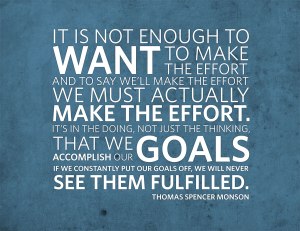
Putting in Effort

effort-invest-time-like-ant

One of the myths I frequently see about relationships is that they shouldn’t require effort. There’s a line of thinking out there that if the relationship is mean to be then things will just work out. And if things don’t work out? Well then it was never true love.

It doesn’t seem to matter that absolutely every psychologist/counselor/relationship expert has debunked that myth; the line of thinking still seems to persist.

For anyone who already has the mindset that love should not require effort, I realize that I won’t sway you. But for anyone who knows at least on some level that relationships require effort, hopefully this will be a gentle reminder.

Talent vs. Effort

In all aspects of life, everyone has some degree of talent. But we also have within us the capacity to learn. No matter what your level of talent is, you can develop it and improve on it. We all know this.

Did we come into the world walking, and talking? No, those are clearly normal parts of cognitive development.

What about more complex things, like math? In math there’s a reason that we start with addition and subtraction and them move onto more complex concepts. They are foundational concepts.

In our school years, we all have certain subjects that come more naturally to us than others. These are subjects that we have some sort of aptitude, or talent for. But we can still learn the others, and the key to developing any skill is effort.

The Genetic Lottery

I don’t think anyone will disagree that effort is important, but there is a belief that effort will only get you so far. This is something that becomes clearly apparent in the world of sports. If you look at professional or Olympic athletes, these are largely people that won the genetic lottery. Depending on the sport, athletes have some combination of size, speed and agility that can be breathtaking. Often when you look at athletes, it seems clear that they have a natural talent for their chosen sport. And that’s true.

One thing that is less readily apparent is just how much effort they have expended to get to the level they are at. At the top levels, EVERYONE has natural talent. Even at that level, the key differentiator between the good and the great is still effort.

There are countless cautionary tales in sports of people who have all the talent in the world, but they don’t work hard, or they have a bad attitude and a sense of entitlement. When players believe that talent is enough, they generally don’t last long. The truly great athletes are the ones who combine a natural aptitude with incredible work ethic. Effort is the key.

Effort without talent is a depressing situation. But talent without effort is a tragedy.
Mike Ditka

Self-Fulfilling Prophecies

Some developmental psychologists believe that talent is actually somewhat of a self-fulfilling prophecy. Having an aptitude for something causes us to enjoy it more (everyone likes seeing success). That enjoyment in turn causes us to put in more effort, developing the “talent” even further.

On the converse, a lack of immediate success can result in frustration and a reduction in effort. And this reduction in effort reinforces the lack of success.

The real key is effort, and a belief in the ability to improve. That’s not to say anyone can do anything. Even if I started at a young age, I likely would never have been an Olympic athlete. But no matter what I choose to try, if I put in consistent effort I will be better at it tomorrow then I am today.

Effort in Relationships

If we can accept that effort can result in improvements, then I have to ask why we would believe that relationships should be any different? Doesn’t it stand to reason that as good or bad as a relationship is, it can always improve? And that improvement is dependent on effort?

Think back to the early days of your relationship. Maybe one person was the primary pursuer, but a relationship requires both people to put in effort. That effort likely involved making time for each other, and spending it together. And during that time as the relationship developed, probably both people did “the little things” to show the other that they cared, and were interested in continuing to grow the relationship. All of those “little things” are effort. They are showing interest in both the relationship and the other person.

Long term relationships are hard. That early level of effort isn’t sustainable. And unfortunately, all too often “life” takes over people start putting in a minimal amount of effort on the relationship.

I think part of this is human nature. When things get difficult, it can seem like it’s “not worth the effort”. But the irony is, in relationships it is likely the lack of effort that was a major contributor to things getting hard in the first place.

Practice Makes Perfect

Not all relationships are meant to be, and sometimes it definitely is better for people to go their separate ways. But for anyone who believes that if it falls apart then it “wasn’t meant to be”, I ask you to go back to the Mike Ditka quote from above.

“Effort without talent is a depressing situation. But talent without effort is a tragedy.” Your “talent” as a couple is whatever brought you together in the first place. You have at least some degree of talent, or you wouldn’t be together. The question is, what sort of effort do you put in to continue to nurture that talent?

effort

Effort needs to be sustained, and continuous. It’s not something you do once in a while, or just when you feel like it. When people say “it just wasn’t meant to be”, they may be right. But I think that line is often simply a rationalization for a lack of effort.

One mistake people make when they hear “effort” is they think “work”. Work has a negative connotation to it. In some ways they are the same thing, and the main differentiator is your mental approach to it. If you see potential value, it’s effort. If you don’t, it’s work.

Anything of value in life is worth fighting for. Personally, I would rather make some mistakes fighting for something I believe in than lose something of value due to simple apathy.

In relationships, effort should be the most important thing. No matter how things are going, effort shows that someone cares. So if you want to see growth in your relationship focus on effort and not just results. As long as the effort is there, results will come in time.

Is the Grass Really Greener?

Is the grass really greener

Are you content? Is your life “enough” for you?

Content. Enough. In North America, those words seem to have taken on a negative connotation. It’s almost like we should never be happy with what we have, or who we are. There is always a push for “more”. Saying that what you have is enough has come to mean that you are “settling”. Settling is bad, because you are special, you are unique and you deserve the best!!! As a result you should never be satisfied. The danger here is that you get into this never ending cycle or always wanting more.

What’s that, you make $30k a year? Well look at all the things you can have if you made $40k. How about $50k, $100k, $2 million? There will always be more. The question is, when is something “enough”.

I used money because it’s easy to quantify different levels (2 is larger than 1). But this mindset pervades all aspects of life and one of the big areas is happiness. The “quality” of your life is seen as something that can only be measured by your own personal level of happiness. If you aren’t happy this becomes a reflection on the quality of your life. Obviously something is missing, or you need more. But what is missing?

Will a hobby help? A new job? A new relationship? Hobbies are easy to try. Jobs may be a bit more difficult (especially if you are in a career), but they are doable. Most companies understand that people are trying to build a career, and if you leave on good terms a good employee is often welcomed back.

Relationships, though? Those aren’t the sort of thing where you can just “test the waters” and see what’s out there and then come back if things don’t work out. Well technically you can, and many do. But I’m pretty sure that would be referred to as an affair, and personally I don’t advise them.

Making Changes

I suspect everyone has heard stories of people who leave relationships because they are unhappy and looking for some kind of change in their life. What they have isn’t enough, and they believe that better opportunities exist for them.

Some people make a change and find that a new start was exactly what they needed. Others make a change and eventually realize it was a mistake. Here are a few stories of the latter variety:

One buddy was married, and about a year after their first child was born his wife walked out. He doesn’t know what happened, but believes she found the reality of being a wife and a parent didn’t match up to her expectations and she didn’t want to do it anymore. He tried holding onto the marriage for a while, and they lived in separate rooms while she relived her youth and went back to the party scene. After a while he gave up and filed for divorce. He hurt for a long time, but eventually moved on with his life.

About two years after their split while doing the weekly exchange of their son his ex-wife told him she missed him, realized she had made a mistake and wondered if it would be possible for them to try again. He told me that hearing her admit it was a mistake made things worse for him, because he had never wanted their relationship to fail and he had tried his best to hold on. But by then it was too late.

Another buddy was raised by his mom, as his parents separated when he was young. While he was growing up his mom had a number of boyfriends that came and went, but none of them were around for very long. When he was older his mom admitted to him that leaving his dad was the biggest mistake she had ever made, and he doesn’t believe she’s ever really been happy in a relationship since.

In both cases the person who left the relationship wasn’t happy, and felt there was “more” out there. They felt they could be happier with a different person, or a different life. In both cases they found that life on the other side wasn’t exactly what they expected, and they didn’t appreciate what they had until it was gone.

grass weeds

Exciting and New

I have to admit, I don’t know a lot about the relationships in the above scenarios. I met the first guy a few years after his wife walked out. For the other guy, I’ve never met his parents. What I do know is one member of the relationship wanted things to work out while the other wanted to “spread their wings”; and in both cases later regretted things. Maybe the problem was that they had got in a rut. Maybe things had just gotten boring, and the wives were looking for a bit more “excitement” in their lives. At the very least, it’s safe to say that they were looking for “something” that was missing in their relationships. Well, “new” doesn’t stay new forever, and neither does excitement actually.

A few years ago a buddy of mine went through… well, I’m not actually sure what he went though. He was well educated, and working a good job in his chosen field. We weren’t close, but we made a point of getting together periodically for lunch to catch up on each others lives. One day we went for lunch and he seemed as happy and positive as usual. A few months later I received a mass email saying he had quit his job and was moving out to the coast to become a white water rafting instructor, which he did for a number of years before eventually returning home.

A while back we got together to catch up and he told me a bit about his life as a white water rafting instructor. The work was seasonal, so when the season was over he alternated between traveling the world (finding hot destinations) and crashing at his parents’ house back home. In his words, he became a bit of a gypsy. He said he enjoyed it at first, but started to miss family and friends. He had relationships, but since he was fairly transient, the only relationships he had were passing things with people who weren’t looking for anything serious. Money was tight, and he didn’t have a sense of permanence. Not only that, but his job started to become exactly that – just another job. He came to realize that:

It doesn’t matter what you are doing, everything becomes routine eventually.

Appreciation

His is a pretty extreme case. We all have bills, and we all need jobs to pay them. At the bare minimum we need food and shelter, but we probably want a bit more than that. So there isn’t really a lot that we can change. With most of our days spent working to support our lives, much of life is routine.

So how can we become happier? To do that we need to learn to enjoy the small moments in life. More importantly, we need to learn to appreciate them. Appreciation and gratefulness are some of the biggest indicators of success and happiness in relationships. Those who appreciate and are grateful for their partners tend to be happy. Those who aren’t, not so much.

It’s an unfortunate fact that many people don’t appreciate what they have though, and it takes losing it in order to realize what they have lost. It’s sad that many relationships are lost due to a simple lack of appreciation. But why is that?

Characteristics of Unhappy People

I recently read an article on chronically unhappy people, and it was found that they tend to share a number of traits. These traits included:

  • Victims mentality. Seeing yourself as a victim of circumstance or “the situation” and not believing you have the power to make changes
  • Focusing on what’s wrong or missing instead of what you have. This is similar to the lack of appreciation mentioned above
  • Comparing yourself to others. This is related to focusing on what is missing, and it breeds jealousy and resentment – two very toxic behaviors
  • Try to control or micromanage your life and being rigid about change. Being a control freak is extremely unhealthy, as your way isn’t always the right way. But even if it was, life has a way of throwing you curveballs, and you must be flexible enough to adapt accordingly
  • Worry and Fear. Focusing on all the things that could go wrong instead of focusing on what has gone right

All of these are toxic attitudes and habits. As the article mentions, these are things that we all do sometimes. But there is a strong correlation between our happiness and how long we stay in these mindsets vs working to get out of them.

When people hear the saying “you are responsible for your own happiness” it means you have the capacity to make appropriate changes in your life. But often it’s easier to look externally then it is to look in the mirror. I don’t think finding happiness has to mean changing your relationship, job, or distancing yourself from family and friends (though these are definitely all things that could be contributing to unhappiness).

I think being responsible for your own happiness is really about looking at your own attitudes and your approach to life and learning to slow down, let go of control and appreciate the things you already have.

IsWhatYouHaveEnough

People often fight change, and cling to the status quo even if they know that their approach to life is self-destructive. They feel they can’t change, because “it’s just the way I am” and I can empathize with that. Change isn’t easy, especially if you have a lifetime of attitudes and habits to break.

Attitude

Earlier I mentioned my buddy who became a white water rafting instructor. Guess what he’s doing now? He’s doing the same job he was doing before. But now he sees it in a new light, and approaches it with a different attitude. More than skill, intelligence or beauty, attitude is the most important quality we have.

I recently read an interesting article on affairs. It suggested that people who have affairs are trying to fill a hole in their lives and find something that is missing. That seems fairly obvious. The interesting part is that the article went on to state that the things people are looking for are things they either had or could have in their current relationships. However they stopped putting them in themselves. Take passion for example. Passion often fades, and is used as an excuse (sorry, I mean reason) for affairs. People look for passion outside the relationship because they have stopped putting it into their own relationship. Again, this comes down to attitude and approach.

I’m by no means suggesting that leaving a relationship is always a mistake. Sometimes a fresh start is better for both parties. But I do think many relationships fail unnecessarily. In many cases people simply stopped giving their existing relationships the care it needed. If that has happened, most relationships can be saved by refocusing on them, nurturing and rebuilding.

justNeedToWaterIt

So is the grass really greener on the other side? No, it’s simply a matter of perception. Perfection doesn’t exist, so when people make changes they are exchanging one set of opportunities and problems for another.

For the Sake of the Children

family

I think that most parents would agree that you will do almost anything for your children. Once you have brought these little beings into the world they change your life forever.

After becoming a parent, many people start to focus on their children. And their own needs, wants and desires take a backseat to doing what they believe is best for the children. To a degree this is a natural part of being a parent, as in the early years children are completely dependent. As the children become older and gain some independence many parents start to make time for themselves again. This can be a difficult transition time for many, but when it happens the children still will always be a priority.

People will do many things for their children. But one thing I don’t believe they should ever do is stay in a relationship “for the children”.

A Stable Home

Any long time readers at thezombieshuffle.com may be wondering where I’m going with this as I’m a big believer in marriage and long term relationships. Furthermore, child psychologists agree that a stable home life with both parents is very beneficial to the personal and emotional development of children.

It seems clear that having children grow up in a home with both parents is a positive thing. So why would I say you should never stay for the children? First, it’s important to understand what is meant by “a stable home life”.

A stable home life goes a lot deeper than just being able to come home to mommy and daddy; it means living in a house full of love.

When discussing environments for children most child psychologists will list some variation on the following scenarios (in order of benefit to the children):

  1. Child is raised by both parents in a loving home
  2. Parents are apart, but the child is raised, supported and loved by both parents
  3. Child is raised by a single parent where the other parent is largely absent
  4. Parents are together “for the child”, but the child grows up in a tense or loveless home
  5. Parents are apart and use the child is used against each other

The ranking of the first and last options seems obvious. Where confusion seems to come in is in the value of staying together “for the sake of the child”. Some people believe that simply providing the child with a home with both parents present is a positive thing. This is not only incorrect, but can actually do long term harm to the emotional development of a child.

The important thing is not the presence of both parents. The truly important thing is the presence of love.

Trouble on the Home Front

I’ve heard of all sorts of troubled relationships involving kids. In some cases parents split up and share custody. In other cases they stay together “for the children” and are unhappy, usually leading to one or both having affairs on the side in order to find the fulfillment that is lacking in their marriage.

Some wait until their children are grown before going their separate ways, and in one case I’ve heard of (second hand) the couple had agreed to split up as soon as their daughter reached the age of majority, and told her just after her 18th birthday. Geez, happy birthday to her.

I believe that the primary role you serve as a parent is as a teacher. You are trying to teach your child, and guide them to be the best people they can be while preparing them for life on their own. If you stay just for the children, what exactly are you teaching them?

A Life of Love

Recently I was at a funeral, and during the eulogy the daughters spoke about their father. One thing that both of them commented on was how much their father loved their mother.

After they spoke, the funeral director spoke and talked about how with the holiday season it is easy to get caught up in gifts. Often we want our gifts to be expensive or extravagant. Then he made the following comment:

As a parent, the greatest gift you can give your children is to love your spouse/partner.

I believe in that 100%. If you don’t do that, what exactly are you doing “for the children”. Children learn from what they see. The relationship parents model to children are the things they come to learn are “normal”. If someone stays “for the children” but has checked out on the relationship how does this help them? Kids are smart, and they can pick up on body language and emotional undercurrents. If you stay in an unhappy relationship for the children you aren’t helping them. All you are doing is creating emotionally broken children.

Reasons to Stay

Just to be clear, I am by no means suggesting that if you are unhappy in your relationship and there are children involved you should leave it.

In fact I understand the idea of staying “for the children”. Relationships naturally go through ups and downs, and often more than just love is needed in order for a relationship to last. Children can act as glue for a relationship, and sometimes they allow a couple to stick things out and make it through the tough times.

But staying in a relationship should never be just for the children. As soon as someone says they are staying “for the children” that implies that they don’t truly want to be in the relationship, and this lays the groundwork for unhappiness and resentment.

You need to be able to stay for the relationship itself, and for the value and satisfaction that it provides to your own life. If it happens to be beneficial to the children at the same time great, that’s a nice side effect.

So no, I am not suggesting leaving your relationship. What I am suggesting is that if you want to truly do something for your children, embrace your relationship. Work on it, and improve it. Do your best to build and model the type of relationship that you would want them to have. One full of love, caring and affection. Remain committed to the relationship and continue to support and love one another.

Love your partner and make that love part of your everyday life. People are different in how they express love, but however you express it make sure that you do. And let the children see that. Give them a home full of love. And let them know that not only do mommy and daddy love them, but mommy and daddy love each other too.

The Challenges of Parenting

I have two children, and I love them to pieces and can’t imagine life without them. But you know what? Being a dad is really hard sometimes, and I have times that I don’t particularly care for some of the things they do, decisions they make, or the way they sometimes treat me. My children are fairly young, and are still prone to the occasional tantrum (realistically though, aren’t we all?). When my child is in the throes of a tantrum, at that particular moment I don’t necessarily enjoy being a dad. But that doesn’t mean I love them any less, or that I will abandon them. And I’m pretty sure I’m not alone in this.

For full disclosure I suppose I should admit that at these times I often tell them if they don’t improve their behaviour I will be putting them up for sale on ebay. But it’s a bit of a joke between us, and they know that I’m kidding (usually).

Why are relationships with partners any different? Why do we hold them to a different standard? Your partner will have days that they make you angry, and there will be days that you don’t particularly like them. That’s just life. We don’t give up on our children, and we don’t stop loving them or showing them that love. So why do we do it with our partners?

This may be a gender thing, but I believe my relationship with my wife is in some ways more important than my relationship with my children (or at least on an equal level). Eventually my children will grow up, move out and start their own lives. I will always be there for them and be a part of their lives, but their lives will be exactly that – theirs. My relationship with my wife is one where I hope we are able to share our lives and support each other “until death do us part”.

Leaving a Legacy

I hope I have a long life ahead of me, but when my time comes I hope my children are able to stand up and say that I was a good man who did my best for them, and that I loved them. And I also hope they are able to say that I loved their mom, and they knew that, felt it, and saw it.

Of all the lessons I am able to teach them, I hope I am able to teach them that life may not always be easy, but love can always endure.

Finding Passion – Part 2

passion

In the first part(s) of this series I talked about how relationships go through stages, and over time passion can be lost as the emotional connection between a couple breaks down. Some people respond to this loss of passion by looking for it outside the relationship, either through an affair or divorce (with the hopes of finding it in a subsequent relationship). Other people stay in the relationship but accept the loss of passion as an inevitable outcome for long term relationships.

I don’t believe this has to happen. The intense hormone driven passion during the infatuation stage of a relationship is gone, but a healthier long term passion can still be nurtured. The love in a marriage (or any long term relationship) should still be a beautiful, wonderful thing. Maybe I’m just naive, but I believe your feelings for your partner should still be able to take your breath away whether you’ve been together 2 years or 60.

In this final part I want to discuss how emotional connection can be rebuilt and passion can be found. Most of the ideas here have come from a variety of sources; books, articles, counselors and even talking with other couples. I believe strongly in long term relationships and marriage, and I believe no matter how hopeless things may seem it is never too late.

Laying Blame

When passion breaks down it can often feel like the death of a loved one, and in some ways it is. Your partner may still be there, but there is a sense of loss for the relationship that previously existed. When this happens it is common to look for something to blame. What happened? How did it break down? Was there something wrong with your partner? Was it because they simply didn’t show you enough love? Was there something fundamentally wrong with the relationship? Was there something wrong with you?

First it’s important to acknowledge that yes, in some ways the relationship IS at fault. But a question to ask yourself is, is the problem something inherent about the relationship? Or is it perhaps the way one or both parties have approached the relationship? If it is a flaw with the way the relationship has been approached then it can be improved. After all, you loved each other once. So why can’t you go back there?

But you won’t actually go “back there”. The patterns of the past are what got you to your current state. So your future must be different. Different isn’t bad though, and it can in fact be better.

You may believe the current state of the relationship is largely due to your partner, which may be true. In some ways however, that doesn’t matter. You do need to understand how you got to your current state in order to avoid making the same mistakes again. Beyond that though, you have to be able to let go of the past and move on. If you want to rebuild, blame simply puts up barriers.

In addition to not blaming your partner, it is important to acknowledge that there are two people in a relationship and you played a role in any issues.

When you are in denial about your part in the relationship then you are no better than a child flinging sand at another child in a sandbox. When you take responsibility for your part in the marriage, only then will you be able to connect with your partner in a mature, intimate way. – Carin Goldstein, LMFT

Believing in Change

For things to change, you need to believe things CAN change. There are two primary mind sets people can have in life, fixed and growth mind sets. I will write more on them in the future, but in order to truly believe in change you have to embrace a growth mindset. In a fixed mindset people often don’t believe change is possible. Problems are seen as a sign of a fundamental flaw, and there is a belief relationships should not require effort (because if it requires effort then it’s not true love). Hate to say it, but if your relationship is in a tough spot and you have a fixed mindset you WILL fail unless you can change that mindset first.

Even without a negative mindset, when you are in a bad spot the situation can poison any effort and make it hard to believe things can improve. In the sports world Phil Jackson recently made the following comment about this negative mindset:

Losing breeds more losing. It’s hard to work out of a funk when the team doesn’t have any sort of confidence. The self-perpetuating cycle just keeps on churning, pushing a squad into a deeper and deeper hole.

The comment was about a basketball team, but it applies to any interpersonal dynamic. Things won’t turn around on their own, and the longer you wait before taking action the deeper the issues get until eventually they seem hopeless. The truth is, everything can improve with effort.

Putting in Effort

Have you seen the movie the Matrix (part one of course, as I will deny the other parts exist)? In it, Keanu Reeves is able to learn anything by simply getting the information he needs uploaded into his head. He needs to learn to fight? No problem. Just upload a Kung Fu program into your brain and voila, instant black belt!!!

Neo

Guess what, life’s not like that. Even if you truly believe change is possible it doesn’t just happen on its own. You need to be willing to put in the effort.

Imagine you want to get into better shape. How do you do it? Do you sit at home thinking “I wish I was in better shape” while popping another Dorito in your mouth? I’ve tried, it doesn’t help. What about if you want to learn a new language? Does it suddenly come to you one day? If you have a post-secondary education, did a degree show up in the mail one day causing the knowledge to just appear in your head? No. All of these things require time, effort and dedication; and rebuilding your relationship is no different.

There are no magic wands, and no shortcuts. If you truly want to make changes in your relationship (or any aspect of life), you need to put in effort in order to facilitate those changes. This isn’t a bad thing, and it doesn’t have to be difficult. Think of it like riding a bike. If you haven’t ridden a bike in a long time, the first few attempts will be shaky and may feel a little unnatural. You may even fall down a few times and wonder if you’ll ever be able to do it again. But if you keep at it, it will come back and eventually it will feel natural again.

Effort is key here, and mindset is everything. There will be setbacks, but you can’t give up in frustration every time things aren’t going well. You need to commit yourself to re-igniting your relationship. It will take time, and require SUSTAINED effort.

Alright, you need to put in effort and you need to believe. But what do you actually have to do?

Take Care of You

One important, and often overlooked thing is taking care of yourself. It’s kind of like the reminders you get before a plane takes off – “In case of a drop in cabin pressure, put your own air mask on first”. This is the same. Basically, you can’t help your relationship if you can’t help yourself. Of course it’s also important not to take this too far, and you can’t ignore your relationship while focusing only on you. But in order to get your relationship to a healthy place you also need to be in a healthy place (or working towards one).

HealYourself

Find Each Other Again

The biggest thing with lost passion is that the couple has “lost each other”. Part of this may be due to different roles. All couples start as friends and lovers, but over time life starts to get in the way. We have jobs, mortgages, bills, and families; and time is quickly filled up with routine. If you don’t devote time to each other it is very easy for the emotional connection to break down, and the relationship to devolve into simply being roommates. When this happens you need to rediscover each other and find each other again.

How do you do this? First, you need to start prioritizing time for each other again. Life is full of routines and things that have to be done, so if you don’t “make time” for each other you will never have it. There will ALWAYS be other things that get in the way. If your relationship is important, then make it a priority in your life. If you haven’t made each other a priority then that’s probably a big part of how you got into this spot.

One of the best resources I have found for rebuilding is John Gottmans book “The 7 Principles for Making Marriage Work”. One of the ideas Gottman has is that when connection has broken down, a couple can actively work on rebuilding their “love maps”. The book contains a number of questionnaires and exercises for couples to do, ideally together. The basic premise behind them is about learning who your partner is again. Engaging them, exploring your hopes and dreams together, and re-learning each other.

Gottmans books has 7 principles for rebuilding an nurturing your relationship:

  1. Enhance Your “Love Maps”. This is about re-learning each other and ensuring you continue to stay in tune with your partner’s life
  2. Nurture Your Fondness and Admiration. This is about thinking about the positive sides of both your partner and your relationship, and taking time to appreciate them
  3. Turn Toward Each Other Instead of Away. This is about actively expressing appreciation for each other (side note, I thought I came up with the marital bank account idea used in prior posts on my own, but apparently I read it here first)
  4. Let Your Partner Influence You. Learn from each other, and be willing to make changes for each other
  5. Solve Your Solvable Problems. Learn how to deal with issues in a non-judgmental way, and learn to compromise
  6. Overcome Gridlock. Some problems will never be solved, and will be perpetual issues in your marriage. This is about learning to accept and live with that problem in a way that you both can talk about it and accept that it’s there, and is simply an acceptable difference between you
  7. Create Shared Meaning. To me this is about emotional intimacy. Finding the deep inner meanings that you can agree on that bond you together, and trying to learn and understand your partner at a deeper level

It had been a few years since I had read this book, but reviewing it for this post reminded me of just how much relationship gold it contains. It should really be a must read for anyone in a relationship, but it is especially good for “distressed” relationships (side note – why is it that you need a license to drive a car, but you don’t need to demonstrate any ability to work as a team prior to getting married?).

Focus on the Positive

Looking at your problems it’s easy to get caught up in who has done what, or what is wrong. So one of the biggest suggestions you will find for repairing and rebuilding a relationship is to remember the good, and focus on it. When you can see how much good you have, it can put into context the things that need improving.

Be thankful for what you have; you’ll end up having more. If you concentrate on what you don’t have, you will never, ever have enough – Paul Pierce

Make lists of all the positive things you can think of about your relationship and your life together. Things like your happiest moments and characteristics that you love about your partner. Then invite your partner to do the same, and share the lists. Sometimes when the relationship is tense it can feel like nothing is going right, so it is important to reminder yourself about what you love about your partner. But sharing this allows you to remind them of the things that you love (and vice versa). This should increase feelings of warmth between you and help rebuild the bond.

Bring Back the Fun

Fun. It’s so important, and so easily lost when things are in a bad place (think of the losers mentality from above). Think of the last time you and your partner had fun together. Has it been recent, has it been a long time?

In part 1 I talked about Robert De Niro’s character from Analyze This. He had lost sight of his wife, and only saw her as the mother of his children instead of his friend and lover. It can be hard to do in the early years of being a parent, but it’s important to always make time to be a couple and not just family.

Go on regular dates, and try to bring back a sense of fun and romance (both partners are equally responsible for this). Find an activity you can both do together on a regular basis and do it. If all you are doing is stuff as a family, then you are simply reinforcing the idea of partner as family. You NEED to be a couple, and be able to have fun as a couple again. To do that you need to spend time alone, away from the kids. And importantly, you need to get out of the house!!!

I mentioned a couple I knew who tried this, and they found they didn’t know how to talk to each other anymore. In addition to taking time as a couple, find other “friend couples” that you can go out with. This allows you to interact as a couple while still being in a social setting, and it takes some of the pressure off of having to “fill the silence” with each other. This can be things like going to dinner or events, playing cards/board games/whatever. Couple dates and joint friends allows socializing in a fun/friendly atmosphere, and helps reinforce the sense of team. This is invaluable for helping to build and maintain bonds.

In addition to rebuilding a feeling of closeness, you have to become lovers and place a priority on maintaining physical intimacy. This can be one of the hardest parts of rebuilding, but being lovers is a natural extension of emotional connection. As emotional connection is rebuilt this *should* come back naturally. That said, it’s a sensitive and complicated topic (which I believe it warrants it’s own post), so I’ll leave this one alone for another day.

Final Word on Passion

It’s human nature to want a fulfilling relationship, we all want it. If you are in a long term relationship, you came together for a reason. When the connection has broken down remember why you came together. Rediscover each other, your passion for each other, and work to maintain it. It’s easy to lose sight of the fact that relationships must be maintained, and it is the responsibility of both parties to keep the spark alive. It requires commitment, and it requires effort.

There are many ways to show your commitment to improving your relationship, and what works for one couple may not work for another. Take a look and pick what you think may work for you. Try it, if it helps great. If not try something different. But the key is you need to take action, try different things, and put in effort.

I like to think of a relationship as a plant. With water and sunlight the smallest seed can grow into a strong beautiful tree. In a relationship, the water and sunlight is the tenderness, affection and effort that we put into each other. Once plants have had time to establish their roots, they can weather all sorts of storms. Times of drought can take a toll, and without care eventually the strongest plants will die. They are remarkably hardy though, and even when they appear dead the roots may still be alive. As long as the roots are alive it’s never too late, and if given the attention it needs the plant will return. The new plant may look a bit different, but it can still be just as beautiful.

sapling photo

Long term relationships require effort, but I believe they are worth it. A close friend once compared rebuilding passion and emotional connection to trying to get an iceberg moving. At first it seems like an impossible task, and the effort to get it moving is considerable. Slowly though it will start to move, and as it moves it will gain momentum. But that momentum requires effort and commitment on both parts. Commit to your partner, and together you can achieve anything.

I’m interested in what YOU think, and if you have any ideas or suggestions for maintaining the passion and emotional connection that keeps us together.

Holding on to Hope

It’s a little after 1am, and I’ve just returned from the movie Interstellar. I should be heading to sleep, but the movie really resonated with me so I feel a need to write.

Without spoiling anything, to me the movie was about hope, love and family.  Central concepts that have carried me through my life, and especially through the past few years.

A while back someone close to me told me that they struggle with a sense of hopelessness. And earlier today one of my readers commented that things like affairs often start when people have lost hope for happiness in their relationships.

I truly can’t understand that. I’ve had my days when it’s hard to find the positive in situations, and when the future looks bleak. But it is always hope, and a belief that tomorrow is a new day where things can always get better that carries me through. Well, that and a healthy dose of stubbornness.

I can be overly analytical at times, but underneath that is a true belief in love. When I started writing it was to try and understand what causes relationships to break down, and why people end up drifting apart or living with unhappy relationships. I’ve identified and written about many common problems, but underneath I still truly don’t understand them.

I know that love isn’t always enough, but WHY isn’t it? Why does anger ever form and resentment build. Why can’t people just love each other? Why is it so hard to work on problems and come to happy solutions together. Why isn’t love enough?

Parents will always love their children unconditionally, and some people say that family will always be family. If that’s true, then why can’t we extend that same unconditional love to our chosen families – our partners.

Vows of marriage seem all too easily broken. But it should be so simple. If we believe in love and cherish one another, that should be enough to allow us to weather the toughest storms. I believe in love, and I always will. I also believe in hope.

The Christmas season is almost here. It is a time for families and a time for love. Earlier this evening I put up the tree with my family, and it was beautiful. Everyone working together and contributing to a common cause, and after we were finished a few peaceful moments when we sat one the couch together with the house being illuminated by only the lights of the tree.

Family is so important, and love is so important. How do we ever let things get in the way? Take time to tell the people closest to you that you love them, and always hold onto Hope.

No matter how dark things may seem, remember that tomorrow is always a new day.

Hope