The Disease of Me

selfish_header

I’ve been writing about relationships for a number of years now, and during that time I’ve read a lot of books and talked to a lot of people.

One thing I’ve found is, although each person and each relationship is a bit different; people’s problems are largely the same.  There are a lot of couples out there who are struggling with slightly different variations of the same things.  But when you really break down the problems, at their root one of the largest problems is that people frequently choose “me” over “we”.

Put another way, one of the largest problems in relationships is selfishness.

I see being in a relationship as being part of a team.  And the same team “skills” that apply in a work environment or on a sports team also apply in relationships.


For years, Pat Riley was widely regarded as one of the top coaches in professional basketball.  He coined the phrase “the disease of me” to describe selfishness, and how runs contrary to the ideas that are required in order for a team to succeed.

The most difficult thing for players to do when they become part of a team is to sacrifice. It is much easier, and much more natural, to be selfish. – Pat Riley

Pat Riley makes a great observation here – it is much more natural to be selfish.  I believe this is very true.


As children, our world is about our needs and our fears.  Parents are in our life to provide for us and to shelter us, and I think we see them for the utility that they bring us instead of seeing us as people.

We grow, and develop friendships.  And although we care about those people, it is still mainly about what they do for us.  How much we enjoy being around them, and how they make us feel.

We start romantic relationships, and in the beginning these are COMPLETELY about us.  We have things we want out of life, and things we are looking for in another person.  And we view this potential partner in terms of what WE get out of the relationship, and how WE feel around that person.

This sense of love being about us and our needs is captured well by someone who writes about having an affair:

I wish I’d known what love was. I craved feelings I labeled as love. Feelings that came from having someone I valued value me in return. It made me feel I was all that. In fact, the more I esteemed the other person, the stronger the effect. But, what I really loved was how they made me feel about myself. The reflection of my image in their eyes made me feel amazing. But love isn’t that feeling, rather it’s the grace my wife extended, not when I deserved it, but rather when I least deserved it.


This inherent selfishness makes sense.  As a person, I can’t see into someone else’s head – but I am acutely aware of what I feel.  My feelings, my emotions, and how events impact me.  I may be able to tell that I have hurt someone around me, but I’m experiencing that through observation and interpretation of their actions and responses to my own.  I can’t actually FEEL their pain.  So it makes sense that it is less important to me than my own.

So yeah, selfishness may be inherent.  But not being able to grow past it is a sign of emotional immaturity.

Truly caring for others (versus seeing them primarily as a tool for our own needs) is learned.  Empathy is learned.  But the capability to learn these things is a huge part of what makes us human.

We may start by only being able to see the world in terms of how it affects us.  But part of growing up involves understanding that everything isn’t about us.

We may go into relationships because of what we want, and what we get out of them.  But for that relationship to truly grow and succeed, it HAS to become something more.  We have to come to see the other persons wants and needs as just as important as our own.  And there are times that we have to be willing to sacrifice what WE want for the benefit of the relationship.

If we can’t?

Then what we have isn’t truly a relationship.

Or if it is, it’s a parasitic one instead of a symbiotic one.  If we are there primarily for what we get and we can’t see the value of what we put in, the relationship will never be able to last.


In discussing the “disease of me” in the context of a basketball team, Pat Riley came up with the following warning signs:

  1. Feelings of under appreciation (‘woe is me’)
  2. Focusing on personal playing time and stats
  3. Internal cliques within the team
  4. Excessive joy in a personal performance when the team loses
  5. Frustration from lack of playing time when the team wins
  6. Desire to have more recognition than a teammate


Although this list has a basketball focus, the basic idea still applies in relationships.  Not feeling appreciated, focusing on what YOU get out of the relationship, not taking pride in or appreciating your partner’s successes, and valuing yourself above your partner.  All of these indicate selfishness.


But wait a minute?  What about me?  Am I saying that relationships are all about “us”, and you need to lose the “me” in order to be successful in a relationship?

No, not at all.

You matter.  Your needs and wants in the relationship matter.  You need to be able to maintain the “individual” as part of the relationship.

But your partner matters too.

In a healthy relationship, you have found a balance between me and we.  You accept that you are building something larger than you, and that sometimes you need to sacrifice for the good of the relationship.

Healthy relationships have strong communication, and accept that there are both individual and couple goals.  And they work to find a balance where both can be worked towards.

I think the following quote sums this up well:

selfishness-quotes


Everyone has needs and wants, and it’s important to strive towards them.  That’s healthy.

But when you put your needs and wants above those of your partner, and expect them to conform to you; that’s selfish.  And that is VERY bad for relationships.


A while back I came up with my three keys to a successful relationship:


  1. love each other (actively)
  2. don’t be selfish
  3. communicate


Three simple rules that I think can make any relationship better.

Loving each other should be easy.  Communication may not be easy, but it’s a skill that can be improved over time.  The real key is not being selfish.

Selfish people CAN change.  But no one can change them.

They have to be willing to see how much damage their self-absorption has caused to those around them, and then they have to want to change on their own.

And when they can’t, or won’t?  Sometimes the only thing you can do is walk away.  Because often their pursuit of happiness will come at the expense of yours.
selfish_just_you

A Life Without Regret

regret_header

I’ve never been one to live in the past.  The past is the past.  It has already happened, and no matter how much we may wish certain things were different there isn’t a damned thing we can do to change it.

Because of that, my focus has always been now.  Today.  The past is fixed, and tomorrow may never come.  So all I can ever do is focus on being the best person I can be in the present.


With that, I don’t really understand regret.

When you hear people talk about regret, often you will see sayings like:

I don’t regret the things I have done, I regret the things I didn’t do when I had the chance

Looked at this way, regret is based on the past, and based on the choices we didn’t make.  Regret is based on beliefs about what could have been.

So with this sentiment, the idea is always be willing to take chances; and don’t pass up opportunities when they are presented to you.  Which makes sense.

Things is, what could have been is usually a false memory; because it’s speculation.  We don’t actually know what could have been, and our beliefs are based on dreams, not reality.


There is also a different form of regret.

And in this form of regret, you will often see sayings like:

You never know what you have until it’s gone.

I guess this form of regret is also about what could have been, however it’s different.  Because it’s not a chance you didn’t take, instead it’s something you had, and lost because you didn’t appreciate it.


So on one hand, people say regret is about not trying a new opportunity when it’s presented to you.  On the other hand, regret is about losing something because you didn’t appreciate it.

Which is it?  Is it both?


The common thread in both scenarios is CHOICE.

Life is full of choices, but regret only comes into play when we are looking at the “big ones”, the ones that have long term impact.

When faced with a choice, you can only ever pick one option.  So there is always the potential that you will wonder about the road not taken.  And if the choice you HAVE taken doesn’t turn out quite the way you expected, this leaves you open to regret.


So how do we avoid regret? I think there are three main ways:

  1. Live according to your core values
  2. Accept that life is never perfect, and ANYTHING can improve with effort
  3. Fully embrace the choices to DO make


When faced with a choice, your core values should always be your guide.  Lying, cheating and stealing sometimes seems like the fast, or easy road to get what you want.  But that is always a short term gain, at the cost of your integrity.  Doing the right thing  isn’t always easy, but in the long run it is the least likely to lead to regrets.

Web


Regret is something that arises most commonly when a choice hasn’t turned out the way you expected it to.  It’s important to remember that life is never perfect, there is always room for growth.  And growth comes from effort.

For some reason people often buy into the fallacy that relationships shouldn’t require effort.  And if they do, it means something is wrong.  Relationships are no different than anything else in this respect.  If you want a relationship to be rewarding, it requires consistent effort over time.  And although problems may never go away completely, all problems can be improved through communication and a willingness to work on them by both people.


Lastly, when you make a choice you need to fully embrace it and commit to it.  Again, this is related to effort.  When you commit to something, you are embracing the choice you DID make, and letting go of the one you didn’t.  If you can’t let go of the other option, you will never be able to fully embrace your choice; and this leaves you open to regret.


Regret is wasted energy.  But if you live your life according to your core values, embrace your choices and accept that ALL situations can be improved with effort, then there is really no reason to live with regret.

Instead of being stuck in the past, and stuck in “what could have been” you will always be moving forward, and making your life the best it can be each and every day.


Empty Love

empty-header

Relationships are hard.

That’s a simple fact – borne out by divorce rates which continue to hover around the 50% mark.

And then there’s that additional question – for every relationship that “makes it”, how many are actually happy?

How many people get up each and every day, and actively CHOOSE their partner?  How many are grateful for what they have?

Instead of that, I really wonder how many are just going through the motions and living day by day.  Still married on paper, but no longer in mind or soul?


All couples are different, but I think the story of a failing marriage is all too familiar.

A couple meet, and fall in love.  Everything is great, or at least good enough that they decide to get married.  And those first few years they are pretty happy.

Then over time, life starts to get in the way.  Jobs, mortgages, bills, kids, extended families.  All the stresses of “everyday life” happen, and this person who started as your friend and lover morphs into something more like a business partner.  Instead of fun and exciting, things become safe, and mundane.  And instead of actively showing each other how much we care about them, we often start to take each other for granted.

Fact for you – MOST couples don’t do a very good job of keeping the romance and the fun alive.

And then one day they wake up, and realize the passion is gone.


What Makes a Couple a Couple?

Let’s rewind a bit, to the early days of a relationship; and think about what it actually is that makes a couple a couple.

Is a couple defined by two people who live together?  No, you can live together and just be roommates.  Conversely you can be in a relationship without living together.  So living together has nothing to do with it.

Is it because you are close friends?  Again, no.  Yeah, friendship is an important *part* of a relationship but being a couple implies something more than that.

The term “friend zone” is used to describe when one person is looking for a relationship with another person, but in return they are just viewed as a friend.

When you have feelings for someone and you are stuck in the friend zone, this is seen as a bad thing.

Having it happen with someone you are hoping to have a relationship with is one thing – if things don’t develop into anything more you can just move on.  But when it happens when you are already IN a relationship (or worse, married)?

Well, that sucks all around.  And realistically, I’m pretty sure it’s not what anyone thought they were signing up for when the relationship started.

No, when you are a couple it is implied that each person views the other as something more, something special.  There is a degree of connection that exists, and often this connection is tied to feelings of closeness, affection, and trust.


Triangle Theory of Love

A while back I came across the idea of the “Triangle Theory of Love”, and I think it’s brilliant.  Love is a really difficult concept, and if you ask people to describe love, you are liable to get a different answer from every person you ask.  That’s because there are different elements to it.

triangular_theory_of_love


This diagram breaks love down into three basic components:

  1. Passion
  2. Commitment
  3. Intimacy


When we look at “romance novel” or “movie” love, the focus is always on the passion.  THIS is the part of love that people are often led to believe IS love.

But it’s not.

It’s a starting point, and a component of love.  But passion on its own does not make a sustainable relationship.  If a relationship is based only on passion, eventually it will burn itself out.  So there has to be more.


Although passion is great, I think Intimacy is actually a MUCH more meaningful part of love.  Intimacy is vulnerability.  This is where you have let down all the walls, and truly let the other person in.

Passion is a physical connection, which often seems emotional as well.  Intimacy however is something deeper.  I think of intimacy as almost a spiritual connection.


Lastly you have commitment.  People talk about commitment as if it’s this great thing, but I’m not so sure if it is.  Commitment is simply saying “I will always be there for you, no matter what”.  It’s the “in good times and in bad times” part of a relationship.  And that part IS important, because there will always be bad times.  There will always be challenges.  So commitment is what keeps you together, even when it’s not easy.  Even when maybe you don’t even want to be.


Empty Love

Common complaint for couples in trouble is that they feel like nothing more than roommates.  They are still together, but they are more two individuals occupying the same space.

The passion is gone.  The intimacy is gone.  And the connection is gone.

All that’s left is commitment.  And when that’s all you have left, it’s a very hollow and lonely way to love.


Robert Smith (The Cure) sums it up beautifully in the song Bare


But holding onto used to be

Is not enough

Memory’s not life

And it’s not love


Think about that for a moment – memory is not life, and it’s not love.

When all you have left is commitment, you have empty love.  You have history, memory, and nothing more.

I think THIS is the biggest challenge in long term relationships.  THIS is the problem that happens to SO many couples.

And THIS is why so many relationships fail.

Empty love.

Commitment, when both the passion and the intimacy have gone.


Choosing Love

When you have Passion, Intimacy AND Commitment all together, you have a beautiful, incredible thing.

But it’s something that is SO easy to lose.

How does this happen?  WHY does this happen?  And what can we do about it?


A while back, one reader (apensiveheart) gave me this comment, and I think it sums things up beautifully:

Love isn’t a feeling. Love is a verb. It is action. It is work. Part of the reason it is so successful and feels so good in the early part of a relationship is because we are willing to put in the work and make the effort to do what our companion desires. Over time, we lose that need or that desire to put that same level of effort in, and things begin to deteriorate. I think we forget just how hard we tried in the beginning simply because the feelings made it feel so easy and natural. We go from asking what can I do for you, to instead asking what can you do for me. The whole dynamic changes because our perspective changes from caring about them to caring more about ourselves.

This is one of my core beliefs about love – it’s an action, a choice.  If we want to maintain intimacy and passion, we need to work on it.

And I guess this is the real value of commitment.

Commitment ISN’T about staying together no matter what.  Commitment does not mean accepting empty love.

Commitment means always choosing your partner, each and every day.  And not just choosing them, but also putting IN to the relationship.

Working on it – working on intimacy.  Working on passion.  Making ALL aspects of love a priority in your relationship, and doing your best to prevent it from failing.


When relationships fail, couples often say that they “fell out of love”.  Or they still love each other, but they were no longer “in love”.

I think they are talking about empty love.  Commitment, without passion or intimacy.

When that happens, I think the fault lies with the person who fell out of love.  Because love is not supposed to be passive.  It’s not just something you “feel” one day, and not another day.

Instead, I believe each person in the relationship is responsible for their feelings of love for their partner.  Part of that commitment involves nurturing that love.

Waking each day, and looking at the good side in the relationship.  Appreciating their partner for who they are, instead of who they aren’t.  And working together to improve the things that need to be improved.

When people “fall out of love” they often believe it’s some sort of incompatibility with their partner.  Or it’s a sign that something is wrong in the relationship.

But love isn’t just a feeling.  It’s not supposed to be passive.

So if they aren’t actively choosing love, each and every day; the person they should really be blaming – is themselves.

I Promise to Hurt You

cryingheader

In my writing, I generally try to have a positive look at relationships and marriage.  I’m a big believer that marriage can be a great thing, while acknowledging that often it ends up not being all that it can and should be.

With that, todays headline may seem like an error at first.  But it’s not.

Yeah, I am intentionally saying “I promise TO hurt you” (instead of I promise NOT to hurt you).  And no, I’m not talking about hurting someone in the “50 Shades of Grey” sense.

I’m talking about actually hurting someone.  Not physically, but emotionally or mentally.  And I’m not saying I may hurt you.  I’m saying I will – and so will you.

So what am I talking about here?


Vulnerability

Who can hurt you?

If you’re talking physically anyone can hurt you.  Periodically people will bump into me with their carts when I’m out shopping, and it hurts.  I play basketball, and sometimes guys will hit me with an elbow or a knee, and yeah, that hurts too.  Hell, my kids will sometime hit me with random toys while playing.

Those kinds of hurts?  Those are just things that happen.  Generally people say sorry (hopefully), bruises heal, and you move on.

But who can REALLY hurt you – the kind of hurt that lingers long after the physical hurt has healed?

The people who can really hurt you the people who are closest to you; the people who love you.  The people you never expect it from; parents, siblings, friends, children and most importantly your partner.

Why?

Because we care about and trust these people.  We believe they value us and want what is best for us.  We allow ourselves to be vulnerable with them, and as a result we open ourselves up to potentially be hurt.


Being Human

I consider myself a fairly good guy.  Based on my belief set I try to do “the right thing”, and when I screw up I try to take accountability for my own actions.

I try, I really do.

But I still screw up sometimes.

I have days where I’m frustrated and I inadvertently take it out on those around me.  I have times that I think I’m being funny, but in reality I’m being hurtful.  I have days that I can be self-absorbed, and not pay enough attention to those around me.

I know these things happen, and I know that when they do they hurt those around me – those who I profess to love the most.

And I don’t think I’m alone in this.

In turn, I can guarantee that I’ve been hurt badly by those who I care about the most.  My parents, my siblings, my wife.

It happens with my friends too, but that happens less frequently.  Why?  Honestly, it’s because I see them a lot less.

When you are around people a lot, they have more opportunities to see you at your worst.


A Higher Standard

Interestingly, I’ve been hurt by my kids too; but it tends to sting less because they are just kids, and I figure they don’t know any better.  To me those “teaching moments”, on how you need to be conscious of how you treat other people.

Here’s the thing though, at some level I hold those closest to me to a higher standard.  Subconsciously I figure that because they care about me, they should know better and they should DO better.  So when they hurt me, it shows they don’t care.


I think we all do this in relationships to some degree.  We hold our partners to a higher standard, and when they hurt us it slowly erodes the trust we have in them.  And as the trust erodes, so is our willingness to be vulnerable.  After all, someone can’t hurt us if we don’t let them in.

I’ve heard it said that relationships rarely die because of some big event.  Instead, it’s usually the death of a thousand cuts – a thousand times that someone has hurts us, and we don’t want to let them do that anymore.


Accepting Hurt

The obvious solution to preserve our relationships is for us to stop hurting each other.  To always be conscious of what we say, and what we do.  To always be considerate and take our partner into account with everything we do.

But that’s a pipe dream.

Don’t get me wrong – it’s a goal, and one we should all aspire to.  Thing is, we all have bad days.  We all have moments we wish we could take back.

That doesn’t excuse bad behavior, and it shouldn’t be a pattern.  But maybe we need to accept that sometimes our partners WILL hurt us.

And when it happens, we communicate it.  Maybe not right in the moment, but we tell them “hey, when you did this it hurt me”.  And then we let it go.

Because holding on to hurt allows it to grow.  That allows it to break down trust, break down vulnerability, and break down relationships.


I would never tell someone I promise not to hurt them, because I know that’s a promise I would not be able to keep.

Instead I would promise people that I would not intentionally hurt them.  And when I do hurt them, I want to know about it, and I want to be held accountable for it.

I can never change the past.  But I can always do my best to prevent the past from poisoning the future.

Sorting Things Out

self-doubt_header

In the past I’ve written about relationship doubt and some of the things that can cause it.  Broken trust, anxiety issues, a belief that there may be someone out there who is *better* for you; all of these things can cause doubts.

Doubt is understandable but it’s also very dangerous, as belief is tied to effort.  At both a conscious or an unconscious level, the more someone doubts the less they put INTO the relationship.  As a result, if doubt is not dealt with it can become a self-fulfilling prophecy, destroying the relationships.


In this post I want to look not only at the person having doubts, but also how it impacts the other person in the relationship.


If someone is having doubts about whether or not they really want their relationship or if it is the right one for them, there are a few things to think about.

First is the nature of the relationship.  It’s one thing to have doubts if you are casually dating, as those doubts are part of determining if it’s a relationship you actually want to commit to.  Once you have committed, things change a bit; and if you are living together, married, and/or have kids together then the complexity of the situation increases significantly.

Even in complex situations it is important to remember that a relationship involves two people.

If you are having doubts, you owe it to your partner to be honest with them.  Any problem or doubts you have affect them too – they NEED to know about it and they need to have an opportunity to be part of any solution.


I can understand the idea that sometimes we want to keep our thoughts to ourselves, especially when periods of doubt can be times when we don’t even really know what’s going on in our own heads.

However it’s pretty common to hear stories where one person thought that things were going pretty well, until one day they find out their partner has decided they want a divorce and they have already made up their mind.

To me, that should never, EVER happen.  Relationships are based on communication.  No one should ever be blindsided by these types of things.  If there is a problem, they have a right to know about it, and to at least have an opportunity to try and work on things; instead of being faced with a position where by the time they know it’s too late.

When someone doesn’t share their doubts, those doubts tend to grow and deepen.  And when that happens a distance will form, as the person with the doubts will naturally tend to withdraw and detach themselves from the relationship.

Some people may claim that their partner knew there were issues.  They had to, because they obviously saw the changes in behavior.

Well yeah, maybe.  I’m sure they did know something was up.  But unless it was communicated to them they had no way of understanding the severity of the doubt.  Relationships go through ups and downs all the time, frequently someone thinks they are just going through a down time – and then one day they wake up to find they are facing a divorce they never saw coming.

doubtpoisons


Time to Figure Things Out

Relationships change, things happen, and sometimes people question whether the life they have is really the one they want.  When it happens it sucks for everyone involved, but it’s part of life.

And when this happens, the person with doubts often wants some time and space to “figure things out”.  I get that.  It’s understandable that they can’t be fully engaged in a relationship if they aren’t sure they want it anymore.  And depending on the source of those doubts, I think most people’s partners will try to be understanding and give them a bit of time.

Here’s the problem though – a (committed) relationship isn’t a part time gig.  It’s not the sort of thing where you can just take a sabbatical, and come back when/if you decide that yeah, you are actually committed to it.

There has to be some empathy and understanding on both sides, but people need to find a way to continue the relationship even during this time.

If they can’t?  If they really need to “take a break”?

In my mind, that is what separation is for.

It is completely unfair and selfish for someone to expect to be able to “stay” in the relationship that they aren’t committed to it anymore.  People can’t just pick and choose the parts they feel like dealing with (usually the security of home, and family) while checking out on the parts they don’t want to deal with (usually emotional and physical intimacy).

To the best of their ability they need to find a way to do both.


In these situations the person with the doubts often wants time to figure things out in their own way, at their own pace.  They want their partner to give them time and space with no pressure.  To wait for them.

In a way there is something romantic about the notion of waiting for someone.

It brings to mind stories of WWII, where soldiers would go off to war and their girlfriends would promise to wait for them.  And the joy they would have when they were finally reunited.

This is different though.

In those cases the relationship was separated by circumstance; and the person waiting believed they would be coming back.

In the case of someone having doubts, why should the other person wait?  They are essentially being told that the person they love is “no longer sure if they want to be with them”.

Think about that for a moment.

No longer sure.

So they love someone and have committed to them, but that person isn’t sure they want things anymore.  Instead of being committed to getting through anything together, the person they love sees them as simply an option – not a priority.

Yet they are expected to just put their life on hold and wait, in the hopes that maybe their partner will continue to choose them.

And if they don’t?

Then that time spent waiting was time wasted.  Time of their life they will never get back.


You Can Never Go Home Again

Doubts happen, and as noted there can be all sorts of reasons that aren’t even directly related to the relationship.  Identity issues, depression, anxiety – all of these can cause doubt.  And sometimes those doubts will never go away.

But you need to identify the real cause of the doubt and actively fight back against it.  Because when someone checks out of a relationship because of those doubts they fundamentally alter the relationship forever.

Once you have been made to feel like an option, things are never the same again.  They can still be good, or even great.  But that magic of knowing that you will always be there for each other no matter what life throws at you?

Once that has been broken it’s gone forever.


I recently read a blog written by someone who’s partner had checked out on the relationship, and he wasn’t sure what to do.  One of the commenters told him that he should use this time to show his wife how much he loves her, because (in her words) “women like to be chased”.

Sorry, I can’t disagree with this more.

Maybe he had been taking his partner for granted and that was contributing to her doubts.  If so, and those doubts made him realize he had been taking them her for granted (sadly something that is natural in relationships), that’s one thing.  Then he should use this as a wake up call, and adjust his behavior appropriately.

We all want to feel valued, and appreciated (that applies to women and men).  But “chasing” accomplishes nothing.  Someone has to be there because they want to be there – not because they like the thrill of being chased.

It’s like an addict chasing the next high.  If someone is only there when they are being chased, how long will it be until they check out and are gone again?

No, if someone needs that thrill and that rush, then I would say let them go.


All sorts of things can cause doubt, and at times they can be crushing.  But if you are in a relationship the worst thing you can do is keep it to yourself.

It may seem like a deeply personal thing but it doesn’t just affect one person, so both people have to be involved.  The doubts may originate with one person, but both people need to be part of the solution.

Doubt can destroy relationships but it doesn’t have to.  In fact love can be strongest when it can accept those doubts and continue to thrive in spite of them.

DoubtingLove

Why Counselling Fails

therapistoffice

Picture this scenario:

There’s a couple, who love each other; but one day they realize they are having problems.  Or maybe they aren’t even having problems, and instead they find themselves thinking that maybe there should be more to life.

Whatever is going on starts to put stress on their relationship, and they are starting to question if they really want this relationship any more.  Or maybe they know they still want the relationships, but not as it currently is.  They want to see some sort of changes that they believe will improve the relationship.

So, either because they think it may help or because other people are suggesting it is a good idea, they decide to see the help of a couples counselor.


The problem is, counselling often doesn’t work.


I don’t have any real hard numbers here, but from what I’ve seen only around 10% of couples show any sort of improvements in their relationship after seeing a counselor.  And for people who choose to see a counselor, around 50% of the relationships end up failing.

That 50% number is right in line with overall divorce rates, so really, what’s the point.  If seeing a counselor doesn’t really improve the success rate of relationships, it looks like it’s just a waste of time and money.


Why?


Is counselling nothing more than a waste of time and effort?  Or can it actually help relationships?

I happen to believe counselling CAN be very valuable – both individually and as a couple.  But you need to be doing it for the right reasons, and you need to go in with the right mindset.


Prevention or Cure?

The first big problem with counselling is, couples often go to a counselor WAY too late.  In fact, many counselors feel that a couple has gone to see them a year or two later than they probably should have.

In many ways this is understandable.  Our personal issues are, well, personal.  Communication is hard at the best of times, which probably the biggest reason that couples get into trouble in the first place.  Yet couples who are struggling with some sort of issues are supposed to now go to see some third party (with their partner) and talk to them about the exact issues they find it hard to talk to their partner about?

Ummm, yeah.  Not fun, or easy.  So it’s easy to see why people often opt to instead do nothing, and hope that this is something that will pass, or something they can just live with.

Except it doesn’t work that way. Ignoring things doesn’t work, and will never make things better

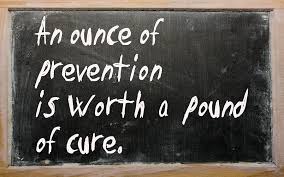
As the saying goes:

prevention

Yet most couples see counselling a last resort, so what may have been fairly manageable issues tend to grow and become magnified.  Resentment often sets in, and by the time people are willing to accept that it’s a big enough problem that they need to do something, there is a lot of damage that needs to be undone before any true improvements can be made.


Problem?  What Problem?

Another big problem with counseling is, in order for it to be effective BOTH people must want it, and see a need for it.  Unfortunately relationship issues often don’t work that way.

Commonly one person is actually pretty happy (or at least content) with the things that are a problem for the other person.  This can make it very difficult to see any real improvements, because the person who wants to see changes needs to get buy-in from someone who doesn’t see a need for any changes.


An important thing to remember is, a relationship involves two people and both peoples needs/wants have to matter.  If one person believes there is a problem (lets just call it an opportunity for improvement) – then guess what, there’s a problem.  The other person who doesn’t really see this as an issue can’t just convince their partner it’s not an issue, or wish it away.  Whether they like it or not, if their partner believes there is an issue then there’s a legitimate issue.

In fact, one of the WORST things they can do is try to convince their partner it’s not an issue.  By doing that, they are invalidating their partners’ feelings and beliefs (hopefully unintentionally).  And doing that will only serve to widen any gaps between a couple.


What is your Goal?

The last (and largest) problem I see with counselling is the reason people go.

See, we have this (broken) notion that unconditional love means you are being accepted “as you are”.  And being accepted for who you are means you shouldn’t have to change.

But if a couple is talking about going to counselling, generally there is a reason.  Something is not working, or could be working better.

And how is that supposed to happen without change?

I’m pretty sure a couple doesn’t expect to go to a counselor, describe their issues, and then have the counselor say something like “Sounds great, keep doing what you’ve been doing”.  That won’t address anything.  That won’t allow anything to improve.

No, couples go to counseling usually because one person is pushing them there, and on at least some level the person pushing for counseling is expecting the counselor to side with them.

They are expecting to go in and tell their story, and have the counselor “fix” their partner for them.  They want the counselor to tell their partner to change their behavior in ways that better accommodate them, and their needs.


And that is where I think counselling really starts to fall apart; because that’s not what it’s for.


To me, counseling is not about determining who’s right or wrong.  It’s not about having one person change their behavior to accommodate the other person.

It’s really about trying to understand the conflicts facing a couple, the gaps between their needs and wants, and trying to find a path forward works best for BOTH people.

And that will almost never involve change on only one side.


For counseling to be successful, I think both people need to be willing to face some potentially uncomfortable truths about themselves, and their roles in the problems their relationship faces.  Yeah, one person may be “more to blame” than the other, but that doesn’t really matter.  If you are looking for who’s to blame, you’re already in trouble.

What’s really more important – for things to be better, or for you to be right?  People often say they want things to be better (for both people), but really they usually want to be right.  Because accepting that they have contributed to the problems means they have to change too.

It’s easy to see how and why our partners should change to accommodate us, but looking at our own part in things?  That’s hard.  It means we may have to change some things too, and no one wants to change – because change is scary as hell.


Maintaining Relationships

If we buy a car, we understand we need to do periodic maintenance or it will break down (seriously, just try driving your car and never changing the oil.  I promise it won’t be fun).  If we buy a house we understand there is yard maintenance that needs to be done and general repair.

Hell, we understand that doing something like taking a bath or a shower on a regular basis is fairly important to personal hygiene.

Everything wears out, gets dirty or breaks down over time if you don’t maintain it.  But our relationships?  In theory they should be one of the most important things in our lives – yet most of us do a TERRIBLE job of even maintaining them (never mind growing them).


Counselling is often seen as a last resort for couples who are searching for how to “save” their relationship, or make it better.  And often even when we do go, it’s more about how we can make the relationship better for us than it is about how to make life better as a couple.


So what is your goal?  Do you truly want to grow old with your partner?  If so, wouldn’t it maybe be a good idea to try and make your relationship the best it can be – for both of you?

If so, putting in effort and working on your relationship a little be every day may go a long way towards keeping it strong.  Trying to truly listen to your partner, and acknowledge when problems exist (even when it doesn’t seem like a problem for you) and show willingness to work on them may also help.

Sometimes it’s hard to work through things together.  Sometimes we do need a bit of help – and that shouldn’t be something to be embarrassed about or ashamed of.

Divorce rates continue to hover around 50%.  And success rates for couples who seek counselling are also believed to be around 50%.

But if you could quantify the success rates for couples who are able to put ego aside and really focus on doing what’s best for “us” instead of what’s best for “me”, I’m confident the numbers would be considerably higher.

Is It Better To Be Single?

guys-drinking-bar-rotator

A while ago I was out with a buddy, and while we were eating he looked at me and asked “do you ever miss being single?”

That’s a pretty loaded question, so I had to get a bit of clarification on what he meant.  He wasn’t talking about dating, or looking for other women.  He was talking about simply being able to do what we were doing – being able to go out and grab some food with a buddy.  To not have to worry about kids, or when he needs to be home, or feeling guilty about leaving his wife alone with the kids while he goes takes time for himself.

Looking at it that way, do I miss being single?

Truthfully?

Of course I do.  But maybe it’s better to say that I miss certain aspects of it.


The Traditional Path

Growing up many of us follow the template:

  • Finish high school
  • Get a post-secondary education
  • Start a career
  • Date, with the hopes of finding that someone you want to build a life with
  • Get married
  • Raise a family

We follow the template because we see it.  It’s been modeled to us our whole lives – from parents, grandparents, friends, the media, etc.  And although people may not say it explicitly, at least at a subconscious level we are taught that this is “the best way”, or “the right way” to live.

Is it TRULY the best way to live?

Personally I like the template, but divorce rates (that continue to hover around 50% for first marriages) would seem indicate that it’s not necessarily an easy way to live.

So best?  Who knows.

At the very least, I can say it’s not the only way to live.


Different “Ways” To Live

There are other ways to life your life.

Some choose to remain single (with no relationship).

For people who do, I suppose you can question if they actually want to be single or if they have just resigned themselves to it.

I suspect it’s probably a mix of both.  Really, for the people who are married I wonder how many actually want to be married and how many are simply scared to be alone.  In any case, remaining single is a viable choice, and is the one that provides the greatest amount of personal freedom.

You may never actually be able to do whatever you want, but your choices impact less people when it’s just you.


Others may stay single yet date casually.  I guess this is way of trying to have some of the benefits of a relationship without the expectations commitment brings.


Then you have others who are in exclusive relationships, but have no interest in marriage or even living together.  I know a guy who’s been with his girlfriend for a few years now.  Both are divorced, have their own kids, and love each other.  But they still value living independently, and their relationship is mainly characterized by getting together a few nights a week and vacationing together periodically.

According to him this approach helps reduce the effects of taking each other for granted (hedonic adaptation), because they only see each other when they want to.

Personally I don’t get it, but hey, it seems to work for them.


For each of these approaches you can also add a variation – with kids and without.  If you’re raising a family together, I would think that probably works best for all involved if you are living under one roof.  But kids bring with them a whole other set of challenges.

Really, the life of a married couple with no kids generally looks VERY different from the life of a married couple with kids.  And even comparing couples with kids, the number of kids and their ages can have big impacts on what the couple’s lives look like.


Choosing a Path

So what approach is best?  To stay single (and not date)?  Date casually?  Get married?  Have kids?  Not have kids?

There’s no right or wrong answer here.

  • If you stay single you have the greatest control over your own life.  And although you may not have a “partner”, you probably have friends, family, coworkers, etc to provide much of the connection that people often look for in a relationship.
  • If you date casually, your relationship life is probably more “exciting” (speculating here, as I really wouldn’t know).  The early phase of a relationship is often referred to as the discovery phase, or the passion phase.  It’s a phase that can’t last though, so having a number of new relationships ensures you are always having new experiences.
  • If you are in a long term committed relationship where you are living with that person/married, you will have a partner in life, and someone to share experiences and “grow old” with.
  • If you have children, you have the experience of truly developing and shaping another life to be the best it can be.  And there is a certain level of pride and joy in being a parent that is difficult to articulate, and can only be understood by someone who is a parent.


Each approach to life is different.  They each have a number of strengths; but there are also a number of challenges and struggles inherent to each approach.

There is no perfect approach that can give you the good without the bad.  Being a parent has some incredible and rewarding moments.  But man, it also involves a lot of sacrifice and challenges.  Getting married and having a partner in life can be great, but it can also be very difficult.

Each choice involves making some sort of sacrifice, and giving up something else.  It’s part of the trade off.


Grass is Greener Syndrome

Where we get ourselves in trouble is when we start comparing, or looking at “the road not chosen”.

When times are good, we don’t even think about our choices (which sadly means we actually taking them for granted and not appreciating the good in them).

When times get hard though?  Well, during those times the sacrifices and challenges or our chosen road often stand out.  And it’s easy to start to question if it’s worth it.


Imagine you have chosen one road, and you find yourself talking to someone who has chosen another.  It’s really easy to look at their life and see primarily the good parts.  The freedoms they have that are different from yours, the sacrifices you make that they don’t seem to have to make.

Remember though – two people can go out who have chosen different roads, and talk.  And each can head home envious of the others life.

The grass isn’t really greener on the other side.  It’s just a bit different.  With both strengths and weaknesses – just like the life we have now.


Going back to the start, do I miss being single?  Sure, sometimes.  I would be lying if I said otherwise.  I also sometimes miss the freedom from my life before I was a parent.

Hell, I miss the days I lived at my parents – where I had no job (beyond my paper route), no responsibilities or bills, and not a care in the world.  Did I appreciate that life at the time?  Of course not – because that life was just what I knew.

And that’s the sad part.

Often you don’t appreciate the things you have until they are gone.  We shouldn’t HAVE to lose things before we can appreciate them.  We should be able to take time out every day, and be truly grateful for the things we DO have.

If we could do that, maybe the bad times wouldn’t feel so overwhelming.  Maybe we wouldn’t get to the point where we are looking longingly at the road not taken.


So instead of looking at what we don’t have and what we are missing, perhaps we should be trying to remember and appreciate the strengths of the road we have chosen.  And focusing on making it the best life it can be.

justNeedToWaterIt


When Roots Run Deep

tree.jpg

One of my earliest memories of moving out from my parents and into my own place is of buying a plant.

I’m not sure if it was actually my first plant (as people may have given me some previously), but it was the first one that I bought.  I had stopped at the mall on the way home from school, and there were some tables set up with a couple of old ladies selling things as part of some church fund raiser.

I was initially drawn to the table for the baking (because really, who doesn’t love cookies), but while there I also bought a small fig tree.

When I bought the plant, it was a twig with a few leaves on it.  I loved that little tree, and it came to represent a change in my apartment.  This little touch of green added some life to my apartment, and as I changed apartments a few times over the next few years it was one of my constants.  It continued to thrive and grow, eventually hitting around 4 or 5 feet tall.

Wherever I was, this tree helped me feel that my apartment wasn’t just a little concrete box that I rented.  Instead, it was my home.


I live in a diverse climate with four distinct seasons.  Our summers tend to be sunny and hot.  Our winters on the other hand, well, they’re pretty damned cold.

Unfortunately one of my many moves in those years happened during winter; and even the trip from apartment to moving vehicle back to new apartment is not kind on plants.

Over the next few days my fig tree dropped all of its leaves, until there was nothing left but branches.  And then, even they started to wither and die.

I was pretty upset.  Most things to me are just that – “things”, and easily replaceable.  But this tree had come to mean more.

My roommate told me it was dead and said I should just throw it out.  But for some reason I didn’t (I’m still not sure why, likely just stubbornness on my part).  I continued to water it, and as branches died I trimmed them down.

Then one day I saw green again.

The tree as it was had died.  It was gone, and wasn’t coming back.  But from the roots a small shoot had come up.

Above ground the tree had died.  But the roots were still alive, and were strong enough to support new life.


I believe this happens in relationships all the time.

Long term relationships are difficult for a number of reasons, but hedonic adaptation is probably the biggest killer of all.  It’s human nature for the good in our lives to become our new normal, and when this happens we start taking the good for granted and instead start seeing the flaws.

If you think of the relationship as a living entity (such as a tree), it’s very common for people to stop putting in the effort that nurtures growth.  We put all this effort into building the relationship, but once we actually have it we feel safe, and we stop putting the effort in.

Instead we neglect the relationship and put our energies into other things.  The kids, our jobs, our hobbies, our friends, maintaining a household.  All these things are important, and “have to be done”, and with a crunch on time our relationships are the most common casualty.

feeling of love

We stop putting in effort.  Then one day we find ourselves both surprised and hurt to find that our relationship has “died”.

The passion is gone.

The love is gone.

The simple enjoyment of being around each other is gone.

We find ourselves asking, is this all there is?  Is this what marriage really looks like?

Some resign themselves to this, believing this is just what happens over time.  Others withdraw even further into individual pursuits, not realizing they are just making things worse and laying a foundation for potential affairs (on one or both sides).  Others accept that things the relationship has run its course, and split up.


I don’t believe any of those options ever has to be the outcome of a struggling relationship.  Loveless relationships aren’t just what happens over time.  You should always be able to find enjoyment and joy at continuing to build your relationship with your partner.  No matter how things are, they can always be improved.


My old fig tree IS dead.  It’s gone.

But I was able to bring it back to life (In fact, that’s a picture of it at the top).

Because under the surface the roots were still alive, and from those roots a new tree has grown.

This new tree is not the same as the old one, and that’s alright.

It may not be the same, but that doesn’t make it any less beautiful.

It’s been over 15 years since my fig tree “died”, but the new one is vibrant and thriving.


When relationships “fail”, rebuilding it is often the hardest choice.

Because in order to rebuild, you need to believe that it can be beautiful again.  And depending on what you’ve been through, that can be very hard to do.  It becomes almost impossible however, if you are unable to let go of your visions of how it used to be.

Truly, it will never be the same.

But it doesn’t have to be.

The question is, is there still life in the roots of the relationship?  Do both people still care, and are they willing to put in effort?

If so, a new relationships can be built.


When a couple is able to put aside hurt, ego, and still choose each other, the new relationship they build can be even stronger than the one they had before.


FeelingofLoveAsChoice.jpg

Doing What You Want

Oscillating

In life, we are individuals first and foremost.  And as individuals, we are able to do anything we want.

Other people can suggest things to us, and they may have a level of influence over us; but we ultimately control our own choices and actions.  No one can force us to do anything we don’t want to do.

So my question is should we ever have to do anything we don’t want to do?


At first glance, the answer seems obvious:

No, of course not.

If you don’t want to do something, why in the world would you do it?  Right?

Unfortunately things aren’t that simple.


Your Life is Not Your Own.

We are individuals.  And yes, we CAN do what we want.  But we do not live in a vacuum.

Our choices and decisions impact others.  If you are in a relationship, or have children; your actions often have a significant impact on those people (whether you like it or not).

There’s no escaping this.  Even if we are single, living on our own and fully independent – there are still going to be times that our actions impact others.  Maybe it’s co-workers, or neighbors, or even just friends.

So no, I don’t think it’s fair to say that someone can ever just do what they want.  Short of removing ourselves from civilization, moving to an isolated island and returning to a hunter/gatherer lifestyle, our actions ALWAYS impact others.


Most of us don’t want to live on an island by ourselves though.  We are social creatures, and we all crave social connection.

Actually, even if we WERE on an island by ourselves we would still desire/need connection.  In the movie Castaway, Tom Hanks was stranded for years, and the only thing that kept him sane was having his volleyball buddy Wilson to talk to (for those that haven’t seen it, Wilson actually was a volleyball).  Yeah it was a fictional movie, but it struck a chord because people are social animals – I suspect that’s why solitary confinement is considered a form of punishment.

So we seek out connection.  We look for people who we can talk to and listen to.  People who make us feel valued, seen, and heard.

And for many of us, this is what leads us to look for a partner in life.  Someone to build a life with, and someone we can envision one day “growing old” with.


Building a Relationship

Looking at romantic relationships (marriage/partner), one of the unwritten rules is that the other person has to matter to you.  Your choices affect them, and their choices affect you.

That doesn’t necessarily mean you need to change anything about the way you live or the choices you make.  After all, for the relationship to work you still need to be you and your partner needs to be able to accept you as such.

Being in a relationship doesn’t mean you aren’t an individual anymore, but it does mean you are more than just an individual.

Because of this you need to keep in mind how your choices will impact your partner.  Relationships require caring, empathy, and accepting influence.  And taking your partner into account is part of that.


This brings me back to my initial question:

Should we ever have to do anything we don’t want to do?

If your partner wants you to do something and you don’t want to do it, should you be willing to do it for them?  Or do you just say I don’t want to, or that’s not my thing?

It’s a difficult question.


Clearly that depends on what it is, and on the perceived expectation from your partner.

If your partner wants you to be their getaway driver for a bank heist, then it’s pretty easy to just say no.  If they want you to have an orgy with the neighbor and a goat, again, pretty easy to say no.

But what if it’s a fairly reasonable request?


Let’s say your partner loves opera and wants you to join them, but you don’t like it.  Should you go with them?  How about if you are planning a vacation and struggling to find a place you both want to go, or even just trying to pick a movie to see?

Are relationships only about finding a person with similar interests, and then only doing things together that you both enjoy?  Or are there time that you should do things you may not really be interested in doing?


In my opinion, for a relationship to be successful there HAS to be give and take.  You need to be able to go outside your comfort zone and do things with your partner that isn’t necessarily your thing.  If I go to the opera with my partner (and I don’t enjoy opera), it has nothing to do with opera.  Instead, it’s about sharing moments and experiences with your partner that are important to them.  You aren’t showing interest in opera – you are showing interest in your partner.

It doesn’t mean you should have to go with them all the time.  But sharing moments that are important to them is about accepting influence from them.  In some ways you can think of it as investing in your relationship, and in your future.


Doing Your Own Thing

In relationships, the balance between individual and part of a couple can be hard, and there are often conflicting messages.

Sometimes you hear things like “happiness is found in doing things for others”.  Other times you hear things like “there’s nothing selfish about putting yourself first, taking care of yourself and making yourself a priority”.

So which is it?  Is it best to do things for others all the time or should you just look out for yourself?

The challenge is, both of these are true.  Looking out for yourself may SEEM selfish, but in some ways it’s not.  YOU MATTER!!!  Your needs, your wants and your desires are important.  They need to matter, whether you are in a relationship or not.

Once in a relationship however, the other person needs to matter too.  And when needs and wants conflict, it can’t just be about you.

Relationships aren’t just about getting your way, and doing what you want.  They don’t only apply when both people’s needs/wants happen to line up.


If you don’t want to do something and feel you shouldn’t have to do anything you don’t want, then that’s fine.  That’s an individual choice that you can make.

But if someone in a relationship feels they should be able to do whatever they want without taking into account how it will impact their partner, then that’s not a relationship.

They are looking for someone to be there on their terms only, and to care of their needs.  What they really want is to pick and choose the parts of the relationship that work for them.

In that situation there isn’t much accepting influence, caring or empathy.

And without that, there isn’t much love.

selfish

Doing the “Right Thing”

morals-630x286

A little while back someone at my work was fired for theft.  I’m sure this sort of thing happens all the time everywhere in the world, but I was still a bit shocked by it.  I work for a pretty good company (benefits, wages, environment), so I didn’t understand why someone would put their job at risk; especially when this guy lost his job over theft of an item worth around $25.  I mean, really?

I was talking this over with one of my co-workers, telling her I didn’t understand why someone would do it, especially when this will now be attached to his employment record and can impact his future.  My co-workers response was that this guy simply figured he wouldn’t get caught.


The Fable of Gyges Ring

This situation made me think of The Fable of Gyges Ring, from Plato’s Republic.  Just to be clear, I don’t normally go around reading things like Plato.  I HAD to read it for school years ago (but have to admit it was actually pretty good).  The Republic presents Plato’s ideas on justice and morality, and the part I remember the most is the fable of Gyges Ring.

In this story a shepherd finds a ring that makes him invisible and somehow this invisibility means the shepherd can take actions without consequences.  Ummm, invisibility means no consequences?  That seems like a bit of a stretch (and perhaps inspiration for Tolkien).  But hey, the story was written over 2000 years ago so I guess we’ll have to cut it some slack.

Anyhow, with his newfound power the shepherd seduces the queen, kills the king and takes over the kingdom (because of course, that’s what we would all do if there were no consequences, right?)

Now here’s the interesting part.  In discussing this tale, Plato theorized that if two of these rings existed, and one was found by a “just” man and the other by an unjust man, the ability to do what he wanted without consequence would cause the just man to become corrupted.

His suggestion was, it’s really only consequences that keep us in line and at our core we are all unjust.


What is Justice?

Are we inherently unjust?  And what exactly does that even mean?

Merriam Webster defines justice as “the process or result of using laws to fairly judge and punish crimes and criminals”.

I’ll acknowledge that sometimes there is a disconnect between law and justice, but for the moment let’s accept that law is an attempt at placing rules around what is “right” or “moral”, and setting consequences for the violation of those rules.

Based on that, is Plato right?  Is it really only the threat of consequences that keeps us in line and makes us act in a moral way?

Without consequences will people really just do whatever they want?


Learning Right From Wrong

In some ways I think Plato was right.  After all, I do think we are born selfish.  If you think about it, as infants all we understand is our own needs and other people are basically vehicles for this need fulfillment.

As a parent, my experience has been that right and wrong needs to be taught.

Children initially don’t understand why they can’t just do what they want, or take something they want.  They need to learn about boundaries, and ownership.  They need to learn the concept of exchange.  Hell, even empathy seems to be something that is largely learned.

I may wish my children would just “understand” right and wrong, but they don’t.  And while learning this, consequences are a practical way of helping them understand why they need to do the right thing.

Eventually I think people have to get to a point where we are no longer doing something to avoid consequences.  Instead, they need to do something because they have come to believe it’s the right thing to do.

There’s a distinction between these two things (avoiding consequences vs. doing what we believe is right); and although it may seem subtle I believe it’s extremely important.

When we are doing something because we believe it’s the right thing to do, we have internalized that value.  It has become part of our belief set.

At that point, the consequences from other people for violating that value aren’t important anymore.  Because overriding any fear of what other people will think is the betrayal of our own core valuesThe disappointment in ourselves far outweighs any concern about being caught.

After all, we can hide things from others – but not from ourselves.


Integrity

Which brings me to one of my favorite topics – integrity.

Integrity is all about how we live our lives.  It’s about whether we actually live the values that we profess.

It’s really easy to SAY things.  But to walk the talk, and to do it consistently?  That’s a lot harder.

integrity

Now, I’m not trying to push my sense of morality on anyone here.

I readily acknowledge no one is perfect.  We all have a darker side to us.  We all have moments that we do things we later regret.  We are all sometimes petty, selfish, stupid, ignorant – whatever.

Having integrity doesn’t mean you never do those things.  Instead, it’s about how frequently do we stick to our values, and how badly do we stray from them when we don’t.

And because we know we ARE going to screw up sometimes, an important element of integrity is accountability.  When we screw up (and yes, it’s a WHEN and not an IF) how do we handle it?  Do we try to hide it?  Do we blame?  Justify?  Or do we own it, accept any consequences from our actions and then try to use the moment as an opportunity for growth?


Shared Values

In relationships, it’s important to find someone with whom you share similar values.  And I think a mistake people often make is they don’t actually get to know who their partner really is.  Instead, they just assume their partner shares a lot of the same beliefs.

Unfortunately, the world isn’t black and white and right and wrong can at times be subjective.  So when it comes to core values, simply assuming someone shares them can often lead to disappointment.

Here’s a little rule of thumb I have.  If someone does something “bad”, and you are shocked because it seems so out of character for them – that’s probably a good thing.  It means they either don’t do things like that often or they just rarely get caught (I’m a glass is half full kind of guy, so I’ll take it to mean they don’t do things like that very often).

If they do something and you find yourself going “sigh, again?”, then maybe that’s just who they are (or more accurately who they CHOOSE to be).  And in that case, you’ve got to ask yourself if that’s a person you really want to be with.

Of course, WHAT they do is also pretty significant.

If someone is “mostly” awesome, but oh yeah they also happen to be a serial killer?  That MAY be a problem for you.

Or maybe not, after all different people have their own boundaries on what’s acceptable and what’s not.

Murderer/sex offender/drug dealer are fairly universally accepted as “deal breakers” for relationships.

For many, finding out their partner is an adulterer/cheater is also a deal breaker (though many who believe that find things are a bit more murky than expected when actually faced with that situation).


To me, affairs show a complete lack of integrity.  I see them as the ultimate selfish act, as they are all about choosing “me” at the expense of “we”.

I understand the conditions that lead to affairs.  I understand when a couple is struggling, when someone feels unhappy in their relationship and/or with themselves.  I understand that having other people show interest in you feels good, and when in a bad spot mentally/emotionally people want more of that feeling.  I understand the dopamine rush that comes with new relationships, and the sense of freedom that comes with being able to do what you want, and not have to worry about the restrictions that come with relationships.

When you hear stories of people who have affairs, there are a lot of things they are feeling and a lot of reasons they do what they do.  And I think I kinda/sorta get that.

Even still, I KNOW I would never have an affair (even if I had Gyges ring allowing me to escape consequences).

Because if you truly care about and respect the person you are with, an affair is completely disrespectful to that person.  So I would NEVER do that to someone else.

And beyond that what I would be doing to someone else, I simply think that it’s wrong.  And I know I could never live with ME if I were to do that.


Being You

I guess that’s the point of doing the right thing.  It’s not about someone else.  It’s not about consequences, and what other people would think if they found out.

It’s about you.

It’s about what you truly believe, and what beliefs you are willing to stand up for.

In the past while I’ve written about being authentic, and being true to yourself.  Well, integrity and doing the right thing is a huge part of that.

Not saying one thing, yet doing another.  Not hiding parts of yourself and presenting a different version of yourself to different audiences.  Not denying fault, blaming or rationalizing your actions when you screw up.

But knowing who you are, and owning your choices and actions.  Being who you are in all aspects of your life, and living a life you believe in.

integrity3