Putting in Effort

effort-invest-time-like-ant

One of the myths I frequently see about relationships is that they shouldn’t require effort. There’s a line of thinking out there that if the relationship is mean to be then things will just work out. And if things don’t work out? Well then it was never true love.

It doesn’t seem to matter that absolutely every psychologist/counselor/relationship expert has debunked that myth; the line of thinking still seems to persist.

For anyone who already has the mindset that love should not require effort, I realize that I won’t sway you. But for anyone who knows at least on some level that relationships require effort, hopefully this will be a gentle reminder.

Talent vs. Effort

In all aspects of life, everyone has some degree of talent. But we also have within us the capacity to learn. No matter what your level of talent is, you can develop it and improve on it. We all know this.

Did we come into the world walking, and talking? No, those are clearly normal parts of cognitive development.

What about more complex things, like math? In math there’s a reason that we start with addition and subtraction and them move onto more complex concepts. They are foundational concepts.

In our school years, we all have certain subjects that come more naturally to us than others. These are subjects that we have some sort of aptitude, or talent for. But we can still learn the others, and the key to developing any skill is effort.

The Genetic Lottery

I don’t think anyone will disagree that effort is important, but there is a belief that effort will only get you so far. This is something that becomes clearly apparent in the world of sports. If you look at professional or Olympic athletes, these are largely people that won the genetic lottery. Depending on the sport, athletes have some combination of size, speed and agility that can be breathtaking. Often when you look at athletes, it seems clear that they have a natural talent for their chosen sport. And that’s true.

One thing that is less readily apparent is just how much effort they have expended to get to the level they are at. At the top levels, EVERYONE has natural talent. Even at that level, the key differentiator between the good and the great is still effort.

There are countless cautionary tales in sports of people who have all the talent in the world, but they don’t work hard, or they have a bad attitude and a sense of entitlement. When players believe that talent is enough, they generally don’t last long. The truly great athletes are the ones who combine a natural aptitude with incredible work ethic. Effort is the key.

Effort without talent is a depressing situation. But talent without effort is a tragedy.
Mike Ditka

Self-Fulfilling Prophecies

Some developmental psychologists believe that talent is actually somewhat of a self-fulfilling prophecy. Having an aptitude for something causes us to enjoy it more (everyone likes seeing success). That enjoyment in turn causes us to put in more effort, developing the “talent” even further.

On the converse, a lack of immediate success can result in frustration and a reduction in effort. And this reduction in effort reinforces the lack of success.

The real key is effort, and a belief in the ability to improve. That’s not to say anyone can do anything. Even if I started at a young age, I likely would never have been an Olympic athlete. But no matter what I choose to try, if I put in consistent effort I will be better at it tomorrow then I am today.

Effort in Relationships

If we can accept that effort can result in improvements, then I have to ask why we would believe that relationships should be any different? Doesn’t it stand to reason that as good or bad as a relationship is, it can always improve? And that improvement is dependent on effort?

Think back to the early days of your relationship. Maybe one person was the primary pursuer, but a relationship requires both people to put in effort. That effort likely involved making time for each other, and spending it together. And during that time as the relationship developed, probably both people did “the little things” to show the other that they cared, and were interested in continuing to grow the relationship. All of those “little things” are effort. They are showing interest in both the relationship and the other person.

Long term relationships are hard. That early level of effort isn’t sustainable. And unfortunately, all too often “life” takes over people start putting in a minimal amount of effort on the relationship.

I think part of this is human nature. When things get difficult, it can seem like it’s “not worth the effort”. But the irony is, in relationships it is likely the lack of effort that was a major contributor to things getting hard in the first place.

Practice Makes Perfect

Not all relationships are meant to be, and sometimes it definitely is better for people to go their separate ways. But for anyone who believes that if it falls apart then it “wasn’t meant to be”, I ask you to go back to the Mike Ditka quote from above.

“Effort without talent is a depressing situation. But talent without effort is a tragedy.” Your “talent” as a couple is whatever brought you together in the first place. You have at least some degree of talent, or you wouldn’t be together. The question is, what sort of effort do you put in to continue to nurture that talent?
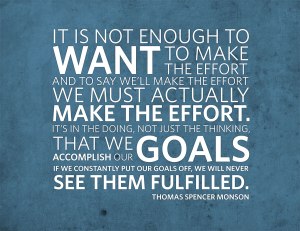
effort

Effort needs to be sustained, and continuous. It’s not something you do once in a while, or just when you feel like it. When people say “it just wasn’t meant to be”, they may be right. But I think that line is often simply a rationalization for a lack of effort.

One mistake people make when they hear “effort” is they think “work”. Work has a negative connotation to it. In some ways they are the same thing, and the main differentiator is your mental approach to it. If you see potential value, it’s effort. If you don’t, it’s work.

Anything of value in life is worth fighting for. Personally, I would rather make some mistakes fighting for something I believe in than lose something of value due to simple apathy.

In relationships, effort should be the most important thing. No matter how things are going, effort shows that someone cares. So if you want to see growth in your relationship focus on effort and not just results. As long as the effort is there, results will come in time.

Building Closeness and Intimacy

closeness

For anyone who has read my site, you know I believe very strongly in love and in long term relationships. I also believe they naturally go through ups and downs, but maintaining and nurturing love is a choice.

You choose how you treat your partner. How much time you spend together, how you spend that time together, how much you value them and appreciate them. You choose how much effort you put into your relationship, and how much you are willing to accept them for who they are.

This idea of choice is supported by every relationship expert I have read or heard about. They all talk about how maintaining long term love is a mindset, an outlook, and a choice.

But what about falling in love? Many people think of love and romance as this magical thing, based on feeling and emotion. And it is. But is falling in love a choice too?

Creating Closeness

A buddy of mine recently pointed me to a fascinating study by Dr. Arthur Aron, called The Experimental Generation of Interpersonal Closeness. I’ll admit the name leaves a bit to be desired, but the study itself is pretty interesting. The study was intended to understand whether or not closeness or intimacy could be created. For the experiment he defined intimacy as “a process in which each feels his or her innermost self validated, understood and cared for by the other.”

His experiment was quite simple. Members of the opposite gender were paired up and given a number of self-disclosure and relationship building tasks of increasing intensity to carry out over a 1 ½ hr period. They were then asked questions measuring the degree of closeness they felt was built through the procedure.

I believe there are variations of the questions, but you can find a sample of them here

He found that:

One key pattern associated with the development of a close relationship among peers is sustained, escalating, reciprocal, personalistic self-disclosure

One interesting part of the study was that he found that it didn’t really matter if you agreed with each other’s ideas and opinions. That didn’t seem to impact the building of intimacy. The important part was the act of self-disclosure.

Falling in Love

There are no real surprises in Dr. Arons study. People often say love “just happens”, but that’s completely untrue. We all know that part of falling in love is getting to know the other person. That’s the time of discovery, where things are new and exciting.

Even in cases where “your eyes met across the room and you knew it was love”, there was still some sort of a process. Your eyes met because there was mutual physical attraction. That may be a good start, but it’s simply the starting point. Even if you moved straight from eyes meeting to sex, that doesn’t make it a relationship (sorry Hollywood and romance novels, it’s true). There will always be a period where you get to know each other, and this period involves self-disclosure.

Does that mean you can make someone fall in love with you? No. Does it mean you can make yourself fall in love with someone simply by learning about them? Well, kind of.

Getting to know someone is how you build intimacy, but it doesn’t always result in love. Some relationships fail quickly, while others start as friendships and develop into love over an extended period of time (potentially years). There is no single formula that will result in success.

Personally, I suspect that when friendships turn into love there was always a degree of attraction for at least one of the members. The whole idea of the dreaded “friend zone” is where someone has feelings for another person that aren’t returned. They often stick around, keeping themselves in the other person’s life with the hopes that maybe it will develop into something more. This happens all the time and is a common theme in love stories (both fictional and real).

In blogs and comments sections there are MANY people out there who are convinced that they are “the one” for someone else. People talk about how much they do for the other person and how they are always there for them, but their love is not returned.

So why do some relationships bloom into love, while others don’t? This depends on the level of intimacy and closeness. As you learn more about another person, you allow yourself to be vulnerable with them, and you become more comfortable sharing information about yourself. We all have emotional walls around ourselves, and when we have let someone breach that wall? I believe that’s when love develops.

Intimacy in Long Term Relationships

If closeness and intimacy is built by sharing and self-disclosure, what exactly does this mean to long term relationships? There seems to be a perception that long term relationships are incompatible with love and romance, and there is some truth to that.

Intimacy or closeness develops through reciprocal self-disclosure, and that period is exciting as it is new and you are learning. But eventually you have learned a lot about each other. Intimacy is built, and the relationship is established. Now how do you maintain it? How do you prevent it from breaking down over time?

That is the part many people struggle with over time. They have finally achieved what they believe they were looking for. They are in a stable relationship, and things are “safe”. A problem is that it’s easy to become comfortable, and it’s easy for both partners to stop doing the little things that you did during the courting stage. Another thing about safe and comfortable is that it can become routine and boring.

Plus over time you start to realize that your partner is just a regular person, who has flaws like any other. Conflict will happen, and depending on how you deal with it conflict can erode the feelings of closeness.

In many relationships, one day you realize the sense of intimacy that brought you together is gone (or at least eroded). You figure maybe it’s a phase that will pass. But it doesn’t, so you find yourselves in a relationship where you have become largely roommates. And being roommates sucks.

Can Guys and Girls Just be Friends – Revisited

One of my most popular posts (in terms of views, comments and likes) is Can Guys and Girls Just be Friends?

In answer to the titular question, my belief is both yes and no. I suppose I’m waffling here, but it really depends on the nature of your interactions and what you are telling the other person.

One reader shared a story with me about her affair, and how it started innocently enough. She was married, and started corresponding with someone through social media. Over time their messages became more intense, and she realized she had fallen in love with this other guy.

It’s easy to see how this happens. I’m not sure about her case, but if the existing relationship is in a bit of a rut and you meet someone new, even if it starts as “just friends”, as you open up to each other the simple nature of intimacy makes it so you are at risk of having it develop into something more.

I recently read an article where someone tried the Dr. Aron questions, and found that they worked for building intimacy. In the article the person states:

The questions reminded me of the infamous boiling frog experiment in which the frog doesn’t feel the water getting hotter until it’s too late. With us, because the level of vulnerability increased gradually, I didn’t notice we had entered intimate territory until we were already there.

When this experiment is done over a period of an hour or so, I can understand that. But when it comes to affairs, I find that very difficult to believe.

People aren’t stupid, they KNOW when the landscape has shifted from feelings of friendship into feelings that might be something more. People can tell when they are becoming excited to hear from the other person, and when they are happy to see them. They know when they are thinking about the other person more than they should be. They know when the relationship has crossed lines that take it beyond friendship and into something more.

They just don’t care. It feels good and is exciting, so they choose to continue the relationship anyways. They may deny that it’s an affair, but the affair has started long before sex, or even the first kiss.

It IS possible to love two people at once. Putting yourself in the position for that love to develop is a choice. Let’s face it, if you are putting yourself in that position then chances are good your relationship is in a troubled spot. If it’s healthy then you probably aren’t taking a lot of time to get to intimately know members of the opposite sex. And if you do, and those feelings start to arise? At that point continuing to see that person after it has developed into love is also a choice.

Back to the idea of guys and girls just being friends, it rarely works (not saying never here, but very rarely). For it to work you really need to put boundaries on the types of interactions you have, and the level of sharing that occurs – especially if you are already in a relationship.

Intimacy and Rebuilding

Alright, intimacy is built through emotionally opening up and sharing with the other person. But this is something that happens as you are learning each other, and once you already know each other well you can’t really “build” intimacy in the same way. Over time relationships can get into a rut and intimacy can break down. So what do you do?

Well, Dr. Aron’s findings on intimacy have some bearing on how you get out of a rut. Think back to his experiment. Did it involve two people sitting in a room watching TV together? Umm, no. How about two people going about individual tasks independently of each other. Again, no.

It involved two people INTERACTING, opening up to each other and allowing themselves to be vulnerable around each other. So why would we expect rebuilding a relationship to work any differently? Why do people wait for “feelings to come back”, or just start living individual lives? How in the world is that ever supposed to help a relationship?

To rebuild a relationship there are things you can do, but you need to DO them. You need to take action, and be conscious about it. You need to recreate the conditions where you fell in love.

BuildingARelationship

Relationship experts agree that you need to actively rebuild. You need to spend time together, make each other priorities in your lives and relearn each other. Even when you have been with someone for years, there is always more you can learn. Beyond learning each other you can also build experiences. So do things together. Go on dates where you have to interact. Maybe find an activity you are both interested in and do it together.

Dr. John Gottman talks about rebuilding your love maps, and he has a series of exercises and questions for couples to do together similar to Dr. Arons findings. In her book Hold Me Tight, Dr. Sue Johnson talks about something similar. She talks about sharing something deep and intimate with someone you love. Different experts suggests different (though similar) things. The main commonality is that rebuilding needs to be intentional, and it needs to be active.

Letting Go of the Past

Rebuilding a relationship isn’t easy. Rebuilding intimacy and closeness means allowing yourself to be vulnerable again, and allowing yourself to be hurt. If your relationship is troubled then that can be difficult. Chances are you have been hurt, so you have emotional walls build up to protect yourself from being hurt again.

But you can’t hold back. You have to let the walls come down and let the other person back in. Think of the study, it is allowing yourself to be vulnerable that allows closeness and intimacy to build (or in this case, rebuild). So if you continue to build up walls, all you are doing is preventing closeness from returning. Effectively you are sabotaging your chances of rebuilding.

If you are holding back, you need to ask yourself why. What are you holding back for? Do you truly want to rebuild the relationship? If so you need to let go.

It’s like the team building exercises on trust, when one person leans back and the other catches them. If you truly want to rebuild a relationship, you need to be willing to take that step and trust your partner. Be willing to open up your heart to them. Be willing to lean back and let them catch you. Build closeness and intimacy into your life, and never let it go.

Power and Control

Man-woman-arm-wrestling

Power and Control. Two things you don’t ever want to think about in a relationship, but at the same time they are things that affect EVERY relationship.

Relationships are full of decisions, big and small. Where you live, how you save/spend money, who takes care of what chores, what car you drive, how you parent, how you spend your leisure time, how often you visit family. Even something as simple as what shows you watch. The list is pretty much endless.

Some decisions are individual ones, as they only affect one person. But when you are in a relationship, a surprising number of decisions actually affect both people in some way shape of form. That’s the thing about relationships; you are no longer just a “me”. You are part of a “we” and you often have to take your partner into consideration with the choices you make.

Add to this the fact that people are different. Chances are good you have some similarities with your partner, often in values and common interests. But for every similarity there are a number of ways that you are probably very different.

These differences allow us to complement and enhance one another, but when it comes time for decision making they can be sources of conflict. Big or small, conflict can happen in all decisions.

The Balance of Power

It’s safe to say that all relationships have some sort of balance of power. If you don’t like the word “power”, replace it with influence – but it’s essentially the same thing. In a perfect world it is an equal split, where both parties in the relationship have equal say in all decisions, and they contribute equally to the relationship. Reality is not that simple though, and an equal split only happens in a mythical magical world where unicorns roam the land (and perhaps not even there).

“Equal” doesn’t actually exist. And with all the areas that people can influence a relationship how would you even measure it? Some decisions have more impact than others, and others involve more efforts. But “equal” shouldn’t actually matter. Some people are more dominant and others are more passive. Some naturally take on a leadership role, and other people are happy to follow. In most relationships people find a rhythm, or a balance that works for them. That balance may be 50/50, 55/45, 60/40 or even 80/20. I can’t see how the last one would work, but as long as both parties feel they are valued, being heard, and their needs are being met it shouldn’t matter.

As a side note, in most cases I believe people actually overvalue their own contributions to a relationship in relation to their partners. If you think about it, you know about all the things that you do. Chances are, there are a number of things you do that your partner doesn’t even notice. Well if you do things they don’t notice, there are probably things they do that you don’t notice. This dynamic creates a skewed view of who is actually contributing what to a relationship. Anyhow, back to the topic at hand…

Power Struggles

If power is relatively balanced in a relationship, you probably don’t even think about it. But even in the most balanced relationships, there will be times that your needs and wants will conflict, and choices have to be made. How a couple handles these times can be very important to the relationships overall success.

Studies show that needing to be in control, or to have things “your way” is one of the fastest routes to unhappiness. No one gets things their way all the time, and it would be extremely unhealthy if they did. Relationships involve two people, and both need to feel valued. So sometimes decisions will go the way you want, and other times they won’t. The question becomes, how do you respond when things don’t go your way?

Do you accept it? Do you get angry? Do you sulk? Do you keep score, and figure your partner got their way this time, so next time it’s your turn?

Who is Right?

Maybe you think that things should be your way, because your way is usually right, or better. First off, that line of thinking is broken. In most circumstances there isn’t a “right way”. There are usually multiple approaches to accomplish the same thing and each persons ideas and contributions have at least some merit.

But just for the sake of argument, let’s assume that your ideas are consistently better than your partners. Does that mean things should be the way you want? I would argue no.

I’m reminded of my grandmother. Growing up, visiting grandma was always a highlight, and one of the things that we did was play cards. This was my introduction to gambling, as we played for money. Of course, grandma provided the money so there was never any risk to me. She would win some, and I would win some. But at the end of the day I always came home with a bit of change in my pocket.

As I got older I realized that as I was learning, grandma always held back. Cards are somewhat random, but she let me win, and let me build confidence in myself and my abilities. As my abilities grew, she played harder, until eventually we were on a fairly even level.

How well would I have learned if she didn’t hold back? If she repeatedly beat me, would I have ever learned the games? Would I have enjoyed them? Heck, would I have liked HER very much?

I’ll admit, cards are different from life. But a focus on things being “your way” immediately makes thing adversarial. It means someone else isn’t getting “their way”. As grandma taught me, even if I know I’m right, the relationship is more important than getting my way. Pick your battles. It’s important to stand up for what you believe is right, but often there is no right and wrong. Relationships aren’t just about one person. They require compromise, and letting someone else have their way is an important component of keeping the relationship happy.

Control

Are you a parent? If so, how do you get your child to do the things you want? If you aren’t a parent, how did your parents get you to do what they wanted?

A common parenting tactic is praise/reward and punishment. Praise reinforces positive behavior (the behavior we want), and punishment is intended to be a deterrent for negative behavior. Punishment can be active (scolding, spanking, time outs etc) or passive (taking something away, not talking to them, etc).

Praise and punishment are needed with children, because children are inherently selfish. They are initially unable to see the world in any way other than how it impacts them. Empathy is learned.
When dealing with your partner however, using punishment to address relationship issues is a VERY bad idea.

Dealing with Anger

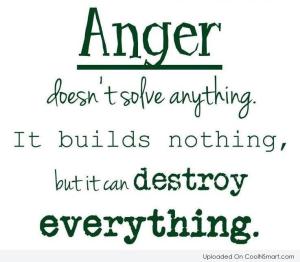
Anger is natural, as we all get angry sometimes. However anger is one of the most destructive forces in a relationship, and it requires a healthy outlet. Explosive anger can create an atmosphere of fear. Withholding anger can be even worse as it can result in passive aggressive behavior.

Passive aggression is when instead of dealing with anger through discussion or confrontation, it is dealt with in a more subversive fashion. Often anger is expressed through body language, withdrawal, silence, or withholding affection.

It is understandable to not want to be around the other person when angry. But when this happens for extended periods or becomes a pattern of behavior then this about punishment and control. Passive aggression is a form or retaliation, it is something that is done to hurt or get back at someone.
Interestingly, people who exhibit passive aggressive behavior often don’t fully realize that they are doing it. For them it is simply their method of coping, and is often a result of how they were taught to deal with anger as a child.

A few notes on passive aggressive behavior:

  • It is one of the highest predictors of divorce
  • It is often a symptom of poor communication
  • It leads to low levels of intimacy in a marriage
  • It is the most common form of emotional abuse

When it comes to anger, here are a few things to think of:

Anger

the-more-anger-you-hold

Say What you Mean

There are always elements of power in a relationship. But relationships should never be about getting what you want, and struggles over power and control have no place in a relationship.

A relationship should be a place of emotional safety. It is supposed to be an environment where you are there to support each other, and each others needs. Your partners needs should be as important as your own, and shouldn’t be conditional on whether or not they have met your needs first.

If your relationship is characterized by anger (overt or passive aggression), or struggles for control, then it is not a healthy environment. But it can change. In almost all cases, this is a result of poor communication and coping skills, which likely developed prior to the relationship.

It is important to learn to communicate in a healthy fashion.  Doing so will not only increase the chances of success in your relationship, but it will also help reduce tension and build intimacy.  Beyond the ways that it will improve your relationship, it’s important to your own health.  Anger is natural, but it helps nothing.

Anger is an acid that does more harm to the vessel in which it is stored than to anything on which it is poured – Mark Twain

Life Without Sex – Part 2

couple-in-bed-arguing

In a relationship, sex has many benefits and is an activity that enhances the connection between a couple. Sex drive differences can change sex from a wonderful part of a relationship to a source of conflict, and in extreme cases couples fall into a sexless relationship. In part 1 I discuss this idea of a sexless relationship (having sex less than 10 times a years is considered a sexless relationship), some of the causes, dangers, and what you can do if you are in a sexless relationship and you are the one who still wants sex.

People in this situation can try to remain supportive and understanding, while showing their partner that they still love them. But ultimately, there’s not a lot they can do to change the dynamic.

Today I want to want to look at this from the side of the person who is either not wanting, or is having issues with the sexual side of a relationship.

Different Reasons

Sex is a good thing in a relationship. It builds connection between the couple, and it gives pleasure to both people. But it requires both partners to be interested and engaged. For the person who is less interested in sex, the question becomes why? I see four main reasons:

  1. They are not sure they want the relationship anymore. Sex requires openness and connection. If someone has checked out on the relationship, then it stands to reason that they would find sex difficult with their partner. When this happens, this person really needs to make a decision to either commit to the relationship or to get out. Staying in the relationship with a breakdown of intimacy is not fair to anyone
  2. They see sex as something to be given or taken away. In some relationships people are interested in control and power, and sex can be used as a weapon (and withheld when they are unhappy). A relationship requires empathy and sharing, and these sorts of attitudes are extremely unhealthy. I plan on writing about power and control in the future, but anyone who is interested in power and control is liable to end up bitter, angry and alone if they can’t change their approach to relationships
  3. They have an immature view of love. If someone sees love as something that should “just happen” rather than something that they need to build into their relationship, then they are bound to end up disappointed by what real sustainable love looks like. This can cause a breakdown of desire and intimacy, making sex difficult
  4. They have had a breakdown of desire. Sometimes this just happens in long term relationships. Usually the person wishes things were different, but they are having a hard time “feeling” for their partner. Desire is related to hormones, so there can be any number of causes behind this (stress, anxiety, depression, and menopause among them)

My interest is for the people in the latter two scenarios, as these are people who actually do care about the relationship and their partner. In these cases the person genuinely wishes things were different, but they are having a hard time changing the way they feel. I’ll refer to this as simply having a lower drive. For people in the first two scenarios, well, chances are you should get out of the relationship anyhow.

Tips for the Lower Drive Person

For the lower drive person, this is a difficult situation. Hopefully the higher drive person is being considerate and understanding, but ultimately the lower drive person is the one who needs to find a way to become lovers again.

First I would like to debunk the myth that sex “isn’t truly a need”. From an individual standpoint this may be true. Unlike food and water, you won’t die without it. But your relationship might. So from the perspective of a relationship yes, regular sex is needed in order maintain and nurture a relationship. What “regular” means is up for interpretation, and that is something that is different from couple to couple (and even for a single couple it will change over the life of the relationship). The absence of sex will put tremendous strain on the relationship, and put it at risk of failure.

It is important to understand it’s not actually the sex that matters (which is why occasional “duty sex” does nothing to improve the bond between the couple). Instead it is the closeness and intimacy that sex is symbolic of. THAT is the part that is needed in order for a relationship to thrive. When intimacy is there sex should come naturally as a result of it. This is why it is important to focus on the relationship itself.

Another thing to remember is that your partner has no other outlets. I’m a firm believer that people are responsible for their own happiness (in the choices they make and the attitude that they bring to their own situation). Sexuality is one of the few places that people are dependent on someone else for fulfillment. So if it’s missing in a relationship, then even if the rest of the relationship is in a good spot this problem will start to affect the rest of the relationship.

The best thing you can do is try and identify any problems in the relationship that may be causing issues with desire. If you’re working on the relationship and desire still isn’t coming back, there may be medical reasons (such as hypoactive sexual desire disorder), however these are extreme cases and only affect a small percentage of the population. Chances are there is something that needs to be addressed in the relationship, and the best way to deal with it is through couples counseling focused on the issue with sexuality.

One question to ask yourself is “should someone have to have sex when they don’t want to”? Obviously the answer is no, they shouldn’t. In fact having sex because someone feels they are supposed to (duty sex) can widen the gap of emotional intimacy instead of helping close it.

Here is the dilemma though:

If someone consistently doesn’t want sex and their partner does then it puts their relationship at risk. If their partner wants it all the time, then this is an issue with the partner not being considerate about the person’s needs. But when the couple has drifted into a sexless marriage, there’s a problem. For the benefit of the relationship it’s up to the couple to find some sort of happy middle ground. It will likely involve an adjustment of expectations for both parties, but it also means the person with the lower drive will have to find a way to be sexual again.

They shouldn’t have to have sex when they don’t want to. But instead of looking at this as doing something they don’t want to, it may be better to try to find a way to nurture their sexual side so that they start to want to be sexual with their partner again.

Making Sex a Priority

Sex is important to a relationship and has many benefits to both the individual and the couple. That is a fact. No one should “have to” have sex when they don’t want to. Also fact.

So the question becomes, if someone consistently isn’t interested in sex and it is putting strain on the relationship, how do they become interested again? How can they find a balance where both members of the relationship are happy? One recommendation is to make sex a focus and a priority in the relationship.

One common misconception is that someone has to be in the mood in order to be sexual. Difficulties getting in the mood are extremely common, and happen to pretty much everyone. With busy lives waiting till you are “in the mood” could be a long wait. And what happens if you are in the mood but your partner isn’t? The chances of both being in the mood at the same time is low. Those who wait for “the mood”, well, generally they find themselves in the sexless relationship.

Instead of waiting to be in the mood for sex, many relationship experts suggest you try to make time for sex with the hope that allowing yourself to be sexual will help put you in the mood (kind of a chicken or the egg approach). In this approach, the lower drive person is just as responsible for getting themselves in the mood as the higher drive person (perhaps more so).

Schedule Sex

To do this, you need to schedule sex. You may do this formally as a couple, or at the start the lower drive person may do it on their own (for example telling themselves that “tonight” is a night for sex). If the thought of doing this doesn’t cause additional stress, then instead it’s possible to mentally prep for sex. Think about sex, read a sexy story (either alone or together), whatever works to try and get yourself into the mood. And then be sexual with your partner.

massage

The key is focusing on sexuality, touch (possibly massage or erotic massage), and building connection instead of the act of sex. In fact, if you don’t or even if you find you aren’t able to engage in penetrative sex, that’s fine. It’s more about taking time to be sexual together and rebuilding a sense of safety with physical intimacy with your partner.

Don’t worry about “shutting your partner down” before penetrative sex or orgasm. If your partner sees that you are putting effort into being lovers again, they will likely be very happy and supportive. When you do have sex it may starts as more of a physical act, but over time it should transition into a more intimate one.

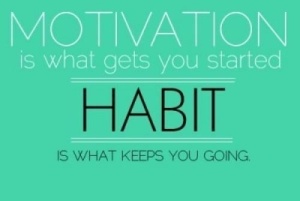
Whether you are scheduling this formally or planning it on your own, come up with a desired frequency and schedule it. Once a week? Once every 2 weeks? Do what works for you and adjust it over time. It’s about building habits, and it may seem awkward at first but over time gets internalized. Be willing to accept that you don’t always have to meet the schedule, but the vast majority of the time you should try to.

Mindset is Key

Depending on how badly the emotional connection has broken down, this can be an extremely difficult thing to do. I recognize this isn’t like watching a movie you aren’t really interested. This is your body, and you are sharing it with someone else.

Because of this, mindset is extremely important. If you view this as an obligation you will get resentful and that will make things worse. But if you accept it is an important part of a relationship, then you will see this as an investment in the long term health and happiness of your relationship.

Heading to the Gym

A great analogy for this is going to the gym with a partner. Physical health is a positive thing (there are really no drawbacks to trying to improve your level of physical fitness). The benefits range from physical health to self-esteem to mental health. But committing to physical fitness takes a commitment of time and effort – it doesn’t just happen.

If you haven’t done anything in a long time though, making a commitment to physical fitness is difficult, and at the beginning it seems like work. You know there are benefits, but the way to achieve those benefits isn’t easy.

In order for the workouts to be effective though, you need to come up with a regular schedule and stick to it. Working out one day, and then not doing anything again for a month or even a few weeks doesn’t really help much. And in fact, if you don’t make it regular you may find it’s easy to make excuses skip a workout. Unfortunately when you miss one workout, it becomes a lot easier to miss another.

If you stick to your routine an interesting thing happens though. After a while you will find you start to enjoy it. And not just that, but if you have to skip a workout you’ll find that you miss it and want to make it up. Instead of “work”, it has become a regular part of your life.

Taking this analogy one step further, even for the people who are regulars at the gym there are days that you just don’t want to go. Maybe you didn’t sleep well last night, or maybe you have a cold. Having a partner who is expecting you to be there can sometimes act as the motivation to get out and do your workout anyhow. Sometimes you will go and you really won’t be into it, but other times even when you force yourself to go you will find that your body responds to being there and you have a great workout anyhow.

motivation

Built to Last

Relationships run into problems, and sexual issues are probably the most difficult ones for a relationship to deal with. But in a long term relationship it is important for the couple to maintain sexuality and being lovers.

It’s important to be open with your partner about what is going on, and recognize this as a problem for the relationship, and not just for the individual. If your partner truly cares about the long term health of the relationship, they will show patience and understanding. But it’s also important to remember that your partner has needs in the relationship too, and letting sexual issues go unresolved will threaten the health of the relationship.

When emotional connection has broken down, it’s the responsibility of both parties to do their part in actively rebuilding it. And part of that rebuilding involves making sexuality and sex a regular part of the relationship.

Scheduling and prioritizing sex may not seem spontaneous or romantic, but it doesn’t have to mean that it’s not intimate. It allows you an opportunity to focus on being intimate together. And you may find that once you prioritize it, you remember what you have been missing.

couple-hands

Life Without Sex – Part 1

Life without sex

When I look at the stats page for the site, the most commonly viewed posts are the ones on Happiness and Sex. This makes a lot of sense as there is a correlation between the two. In long term relationships a couples sex life is generally a barometer of the relationships overall health.

Sex is a form of intimacy and is a manifestation of closeness and connection in a relationship. If your relationship is in a good place, then you have the sense of closeness and connection that leads to sex. And if you have that closeness you are generally pretty happy. So although it may not be entirely causal, more sex equals increased relationship satisfaction (note, that was causal – as in “being the cause of”, and not casual. If you’re interested in learning about casual sex you came to the wrong place).

There are all sorts of taboos about sex, but as a component of a healthy relationship sex is a great thing. Sex in a relationship provides a number of advantages physically and emotionally, for both the individual and the couple. So why is it such a difficult topic for couples, and why can it become a source of so much conflict?

In my previous series of posts on sex I talked about how sex can be a source of conflict due to differing sex drives; and that this is both natural and unavoidable. I talked about ways to deal with these differences, and how open communication in the relationship is the best approach to finding a happy middle ground, ensuring these differences allow sex to continue to enhance a relationship instead of damaging it.

I don’t want to rehash a topic that I’ve addressed already, but I recently came across a concept that made me want to look at this once again. That topic is a “Sexless Marriage”.

Sexless Marriage

A Sexless Marriage is defined as a marriage (or any long term relationship) where the couple has sex 10 or less times per year. According to stats, 15-20% of couples find themselves in this state.

Differences in sex drive are normal, requiring compassion and understanding on the part of both members of the couple. A sexless marriage is an extreme though, and is generally a sign of more than just differing sex drives.

Because relationships have ups and downs which can impact feelings of closeness, it’s not uncommon for “sexual droughts” to happen occasionally in long term relationships. In fact it is fairly common occurrence in the first few years after children are born. When it lasts for extended periods of time however, it can become a serious issue and threaten the relationship.

Humans are sexual creatures, and there are many advantages to sex in a relationship. In a healthy relationship sex is a physical manifestation of the love the couple shares. It is a way of showing closeness and desire, and is a form of communication and sharing. It is a special activity that the couple shares with each other and no one else, and it is not just a physical act, but also an emotional and symbolic act.

The absence of sex (or sex being reduced to duty sex) is symbolic in a different way. When this happens it comes to symbolize a lack of desire, closeness, and a sense that the other persons needs don’t matter. But perhaps most significantly, it comes to symbolize a lack of love.

This is a pretty sensitive topic, so I will try to tread lightly here. To be clear, when I talk about sex here, I’m talking about sex as an extension of intimacy (with the idea that the absence of sex also means there is an absence of intimacy). When this happens it’s safe to say that a sexless relationship is bad news, and not good for anyone.

The frequency with which a couple has sex really isn’t that important (as long as it’s not an issue for the couple), and most couples find a balance that works for them. But sex still needs to be a regular part of the relationship. According to the definition of a sexless relationship, you need it at least once a month for “regular maintenance”. Less than that and I find it hard to believe it’s not an issue for the couple.

Once it becomes an issue the taboo nature of sex likely makes it a difficult one to resolve. It does need to be addressed though, as the cost of not addressing the issue is extremely high. Sexual issues are one of the leading causes of relationships breaking down, often leading to affairs or divorce. It’s something you kinda need your partner for. So if there is no sexual satisfaction within the relationship and no signs that will ever change, eventually people will start looking outside of it.

Breakdown of Intimacy

I’ve touched on some of the causes for the breakdown of sex before, but here’s a quick overview:

Life often gets in the way, and people find themselves too tired or too busy. People naturally have differing drives, where one person wants it and the other isn’t interested. If the gap is large, for the lower drive person this causes pressure. For the higher drive person being “shut down” hurts, and after a while they stop asking. Next thing you know a long time has passed.

Desire is related to hormones, and things like childbirth can make changes to a woman’s hormone levels to change in a way that desire fades (body image issues after kids play a role in this). This is apparently a common issue, and there are a number of books written for women that deal with this (one of the top ones is supposedly Great Sex for Moms, by Valerie Raskin).

This isn’t just an issue for women though (well, the childbirth part is). Dampened levels of desire can also affect men, with some of the main causes of lowered sex drives being depression, anxiety or even high levels of stress.

Another problem for intimacy is simply differences between men and women. For years I leaned towards the “nurture” side of the nature/nurture debate. I thought men and women were largely the same and it was socialization that made us different. But there are differences, and these are very evident when it comes to sex. It’s been said that:

Men need sex for intimacy, women need intimacy for sex.

That’s not entirely accurate. Some men seem to treat sex and intimacy interchangeably, but most understand that sex is only a form of intimacy. But there is an element of truth there as men definitely seem to place a greater emphasis on the importance of sex for intimacy then women do.

So what does this mean for the relationship?

Work on the Relationship

One thing to remember is that most sexual issues are issues with the relationships itself, and not issues about sex. You know the saying build it that they will come? Ideally the same can be said here.

I recently wrote a series of posts on rebuilding passion in a relationship. Your main goal should be strengthening your relationship, and as the relationship strengthens it should also rekindle the spark needed for sex. Sex is important, but a healthy relationship should be your goal (with sex as a nice bonus).

But what happens if you are working on the relationship and the intimacy needed for sex doesn’t return?

Tips for the Higher Drive Person

For the higher drive person ensure you understand what makes your partner feel valued and loved, and show them that. If you are doing your best to ensure the health of the relationship and your partner is still not showing any desire or interest in sex? At that point there’s not a lot you can do. You can’t “make” someone want you, and the low drive person pretty much holds all the keys.

Taking care of your own sexual needs may provide physical release, but sex is supposed to strengthen the sense of closeness and the bonds between a couple. So self-pleasuring isn’t going to do much for you here. I guess it could, but if you find you are sending yourself flowers at work or sending yourself suggestive texts then you are probably hitting bottom.

kissing-mirror

In all seriousness, being forced to take care of your own needs for an extended period of time will only damage your relationship. It will break down the bonds between you and your partner, and resentment will build along with a sense that your needs don’t matter in the relationship.

Due to this you need to get it out in the open and try to find a solution (waiting things out won’t work, and will only result in a lot of waiting). Be careful in how you approach this though. Your partner need to be able to understand that you do love them, and that you miss sex with them, and the closeness and benefits it provides.

Remember that your goal is a lifetime of love and happiness with your partner. Sex needs to be part of that and your needs have to matter in the relationship. But the relationship is the main goal.

At the same time, don’t lose sight of the fact that you and your needs matter too. You need to be happy in the relationship, and that can be difficult without physical intimacy. If your partner values you and the relationship, you will see effort on their part. If you don’t see effort you have a difficult decision to make. Can you stay in a relationship without intimacy? Some do, though I can’t see how that is good for anyone. But hopefully there are signs that your partner does want this to change.

So what about the lower drive person? That’s coming in Part 2…

The Golden Rule

I’ve long had an interest in interpersonal relationships, and I spend a fair bit of time thinking, reading and writing on the topic. Interpersonal relationships are simply our interactions with other people, and a big part of that is how we treat others.

Have you ever thought about how you treat others? For me, one of my guiding principles was the golden rule. The wording I was taught was “Do unto others as you would have them do unto you”. Over the years this has been simplified, with the current wording being:

Golden rule

Treat others the way you want to be treated is another way of saying “Be kind to people and don’t treat them like crap”. That seems obvious. No one enjoys being on the receiving end of outburst of anger, or someone being cruel. So if you don’t enjoy it, it stands to reason that you shouldn’t treat other people that way.

But this rule only really applies at a high level. “I like it when someone is kind to me, therefore I should be kind to others” is obvious. But “I like onions therefore I should give you onions and expect you to appreciate it” doesn’t really work. Unfortunately, that is often exactly what we do. We take this “rule” too far, and do things for others that we enjoy. And then find ourselves shocked or disappointed when our efforts aren’t received the way we would expect.

People are different. We have different personalities and different interests. So it shouldn’t be shocking that what we want and need from each other may be different. Instead of treating others the way we want to be treated, we need to start focusing on treating others the way THEY want to be treated.

Love Languages

lovelanguages

Recently I read the “The 5 Love Languages – The Secret to Love that Lasts” by Gary Chapman, and it touches on this very idea. It’s a fairly short book (around 150 pages), and definitely worth a read, but I’ll give you a bit of a synopsis.

A while back I talked about a marital satisfaction bank account, and how the good times in our relationships act as a buffer against the bad times, allowing us to persevere when times are hard.

Dr. Chapman has a similar concept, but he calls it a “love tank”. According to him we all have love tanks, and when our relationships are in a good place these tanks are largely full. Personally I like the idea of marital satisfaction bank accounts better, but he’s the one selling books so I guess I’ll stick with his concept for now (mine’s cooler though).

We all want to feel loved and we all want to feel valued, and through years of being a counselor he felt there are five different ways couples express love to each other.

The Five Love Languages

Dr. Chapman called these different approaches to expressing love “The Five Love Languages”. They are pretty self-explanatory, but a brief overview is as follows:

  • Words of affirmation. This is when someone is open about telling you how much they care, and appreciate you. It can even just saying “I love you”
  • Acts of service. This is taking on tasks, or doing things for the other person
  • Quality time. This is about being together, but being fully present and in the moment with each other. Watching TV together probably doesn’t count, but talking, going for walks together and just “being” with each other does.
  • Gifts. This is… umm… giving gifts. Gifts can be anything from a day pass at the spa to coming home with flowers
  • Physical affection. This encompasses everything from hugging and holding hands to sex.

Primary Languages

Looking at the 5 love languages it seems safe to say that they are all different ways to express love. All of them seem valuable, and I would even argue needed in a relationship. We all need to *know* that we are loved, we all need to feel it. If you don’t feel loved in your relationship, it can lead to doubts, and it can cause things to start to break down.

We are all different though. Some people need more expressions of love while others need less. Beyond that though, what Dr. Chapman identified is that we each have our own “Primary” love language.

In counseling many couples, he found that often the couples seemed to be doing the right things. But although they were, one or both of them weren’t happy. They may not have been unhappy, but their “love tanks” weren’t full. In talking with the people individually he found that for some people, one love language is much more important and has greater impact on them then the others.

This is where the problem of the Golden Rule comes in. We tend to treat others the way that we want to be treated, and that applies to our expressions of love. But what happens when your preferred expression of love doesn’t match your partners? Well, then you have a recipe for a couple who may truly love each other, but still not be very happy.

Ask yourself how you show love to your partner. Do they just *know* you love them? If so, how? Look through the love languages and figure out which ways you actively show your partner love. If you aren’t actively doing any of them, I’ll make a guess that your relationship could use some attention.

Identify Each Others Love Languages

Instead of treating others the way we want to be treated, we need to treat others the way THEY want to be treated. And that requires a bit of self discovery.

In order to fully embrace your relationship, you need to understand your own love language. Take a look at the list above, and figure out what the most important languages are for you. There may be more than one that stands out, and that’s fine. But whatever stands out to you is the way that you like to have love expressed to you, and the way that you feel the most valued.

If you are struggling with figuring out your love language, one clue may be areas of conflict between you and your partner. The books states:

People tend to criticize their spouse most loudly in the area where they themselves have the deepest emotional need

Once you have identified your primary love language, think about times that you haven’t had it expressed to you and how it made you feel.

Have your spouse do this exercise too, and then share your love languages. Maybe you already know them, and you have been speaking to each other in the right languages. But maybe you haven’t.

Choosing Love

One question that is addressed in the book is “what if my partners love language is one that is not natural to me”?

I’ve talked a lot in the past about how long term love is a choice. Some people don’t like that idea because it doesn’t seem to fit how love is portrayed in pop culture. Love is usually portrayed as all hormones and emotion.

But choosing love? Somehow that seems cold, and calculated, and not very romantic at all. Maybe it’s just me, but I think choosing love can be very romantic.

It’s easy to be in love when things are going well, or when it “works for you”. But a relationship involves two people. If your primary love languages aren’t matches then taking actions that you know will be meaningful and have greater impact for your partner shows a deeper love and commitment than just doing the things that are more natural to you. And if your partner knows that those aren’t natural expressions of love for you? Chances are they will appreciate it even more.

Taking another quote from the book:

The object of love is not getting something you want, but doing something for the well-being of the one you love.

I still think the Golden Rule is a good guideline in life. But it’s just a starting point. We are all different, and we all have different needs. For the people who you are closest to, and especially for you partner you need to go deeper. You need to take the time to understand them and their needs, and treat them the way they want to be treated. By doing that you show that THEY matter, and that you value them.

Depending on your own love language it may be a stretch at first, but your relationship will likely be happier for it.

Accountability Part 2 – Taking Ownership

accountability_header

What is the one and only thing you have control over in your life? Your job? Nope. Your friends? Nope. Your kids? Uh, definitely nope.

The only thing you have control over is you. You control your actions and your decisions. You have the ability to “influence” other things and other people. But just as you make your choices, they make theirs. And trying to control anything else is a bad idea anyhow .

Likewise there are things that influence you and your decisions. Some things have greater influences than others. But ultimately you choose which influences you will allow to impact you, and you make the choices that lead to your decisions.

In part 1 I went over the Responsibility Process. It talked about consciously choosing to be responsible, and the mental process that happens as we move through various states from denial to consciously choosing responsibility. Choosing responsibility is only part of accountability however.

Accountability is about owning your life, your decisions and your actions. The only person who controls those is you.

For some people this idea is liberating, while for others it’s terrifying. It’s not always easy to make a decision, because what if you make the wrong choice? When you make a choice, you are responsible for the outcomes or consequences of that choice. That’s fine when things go well, but what about when they don’t? Having to “own” bad choices can be a very scary thing to face.

Because of this it’s easier to try and deflect the decision making on to someone else. Denial, Blame and Justification are all examples of deflecting decision making away from yourself. Another approach is to simply not make a decision. However NOT making a decision IS a decision. It is essentially the same as denial. The following quote sums this up beautifully:

Accountability_inaction

It’s important to understand that no one acts from a position of accountability all the time. All of us have moments that we try to deny, blame, justify, or act due to shame or a sense of obligation.

Periodically that is fine, but some people rarely hold themselves accountable. Instead their default mode of operating is denial, blame, justification, shame and obligation.

It seems obvious that these are negative modes of operation, so would anyone want to operate from these modes? I don’t believe anyone really “wants” to operate from any of these modes. Rather, these modes are primal responses to issues, and it is easy for your mind to accept them as acceptable responses.

Learned Helplessness

Have you ever heard of Learned Helplessness? There’s a lot of valuable literature on it, but in summary Learned Helplessness is when someone has lost the belief that they are able to change their situation. They actually CAN impact their situation, but due to a belief that they can’t, they don’t even try. This creates a self fulfilling prophecy, where the lack of belief leads to an inability to attempt change (or in some cases a half hearted attempt). But this inability to attempt change is the actual driver behind the lack of change.

Learned Helplessness often goes hand in hand with Victim Mentality. This is a learned trait where someone tends to:

  • Blame others for a situation that they have either created or contributed to. They don’t take responsibility for their own role in the situation
  • Assume the worst, incorrectly attributing negative intentions to other people
  • Compare themselves to others, believing that other people are happier than they are

Impacts on Mental Health?

Learned Helplessness and Victims Mentality can have serious consequences. People who exhibit these characteristics generally don’t hold themselves accountable for their actions and decisions. They also tend to have low levels of happiness. More alarming, there is a strong correlation between these and things like clinical depression and mental illness.

Thankfully, because these are learned mindsets they can be corrected. For many psychologists and counselors significant effort is spent trying to correct these negative mindsets and replace them with healthier ones.

Unfortunately studies show that these mindsets and the issues related to them are on the rise. I’ve seen numbers showing anywhere from a tenfold to a thirty-five fold increase in the last two generations.

Here is an interesting quote I found about this (in this case specifically on depression):

There is 10 times more major depression in people born after 1945 than in those born before. This clearly shows that the root cause of most depression is not a chemical imbalance. Human genes do not change that fast.

Let’s re-examine a few of these points:

  • There are significant increases in major/clinical depression and other mental illnesses or disorders. The speed of the increases suggests some sort of cultural or social cause
  • These conditions show a high correlation to characteristics like Learned Helplessness and Victims Mentality. Both of these are learned behaviors, characterized by low levels of happiness and personal accountability

Looking at this makes me wonder about the relationship between personal accountability and issues such as depression. Is it possible that not learning personal accountability predisposes you to future issues? If so, what are some of the societal changes that have led to this shift?

Culture Shift

One possible contributor is that we seem to have become a culture of blame and entitlement. We see this in the legal world, where frivolous lawsuits have become the norm. But we also see it in other aspects of life.

What’s that, little Suzie didn’t do well in school? Well it must be because she has a poor teacher. You aren’t getting the playing time for your sports team? It’s because the coach doesn’t like you. You don’t have a good job? It’s because of the economy. Your relationship fell apart? Well that’s because you and the other person just weren’t compatible.

Where is the sense of ownership? Where is the sense of pride in immersing yourself in something and knowing that your success or failure is largely under your own control?

Accountabilityandblame

Accepting Failure

One possible contributor to this shift is an unreasonable focus on results, or success. There is considerable pressure to “be the best”. One slogan I remember going around (at the Olympics no less) was:

Second place is just the first loser.

I’m all for improving yourself and trying to be the best that you can be, but there is just so much that is wrong with that slogan. It’s always good to have other people to measure yourself against, but what’s more important is how you are improving and growing personally.

One problem with this focus on success and being the best is that is has created a fear of failure. Failure may be disappointing, but it’s a good thing. Failure is the opportunity to begin again, this time more intelligently. It is our reaction to failure that matters. Failure is how we learn.

Is everything going to go your way in life? You think you’re on the Earth and everything you want to happen to you is going to happen to you positively? The measure of who we are is how we react to something that doesn’t go our way. – Greg Popovich

Over Parenting

One additional item that I believe contributes to a lack of accountability is us, and how we parent. The world has changed. Kids no longer get out and play the way they once did. I think back on some of the things I did as a child, and based on today’s approach it’s amazing I’m still alive (and I’m not THAT old). I played, I fell, and I got hurt. A lot. But my cuts and bruises healed, and I got up to play another day.

With two working parents, busy schedules and a perception of a more dangerous world, you don’t see kids out in parks and playgrounds the way they once were. Today many kids are largely in scheduled events. When they are there at the playground at all usually parents are a few feet away, watching to ensure that no one kidnaps them and that their every bump and bruise is attended to. I’m as guilty of this as anyone else. Why do we do this? We do it out of love, and concern for our children.

But in the process we are crippling them. We are removing choice, and removing the ability to fail. They need to fail, they need to learn. With the best of intentions we are stunting their growth.

As hard as it is to do, sometimes if you love someone the best thing to do is sit back and let them make their own mistakes. Let them fail. Pick your moments though (something like learning to swim is perhaps not the best time).
Ask yourself this, when we try to do everything for your children what are we really teaching them?

Taking Ownership

One of the most influential people in my life was my Grandmother. One thing that sticks with me from her was a story she would tell. She admired her father greatly, and would often seek his opinion on things. When she asked him about something he would respond “I know what I think, but what do you think?” This has always resonated with me. If someone asks your opinion and you give advice on what you would do, you are taking ownership of their issue. Maybe a better approach is to coach them, and help guide them to find their own solutions.

Accountability

Catch yourself when you are in denial, blaming, justifying or acting out of shame or obligation. Take ownership of your own life. Accept that no matter what your situation and influences are, the only person who can control you is you. The right choice is not always the easy choice. But as a buddy of mine always says:

It’s never too late to make the right decision

Accountability Part 1 – Responsibility

Responsibility

When you think of someone who is “responsible”, what is the first thing that comes to mind? Often someone who is responsible is seen as someone who is stable, and has their stuff together. They have a decent job (that they have been able to hold), they have a plan, and they are dependable.

Sometimes being responsible is seen as the opposite of being a dreamer. Dreamers live for the moment, while responsible people live a few steps ahead, and are less likely to throw caution to the wind.
But is responsibility really just about stability, structure and planning? Can’t a dreamer also be responsible?

Responsibility Process

I recently came across an approach to looking at responsibility that makes a lot of sense to me. In it, responsibility is defined as a mental process, whereby you own your ability and power to create, choose, and attract.

The idea behind the responsibility process is that there are different stages of behaviors that can culminate in responsibility.

This process starts with Denial, and then moves to Blame, Justification, Shame, Obligation, and finally Responsibility. Each of these stages represents a mode of thinking, and I’m sure every single one of us has operated from each of these modes at one point in time or another (I know I have).

Life is easy when things are going well, and these behaviors usually arise in response to some form of problem or stresses.

The first three, denial, blame and justification are easy to explain. In these, rather than taking any sort of ownership we are deflecting the issue away from us. In denial there is no problem. In blame the problem is seen, but it’s not “my” problem, it’s someone else’s. And in justification I only partially accept that it’s my problem. I am saying that yes, it’s my problem – but there are a number of reasons as to “why” it happened (and these reasons somehow absolve me of any blame).

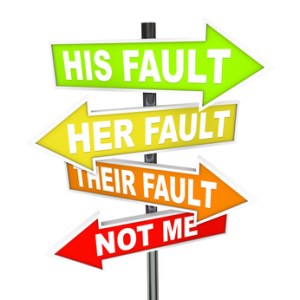
Arrow SIgns - Not My Fault Shifting Blame

Shame and obligation are where I think things get really interesting. According to the responsibility process, acting from a state of shame or obligation is almost worse than the previous three. This is because in the first three you are deflecting an issue away from yourself, while for these two you are taking partial ownership. With shame or obligation, you feel as though you are being compelled to do something by some external force. When this happens you are liable to build up resentment that you “have to” do something. Doing something from a state of shame or obligation is fine occasionally, but if it is a common state for you then are liable to give up or quit.

The responsibility process is explained as follows:

When something goes wrong large or small (for example, lost keys or a lost retirement account), The Responsibility Process kicks in. The mind offers Lay Blame as a reason. If you accept blame as a sufficient reason, then you will act on that blame. If you don’t accept it, then your mind offers you an excuse (Justify). And so on. Thus taking personal responsibility is a step-wise process of refusing to act on a series of irresponsible thoughts that your mind offers up.

The Responsibility Mindset

It’s easy to be responsible when things are going well, but this responsibility process is something that largely happens in times of stress, or when things have gone wrong. So how does one shift from operating from a state of shame or obligation to a state of responsibility? Basically it’s all about mindset.

In all aspects of life there are things we “have to do” even though we may not want to, and the attitude you bring into these things is very important. It’s very easy to approach these “have to” moments from a state of obligation, but as noted above doing so runs the risk of building up resentment.

The change in your mindset from obligation to responsibility is subtle, but it’s very important. In both cases you “have to do something”. But in obligation you have to do it because you are being forced to, or because you are trying to meet some sort of external expectations. With a mindset of responsibility these expectations have been internalized. It’s no longer because someone else expects you to do something, it’s because YOU expect yourself to do it. And you expect yourself to do it because you see it as required or believe it is the right thing to do at the time.

The early states of the responsibility process (denial, blame, justification, shame and obligation) are reactionary, almost primal responses. They are also very “me” focused; only seeing a situation in terms of how it affects you personally. Operating from responsibility is different in that it is a conscious decision. Operating from this state requires three things:

  1. Intention – Intending to respond from Responsibility when things go wrong.
  2. Awareness – Catching yourself in the mental states of Denial, Lay Blame, Justify, Shame, Obligation, and Quit.
  3. Confront – Facing yourself to see what is true that you can learn, correct, or improve

Being responsible is a conscious process. You “choose” to act and respond in a certain way. You may later find out that the decision you made wasn’t a good one, but owning that decision is an act of responsibility.

responsibility-the-ability-to-choose-your-response

The “Have To’s”

To illustrate the responsibility process, let’s walk through it with a simple example. Imagine you are a parent, and your child has filled their diaper:

Denial. You can always pretend that the diaper hasn’t been filled (and hope that someone else notices and changes your child for you). But the other person may do that too, and eventually the wonderful aroma will become too much to bear. More importantly, your child will be uncomfortable and crying will probably start (it could be yours or thiers).

Blame and Justification. You can blame your child for filling their diaper, but that won’t change anything. And you may try justifying things (I shouldn’t have to change him/her, I did it last time!!!), but what does that really accomplish? The child will still be uncomfortable, and still need to be changed.

Shame and Obligation. Here you decide that yes, you will change the diaper. But you don’t “want” to do it. You’re only doing it because you have to. Are you going to get resentful with your child? Some parents actually do, and over time this can lead to things like child abuse. But those cases are fairly extreme, and hopefully rare.

Responsibility. This is the natural course of action for your mind to take. You still probably don’t “want” to change the diaper. But you recognize that the diaper has been filled, the child is uncomfortable and incapable of changing themselves. Plus you care about your child and recognize that the diaper simply needs to be changed, so you do it.

In this scenario I suspect that most of us would automatically operate from a position of responsibility. In times of high stress we may slip back into some of the other stages temporarily, but we change the diaper anyhow because it is the right thing to do. It’s an easy choice.

Many of life’s “have to’s” fall into this category. Going to work every day? You don’t always want to and you may have days you are resentful. You may even have a few “sick” days that are actually mental health days. But going to work is something that we have to do.

Making Choices

The examples above are easy ones. But now consider something like your relationship.

What if your partner loves ballet while you don’t, and they periodically ask you to go with them? In a prior post I mentioned that it’s positive for your relationship if you can show some interest in their interests, as it’s a way for you to show interest and caring for them.

You may prefer that they find a friend with some interest in the ballet to go with, but there may be times that you “have to” go with them. What attitude do you bring into those times? If you attend the ballet out of a sense of obligation, you may go in expecting to hate it, and see it as wasted time where you could be doing something else that you enjoy more.

Perhaps a better (and more responsible) approach is to see it as an opportunity to share something with your partner that is special to them. In both cases you “had to” do something. But in one case you owned the decision to attend.

Choosing Responsibility

No one is always responsible. When faced with challenges and stresses the default is for us to respond with the lower level states – denial, blame, justification, shame and obligation. That’s normal, and common. And honestly, sometimes it’s a lot easier to stay in those states. But it’s also not healthy.

If you find that you are frequently angry or resentful, then think of this process. Think of something you are upset about, and ask yourself where you fall on this scale. Are you blaming? Justifying behavior that at least a part of you knows is wrong? Are you doing things due to shame or obligation? All of these things can lead to resentment, and anger. Which of course leads to hate, which leads to the dark side of the force (ummm, wrong movie)…

In seriousness though, resentment and anger are some of the most toxic emotions you can have. So being able to switch from a mindset of obligation to one of responsibility is very important to both your own health, and the health of your relationships.

I’m not suggesting that anyone should always have to do something. If you find that you are constantly doing things because you feel obligated to, ask yourself if you really “have to” do it. Can you simply say no? Don’t be afraid to set boundaries and say no sometimes. But if you truly “have to” do something then there’s a reason for it. Try approaching it from a framework of responsibility, and you will probably be happier and healthier for it in the long run.

Dealing with Conflict

tugofwar

Conflict. The very term can trigger somewhat of an anxiety response. So what exactly is it? When I look up a definition of conflict I see terms like the following:

Serious disagreement, clash, fight, battle, struggle, collision and incompatibility.

Wow, no wonder the thought of conflict can make us anxious – all those words make it seem antagonistic! But is that really what conflict is?

I think conflict in personal relationships simply means two people disagree on something. It may not even be a disagreement, and rather is one or both people feeling as though they are not being heard.

One thing about people is that we aren’t the same. In any interpersonal relationship there are different personalities and differences of opinion, and as a result we WILL have conflict. Why is this bad? It’s a natural part of interpersonal relationships, so why do we hide it and have a hard time dealing with it?

We have a hard time dealing with conflict because we have this notion that it is a bad thing, and because of that we don’t have positive ways of dealing with it.

Ask yourself truthfully, how do you deal with conflict and how did you learn the approach you take? It is one of the most important skills that we can have, but dealing with conflict also happens to be one of the things we do the worst job of. In fact many of us never develop the skills needed for dealing with conflict.

I’m pretty sure there are conflict resolution classes, but those are likely attended by people like negotiators and human resources managers (I’m guessing here, as I’m neither). Shouldn’t dealing with conflict be a fundamental skill? We all deal with it continually in our lives, so why don’t we learn it? Why isn’t it a part of the curriculum, right up there with Math and English?

Conflict Avoidance

One approach I’ve seen to conflict is avoiding it altogether. I suspect this stems from the belief that conflict is an indicator of problems, which is perceived as a bad thing. For perfectionists problems aren’t acceptable as they violate that perfection. Maintaining an outward appearance of perfection is important, so problems are ignored. After all, we ALL know that if you pretend that something isn’t there eventually it will just go away (that was sarcasm by the way, just in case you weren’t clear).

There are all sorts of issues with this approach. First, nothing is perfect. Problems will arise, but this is actually positive as they are how we learn and grow. By denying the existence of problems in your relationship you are actually stunting its growth. Getting issues out in the open and dealing with them is what allows you to improve and your relationships to thrive.

Additionally, if you hold everything in you don’t have a release valve. If you continually brush things under the carpet pretending they aren’t there, eventually that carpet gets really bumpy and it gets hard to even walk on. If things are never addressed, this becomes the perfect recipe for resentment (which is up there with jealousy as one of the most corrosive emotions to a relationship).

The Need to Win

On the opposite end of the spectrum are people who seem to enjoy conflict and see it as a competition or a battle of wills. For these people there is a need to “win”, and conflict becomes a power struggle that is more about dominance and control than the issue at hand. There’s one big problem with winning though. If you always need to win, in the long term you are going to lose.

Every relationship has a more dominant personality, and that personality tends to be the one who drive things. But there needs to be some balance. The less dominant person needs to feel engaged and feel like they are part of the team. They need to know they are being heard and their opinions are valued. If that doesn’t happen? Guess what, you’ve got another breeding ground for resentment – yay!!! The constant need to be right and control will end up driving the other person away.

Finding a Balance

Both avoidance and dominance are really about control, and both are equally damaging to relationships. To approach conflict in a healthy way you need to find some balance between these approaches. It’s difficult to say exactly what that balance should look like, and I find most people tend to lean one way or another.

Personally I lean towards avoidance. I tell myself that I just pick my battles and that I will fight for the things I really believe in. And that’s true. But I also I don’t do conflict very well. The good thing is I realize that, and know that it’s something I need to work on.

In his book Seven Principles for Making Marriage Work Dr. John Gottman states that the frequency with which people fight doesn’t say anything about their chances at marital success. What important is *how* they fight. So there must be better and worse ways of dealing conflict.

Finding A Better Way

In university I took Philosophy classes. A big part of Philosophy was trying to look at things logically, and objectively. We would look at different topics, often emotionally charged ones like abortion and the existence of God; and we would have to put our own feelings aside in order to present logical arguments both for and against something. It was a ton of fun, and really – who doesn’t love Epistemology?

I think the approach of trying to look at things analytically is positive (in most cases) and puts you in the best position to make decisions. There’s just one problem though…

We aren’t robots, and we do have emotions. And sometimes those emotions can override everything.

Emotional Flooding

Have you ever heard of emotional flooding? Here’s a description of it (from this site) in the context of conflict in a relationship:

Emotional flooding is the term given to the feelings of one partner who are so overwhelmed by their partner’s perceived negativity and their own reaction to it that they become swamped by dreadful and intense feelings.

Any person who is engaged in and experiencing emotional flooding cannot hear without distortion or respond with clarity in a dispassionate way. They find it hard to organize their thinking and they instead fall back on primitive reactions. They just want things to stop, or want to run or, sometimes, to strike back. They react and do not relate.

I think we have all experienced this feeling at one time or another, but it becomes a major issue when it happens with regularity. For many anxiety sufferers this sort of emotional flooding is a part of everyday life.

If someone is experiencing emotional flooding any sort of rational attempts at dealing with conflict are gone, and you run the risk of having things escalate. Because of this it is important to recognize when this is happening, as there is no point continuing a discussion.

Conflict Agreements

A few weeks back I attended a conference and went to a workshop on team building. One of the ideas presented was that many successful teams have formalized rules for handling conflict. I think this idea of a “conflict agreement” makes sense in any frequent interpersonal relationships (such as the one with your partner). The idea is that you come up with an agreed upon approach for handling conflict together.

For example, you may agree that you will always get all issues out in the open, but acknowledge that if things are escalating either of you can say something like “I know we need to discuss this, but I’m having a hard time dealing with this right now. Let’s stop here and pick this up later”. The key to making this work is that you have to have some rules about what “later” means. I recommend that you agree to pick things up in a few hours if possible, and never let anything go for more than 24 hours.

When approaching any sort of issues, remember to focus on the point. Your goal should be to get issues out in the open to try to improve mutual understanding and ensuring that you are heard. It is important to not make things personal and to be conscious of “how” you approach conflict.

I can’t speak for all relationships, but I suspect people will be more receptive to something like “when you did X, it made me feel Y” than “you are an inconsiderate jerk”. When John Gottman talked about “how” people fight, a big part of it was softening your approach and de-escalating. There is a significant difference between constructive criticism and plain old complaining.

When you are the person on the receiving end, remember that this isn’t (or shouldn’t be) an attack on you personally. It’s very easy to hear “you did something wrong” and interpret it as “you are a bad person”. Remember, it may have been hard enough for someone to raise an issue with you. Try not to perceive it as an attack, and instead treat conflict as an opportunity to learn and improve.

Continuous Improvement

Dealing with conflict is a skill like any other. It can be developed and improved over time, with practice. And guess what – you’re going to have plenty of opportunities to practice. If you claim that you don’t have conflict in your interpersonal relationships, there’s a pretty good chance you have a really lumpy carpet.

We need to stop thinking of conflict as a negative, and instead view it as a way of improving mutual understanding. When dealing with conflict remember the point. Think of what really matters and check your ego at the door. Be willing to compromise, and don’t keep score. And lastly, be willing to apologize and admit when you are wrong (guys, I know that last part can be hard).

The more you can improve your communication skills and deal with conflict in a positive manner, the healthier you relationships will be.

Relationships and Possession

possessiveness

I read a fair number of relationship articles and blogs, and one thing that I see again and again is that women don’t like it when men become possessive. Um, yeah. That seems like it should be fairly obvious (women do this too, but men seem to be bigger jerks about it).

The word possession implies ownership, and no one likes to think of themselves as property. Plus when you hear stories about it, they are commonly accompanied by stories of someone trying to control the other person. That seems like bad news all around.

Then I got thinking, don’t we all kind of think of our partners as “ours”? We don’t necessarily think of them as our property, but think of some of the things you’ll see on cards:

ImYoursYourMine

I’m yours? You’re mine? Those terms are actually kind of creepy when you think about it. We use them as terms of endearment, and they need to go both ways. But it does seem like there’s a degree of ownership there.

Are Relationships Possessive?

So are committed relationships inherently possessive? I don’t think so. I believe they are built on commitment and trust (which go hand in hand). But this commitment and trust NEEDS to be mutual. For you to truly commit to someone you have to believe you can trust them, and you must also believe they are committed to you.

Fear

Have you ever thought about fear? Fear is largely a learned emotion. There are instances where fear is believed to be innate and related to perception (there’s a classic study with babies and “visual cliffs” that you can read about here). But by and large fear is a defense mechanism that develops when we experience things that we come to recognize as threats.

As we learn that things are threats, these threats elicit the fear response, accompanied by physiological changes such as increased heart rate, breathing and potentially shortness of breath. Here’s a Wikipedia link to it if you want to learn more (it’s pretty fascinating stuff when you think about it).

So fear is a good thing. It’s a rational response to a perceived threat, and is one of nature’s built in ways of protecting us.

Anxiety

Fear is rational, however it can also become irrational. When this happens it moves into the realm of phobias and anxiety. Everyone has their own phobias (spiders creep me out). Anxiety is more subversive though, because it is like the fear of fear. It’s irrational, but seems very rational to the person experiencing it.

I have plans to write more on Anxiety in the future, but for now I’ll just steal a somewhat amusing description from a book I read on it (paraphrasing as I don’t have the book handy).

Imagine you are on an African safari, and you are sleeping in a tent on the savannah. You hear a noise and wake up and you suddenly worry that it may be a lion, and you may be eaten by a lion. That is fear.

Now imagine you are sitting at a bar in New York. You hope to one day go on an African safari, and suddenly you find yourself experiencing the physiological fear responses because you believe that if you go you may be eaten by a lion. That is anxiety.

Anxiety is more complex than that and I don’t mean to downplay the seriousness of it. But generally anxiety is an irrational response to perceived threat, situation or even future situation.

Perceived Threat

Alright, so you may be wondering what the heck all of this has to do with relationships, commitment and possessiveness.

If you are in a truly loving, committed relationship with another person, then you are in a position of mutual trust and respect. When your partner is out you don’t even think about it as you trust them implicitly.

Fear is learned though, so if you have been hurt or betrayed by someone close to you before then it is a natural defense mechanism for you to experience fear if you perceive a threat to the relationship through your partners actions or behaviors.

When people start to feel threatened in relationships it can cause them to either pull away, or start to hold on too tight. Jealousy is fear that you are losing the relationship to someone else, and it can turn into control and possessiveness as someone is trying to hold on and try to regain some control over the relationship they feel they are losing.

Rational and Irrational Fear

When it is based on tangible evidence, Jealousy can be a rational fear response. There are all sorts of warning signs when a relationship has taken a negative turn, and you can usually “feel” the shift. You know something has changed. Counselors will often tell you to trust your instincts on these things, and that if you feel something is wrong you are probably right.

But what if it’s really an irrational fear response? People who are insecure or who have been hurt in the past are more likely to experience this. They are more likely to be hyper vigilant for any sign of threat to the relationship, and run the risk of perceiving threat when it’s not actually there.

Love and Trust

Jealousy can be a normal reaction to things, and I believe even the most emotionally secure of us have felt it at one point in time or another. But whether it’s rational or not, jealousy is still very corrosive to a relationship.

Relationships aren’t based on possession and control They are based on commitment and trust, and jealousy involves a breakdown of these. This is one of the many reasons communication is so important in relationships.

We all will do things to hurt our partners from time to time (hopefully inadvertently). But it’s important that we don’t let things fester and grow. We all have our own insecurities, and being honest and upfront about those insecurities is important. Get issues out in the open. If your partner understands the ways you have been hurt in the past then they may be more conscious of things that could be seen as threats by you.

One of the dangers of being hurt is that it can cause us to build up walls to “protect ourselves” from being hurt again. But those very walls that we build up are also likely to be the things that push people away from us. To truly love, you need to let those walls come down. It’s not easy, but you need to allow yourself to be vulnerable to being hurt again.

And you may be. Life has no guarantees. You may be hurt again, and love may break down. But possessive behavior won’t help anything. The simple fact is, you can’t control someone else and you can’t make them love you. The only one you have control over is yourself. There’s a line from a U2 song that says:

You can hold onto something so tight, you’ve already lost it

Being possessive and trying to control won’t help anything; it will just push someone further away. Try to operate from trust instead of fear. If you believe someone is violating that trust then communicate. It may just have been your own insecurities and irrational fear. And if it was a legitimate breach of trust, it may be a situation you are better off getting out of.