You Only Live Once

yolo-board

When we are young we tend to think of ourselves as invincible. Or perhaps it’s more accurate to say we have no concept of mortality. Eventually however, this changes.

There can be any number of triggers. Midlife (and the realization that we are statistically closer to death than birth), serious injury or illness, or perhaps the death of a loved one. Anything can happen to make you realize that your time on this earth is limited.

YOLO

One of the relatively recent catch phrases/acronyms (whatever you want to call it) is YOLO, or “you only live once”. This has become a mantra for a whole generation, and it carries with it the following connotations:

  • Do what you want
  • Do whatever makes you happy
  • Live for today
  • Don’t worry about the future
  • Don’t care what others think about you, live the way you want

Do you notice a trend in those? Kind of like my post What’s in it for Me?, it’s all about you. It’s all about your own pleasure, happiness, and instant gratification.

Often when you hear people use the term YOLO it’s in response to behavior that most would consider immature. Calling in sick for work because you were out drinking with buddies during the week? YOLO. Cheating on your partner because a “better opportunity came along”? YOLO. Going into debt to live a lifestyle you can’t afford? YOLO.

In fact Urban Dictionary refers to YOLO as “The dumbass’s excuse for something stupid that they did”. That description seems a bit harsh, but when you see the way YOLO is used it’s actually a fairly accurate definition. The way many people use YOLO, it has become an excuse for a lack of personal responsibility.

What is Freedom?

In the YOLO mindset, freedom is the unstated goal. The freedom to do what you want, when you want, with who you want and how you want. “Responsibility” is treated as a bad thing, because it is viewed as the antithesis of “freedom”.

I struggle to understand how responsibility is a bad thing. Yeah, I’ll admit that it would be nice to not have to worry about a mortgage and bills. But guess what, that’s part of life. Unless you are living as a gypsy and living off the land, you kind of need some form of income.

When you’re 20 it’s fine to live at home with mom and dad. Maybe even when you’re 30 (depending on the situation). But when you’re much older than that, it’s probably a good thing if you are able to handle responsibility and support yourself. I don’t know about you, but I fail to see how living paycheck to paycheck while living with mom and dad, or just living day to day with no plans or direction for the future is a sign of “freedom”.

I would think real freedom comes from having some sort of control over your own life. You may not be able to do things on a whim, but if you set priorities and make plans you are often able to accomplish almost anything. How is that a bad thing? I see that as empowering, not restricting.

Living In The Moment

Another problem with YOLO is that it focuses on instant gratification. All that matters is the here and now. You only worry about the future when it comes. But that sort of short term thinking often means you don’t have a future. Or it means your future is much more limited than the one you hoped for. Impulsive decisions tend to have consequences, and some of those consequences aren’t pleasant.

Oh, I’m pregnant!!! Hey look, an STD!!! Oh snap, I killed someone while driving drunk. Ah well, it’s no big deal, I was living in the moment!!!

Yolo

Balancing the Future and Present

Short term thinking can cause all sorts of issues for people.

From a financial standpoint, it can lead people to spend their money on things they want (not necessarily need), or spend more than they have and go into debt. Credit cards and loans may seem a great way to get something, but they are less appealing when you are struggling to make payments.

It can also damage your future emotionally. This doesn’t always apply, but often affairs happen because someone is looking for something missing in their relationship, and the affair is easier than putting in the work to address the problems in the relationship. Often the thing people are looking for is something they could have had in their relationships, and they are just as guilty as their partner for the breakdown of whatever they feel is missing.

Some people go the opposite route and focus too much on the future at the expense of the present. I’ve been guilty of that, and I recognize it. I’m now making it a point to do enjoy today a bit more, and not worry as much about the future. Neither approach is healthy. You need to balance today with tomorrow.

I get that it’s easy to focus on today. What you need or want now seems immediate, and it is hard to make sacrifices today for a future that may seem out of reach; especially when there are no guarantees of the future. But although the future isn’t guaranteed you still need to prepare for it.

For me, setting goals for the future is something that gives me hope, and gives me something to strive towards. It gives meaning to the grind of the routines of day to day life.

Setting Priorities

Where YOLO does get things right is that it is true that you only get one life. Even if you believe in an afterlife, the life we have and know is finite – once its gone, its gone. But that doesn’t mean you should focus on yourself. I don’t think that’s what life is really about.

A family member was recently diagnosed with terminal cancer, and it’s been a reminder of my own mortality. My response has not been to go out and spend all my money on “wants”, or to feel that I need to accomplish all my goals “today”. I haven’t spent my days in a drug and alcohol induced haze and gone off seeking pleasure wherever I can find it.

Rather, I have re-examined my own life and looked at my own priorities and what is important to me. The most important things to me are my wife and my children. My family. The people who matter to me. They are infinitely more important than the car I drive, the house I live in, or what I did last night.

Sure I have goals and dreams. I have things that I want to accomplish in my life. For example, I love travelling. I love seeing new places, trying new foods and experiencing new cultures. There are a number of places in the world that I hope to see during my life. But to me, the experience means more when I share it with someone I love. What is the point of doing any of that if I lose the things that matter to me in the process?
ThinkingAboutPriorities

When I look at YOLO, I have a different approach. To me it means:

  • Do something that matters
  • Live how you want to be remembered
  • Make the most of it

I’m just one person and I have limited influence. But I still hope to leave the world a better place than I found it. The thing I can influence the most is my children, and hopefully raise them to live their lives with integrity. I try to involve myself somewhat in my community. Nothing major, but enough that I feel I have made some sort of mark.

Even this blog. I don’t know who reads it or if my words resonate with anyone. But if I can make one person actually think or give them some sort of hope, then I have accomplished something (though I will likely never know it).

That’s what YOLO is about to me. Its not about doing what I want when I want. Its not about avoiding responsibility. I only have one life, and I want to live it in a way that I can be proud of.

the-concept-of-yolo

Your Last Day

What if today was your last day? What would matter to you?

If today was my last day, I wouldn’t spend it getting drunk, getting high, or looking for a quick thrill.

I would want to spend it surrounded by the people I love, and the people who matter to me. I would want to play with my children, read to them and draw pictures with them.

I would want to spend the day outdoors with my family. I would take the time to enjoy the feel of the grass under my feet, and the warmth of the sun on my skin (well, not if it’s winter. I hate winter. I can’t say I enjoy the feel of my skin freezing).

Maybe I would have a dinner party with my closest friends and family, where we could enjoy a good meal, tell stories and just enjoy good company.

After I would put my kids to bed, and tell them I love them. Then I would spend my last hours with my wife, reminiscing about all the good we have had in our life, and trying to laugh about the times that weren’t so good. I would hold her, tell her that I love her, and we would make love one last time before drifting off to sleep in each other’s arms.

In retrospect that would probably be pretty traumatic for her to wake up with me dead, but hey, I’m assuming it’s my last day not hers. But that’s what my last day would look like.

You only live once. So make the most of it.
Accountability Part 2 – Taking Ownership

accountability_header

What is the one and only thing you have control over in your life? Your job? Nope. Your friends? Nope. Your kids? Uh, definitely nope.

The only thing you have control over is you. You control your actions and your decisions. You have the ability to “influence” other things and other people. But just as you make your choices, they make theirs. And trying to control anything else is a bad idea anyhow .

Likewise there are things that influence you and your decisions. Some things have greater influences than others. But ultimately you choose which influences you will allow to impact you, and you make the choices that lead to your decisions.

In part 1 I went over the Responsibility Process. It talked about consciously choosing to be responsible, and the mental process that happens as we move through various states from denial to consciously choosing responsibility. Choosing responsibility is only part of accountability however.

Accountability is about owning your life, your decisions and your actions. The only person who controls those is you.

For some people this idea is liberating, while for others it’s terrifying. It’s not always easy to make a decision, because what if you make the wrong choice? When you make a choice, you are responsible for the outcomes or consequences of that choice. That’s fine when things go well, but what about when they don’t? Having to “own” bad choices can be a very scary thing to face.

Because of this it’s easier to try and deflect the decision making on to someone else. Denial, Blame and Justification are all examples of deflecting decision making away from yourself. Another approach is to simply not make a decision. However NOT making a decision IS a decision. It is essentially the same as denial. The following quote sums this up beautifully:

Accountability_inaction

It’s important to understand that no one acts from a position of accountability all the time. All of us have moments that we try to deny, blame, justify, or act due to shame or a sense of obligation.

Periodically that is fine, but some people rarely hold themselves accountable. Instead their default mode of operating is denial, blame, justification, shame and obligation.

It seems obvious that these are negative modes of operation, so would anyone want to operate from these modes? I don’t believe anyone really “wants” to operate from any of these modes. Rather, these modes are primal responses to issues, and it is easy for your mind to accept them as acceptable responses.

Learned Helplessness

Have you ever heard of Learned Helplessness? There’s a lot of valuable literature on it, but in summary Learned Helplessness is when someone has lost the belief that they are able to change their situation. They actually CAN impact their situation, but due to a belief that they can’t, they don’t even try. This creates a self fulfilling prophecy, where the lack of belief leads to an inability to attempt change (or in some cases a half hearted attempt). But this inability to attempt change is the actual driver behind the lack of change.

Learned Helplessness often goes hand in hand with Victim Mentality. This is a learned trait where someone tends to:

  • Blame others for a situation that they have either created or contributed to. They don’t take responsibility for their own role in the situation
  • Assume the worst, incorrectly attributing negative intentions to other people
  • Compare themselves to others, believing that other people are happier than they are

Impacts on Mental Health?

Learned Helplessness and Victims Mentality can have serious consequences. People who exhibit these characteristics generally don’t hold themselves accountable for their actions and decisions. They also tend to have low levels of happiness. More alarming, there is a strong correlation between these and things like clinical depression and mental illness.

Thankfully, because these are learned mindsets they can be corrected. For many psychologists and counselors significant effort is spent trying to correct these negative mindsets and replace them with healthier ones.

Unfortunately studies show that these mindsets and the issues related to them are on the rise. I’ve seen numbers showing anywhere from a tenfold to a thirty-five fold increase in the last two generations.

Here is an interesting quote I found about this (in this case specifically on depression):

There is 10 times more major depression in people born after 1945 than in those born before. This clearly shows that the root cause of most depression is not a chemical imbalance. Human genes do not change that fast.

Let’s re-examine a few of these points:

  • There are significant increases in major/clinical depression and other mental illnesses or disorders. The speed of the increases suggests some sort of cultural or social cause
  • These conditions show a high correlation to characteristics like Learned Helplessness and Victims Mentality. Both of these are learned behaviors, characterized by low levels of happiness and personal accountability

Looking at this makes me wonder about the relationship between personal accountability and issues such as depression. Is it possible that not learning personal accountability predisposes you to future issues? If so, what are some of the societal changes that have led to this shift?

Culture Shift

One possible contributor is that we seem to have become a culture of blame and entitlement. We see this in the legal world, where frivolous lawsuits have become the norm. But we also see it in other aspects of life.

What’s that, little Suzie didn’t do well in school? Well it must be because she has a poor teacher. You aren’t getting the playing time for your sports team? It’s because the coach doesn’t like you. You don’t have a good job? It’s because of the economy. Your relationship fell apart? Well that’s because you and the other person just weren’t compatible.

Where is the sense of ownership? Where is the sense of pride in immersing yourself in something and knowing that your success or failure is largely under your own control?

Accountabilityandblame

Accepting Failure

One possible contributor to this shift is an unreasonable focus on results, or success. There is considerable pressure to “be the best”. One slogan I remember going around (at the Olympics no less) was:

Second place is just the first loser.

I’m all for improving yourself and trying to be the best that you can be, but there is just so much that is wrong with that slogan. It’s always good to have other people to measure yourself against, but what’s more important is how you are improving and growing personally.

One problem with this focus on success and being the best is that is has created a fear of failure. Failure may be disappointing, but it’s a good thing. Failure is the opportunity to begin again, this time more intelligently. It is our reaction to failure that matters. Failure is how we learn.

Is everything going to go your way in life? You think you’re on the Earth and everything you want to happen to you is going to happen to you positively? The measure of who we are is how we react to something that doesn’t go our way. – Greg Popovich

Over Parenting

One additional item that I believe contributes to a lack of accountability is us, and how we parent. The world has changed. Kids no longer get out and play the way they once did. I think back on some of the things I did as a child, and based on today’s approach it’s amazing I’m still alive (and I’m not THAT old). I played, I fell, and I got hurt. A lot. But my cuts and bruises healed, and I got up to play another day.

With two working parents, busy schedules and a perception of a more dangerous world, you don’t see kids out in parks and playgrounds the way they once were. Today many kids are largely in scheduled events. When they are there at the playground at all usually parents are a few feet away, watching to ensure that no one kidnaps them and that their every bump and bruise is attended to. I’m as guilty of this as anyone else. Why do we do this? We do it out of love, and concern for our children.

But in the process we are crippling them. We are removing choice, and removing the ability to fail. They need to fail, they need to learn. With the best of intentions we are stunting their growth.

As hard as it is to do, sometimes if you love someone the best thing to do is sit back and let them make their own mistakes. Let them fail. Pick your moments though (something like learning to swim is perhaps not the best time).
Ask yourself this, when we try to do everything for your children what are we really teaching them?

Taking Ownership

One of the most influential people in my life was my Grandmother. One thing that sticks with me from her was a story she would tell. She admired her father greatly, and would often seek his opinion on things. When she asked him about something he would respond “I know what I think, but what do you think?” This has always resonated with me. If someone asks your opinion and you give advice on what you would do, you are taking ownership of their issue. Maybe a better approach is to coach them, and help guide them to find their own solutions.

Accountability

Catch yourself when you are in denial, blaming, justifying or acting out of shame or obligation. Take ownership of your own life. Accept that no matter what your situation and influences are, the only person who can control you is you. The right choice is not always the easy choice. But as a buddy of mine always says:

It’s never too late to make the right decision

Can Guys and Girls “Just be Friends”?

justfriends

A buddy of mine (who happens to be married) recently came across an old girlfriend, and they ended up going for lunch and catching up on each other’s lives. He mentioned this to me because they ended up exchanging numbers and talked about getting together again, and he wasn’t sure if it was a good idea. Especially because he enjoyed seeing her, and it brought back happy memories of the times they shared.

For anyone who’s a regular reader on thezombieshuffle.com, I’m pretty sure you can guess my advice. Umm, did I mention that he’s married? Yeah, he is. From talking to people, and reading assorted relationship books and blogs I know his situation is far from unique. I’ve touched on thoughts on straying when your relationship is in a rut and on affairs before. But I thought this story provided me with an opportunity to provide a slightly different twist on things.

Radio Story

I commonly listen to the radio on the ride in to work, and for the morning show they have both a male and a female host. A number of months back they had a discussion on whether or not guys and girls can ever be “just friends”. Their perspectives weren’t surprising.

The girl said yes, of course, and she cited a number of people she knew who had platonic guy friends. The guy had a different take on things. He said no, not a chance. Guys and girls can be friends, but in most cases the guy is looking for more. And the guy is probably actively thinking/imaging the girl in, shall we say, less platonic situations. His opinion was that the guy is content to be just friends, but if the girl were to “open the door” for things to go further, then the guy would be more than happy to comply.

As a guy, I have to agree with his perspective. I’m not sure if women are just naive about this or if they are just wired differently. But in most circumstances the guy would be more than happy to move beyond the friend zone. I’m not suggesting this applies in all cases. I have a handful of female friends who remain friends. But I also recognize that my female friends are definitely different from my male friends, making the nature of the relationship different.

So can guys and girls ever be “just friends”. My belief is sure, they can be. But it depends on both their history and their present. What I mean by this is that although it is possible, it depends on their shared history. If they have been more than friends in the past, then it changes things considerably. It’s still *possible*, but old feelings will always be there. This is where the present is also relevant. If neither of you are in a relationship then there should be no issues. If one or both of you are? That changes things.

Digging up the Past

A while back I read an article talking about how social media and cell phones has changed the way affairs happen, and it has also caused a rise of broken relationships due to “exes”. Sadly I didn’t bookmark it, but it was a great article.

If you were in a relationship with someone in the past, then no matter how it ended there were good times. It’s normal to sometimes think about exes. Maybe there’s something that reminds you of them, a song, or a sight, and memories that were forgotten come rushing back. Those memories may make you think about them, and wonder how they are doing and where their life has taken them. The social media world has made it easy to take things beyond just memories, and to actively reach out and see how the other person is doing. That’s something I strongly caution against. It’s best if exes remain exes, and remain in the past.

If you are in a relationship, friendships with members of the opposite sex come with a number of potential risks. But adding exes to the mix? That’s a recipe for disaster. It’s one thing to wonder about how someone is doing, but if you are actively looking them up you have to ask yourself what you hope to accomplish. Especially if you are doing it at a time that your own relationship is in need of some attention.

When Does an Affair Become an Affair?

One common misconception people have is about what an affair actually is. Commonly people believe that affairs are only happening with sex is involved. But that is completely untrue. Relationships rarely start with sex. Heck, some couples still buy into the notion that they want to wait until they are married for sex (a dying breed, but it still happens). Relationships are built on connection, and emotion. The physical side simply comes out of that.

What people often think of as affairs is really the physical side, but any emotional connection is just as much of an affair. I found the following on this site, and it sums is up well:

It starts very innocently. Very slowly they get to know each other. It’s often an emotional affair to begin with. Maybe they have long conversations, whatever.
However it happens, eventually they realize that they’ve crossed some sort of line. But they realize it after they’ve crossed it. And it feels wonderful because it was a line they were hungry to cross. But it also feels terrible because they know it’s cheating, and they know they never wanted to be a cheater. But it keeps going.

Crossing the Line

So where does crossing the line start? Where does a friendship start to develop into something more? It starts with flirting. Wikipedia refers to flirting as:

Speaking and behaving in a way that suggests a mildly greater intimacy than the actual relationship between the parties would justify, though within the rules of social etiquette, which generally disapproves of a direct expression of sexual interest. This may be accomplished by communicating a sense of playfulness or irony

Some people are flirts, but if you are already in a relationship flirting is a dangerous game. And you have to ask yourself, what is the purpose of the flirting? Is it to seek attention? To feel beautiful and wanted? To make yourself feel better about yourself? Perhaps the biggest question is, are you flirting when your partner is not around in a way that you would not when they are?

People know when they are doing something wrong. So if you are behaving differently when your partner is not around you are essentially defining your flirting as unacceptable to the partnership.

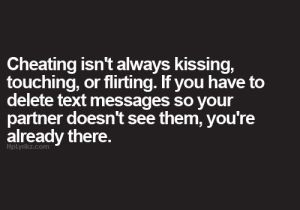
This is where I disagree with the notion that people don’t realize it until after they’ve crossed the line. They knew all along that they were doing something wrong. They may have set lines that they believed they wouldn’t cross. The problem was, they set those lines incorrectly. Instead of setting the line at kissing or sex, it should have been set at other things. It should have been set as soon as you were doing something that you felt you needed to hide.

textingcheating

Emotional Affairs

There are all sorts of great articles on emotional affairs, but here are a few signs that your relationship has crossed the line:

  • You share frustrations about your marriage or relationship with the other person
  • Your flirting is starting to get more aggressive and intense
  • You are arranging to meet the other person for things like coffee and lunch, but you neglect to tell your partner about this
  • You are thinking about and contacting the other person at unusual times – early mornings and late at night

If you are doing any of the above, you may still be telling yourself that it’s innocent, but in your heart you know that you are lying. It may or may not have become physical, but guess what, it’s still an affair. And if you don’t actively stop it, you run the risk of it getting more serious.

cheating8

What to do?

I opened with talking about my buddies lunch meeting. The fact that he was asking my opinion tells me that he already knew the answer to his own question. Affairs don’t just happen, they are a result of choices. If you want to stay faithful to your partner the best thing you can do is not put yourself in a situation that can result in an affair.

One thing about affairs is that happy people don’t cheat. Chances are, if you are thinking about other people then there is something missing in your relationship. In my buddy’s case, he’ll be the first to acknowledge that his marriage is “in a rut”. Being in an unhappy situation makes you more likely to look for happiness elsewhere.

Thing is, affairs are the easy way, and I would even suggest the cowards way out. If your relationship is in a bad spot, look inwards and see what you can do to repair it. Make it your priority and work together with your partner to see if you can repair things. If you find you can’t, accept that your relationship has ended and go your separate ways first.

But acknowledge the fact that you can’t actively work on your relationship if your mind is partially with someone else. You NEED to cut that other person out of your life completely if you expect to have any hope of addressing the issues in your relationship. Unfortunately many people believe they won’t be caught, so they try to have the best of both worlds.

One of my sons occasionally will do naughty things, and sometimes when I ask him to stop he tells me “I don’t want to, it’s fun”. He knows it’s wrong, but he does it anyhow because he enjoys it. That is a self absorbed approach to the world, and shows no respect for the rest of the family. He’s 8 though, an age where the world seems focused just on you. If you are still doing that as an adult there’s a word for it – narcissism. If you are in a relationship it’s supposed to be built on trust, and respect. As soon as you cross those lines and start hiding things from your partner, all you are doing is showing you are not worthy of the trust they have given you. It may start small, but soon you are juggling two lives, and your pursuit of your own “happiness” is liable to hurt everyone around you.

People-Say-You-Dont-Know-What-Youve-Got-Till-Its-Gone

Accountability Part 1 – Responsibility

Responsibility

When you think of someone who is “responsible”, what is the first thing that comes to mind? Often someone who is responsible is seen as someone who is stable, and has their stuff together. They have a decent job (that they have been able to hold), they have a plan, and they are dependable.

Sometimes being responsible is seen as the opposite of being a dreamer. Dreamers live for the moment, while responsible people live a few steps ahead, and are less likely to throw caution to the wind.
But is responsibility really just about stability, structure and planning? Can’t a dreamer also be responsible?

Responsibility Process

I recently came across an approach to looking at responsibility that makes a lot of sense to me. In it, responsibility is defined as a mental process, whereby you own your ability and power to create, choose, and attract.

The idea behind the responsibility process is that there are different stages of behaviors that can culminate in responsibility.

This process starts with Denial, and then moves to Blame, Justification, Shame, Obligation, and finally Responsibility. Each of these stages represents a mode of thinking, and I’m sure every single one of us has operated from each of these modes at one point in time or another (I know I have).

Life is easy when things are going well, and these behaviors usually arise in response to some form of problem or stresses.

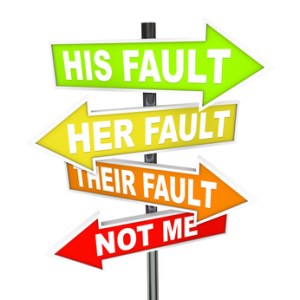
The first three, denial, blame and justification are easy to explain. In these, rather than taking any sort of ownership we are deflecting the issue away from us. In denial there is no problem. In blame the problem is seen, but it’s not “my” problem, it’s someone else’s. And in justification I only partially accept that it’s my problem. I am saying that yes, it’s my problem – but there are a number of reasons as to “why” it happened (and these reasons somehow absolve me of any blame).

Arrow SIgns - Not My Fault Shifting Blame

Shame and obligation are where I think things get really interesting. According to the responsibility process, acting from a state of shame or obligation is almost worse than the previous three. This is because in the first three you are deflecting an issue away from yourself, while for these two you are taking partial ownership. With shame or obligation, you feel as though you are being compelled to do something by some external force. When this happens you are liable to build up resentment that you “have to” do something. Doing something from a state of shame or obligation is fine occasionally, but if it is a common state for you then are liable to give up or quit.

The responsibility process is explained as follows:

When something goes wrong large or small (for example, lost keys or a lost retirement account), The Responsibility Process kicks in. The mind offers Lay Blame as a reason. If you accept blame as a sufficient reason, then you will act on that blame. If you don’t accept it, then your mind offers you an excuse (Justify). And so on. Thus taking personal responsibility is a step-wise process of refusing to act on a series of irresponsible thoughts that your mind offers up.

The Responsibility Mindset

It’s easy to be responsible when things are going well, but this responsibility process is something that largely happens in times of stress, or when things have gone wrong. So how does one shift from operating from a state of shame or obligation to a state of responsibility? Basically it’s all about mindset.

In all aspects of life there are things we “have to do” even though we may not want to, and the attitude you bring into these things is very important. It’s very easy to approach these “have to” moments from a state of obligation, but as noted above doing so runs the risk of building up resentment.

The change in your mindset from obligation to responsibility is subtle, but it’s very important. In both cases you “have to do something”. But in obligation you have to do it because you are being forced to, or because you are trying to meet some sort of external expectations. With a mindset of responsibility these expectations have been internalized. It’s no longer because someone else expects you to do something, it’s because YOU expect yourself to do it. And you expect yourself to do it because you see it as required or believe it is the right thing to do at the time.

The early states of the responsibility process (denial, blame, justification, shame and obligation) are reactionary, almost primal responses. They are also very “me” focused; only seeing a situation in terms of how it affects you personally. Operating from responsibility is different in that it is a conscious decision. Operating from this state requires three things:

  1. Intention – Intending to respond from Responsibility when things go wrong.
  2. Awareness – Catching yourself in the mental states of Denial, Lay Blame, Justify, Shame, Obligation, and Quit.
  3. Confront – Facing yourself to see what is true that you can learn, correct, or improve

Being responsible is a conscious process. You “choose” to act and respond in a certain way. You may later find out that the decision you made wasn’t a good one, but owning that decision is an act of responsibility.

responsibility-the-ability-to-choose-your-response

The “Have To’s”

To illustrate the responsibility process, let’s walk through it with a simple example. Imagine you are a parent, and your child has filled their diaper:

Denial. You can always pretend that the diaper hasn’t been filled (and hope that someone else notices and changes your child for you). But the other person may do that too, and eventually the wonderful aroma will become too much to bear. More importantly, your child will be uncomfortable and crying will probably start (it could be yours or thiers).

Blame and Justification. You can blame your child for filling their diaper, but that won’t change anything. And you may try justifying things (I shouldn’t have to change him/her, I did it last time!!!), but what does that really accomplish? The child will still be uncomfortable, and still need to be changed.

Shame and Obligation. Here you decide that yes, you will change the diaper. But you don’t “want” to do it. You’re only doing it because you have to. Are you going to get resentful with your child? Some parents actually do, and over time this can lead to things like child abuse. But those cases are fairly extreme, and hopefully rare.

Responsibility. This is the natural course of action for your mind to take. You still probably don’t “want” to change the diaper. But you recognize that the diaper has been filled, the child is uncomfortable and incapable of changing themselves. Plus you care about your child and recognize that the diaper simply needs to be changed, so you do it.

In this scenario I suspect that most of us would automatically operate from a position of responsibility. In times of high stress we may slip back into some of the other stages temporarily, but we change the diaper anyhow because it is the right thing to do. It’s an easy choice.

Many of life’s “have to’s” fall into this category. Going to work every day? You don’t always want to and you may have days you are resentful. You may even have a few “sick” days that are actually mental health days. But going to work is something that we have to do.

Making Choices

The examples above are easy ones. But now consider something like your relationship.

What if your partner loves ballet while you don’t, and they periodically ask you to go with them? In a prior post I mentioned that it’s positive for your relationship if you can show some interest in their interests, as it’s a way for you to show interest and caring for them.

You may prefer that they find a friend with some interest in the ballet to go with, but there may be times that you “have to” go with them. What attitude do you bring into those times? If you attend the ballet out of a sense of obligation, you may go in expecting to hate it, and see it as wasted time where you could be doing something else that you enjoy more.

Perhaps a better (and more responsible) approach is to see it as an opportunity to share something with your partner that is special to them. In both cases you “had to” do something. But in one case you owned the decision to attend.

Choosing Responsibility

No one is always responsible. When faced with challenges and stresses the default is for us to respond with the lower level states – denial, blame, justification, shame and obligation. That’s normal, and common. And honestly, sometimes it’s a lot easier to stay in those states. But it’s also not healthy.

If you find that you are frequently angry or resentful, then think of this process. Think of something you are upset about, and ask yourself where you fall on this scale. Are you blaming? Justifying behavior that at least a part of you knows is wrong? Are you doing things due to shame or obligation? All of these things can lead to resentment, and anger. Which of course leads to hate, which leads to the dark side of the force (ummm, wrong movie)…

In seriousness though, resentment and anger are some of the most toxic emotions you can have. So being able to switch from a mindset of obligation to one of responsibility is very important to both your own health, and the health of your relationships.

I’m not suggesting that anyone should always have to do something. If you find that you are constantly doing things because you feel obligated to, ask yourself if you really “have to” do it. Can you simply say no? Don’t be afraid to set boundaries and say no sometimes. But if you truly “have to” do something then there’s a reason for it. Try approaching it from a framework of responsibility, and you will probably be happier and healthier for it in the long run.