Power and Control

Man-woman-arm-wrestling

Power and Control. Two things you don’t ever want to think about in a relationship, but at the same time they are things that affect EVERY relationship.

Relationships are full of decisions, big and small. Where you live, how you save/spend money, who takes care of what chores, what car you drive, how you parent, how you spend your leisure time, how often you visit family. Even something as simple as what shows you watch. The list is pretty much endless.

Some decisions are individual ones, as they only affect one person. But when you are in a relationship, a surprising number of decisions actually affect both people in some way shape of form. That’s the thing about relationships; you are no longer just a “me”. You are part of a “we” and you often have to take your partner into consideration with the choices you make.

Add to this the fact that people are different. Chances are good you have some similarities with your partner, often in values and common interests. But for every similarity there are a number of ways that you are probably very different.

These differences allow us to complement and enhance one another, but when it comes time for decision making they can be sources of conflict. Big or small, conflict can happen in all decisions.

The Balance of Power

It’s safe to say that all relationships have some sort of balance of power. If you don’t like the word “power”, replace it with influence – but it’s essentially the same thing. In a perfect world it is an equal split, where both parties in the relationship have equal say in all decisions, and they contribute equally to the relationship. Reality is not that simple though, and an equal split only happens in a mythical magical world where unicorns roam the land (and perhaps not even there).

“Equal” doesn’t actually exist. And with all the areas that people can influence a relationship how would you even measure it? Some decisions have more impact than others, and others involve more efforts. But “equal” shouldn’t actually matter. Some people are more dominant and others are more passive. Some naturally take on a leadership role, and other people are happy to follow. In most relationships people find a rhythm, or a balance that works for them. That balance may be 50/50, 55/45, 60/40 or even 80/20. I can’t see how the last one would work, but as long as both parties feel they are valued, being heard, and their needs are being met it shouldn’t matter.

As a side note, in most cases I believe people actually overvalue their own contributions to a relationship in relation to their partners. If you think about it, you know about all the things that you do. Chances are, there are a number of things you do that your partner doesn’t even notice. Well if you do things they don’t notice, there are probably things they do that you don’t notice. This dynamic creates a skewed view of who is actually contributing what to a relationship. Anyhow, back to the topic at hand…

Power Struggles

If power is relatively balanced in a relationship, you probably don’t even think about it. But even in the most balanced relationships, there will be times that your needs and wants will conflict, and choices have to be made. How a couple handles these times can be very important to the relationships overall success.

Studies show that needing to be in control, or to have things “your way” is one of the fastest routes to unhappiness. No one gets things their way all the time, and it would be extremely unhealthy if they did. Relationships involve two people, and both need to feel valued. So sometimes decisions will go the way you want, and other times they won’t. The question becomes, how do you respond when things don’t go your way?

Do you accept it? Do you get angry? Do you sulk? Do you keep score, and figure your partner got their way this time, so next time it’s your turn?

Who is Right?

Maybe you think that things should be your way, because your way is usually right, or better. First off, that line of thinking is broken. In most circumstances there isn’t a “right way”. There are usually multiple approaches to accomplish the same thing and each persons ideas and contributions have at least some merit.

But just for the sake of argument, let’s assume that your ideas are consistently better than your partners. Does that mean things should be the way you want? I would argue no.

I’m reminded of my grandmother. Growing up, visiting grandma was always a highlight, and one of the things that we did was play cards. This was my introduction to gambling, as we played for money. Of course, grandma provided the money so there was never any risk to me. She would win some, and I would win some. But at the end of the day I always came home with a bit of change in my pocket.

As I got older I realized that as I was learning, grandma always held back. Cards are somewhat random, but she let me win, and let me build confidence in myself and my abilities. As my abilities grew, she played harder, until eventually we were on a fairly even level.

How well would I have learned if she didn’t hold back? If she repeatedly beat me, would I have ever learned the games? Would I have enjoyed them? Heck, would I have liked HER very much?

I’ll admit, cards are different from life. But a focus on things being “your way” immediately makes thing adversarial. It means someone else isn’t getting “their way”. As grandma taught me, even if I know I’m right, the relationship is more important than getting my way. Pick your battles. It’s important to stand up for what you believe is right, but often there is no right and wrong. Relationships aren’t just about one person. They require compromise, and letting someone else have their way is an important component of keeping the relationship happy.

Control

Are you a parent? If so, how do you get your child to do the things you want? If you aren’t a parent, how did your parents get you to do what they wanted?

A common parenting tactic is praise/reward and punishment. Praise reinforces positive behavior (the behavior we want), and punishment is intended to be a deterrent for negative behavior. Punishment can be active (scolding, spanking, time outs etc) or passive (taking something away, not talking to them, etc).

Praise and punishment are needed with children, because children are inherently selfish. They are initially unable to see the world in any way other than how it impacts them. Empathy is learned.
When dealing with your partner however, using punishment to address relationship issues is a VERY bad idea.

Dealing with Anger

Anger is natural, as we all get angry sometimes. However anger is one of the most destructive forces in a relationship, and it requires a healthy outlet. Explosive anger can create an atmosphere of fear. Withholding anger can be even worse as it can result in passive aggressive behavior.

Passive aggression is when instead of dealing with anger through discussion or confrontation, it is dealt with in a more subversive fashion. Often anger is expressed through body language, withdrawal, silence, or withholding affection.

It is understandable to not want to be around the other person when angry. But when this happens for extended periods or becomes a pattern of behavior then this about punishment and control. Passive aggression is a form or retaliation, it is something that is done to hurt or get back at someone.
Interestingly, people who exhibit passive aggressive behavior often don’t fully realize that they are doing it. For them it is simply their method of coping, and is often a result of how they were taught to deal with anger as a child.

A few notes on passive aggressive behavior:

  • It is one of the highest predictors of divorce
  • It is often a symptom of poor communication
  • It leads to low levels of intimacy in a marriage
  • It is the most common form of emotional abuse

When it comes to anger, here are a few things to think of:
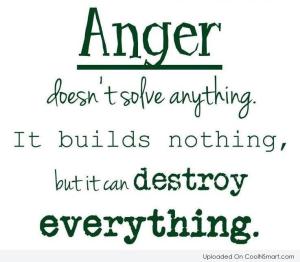
Anger

the-more-anger-you-hold

Say What you Mean

There are always elements of power in a relationship. But relationships should never be about getting what you want, and struggles over power and control have no place in a relationship.

A relationship should be a place of emotional safety. It is supposed to be an environment where you are there to support each other, and each others needs. Your partners needs should be as important as your own, and shouldn’t be conditional on whether or not they have met your needs first.

If your relationship is characterized by anger (overt or passive aggression), or struggles for control, then it is not a healthy environment. But it can change. In almost all cases, this is a result of poor communication and coping skills, which likely developed prior to the relationship.

It is important to learn to communicate in a healthy fashion.  Doing so will not only increase the chances of success in your relationship, but it will also help reduce tension and build intimacy.  Beyond the ways that it will improve your relationship, it’s important to your own health.  Anger is natural, but it helps nothing.

Anger is an acid that does more harm to the vessel in which it is stored than to anything on which it is poured – Mark Twain

For the Sake of the Children

family

I think that most parents would agree that you will do almost anything for your children. Once you have brought these little beings into the world they change your life forever.

After becoming a parent, many people start to focus on their children. And their own needs, wants and desires take a backseat to doing what they believe is best for the children. To a degree this is a natural part of being a parent, as in the early years children are completely dependent. As the children become older and gain some independence many parents start to make time for themselves again. This can be a difficult transition time for many, but when it happens the children still will always be a priority.

People will do many things for their children. But one thing I don’t believe they should ever do is stay in a relationship “for the children”.

A Stable Home

Any long time readers at thezombieshuffle.com may be wondering where I’m going with this as I’m a big believer in marriage and long term relationships. Furthermore, child psychologists agree that a stable home life with both parents is very beneficial to the personal and emotional development of children.

It seems clear that having children grow up in a home with both parents is a positive thing. So why would I say you should never stay for the children? First, it’s important to understand what is meant by “a stable home life”.

A stable home life goes a lot deeper than just being able to come home to mommy and daddy; it means living in a house full of love.

When discussing environments for children most child psychologists will list some variation on the following scenarios (in order of benefit to the children):

  1. Child is raised by both parents in a loving home
  2. Parents are apart, but the child is raised, supported and loved by both parents
  3. Child is raised by a single parent where the other parent is largely absent
  4. Parents are together “for the child”, but the child grows up in a tense or loveless home
  5. Parents are apart and use the child is used against each other

The ranking of the first and last options seems obvious. Where confusion seems to come in is in the value of staying together “for the sake of the child”. Some people believe that simply providing the child with a home with both parents present is a positive thing. This is not only incorrect, but can actually do long term harm to the emotional development of a child.

The important thing is not the presence of both parents. The truly important thing is the presence of love.

Trouble on the Home Front

I’ve heard of all sorts of troubled relationships involving kids. In some cases parents split up and share custody. In other cases they stay together “for the children” and are unhappy, usually leading to one or both having affairs on the side in order to find the fulfillment that is lacking in their marriage.

Some wait until their children are grown before going their separate ways, and in one case I’ve heard of (second hand) the couple had agreed to split up as soon as their daughter reached the age of majority, and told her just after her 18th birthday. Geez, happy birthday to her.

I believe that the primary role you serve as a parent is as a teacher. You are trying to teach your child, and guide them to be the best people they can be while preparing them for life on their own. If you stay just for the children, what exactly are you teaching them?

A Life of Love

Recently I was at a funeral, and during the eulogy the daughters spoke about their father. One thing that both of them commented on was how much their father loved their mother.

After they spoke, the funeral director spoke and talked about how with the holiday season it is easy to get caught up in gifts. Often we want our gifts to be expensive or extravagant. Then he made the following comment:

As a parent, the greatest gift you can give your children is to love your spouse/partner.

I believe in that 100%. If you don’t do that, what exactly are you doing “for the children”. Children learn from what they see. The relationship parents model to children are the things they come to learn are “normal”. If someone stays “for the children” but has checked out on the relationship how does this help them? Kids are smart, and they can pick up on body language and emotional undercurrents. If you stay in an unhappy relationship for the children you aren’t helping them. All you are doing is creating emotionally broken children.

Reasons to Stay

Just to be clear, I am by no means suggesting that if you are unhappy in your relationship and there are children involved you should leave it.

In fact I understand the idea of staying “for the children”. Relationships naturally go through ups and downs, and often more than just love is needed in order for a relationship to last. Children can act as glue for a relationship, and sometimes they allow a couple to stick things out and make it through the tough times.

But staying in a relationship should never be just for the children. As soon as someone says they are staying “for the children” that implies that they don’t truly want to be in the relationship, and this lays the groundwork for unhappiness and resentment.

You need to be able to stay for the relationship itself, and for the value and satisfaction that it provides to your own life. If it happens to be beneficial to the children at the same time great, that’s a nice side effect.

So no, I am not suggesting leaving your relationship. What I am suggesting is that if you want to truly do something for your children, embrace your relationship. Work on it, and improve it. Do your best to build and model the type of relationship that you would want them to have. One full of love, caring and affection. Remain committed to the relationship and continue to support and love one another.

Love your partner and make that love part of your everyday life. People are different in how they express love, but however you express it make sure that you do. And let the children see that. Give them a home full of love. And let them know that not only do mommy and daddy love them, but mommy and daddy love each other too.

The Challenges of Parenting

I have two children, and I love them to pieces and can’t imagine life without them. But you know what? Being a dad is really hard sometimes, and I have times that I don’t particularly care for some of the things they do, decisions they make, or the way they sometimes treat me. My children are fairly young, and are still prone to the occasional tantrum (realistically though, aren’t we all?). When my child is in the throes of a tantrum, at that particular moment I don’t necessarily enjoy being a dad. But that doesn’t mean I love them any less, or that I will abandon them. And I’m pretty sure I’m not alone in this.

For full disclosure I suppose I should admit that at these times I often tell them if they don’t improve their behaviour I will be putting them up for sale on ebay. But it’s a bit of a joke between us, and they know that I’m kidding (usually).

Why are relationships with partners any different? Why do we hold them to a different standard? Your partner will have days that they make you angry, and there will be days that you don’t particularly like them. That’s just life. We don’t give up on our children, and we don’t stop loving them or showing them that love. So why do we do it with our partners?

This may be a gender thing, but I believe my relationship with my wife is in some ways more important than my relationship with my children (or at least on an equal level). Eventually my children will grow up, move out and start their own lives. I will always be there for them and be a part of their lives, but their lives will be exactly that – theirs. My relationship with my wife is one where I hope we are able to share our lives and support each other “until death do us part”.

Leaving a Legacy

I hope I have a long life ahead of me, but when my time comes I hope my children are able to stand up and say that I was a good man who did my best for them, and that I loved them. And I also hope they are able to say that I loved their mom, and they knew that, felt it, and saw it.

Of all the lessons I am able to teach them, I hope I am able to teach them that life may not always be easy, but love can always endure.

A Christmas Greeting

xmasornaments

Ah, the Christmas season is upon us. It’s a time of year that means different things to different people. For some it’s about Santa, and presents under the tree. For others it’s about the birth of Jesus (though probably also about Santa and presents under the tree). And for others it’s simply a time for family, and spending time with people you love.

Oh yeah, and it also tends to be about food. Lots, and lots of food (I’m feeling bloated just thinking about the days to come).

I’ve always loved this time of year. Some of my favorite childhood memories revolve around Christmas. As a child, it was a huge event. My parents would decorate the whole house. It seems like every window had lights, and every room was strung with garland. Christmas cards became a decoration, as yarn was hung in the kitchen with cards over them.

And then there was the tree. Decorating the house was a task largely done by my parents (and if memory serves correctly, primarily my Dad). But the tree? That was a task for the whole family. We each had our own “special ornaments” that we would hang (in fact, I still have an ornament that I made when I was in cub scouts, though in recent years I let my boys hang it for me). But decorating the tree together with Christmas carols playing in the background was always one of my highlights.

In addition to the decorating there was the baking. My parents always hosted a big dinner for Christmas, and looking back it feels like my dad started the baking at least a month in advance. Mind you he had to, as my siblings and I would sneak down to the basement freezer and eat the baking almost as fast as he could make it.

A strange thing happens as you age though. As you transition from child to adult, and then start your own family you find that you develop your own traditions. If you are in a relationship hopefully you are able to build a new tradition by borrowing bits and pieces from both your childhood and that of your partner, while adding in bits and pieces to make your “new tradition” uniquely your own.

My blog has largely been a forum for me to share ideas and philosophies on relationships. And although I focus on spousal/romantic partner relationships, all relationships are important. Christmas is a season of giving, but it’s never been about the presents. Presents are simply symbols showing someone you care about them. It’s really a season of love. So take time this holiday season to show the important people in your life that you care, and that you love them.

For any readers out there, I wish the best for you and your families. Merry Christmas to all…
…and to all a good night.

Accountability Part 2 – Taking Ownership

accountability_header

What is the one and only thing you have control over in your life? Your job? Nope. Your friends? Nope. Your kids? Uh, definitely nope.

The only thing you have control over is you. You control your actions and your decisions. You have the ability to “influence” other things and other people. But just as you make your choices, they make theirs. And trying to control anything else is a bad idea anyhow .

Likewise there are things that influence you and your decisions. Some things have greater influences than others. But ultimately you choose which influences you will allow to impact you, and you make the choices that lead to your decisions.

In part 1 I went over the Responsibility Process. It talked about consciously choosing to be responsible, and the mental process that happens as we move through various states from denial to consciously choosing responsibility. Choosing responsibility is only part of accountability however.

Accountability is about owning your life, your decisions and your actions. The only person who controls those is you.

For some people this idea is liberating, while for others it’s terrifying. It’s not always easy to make a decision, because what if you make the wrong choice? When you make a choice, you are responsible for the outcomes or consequences of that choice. That’s fine when things go well, but what about when they don’t? Having to “own” bad choices can be a very scary thing to face.

Because of this it’s easier to try and deflect the decision making on to someone else. Denial, Blame and Justification are all examples of deflecting decision making away from yourself. Another approach is to simply not make a decision. However NOT making a decision IS a decision. It is essentially the same as denial. The following quote sums this up beautifully:

Accountability_inaction

It’s important to understand that no one acts from a position of accountability all the time. All of us have moments that we try to deny, blame, justify, or act due to shame or a sense of obligation.

Periodically that is fine, but some people rarely hold themselves accountable. Instead their default mode of operating is denial, blame, justification, shame and obligation.

It seems obvious that these are negative modes of operation, so would anyone want to operate from these modes? I don’t believe anyone really “wants” to operate from any of these modes. Rather, these modes are primal responses to issues, and it is easy for your mind to accept them as acceptable responses.

Learned Helplessness

Have you ever heard of Learned Helplessness? There’s a lot of valuable literature on it, but in summary Learned Helplessness is when someone has lost the belief that they are able to change their situation. They actually CAN impact their situation, but due to a belief that they can’t, they don’t even try. This creates a self fulfilling prophecy, where the lack of belief leads to an inability to attempt change (or in some cases a half hearted attempt). But this inability to attempt change is the actual driver behind the lack of change.

Learned Helplessness often goes hand in hand with Victim Mentality. This is a learned trait where someone tends to:

  • Blame others for a situation that they have either created or contributed to. They don’t take responsibility for their own role in the situation
  • Assume the worst, incorrectly attributing negative intentions to other people
  • Compare themselves to others, believing that other people are happier than they are

Impacts on Mental Health?

Learned Helplessness and Victims Mentality can have serious consequences. People who exhibit these characteristics generally don’t hold themselves accountable for their actions and decisions. They also tend to have low levels of happiness. More alarming, there is a strong correlation between these and things like clinical depression and mental illness.

Thankfully, because these are learned mindsets they can be corrected. For many psychologists and counselors significant effort is spent trying to correct these negative mindsets and replace them with healthier ones.

Unfortunately studies show that these mindsets and the issues related to them are on the rise. I’ve seen numbers showing anywhere from a tenfold to a thirty-five fold increase in the last two generations.

Here is an interesting quote I found about this (in this case specifically on depression):

There is 10 times more major depression in people born after 1945 than in those born before. This clearly shows that the root cause of most depression is not a chemical imbalance. Human genes do not change that fast.

Let’s re-examine a few of these points:

  • There are significant increases in major/clinical depression and other mental illnesses or disorders. The speed of the increases suggests some sort of cultural or social cause
  • These conditions show a high correlation to characteristics like Learned Helplessness and Victims Mentality. Both of these are learned behaviors, characterized by low levels of happiness and personal accountability

Looking at this makes me wonder about the relationship between personal accountability and issues such as depression. Is it possible that not learning personal accountability predisposes you to future issues? If so, what are some of the societal changes that have led to this shift?

Culture Shift

One possible contributor is that we seem to have become a culture of blame and entitlement. We see this in the legal world, where frivolous lawsuits have become the norm. But we also see it in other aspects of life.

What’s that, little Suzie didn’t do well in school? Well it must be because she has a poor teacher. You aren’t getting the playing time for your sports team? It’s because the coach doesn’t like you. You don’t have a good job? It’s because of the economy. Your relationship fell apart? Well that’s because you and the other person just weren’t compatible.

Where is the sense of ownership? Where is the sense of pride in immersing yourself in something and knowing that your success or failure is largely under your own control?

Accountabilityandblame

Accepting Failure

One possible contributor to this shift is an unreasonable focus on results, or success. There is considerable pressure to “be the best”. One slogan I remember going around (at the Olympics no less) was:

Second place is just the first loser.

I’m all for improving yourself and trying to be the best that you can be, but there is just so much that is wrong with that slogan. It’s always good to have other people to measure yourself against, but what’s more important is how you are improving and growing personally.

One problem with this focus on success and being the best is that is has created a fear of failure. Failure may be disappointing, but it’s a good thing. Failure is the opportunity to begin again, this time more intelligently. It is our reaction to failure that matters. Failure is how we learn.

Is everything going to go your way in life? You think you’re on the Earth and everything you want to happen to you is going to happen to you positively? The measure of who we are is how we react to something that doesn’t go our way. – Greg Popovich

Over Parenting

One additional item that I believe contributes to a lack of accountability is us, and how we parent. The world has changed. Kids no longer get out and play the way they once did. I think back on some of the things I did as a child, and based on today’s approach it’s amazing I’m still alive (and I’m not THAT old). I played, I fell, and I got hurt. A lot. But my cuts and bruises healed, and I got up to play another day.

With two working parents, busy schedules and a perception of a more dangerous world, you don’t see kids out in parks and playgrounds the way they once were. Today many kids are largely in scheduled events. When they are there at the playground at all usually parents are a few feet away, watching to ensure that no one kidnaps them and that their every bump and bruise is attended to. I’m as guilty of this as anyone else. Why do we do this? We do it out of love, and concern for our children.

But in the process we are crippling them. We are removing choice, and removing the ability to fail. They need to fail, they need to learn. With the best of intentions we are stunting their growth.

As hard as it is to do, sometimes if you love someone the best thing to do is sit back and let them make their own mistakes. Let them fail. Pick your moments though (something like learning to swim is perhaps not the best time).
Ask yourself this, when we try to do everything for your children what are we really teaching them?

Taking Ownership

One of the most influential people in my life was my Grandmother. One thing that sticks with me from her was a story she would tell. She admired her father greatly, and would often seek his opinion on things. When she asked him about something he would respond “I know what I think, but what do you think?” This has always resonated with me. If someone asks your opinion and you give advice on what you would do, you are taking ownership of their issue. Maybe a better approach is to coach them, and help guide them to find their own solutions.

Accountability

Catch yourself when you are in denial, blaming, justifying or acting out of shame or obligation. Take ownership of your own life. Accept that no matter what your situation and influences are, the only person who can control you is you. The right choice is not always the easy choice. But as a buddy of mine always says:

It’s never too late to make the right decision

Holding on to Hope

It’s a little after 1am, and I’ve just returned from the movie Interstellar. I should be heading to sleep, but the movie really resonated with me so I feel a need to write.

Without spoiling anything, to me the movie was about hope, love and family.  Central concepts that have carried me through my life, and especially through the past few years.

A while back someone close to me told me that they struggle with a sense of hopelessness. And earlier today one of my readers commented that things like affairs often start when people have lost hope for happiness in their relationships.

I truly can’t understand that. I’ve had my days when it’s hard to find the positive in situations, and when the future looks bleak. But it is always hope, and a belief that tomorrow is a new day where things can always get better that carries me through. Well, that and a healthy dose of stubbornness.

I can be overly analytical at times, but underneath that is a true belief in love. When I started writing it was to try and understand what causes relationships to break down, and why people end up drifting apart or living with unhappy relationships. I’ve identified and written about many common problems, but underneath I still truly don’t understand them.

I know that love isn’t always enough, but WHY isn’t it? Why does anger ever form and resentment build. Why can’t people just love each other? Why is it so hard to work on problems and come to happy solutions together. Why isn’t love enough?

Parents will always love their children unconditionally, and some people say that family will always be family. If that’s true, then why can’t we extend that same unconditional love to our chosen families – our partners.

Vows of marriage seem all too easily broken. But it should be so simple. If we believe in love and cherish one another, that should be enough to allow us to weather the toughest storms. I believe in love, and I always will. I also believe in hope.

The Christmas season is almost here. It is a time for families and a time for love. Earlier this evening I put up the tree with my family, and it was beautiful. Everyone working together and contributing to a common cause, and after we were finished a few peaceful moments when we sat one the couch together with the house being illuminated by only the lights of the tree.

Family is so important, and love is so important. How do we ever let things get in the way? Take time to tell the people closest to you that you love them, and always hold onto Hope.

No matter how dark things may seem, remember that tomorrow is always a new day.

Hope

Accountability Part 1 – Responsibility

Responsibility

When you think of someone who is “responsible”, what is the first thing that comes to mind? Often someone who is responsible is seen as someone who is stable, and has their stuff together. They have a decent job (that they have been able to hold), they have a plan, and they are dependable.

Sometimes being responsible is seen as the opposite of being a dreamer. Dreamers live for the moment, while responsible people live a few steps ahead, and are less likely to throw caution to the wind.
But is responsibility really just about stability, structure and planning? Can’t a dreamer also be responsible?

Responsibility Process

I recently came across an approach to looking at responsibility that makes a lot of sense to me. In it, responsibility is defined as a mental process, whereby you own your ability and power to create, choose, and attract.

The idea behind the responsibility process is that there are different stages of behaviors that can culminate in responsibility.

This process starts with Denial, and then moves to Blame, Justification, Shame, Obligation, and finally Responsibility. Each of these stages represents a mode of thinking, and I’m sure every single one of us has operated from each of these modes at one point in time or another (I know I have).

Life is easy when things are going well, and these behaviors usually arise in response to some form of problem or stresses.

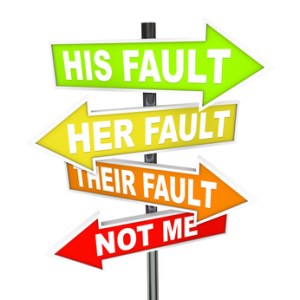
The first three, denial, blame and justification are easy to explain. In these, rather than taking any sort of ownership we are deflecting the issue away from us. In denial there is no problem. In blame the problem is seen, but it’s not “my” problem, it’s someone else’s. And in justification I only partially accept that it’s my problem. I am saying that yes, it’s my problem – but there are a number of reasons as to “why” it happened (and these reasons somehow absolve me of any blame).

Arrow SIgns - Not My Fault Shifting Blame

Shame and obligation are where I think things get really interesting. According to the responsibility process, acting from a state of shame or obligation is almost worse than the previous three. This is because in the first three you are deflecting an issue away from yourself, while for these two you are taking partial ownership. With shame or obligation, you feel as though you are being compelled to do something by some external force. When this happens you are liable to build up resentment that you “have to” do something. Doing something from a state of shame or obligation is fine occasionally, but if it is a common state for you then are liable to give up or quit.

The responsibility process is explained as follows:

When something goes wrong large or small (for example, lost keys or a lost retirement account), The Responsibility Process kicks in. The mind offers Lay Blame as a reason. If you accept blame as a sufficient reason, then you will act on that blame. If you don’t accept it, then your mind offers you an excuse (Justify). And so on. Thus taking personal responsibility is a step-wise process of refusing to act on a series of irresponsible thoughts that your mind offers up.

The Responsibility Mindset

It’s easy to be responsible when things are going well, but this responsibility process is something that largely happens in times of stress, or when things have gone wrong. So how does one shift from operating from a state of shame or obligation to a state of responsibility? Basically it’s all about mindset.

In all aspects of life there are things we “have to do” even though we may not want to, and the attitude you bring into these things is very important. It’s very easy to approach these “have to” moments from a state of obligation, but as noted above doing so runs the risk of building up resentment.

The change in your mindset from obligation to responsibility is subtle, but it’s very important. In both cases you “have to do something”. But in obligation you have to do it because you are being forced to, or because you are trying to meet some sort of external expectations. With a mindset of responsibility these expectations have been internalized. It’s no longer because someone else expects you to do something, it’s because YOU expect yourself to do it. And you expect yourself to do it because you see it as required or believe it is the right thing to do at the time.

The early states of the responsibility process (denial, blame, justification, shame and obligation) are reactionary, almost primal responses. They are also very “me” focused; only seeing a situation in terms of how it affects you personally. Operating from responsibility is different in that it is a conscious decision. Operating from this state requires three things:

  1. Intention – Intending to respond from Responsibility when things go wrong.
  2. Awareness – Catching yourself in the mental states of Denial, Lay Blame, Justify, Shame, Obligation, and Quit.
  3. Confront – Facing yourself to see what is true that you can learn, correct, or improve

Being responsible is a conscious process. You “choose” to act and respond in a certain way. You may later find out that the decision you made wasn’t a good one, but owning that decision is an act of responsibility.

responsibility-the-ability-to-choose-your-response

The “Have To’s”

To illustrate the responsibility process, let’s walk through it with a simple example. Imagine you are a parent, and your child has filled their diaper:

Denial. You can always pretend that the diaper hasn’t been filled (and hope that someone else notices and changes your child for you). But the other person may do that too, and eventually the wonderful aroma will become too much to bear. More importantly, your child will be uncomfortable and crying will probably start (it could be yours or thiers).

Blame and Justification. You can blame your child for filling their diaper, but that won’t change anything. And you may try justifying things (I shouldn’t have to change him/her, I did it last time!!!), but what does that really accomplish? The child will still be uncomfortable, and still need to be changed.

Shame and Obligation. Here you decide that yes, you will change the diaper. But you don’t “want” to do it. You’re only doing it because you have to. Are you going to get resentful with your child? Some parents actually do, and over time this can lead to things like child abuse. But those cases are fairly extreme, and hopefully rare.

Responsibility. This is the natural course of action for your mind to take. You still probably don’t “want” to change the diaper. But you recognize that the diaper has been filled, the child is uncomfortable and incapable of changing themselves. Plus you care about your child and recognize that the diaper simply needs to be changed, so you do it.

In this scenario I suspect that most of us would automatically operate from a position of responsibility. In times of high stress we may slip back into some of the other stages temporarily, but we change the diaper anyhow because it is the right thing to do. It’s an easy choice.

Many of life’s “have to’s” fall into this category. Going to work every day? You don’t always want to and you may have days you are resentful. You may even have a few “sick” days that are actually mental health days. But going to work is something that we have to do.

Making Choices

The examples above are easy ones. But now consider something like your relationship.

What if your partner loves ballet while you don’t, and they periodically ask you to go with them? In a prior post I mentioned that it’s positive for your relationship if you can show some interest in their interests, as it’s a way for you to show interest and caring for them.

You may prefer that they find a friend with some interest in the ballet to go with, but there may be times that you “have to” go with them. What attitude do you bring into those times? If you attend the ballet out of a sense of obligation, you may go in expecting to hate it, and see it as wasted time where you could be doing something else that you enjoy more.

Perhaps a better (and more responsible) approach is to see it as an opportunity to share something with your partner that is special to them. In both cases you “had to” do something. But in one case you owned the decision to attend.

Choosing Responsibility

No one is always responsible. When faced with challenges and stresses the default is for us to respond with the lower level states – denial, blame, justification, shame and obligation. That’s normal, and common. And honestly, sometimes it’s a lot easier to stay in those states. But it’s also not healthy.

If you find that you are frequently angry or resentful, then think of this process. Think of something you are upset about, and ask yourself where you fall on this scale. Are you blaming? Justifying behavior that at least a part of you knows is wrong? Are you doing things due to shame or obligation? All of these things can lead to resentment, and anger. Which of course leads to hate, which leads to the dark side of the force (ummm, wrong movie)…

In seriousness though, resentment and anger are some of the most toxic emotions you can have. So being able to switch from a mindset of obligation to one of responsibility is very important to both your own health, and the health of your relationships.

I’m not suggesting that anyone should always have to do something. If you find that you are constantly doing things because you feel obligated to, ask yourself if you really “have to” do it. Can you simply say no? Don’t be afraid to set boundaries and say no sometimes. But if you truly “have to” do something then there’s a reason for it. Try approaching it from a framework of responsibility, and you will probably be happier and healthier for it in the long run.

The Pursuit of Happiness

happiness

Are you happy? We all want to be happy, and we are all deserving of happiness.

Previously I’ve touched on what I believe happiness is. Unfortunately, happiness is not like a switch, where you are either happy or you aren’t. It’s more like a sliding scale where you can fall anywhere on the spectrum between happiness and unhappiness. But it’s complicated further because there are different areas in your life where you can be happy, and chances are good that you land on different spots in the “happiness spectrum” in each of those areas.

Think of some of the main areas of your life. I’m guessing most of us break our lives down into something like the following:

  • Committed relationship (spouse or partner)
  • Immediate families (parents, siblings, children, grandchildren)
  • Extended families
  • Social Networks (friends and acquaintances)
  • Jobs
  • Personal interests/hobbies
  • Additional organizations/memberships

Those are the first things that came to my mind, and you can add and subtract from that list in whatever way best applies to you. If you think of all the different roles that you play, you can have a different level of happiness in each of them. For example, you may not be happy in your job (which will affect your overall level of happiness), but still consider yourself happy.

Looking at the different roles that you play, how can you really measure happiness? If you are largely happy, or at least content, then it’s probably not something you even think about as it’s just a natural state.

The Search for Happiness

If you characterize yourself as an unhappy person, it seems obvious that you need to do something about it.

FindingHappiness

It’s clear that you need to change something. But what should you change? It’s probably best to try changing the “small” things first. Maybe take up a new hobby, or join a club or a team. If there are people in your life that are bringing you down, try talking to them about it, and if that doesn’t work spend less time with them. The same applies to family.

But what if it’s something bigger, like your job or your relationship with your partner/spouse? If you aren’t happy in your job, you can (and perhaps should) change your job. If it’s your relationships, then there are some bigger questions to answer. A few posts back I talked about questioning your relationship, so I won’t go over that again (in summary you either communicate and try to work on things or you move on).

One problem is that people who are in search of happiness often don’t know how to go about trying to achieve it. To make matters worse, they often go about searching for it in the wrong way.

There are countless cautionary tales of people who have embarked on self destructive behaviors, or made questionable life choices in the pursuit of happiness. In the search of happiness people often start engaging in activities either to make them “feel good” or to mask the pain of the unhappiness they feel.

Things like shopping, comfort eating, gambling or sex become outlets that give them a bit of a high. People may also turn to an actual high through drugs and alcohol. A more recent trend is turning to social media, and measuring happiness by the number of friends, likes, or complimentary remarks to posts.

Unfortunately these things are only temporary fixes, ways of numbing the pain and emptiness that they are feeling inside. They are like putting a band-aid on a gaping wound. And guess what? In most circumstances these people don’t actually end up any happier.

Happiness comes from within

One of the most difficult things about the search for happiness is that there is no magic pill; and you can’t “find it”. All the money and fame in the world can’t make someone happy. Just think of all the rich and famous people who make the news for things like addictions, behavioral issues or even suicide. Nothing can “make you happy”, you have to find it within yourself.

One problem with the pursuit of happiness is that I believe people aren’t actually pursuing happiness. They are really looking for meaning and fulfillment. There is a correlation between happiness and meaning, as people who find meaning in their lives generally are people who would describe themselves as happy (or at least leaning towards happiness on the happiness spectrum).

Ideally you find meaning in all aspects of your life – your committed relationship, your family, your social networks, job, and your personal interests. The reality is, very few people have a job that they love. Hopefully you find some fulfillment in your job, but many people find themselves in jobs that they don’t like, and they stay due to complacency and/or a need to pay the bills. Sometimes it’s worth taking a pay cut to find something more fulfilling, but if you have dependents then it’s easy to feel “stuck” in your job.

If you aren’t happy in one aspect of life (such as your job) it becomes especially important to find meaning in other areas. One of the most common areas that people neglect is their personal interests, and self nurturing. We all have talents and interests and it is important to take some time out for ourselves to nurture these. Often this involves engaging your creative side, such as music, art, writing, crafts, mechanical “tinkering” or cooking. It could also be things like volunteering, joining a sports team, or taking up some sort of regular activity.

I read somewhere that taking me time is necessary, as it provides the space needed to allow your relationships to flourish and grow. Without it you unfairly put all of your needs on your partner, and that holds them to a standard that they will never be able to meet.

That’s true, but there are different types of me time, and it is important that you choose things that provide meaning and help “feed your soul”. Taking time to watch your favorite TV show is great, and we all do it. But it doesn’t exactly provide the sort of fulfillment that will improve your happiness. Doing things to improve yourself is one of the best ways to provide meaning, and help build happiness from within.

happiness-is

Appreciation

In the workplace, employers have found that salary increases are ineffective tools for employee retention. Similar to drugs and alcohol from above, the effects are short lived. When someone gets a raise, they have an initial moment of excitement at the increased pay. But after a few pay periods that new pay becomes their norm. Unfortunately it is human nature to take the things we have for granted, and we do this in all aspects of our lives.

I live in Canada, and Canada is often cited as one of the best countries in the world by various measures. Wikipedia states that it “ranks among the highest in international measurements of government transparency, civil liberties, quality of life, economic freedom, and education, and stands among the world’s most educated countries”. Sounds great right? And it is. But it’s also been my home for my whole life so it is my norm, and as a result I often don’t appreciate it for what it is.

When I finished university I went on a trip to Vietnam, and I stayed with a family in Ho Chi Mihn city (the locals still call it Saigon) for a month. It was an incredible experience and it was the first time I had ever left North America. There were good and bad moments on the trip, but they were all new experiences and I loved every minute of my trip. Well, maybe not every minute. Getting into an argument with a customs agent because I refused to pay a bribe and almost missing my flight home wasn’t so great. But that’s a whole other story.

One of the most important things about my trip was that when I returned it gave me a different point of reference and allowed me to see Canada in a different light. It allowed me to truly appreciate my home in a way that I never would have had I not gone on the trip.

Another moment that made me appreciate things in a different way was an early experience as a new dad with my son. I’ll never forget the first time I took him for a walk in the neighborhood. He had just turned one, and was still a little unsteady on his feet. It was summer, and it was his first time exploring the outside world. Everything was new to him and we had to stop everywhere. He’s ten now, but I can still picture the sheer joy on his face as he touched and played with grass, felt the texture of the bark on trees and watched ants walking down the sidewalk. I picked some up and let them walk on his arms (which was cute, until he tried to eat them). He even explored the cracks in the concrete of the sidewalk. It took us almost an hour to make it two houses down, but it was a beautiful magical hour.

I looked at the yard and I saw grass that needed to be cut and weeds that needed to be pulled. Looking at the sidewalk I saw the cracks as flaws, signs that the concrete would need to be repaired or replaced. My son saw those things, and I won’t pretend to know what was going through his head (he was one). But from his expressions, it was wonderment. For him the world was shiny and new, and experiencing it with him allowed me to see the world that way again. I had forgotten the beauty that we have all around us, and stopped seeing it. All I saw were the flaws and the work that needed to be done. That day my little man taught me a lesson I have tried hard not to forget.

Relationships and Appreciation

As we age we lose that innocence and we fail to appreciate the little things in life. We have all this beauty and wonder around us all the time. We have people who love us. And we don’t even see it or appreciate it. We take for granted what we have.

We stop to see the good because it has been right in front of us for so long that is has become our norm. Once that has become our norm, we don’t appreciate it and instead we see the problems and the flaws.

If you talk to counselors or look at relationship books, one of the most commonly prescribed things is to try to focus on the positive. They will tell you to do things like make lists of the positives in a situation or a relationship and remind yourself of them.

This is all about looking at what you have and trying to appreciate it again. Rather than focusing on the positive I think it’s more accurate to say that this is trying to find again the positive that we have taken for granted over time.

I generally focus on relationships, but I believe this applies to all aspects of your life. Chances are there is a lot of good that you simply have lost the ability to see.

Finding Inner Peace

People do deserve to be happy, and by no means am I suggesting that people should stay in relationships or jobs that make them unhappy. People should be free to pursue interest that make them happy, and be around friends that bring them joy.

But sometimes we have simply lost the ability to see what has been around us the whole time. Sometimes instead of seeing the good all we are seeing is the cracks, and the flaws.

Change can be very positive. But sometimes it can’t be undone. If you are unhappy and looking to make changes in your life, first look at the things you have in your life and try to see them in with new eyes. Try to appreciate the good and the wonder in the things in your life. Try to see the world through the eyes of a child again.

If you are a parent, think back to the wonder your children showed as they first explored the world. If you aren’t a parent then find a kid between one and two that you can borrow for a while. Just make sure you get permission first (local law enforcement tends to frown upon it if you don’t).

If you can’t do that, just go out on your own and slow down. Take your time to look at things again for the first time. Feel the texture of the grass, and the bark of the trees. Don’t eat the bugs though, because that’s pretty gross.

You won’t necessarily “find” happiness, but you can try to take pleasure in the little things in life and try to let happiness in again.

Setting Goals

Goals

Have you ever seen the Pixar movie Up? It’s a great movie and in my opinion it was the last of the great Pixar films. Seriously, if you love movies look at the films Pixar released prior to that. Monsters Inc, Finding Nemo, The Incredibles, Cars, Ratatouille and WALL-E. These weren’t just “kids movies”. Sure they had cute colorful characters and funny moments; but they also dealt with serious topics and had a lot of heart.

Even from Pixar Up was unique. It was about an old man who is stubbornly holding on to his house, his last connection to a wife who died years ago. When he’s about to be evicted and sent to a seniors home he embarks on the adventure he had always dreamed of.

The opening sequence of the movie really stands out for me. In it you see two children meet due to a shared love of adventure. They fall in love, get married and start a life together with the dreams of the trip they will take. But “life” keeps getting in the way, and find that they are never able to achieve their dream together. I’ve seen Up a few times now, and that opening sequence still makes me cry like a baby. Laugh if you want, I don’t care. I’m secure in who I am. You can check out most of the opening sequence here. If that doesn’t move you in some way then sorry, you’re either a robot or an alien.

Part of the reason Up resonated with me is because of my own grandfather, and my memories of the last time I saw him. That night we sat in his kitchen talking about all sorts of things, and the topic of traveling came up. My grandfather was a very religious man, and he told me he had always dreamed of seeing Vatican City. I hadn’t known that, but honestly I didn’t know very much about him. It’s amazing how people can be part of our lives yet we can know so little about them. He was my grandfather and that was how I knew him. Sadly, I really didn’t know much about my grandfather the man.

At the time I didn’t know that would be the last day I ever saw him, but he passed away a few days later. That last conversation has stuck with me, and I can still picture how wistful he was that night for dreams never achieved and opportunities lost. There are always defining moments in your life that shape you, and that was one of mine.

Dreams

The capacity to dream is one of the things that differentiates humanity from other animals. It allows us to have science, art and culture.

Everyone has dreams. We all have things that we want to see, do, and accomplish; and a bucket list is really just a list of things that we want to do in our lifetime.

In the early days of a relationship, sharing of bucket lists is often part of the process of getting to know the other person and finding out if the two of you are a good fit. It helps build connection, as there is intimacy in opening ourselves up to another person and letting them in to our hopes and dreams. And when those hopes and dreams seem to align, it makes it easy to imagine a future with the other person. After all, you want the same things and are on the same path. So why not do it together?

Dreams vs Goals

There is a difference between dreams and goals though, and sharing similar dreams does not mean you have similar goals.

A friends marriage broke down a few years back, and when I talked to her about what had happened one of her biggest disappointments was she felt her husband had no ambition. When they first met they shared their hopes and dreams, and she had visions of the future they would share. But as the years went by she felt it was all talk, as he didn’t actually do anything or take any action to achieve those dreams.

I knew the guy fairly well, and he did have dreams. But it’s easy to have dreams, and it’s easy to have a bucket list. What isn’t easy is prioritizing those dreams and making them happen. Goals are based on dreams. The difference is that they are something you are actively working towards, and you have planned out a way to make them happen.

Goal-Setting-300x224

One thing many people don’t seem to understand about goals is that they don’t just happen on their own. They involve planning and sacrifice. In order to achieve something you generally have to give something else up. It may be time, money, or other opportunities, but you can’t have everything.

As an individual it is important that you have goals, as they show you have initiative. When you go for a job interview one of the most common questions interviewers ask is where you see yourself in 2-5 years. Often they don’t really care *what* your answer is. They are simply looking for proof that you have a vision for yourself and where you want to go.

Planning Together

In a relationship one of the most rewarding things you can do is not only sharing dreams, but sharing goals and working towards them together.

It’s very easy to get caught up in the daily routines of life, so it is important to have both long and short term goals (like the 2 & 5 year plans that interviewers ask) as both an individual and a couple to look forward to.

Is there a big trip you want to do? A house? Renovations on the existing place? Courses you want to take? As I mentioned earlier, you can’t have everything. All of this stuff involves a commitment of both time and money. You need to prioritize which ones are most important to you (both individually and as a couple) and come up with a plan on how you will go about achieving these goals.

If there are individual goals for you or your partner that are a priority it’s important that you support each other in those goals, because it’s just as important for each of you to grow as individuals as it is to grow as a couple. You should have periodic checkpoints where you talk about these goals and see how you are doing, or if there is anything you want to change.

Knowing that you are working towards both your individual and common goals together shows commitment to the future. It also helps build and strengthen the connection you share. And accomplishing goals together builds experiences that you can never take away.

Be Flexible

One reminder about goals is that life is unpredictable. An unexpected pregnancy, a lost job, a broken relationship. Any number of things can happen to you that can completely derail your long and short term plans. Life throws curveballs at you, and you need to adjust accordingly.

In the movie Up the couple never was able to make their trip together, and not achieving that dream filled the main character with a sense of loss. They had a photo album that they planned on filling with the pictures and memories of the trip they never took. Near the end of the movie there is a beautiful moment where the husband looks in the photo album and realizes his wife has filled it with pictures of their life. They didn’t have the adventure they expected, but their life together was their adventure.

My grandfather never made it to Vatican City, he never achieved that dream. At the end he had regrets about it, but what would he have traded? I honestly don’t know, but I would like to think nothing. I like to think he gave that up because he prioritized other things, and he was happy with the decisions he made in his life.

So set goals. Dream together and plan together. And no matter what life throws at you, do it together.

A New Chapter

My last entry marks both an end and a beginning to thezombieshuffle.com.

When I started blogging, I had a specific focus in mind. I asked myself the following:

No one gets married thinking “this marriage should last me a couple years, at least until I can afford a better one”. We all want this to work, we all want this to last. So why do so many fail? And for those that don’t fail, why do so many people end up unhappy or in a marriage that isn’t satisfying?

In an attempt to answer that question for myself I wrote down a number of concepts around relationships that I wanted to explore. Things like happiness, love, commitment, communication, identity and a few others. I wanted to understand what they were, and what they meant to me.

I charted out a rough flow for presenting them that I thought made sense, and over the past two years I have read, thought and written about those topics. Occasionally I’ve switched up the order, or worked additional ideas in, but I’ve managed to stay fairly close to my original plan.

My last entry When is it too late? was the final piece in my “planned” content, and my original vision is now complete. It’s been a personal journey for me, and I’ve learned a lot about myself in the process. For anyone who has joined me along the way, thanks. I hope I’ve been able to inspire somewhat, and make you appreciate what you have. If not, I hope I at least was able to make you think. This isn’t the end though.

The subtitle for the site has always been “One Guys Take on Life and Love”. Life and Love go hand in hand, but my focus has been more on love. Moving forward I am broadening my focus a bit, and writing on pretty much anything that is of interest or seems important to me at a particular time.

As I’ve said before, life is a journey. It’s time to see where it takes me next…

When is it too late?

crossroads1

Relationships will always run into troubles. They are an unavoidable outcome of two different personalities working together. Traditional wedding vows even come with that warning built in. When your commitment is supposed to be “in good times and in bad”, the implication is that bad times will exist. We all know this intuitively. But sometimes the bad times can overshadow the good times, threatening the relationship.

Think of your relationship as a bank account. A while back I posted something about a marriage box, but a bank account works better because it can hold a negative balance. All the good moments in your relationship are deposits into the “Relationship Satisfaction” account, while the bad moments are withdrawals.

Good times act as a buffer against bad times, and ideally your account “balance” always stays positive. During hard times your account may run into a negative balance, and it’s normal for this to happen occasionally. But if the account is in the negative for extended periods then some sort of action is required.

Maybe the account owners can take a good look at how they got there and come up with a plan to get out of the hole together. Maybe they want to get out of the hole but are having a hard time doing it so they need to bring in outside help to come up with a plan. But sometimes the only recourse seems to be declaring bankruptcy.

When your relationship is in a critical spot you may find yourself wondering if it’s possible to save the relationship, or if it’s too late. If this happens, it’s time for some serious reflection.

Reflect

Before making any decisions it is a good idea to reflect on where you are and how you got there. The saying “those who don’t learn from the past are doomed to repeat it” is very true.

What are the problems? Can you identify the issues that are causing conflict for the two of you? Often the surface problems are really only symptoms of deeper issues, and it can be difficult to look at a situation impartially when you are emotionally invested in it.

If you are having difficulty identifying the issues then try to focus on the good. There has to be at least some good, or you wouldn’t be together. So what has been good? What have you learned? Is there anything that you would do differently if given the chance, and if so is it too late to do that?

One of the many challenges long term relationships face is that it is natural for people to drift apart over time. Caught early enough this can be an opportunity for a couple to throw out what hasn’t been working, and strengthen their bond for a better future. But sometimes it is caught too late and it marks the end of the relationship.

Things to think about

In addition to reflecting on the specifics of your relationship there are a few other things that are important to consider.

Statistically, first marriages are the most successful with divorce rates rising considerably for second and third marriages (I haven’t seen stats on non married long term relationships, but I suspect the numbers are similar).

I found this surprising. I expected people learning from their mistakes and wanting to “be better” next time to result in improved marital odds the second time around. So why is that not the case? The main reason is that a marriage is about more than just the two people in the relationship. They are the key players, but additional factors act as the glue holding a relationship together.

Children (if present) are the biggest one. But even in the absence of children there are things like families, joint friends and shared history. In leaving the relationship you are often leaving behind much more than just the other person, and that can be very difficult. Obviously the length of the relationship plays a big factor here, but in subsequent long term relationships this glue that holds people together is often weaker.

Another important point is, the reasons the first relationship failed often impact the success of future relationships. Frequently people who can’t make a first marriage succeed fail at future relationships because they are either looking for something that doesn’t exist, or they bring the same baggage that destroyed their first marriage into subsequent relationships.

Statistically speaking your first marriage is really your best shot, so it’s important to make it count.

Moving on

If you decide to move on, it’s important that you understand why you are moving on. What do you hope to change? What do you hope will be different next time?

One thing I would strongly recommend is that you leave the relationship on it’s own merits (or lacktherof), and not because you already have another relationship lined up, or because you have started another relationship already. Too often people it seems people stay in a situation where they weren’t happy only because there is nothing better available, and then they leave when something “better” comes along.

There are countless stories of people who leave a relationship for something new only to wake up six months to a year later and realize they made a mistake. If you have entered another relationship or have one waiting in the wings, you can’t fairly judge your current situation.

Don’t expect the next relationship to be “better”. It may be, but chances are you contributed to the demise of your current. So take a look at yourself and see what you can do better next time, and use this as an opportunity to grow as a person. If you bring the same baggage in, you will often end up with a similar result.

When a relationship ends there are hurt feelings, and often a period of grieving is needed. It’s natural to need to vent and want to lash out, but try not to cast your ex in a negative light. Treat the relationship as a chapter in your life. You once cared deeply about each other, so try not to let the hurt override the fact that you did have good times.

And remember that giving up doesn’t mean you are weak. Sometimes it means that you are strong enough to let go.

Rebuilding

In order to rebuild, both people have to truly want it. If two people still love each other then it’s never really too late to rebuild a relationship. Anything can be worked out. But rebuilding is often the hardest path.

If you need to rebuild, then there have obviously been issues that have put your relationship in jeopardy. But in order to move forward together, you have to let it go. This doesn’t mean you forget about something and pretend it never happened. You must address it, forgive, and be willing to start fresh.

I can’t recall where I found this passage, but it says it beautifully:

Forgiveness is the only way to heal your emotional wounds. Forgive those who hurt you no matter what they’ve done because you don’t want to hurt yourself every time you remember what they did. When you can touch a wound and it doesn’t hurt, then you know you have truly forgiven.

In rebuilding, you will need to redefine your relationship and the future will be different from the past. It has to be. Years of established patterns can be hard to break, so it is likely best to find a skilled counsellor to help you find a new path forward together.

Rebuilding is very difficult. But it can also be very rewarding to know that you were able to persevere and stick together when times were the hardest.

Making a decision

So when is it too late to save a relationship? There’s really no magic formula, and no right or wrong answer to that question.

The one thing I will say though is that if your relationship is at a crisis point, the worst thing you can do is nothing. If you recognize there is a serious problem you can’t just ignore it and hope that it will pass. Problems don’t solve themselves, and they don’t go away on their own. You need to either roll up your sleeves and go to work as a couple, or accept that the relationship has ended and move on with the process of healing.

Whatever decision you make, the fun part is that you will never know if it was the right one. But you can’t let yourself dwell on that. Don’t ask yourself if there was anything more that you could have done, because there always will be. Instead ask yourself if you have done enough.

Life will work out

Life is a journey, and most of us hope we can find that special someone to share our journey with. But your journey is exactly that, yours. It’s a personal journey, and there is no single correct path.

We can’t know the future, and there are no guarantees in life. You will never know if the decision you made was the “right” one or not. The only thing you can ever say is that it was the right one for you at the time that you made it.

In the words of James Mercer (of the Broken Bells):


But I’ve been turned around
I was upside down
I thought love would always find a way
But I know better now
Got it figured out
It’s a perfect world all the same

It IS a perfect world.  It’s complicated, and broken, and perfect all at once.  Life doesn’t always work out the way you expected it to, but that’s alright, because it WILL work out. You only have one life, so make the best of it.