Accountability Part 1 – Responsibility

Responsibility

When you think of someone who is “responsible”, what is the first thing that comes to mind? Often someone who is responsible is seen as someone who is stable, and has their stuff together. They have a decent job (that they have been able to hold), they have a plan, and they are dependable.

Sometimes being responsible is seen as the opposite of being a dreamer. Dreamers live for the moment, while responsible people live a few steps ahead, and are less likely to throw caution to the wind.
But is responsibility really just about stability, structure and planning? Can’t a dreamer also be responsible?

Responsibility Process

I recently came across an approach to looking at responsibility that makes a lot of sense to me. In it, responsibility is defined as a mental process, whereby you own your ability and power to create, choose, and attract.

The idea behind the responsibility process is that there are different stages of behaviors that can culminate in responsibility.

This process starts with Denial, and then moves to Blame, Justification, Shame, Obligation, and finally Responsibility. Each of these stages represents a mode of thinking, and I’m sure every single one of us has operated from each of these modes at one point in time or another (I know I have).

Life is easy when things are going well, and these behaviors usually arise in response to some form of problem or stresses.

The first three, denial, blame and justification are easy to explain. In these, rather than taking any sort of ownership we are deflecting the issue away from us. In denial there is no problem. In blame the problem is seen, but it’s not “my” problem, it’s someone else’s. And in justification I only partially accept that it’s my problem. I am saying that yes, it’s my problem – but there are a number of reasons as to “why” it happened (and these reasons somehow absolve me of any blame).
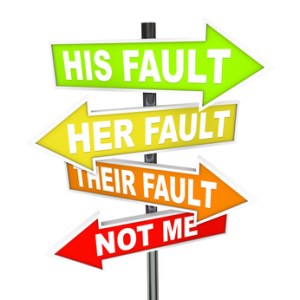
Arrow SIgns - Not My Fault Shifting Blame

Shame and obligation are where I think things get really interesting. According to the responsibility process, acting from a state of shame or obligation is almost worse than the previous three. This is because in the first three you are deflecting an issue away from yourself, while for these two you are taking partial ownership. With shame or obligation, you feel as though you are being compelled to do something by some external force. When this happens you are liable to build up resentment that you “have to” do something. Doing something from a state of shame or obligation is fine occasionally, but if it is a common state for you then are liable to give up or quit.

The responsibility process is explained as follows:

When something goes wrong large or small (for example, lost keys or a lost retirement account), The Responsibility Process kicks in. The mind offers Lay Blame as a reason. If you accept blame as a sufficient reason, then you will act on that blame. If you don’t accept it, then your mind offers you an excuse (Justify). And so on. Thus taking personal responsibility is a step-wise process of refusing to act on a series of irresponsible thoughts that your mind offers up.

The Responsibility Mindset

It’s easy to be responsible when things are going well, but this responsibility process is something that largely happens in times of stress, or when things have gone wrong. So how does one shift from operating from a state of shame or obligation to a state of responsibility? Basically it’s all about mindset.

In all aspects of life there are things we “have to do” even though we may not want to, and the attitude you bring into these things is very important. It’s very easy to approach these “have to” moments from a state of obligation, but as noted above doing so runs the risk of building up resentment.

The change in your mindset from obligation to responsibility is subtle, but it’s very important. In both cases you “have to do something”. But in obligation you have to do it because you are being forced to, or because you are trying to meet some sort of external expectations. With a mindset of responsibility these expectations have been internalized. It’s no longer because someone else expects you to do something, it’s because YOU expect yourself to do it. And you expect yourself to do it because you see it as required or believe it is the right thing to do at the time.

The early states of the responsibility process (denial, blame, justification, shame and obligation) are reactionary, almost primal responses. They are also very “me” focused; only seeing a situation in terms of how it affects you personally. Operating from responsibility is different in that it is a conscious decision. Operating from this state requires three things:

  1. Intention – Intending to respond from Responsibility when things go wrong.
  2. Awareness – Catching yourself in the mental states of Denial, Lay Blame, Justify, Shame, Obligation, and Quit.
  3. Confront – Facing yourself to see what is true that you can learn, correct, or improve

Being responsible is a conscious process. You “choose” to act and respond in a certain way. You may later find out that the decision you made wasn’t a good one, but owning that decision is an act of responsibility.

responsibility-the-ability-to-choose-your-response

The “Have To’s”

To illustrate the responsibility process, let’s walk through it with a simple example. Imagine you are a parent, and your child has filled their diaper:

Denial. You can always pretend that the diaper hasn’t been filled (and hope that someone else notices and changes your child for you). But the other person may do that too, and eventually the wonderful aroma will become too much to bear. More importantly, your child will be uncomfortable and crying will probably start (it could be yours or thiers).

Blame and Justification. You can blame your child for filling their diaper, but that won’t change anything. And you may try justifying things (I shouldn’t have to change him/her, I did it last time!!!), but what does that really accomplish? The child will still be uncomfortable, and still need to be changed.

Shame and Obligation. Here you decide that yes, you will change the diaper. But you don’t “want” to do it. You’re only doing it because you have to. Are you going to get resentful with your child? Some parents actually do, and over time this can lead to things like child abuse. But those cases are fairly extreme, and hopefully rare.

Responsibility. This is the natural course of action for your mind to take. You still probably don’t “want” to change the diaper. But you recognize that the diaper has been filled, the child is uncomfortable and incapable of changing themselves. Plus you care about your child and recognize that the diaper simply needs to be changed, so you do it.

In this scenario I suspect that most of us would automatically operate from a position of responsibility. In times of high stress we may slip back into some of the other stages temporarily, but we change the diaper anyhow because it is the right thing to do. It’s an easy choice.

Many of life’s “have to’s” fall into this category. Going to work every day? You don’t always want to and you may have days you are resentful. You may even have a few “sick” days that are actually mental health days. But going to work is something that we have to do.

Making Choices

The examples above are easy ones. But now consider something like your relationship.

What if your partner loves ballet while you don’t, and they periodically ask you to go with them? In a prior post I mentioned that it’s positive for your relationship if you can show some interest in their interests, as it’s a way for you to show interest and caring for them.

You may prefer that they find a friend with some interest in the ballet to go with, but there may be times that you “have to” go with them. What attitude do you bring into those times? If you attend the ballet out of a sense of obligation, you may go in expecting to hate it, and see it as wasted time where you could be doing something else that you enjoy more.

Perhaps a better (and more responsible) approach is to see it as an opportunity to share something with your partner that is special to them. In both cases you “had to” do something. But in one case you owned the decision to attend.

Choosing Responsibility

No one is always responsible. When faced with challenges and stresses the default is for us to respond with the lower level states – denial, blame, justification, shame and obligation. That’s normal, and common. And honestly, sometimes it’s a lot easier to stay in those states. But it’s also not healthy.

If you find that you are frequently angry or resentful, then think of this process. Think of something you are upset about, and ask yourself where you fall on this scale. Are you blaming? Justifying behavior that at least a part of you knows is wrong? Are you doing things due to shame or obligation? All of these things can lead to resentment, and anger. Which of course leads to hate, which leads to the dark side of the force (ummm, wrong movie)…

In seriousness though, resentment and anger are some of the most toxic emotions you can have. So being able to switch from a mindset of obligation to one of responsibility is very important to both your own health, and the health of your relationships.

I’m not suggesting that anyone should always have to do something. If you find that you are constantly doing things because you feel obligated to, ask yourself if you really “have to” do it. Can you simply say no? Don’t be afraid to set boundaries and say no sometimes. But if you truly “have to” do something then there’s a reason for it. Try approaching it from a framework of responsibility, and you will probably be happier and healthier for it in the long run.
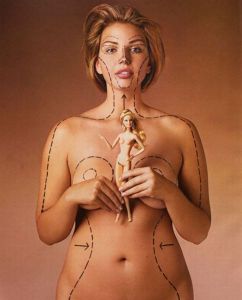

What Does a “Real Person” Look Like?

barbie-proportions

If you’re a regular at thezombieshuffle, you know that I’m a big proponent of accepting yourself for who you are, while always striving for self-improvement. At first glance those two concepts may seem contradictory. If you accept yourself for who you are why should you strive to be something more? Rather than being contradictory, I see them as complementary.

By accepting yourself, I mean that it’s important to truly be able to love yourself for who you are, as you are. The person you are today may not be perfect, but you are “enough”. This doesn’t however mean you can’t improve, and strive to be something more. And in fact I think we should always strive to improve ourselves in all aspects of life. Saying you are enough simply means you are measuring your self-worth against who you actually are, instead of some ideal of who you believe you should be. It’s saying I don’t NEED to be more to be worthy of love and acceptance by myself and others. I am worthy of love and acceptance as I am right now.

Body Image

In order to accept yourself for who you are you need to be able to accept all of yourself for who you are. But when we look in the mirror, we don’t see our hearts and souls – we see our bodies. Think of our bodies, and our ideas of beauty for a moment.

People magazine has an annual “sexiest man alive” issue. Over the past few years the winners were Adam Levine, Channing Tatum, Bradley Cooper, Ryan Renolds, Johnny Depp, Hugh Jackman, Matt Damon and George Clooney. In 1989 it was Sean Connery, who was 60 at the time. That list has considerable diversity among both age and body type.

Now look at the equivalent for women. Esquire has a “sexiest woman alive” list, and over the past few years they have Scarlett Johansson, Mila Kunis, Rihanna, Minka Kelly, Kate Beckinsale, Halle Berry and Charlize Theron. The women all seem to be between their early 20’s and early 30’s, and they all share a similar body type. The cover photos of the women are much more sexualized, with greater focus on their… shall we say “physical attributes”. The mold women need to fit to meet the standard of beauty seems very rigid. Let’s face it, you sure don’t see any 60 year old women on that list. Why not? Why is age fine for men, but not for women?

In most movies or TV shows, if there is a female character that is supposed to be “ugly” they are always someone who is beautiful by most standards. They just have less makeup, or are dressed in frumpy or quirky clothes.
If you think about age, in movies it is so common to see an older male protagonist with a much younger woman that you don’t really notice it. But if an older woman is with a younger man then it’s likely some sort of plot device. Older men are seen as “distinguished”, while older women are just seen as old.

Seeing all this, I have to admit sometimes I’m really glad I am a guy. I can only image how hard it is for a woman to constantly be bombarded with this sort of media imaging of what is beautiful, and how it must impact their self image.

You are More Beautiful Than You Think

A few years back, Dove had an ad campaign that touched on body image issues for women. In one ad women sat down with a police forensic artist who couldn’t see them, and he drew them based on how they described themselves.

Afterwards the women left and a second drawing of the person was done based on the descriptions provided by a person who had met them in the lobby.

The women tended to be critical of themselves, while the person who had met them in the lobby was more inclined to be positive in their descriptions of the woman. As shown the in commercial, the second drawing depicted the woman in a more flattering light (and also seemed more accurate). At the end of the ad, after seeing the two different pictures of her one woman noted:

We spend a lot of time as women analyzing and trying to fix the things that aren’t quite right, and we should spend more time appreciating the things we do like.

Body Transformation

Thinking of this unrealistic standard of beauty and negative body image reminds me of a mini controversy that erupted on social media a while back. An extremely fit mother of three posted a photo of herself in workout gear with her children, and a heading at the top that said “What’s your excuse?”

When it happened there was an outcry of people who felt that her image was an example of body shaming, and people saying that she didn’t represent what “real people” look like. Things took a nasty turn as photos of obese people started circulating social media in response with headings like “Is this what a real person looks like?”

It ended up making national news, and there was an ABC News interview where she said:

No matter how many children you have, especially when you’re working and trying to maintain your shape, you don’t have to lose yourself in becoming a mother. You can still maintain a sense of self physically and professionally. If I can do it, you can do it.

I think that instead of using “What’s your excuse” she probably should have used something like “You can do it too”. But part of me agrees with her. You CAN do it. Heck, I can do it too (though I may look somewhat ridiculous in a sports bra). You own your life, and make your own decisions. If you want changes in your life, the only way to do it is by taking ownership and making changes on your own.

So yes, you can get in great shape. But guess what? It requires work, time, and effort. And you have to ask yourself, what do you have to give up? What are your priorities?

What Do You Want?

If you want to get into better shape, stop and ask yourself WHY you want to get into better shape. What do you hope to accomplish? Be introspective and honest here. Are you trying to fit an arbitrary mold of beauty?

If so, let me give you perhaps a different perspective on body image. A buddy of mine plays competitive volleyball, and to keep playing as he has aged, he had a workout routine tailored to his needs. He made a comment to me that made a lot of sense. He said it was more important that he had functional muscles for what he wanted to do with his life than it was to have the sort of muscles that would attract attention in a bar.

We aren’t all competitive athletes, but the same idea applies. Instead of comparing yourself to fashion models and movie stars, ask yourself what are the things you enjoy doing? Travelling? Swimming? Bike riding? Softball? Keeping up with your children? Going for walks in the park? Are you able to do the things that you enjoy, or does your body and your physical conditioning hamper your ability to do these things? I think THAT should be the most important thing. Not trying to fit the mold of what society says is beautiful.

There are health risks associated with being overweight, so from a health perspective alone it is important to take care of yourself. But how your body “looks” isn’t necessarily an indicator of the sort of shape you are in. I’ve seen people with heavier builds power through high intensity aerobic classes while thinner and more “fit looking” people struggled to keep up.

Accepting yourself

Going back to what I said at the beginning, we all need to accept ourselves for who we are. That doesn’t mean giving up, or saying that I can’t get “better”. But we shouldn’t measure ourselves against the current standard of beauty. It’s also important to remember that your beauty starts from the inside, not the outside. There are many men and women whose outward appearance may be beautiful, while inside they are anything but.

Although we all do this, it’s best not to compare ourselves to others. There are different body types out there, and that’s fine. I won’t pretend to speak for all guys, but based on a sample of myself and a sizable group of male friends, I have to tell you ladies there isn’t a single mold of what is beautiful. People are all different, and just as our personalities are different so are the characteristics that we find attractive. Instead of trying to be someone else, strive to be the best “you” that you can be.

So what does a real person look like? You see them every day. Your neighbor, your best friend, your co-worker, and most of all you. We are all real people.

The Pursuit of Happiness

happiness

Are you happy? We all want to be happy, and we are all deserving of happiness.

Previously I’ve touched on what I believe happiness is. Unfortunately, happiness is not like a switch, where you are either happy or you aren’t. It’s more like a sliding scale where you can fall anywhere on the spectrum between happiness and unhappiness. But it’s complicated further because there are different areas in your life where you can be happy, and chances are good that you land on different spots in the “happiness spectrum” in each of those areas.

Think of some of the main areas of your life. I’m guessing most of us break our lives down into something like the following:

  • Committed relationship (spouse or partner)
  • Immediate families (parents, siblings, children, grandchildren)
  • Extended families
  • Social Networks (friends and acquaintances)
  • Jobs
  • Personal interests/hobbies
  • Additional organizations/memberships

Those are the first things that came to my mind, and you can add and subtract from that list in whatever way best applies to you. If you think of all the different roles that you play, you can have a different level of happiness in each of them. For example, you may not be happy in your job (which will affect your overall level of happiness), but still consider yourself happy.

Looking at the different roles that you play, how can you really measure happiness? If you are largely happy, or at least content, then it’s probably not something you even think about as it’s just a natural state.

The Search for Happiness

If you characterize yourself as an unhappy person, it seems obvious that you need to do something about it.

FindingHappiness

It’s clear that you need to change something. But what should you change? It’s probably best to try changing the “small” things first. Maybe take up a new hobby, or join a club or a team. If there are people in your life that are bringing you down, try talking to them about it, and if that doesn’t work spend less time with them. The same applies to family.

But what if it’s something bigger, like your job or your relationship with your partner/spouse? If you aren’t happy in your job, you can (and perhaps should) change your job. If it’s your relationships, then there are some bigger questions to answer. A few posts back I talked about questioning your relationship, so I won’t go over that again (in summary you either communicate and try to work on things or you move on).

One problem is that people who are in search of happiness often don’t know how to go about trying to achieve it. To make matters worse, they often go about searching for it in the wrong way.

There are countless cautionary tales of people who have embarked on self destructive behaviors, or made questionable life choices in the pursuit of happiness. In the search of happiness people often start engaging in activities either to make them “feel good” or to mask the pain of the unhappiness they feel.

Things like shopping, comfort eating, gambling or sex become outlets that give them a bit of a high. People may also turn to an actual high through drugs and alcohol. A more recent trend is turning to social media, and measuring happiness by the number of friends, likes, or complimentary remarks to posts.

Unfortunately these things are only temporary fixes, ways of numbing the pain and emptiness that they are feeling inside. They are like putting a band-aid on a gaping wound. And guess what? In most circumstances these people don’t actually end up any happier.

Happiness comes from within

One of the most difficult things about the search for happiness is that there is no magic pill; and you can’t “find it”. All the money and fame in the world can’t make someone happy. Just think of all the rich and famous people who make the news for things like addictions, behavioral issues or even suicide. Nothing can “make you happy”, you have to find it within yourself.

One problem with the pursuit of happiness is that I believe people aren’t actually pursuing happiness. They are really looking for meaning and fulfillment. There is a correlation between happiness and meaning, as people who find meaning in their lives generally are people who would describe themselves as happy (or at least leaning towards happiness on the happiness spectrum).

Ideally you find meaning in all aspects of your life – your committed relationship, your family, your social networks, job, and your personal interests. The reality is, very few people have a job that they love. Hopefully you find some fulfillment in your job, but many people find themselves in jobs that they don’t like, and they stay due to complacency and/or a need to pay the bills. Sometimes it’s worth taking a pay cut to find something more fulfilling, but if you have dependents then it’s easy to feel “stuck” in your job.

If you aren’t happy in one aspect of life (such as your job) it becomes especially important to find meaning in other areas. One of the most common areas that people neglect is their personal interests, and self nurturing. We all have talents and interests and it is important to take some time out for ourselves to nurture these. Often this involves engaging your creative side, such as music, art, writing, crafts, mechanical “tinkering” or cooking. It could also be things like volunteering, joining a sports team, or taking up some sort of regular activity.

I read somewhere that taking me time is necessary, as it provides the space needed to allow your relationships to flourish and grow. Without it you unfairly put all of your needs on your partner, and that holds them to a standard that they will never be able to meet.

That’s true, but there are different types of me time, and it is important that you choose things that provide meaning and help “feed your soul”. Taking time to watch your favorite TV show is great, and we all do it. But it doesn’t exactly provide the sort of fulfillment that will improve your happiness. Doing things to improve yourself is one of the best ways to provide meaning, and help build happiness from within.

happiness-is

Appreciation

In the workplace, employers have found that salary increases are ineffective tools for employee retention. Similar to drugs and alcohol from above, the effects are short lived. When someone gets a raise, they have an initial moment of excitement at the increased pay. But after a few pay periods that new pay becomes their norm. Unfortunately it is human nature to take the things we have for granted, and we do this in all aspects of our lives.

I live in Canada, and Canada is often cited as one of the best countries in the world by various measures. Wikipedia states that it “ranks among the highest in international measurements of government transparency, civil liberties, quality of life, economic freedom, and education, and stands among the world’s most educated countries”. Sounds great right? And it is. But it’s also been my home for my whole life so it is my norm, and as a result I often don’t appreciate it for what it is.

When I finished university I went on a trip to Vietnam, and I stayed with a family in Ho Chi Mihn city (the locals still call it Saigon) for a month. It was an incredible experience and it was the first time I had ever left North America. There were good and bad moments on the trip, but they were all new experiences and I loved every minute of my trip. Well, maybe not every minute. Getting into an argument with a customs agent because I refused to pay a bribe and almost missing my flight home wasn’t so great. But that’s a whole other story.

One of the most important things about my trip was that when I returned it gave me a different point of reference and allowed me to see Canada in a different light. It allowed me to truly appreciate my home in a way that I never would have had I not gone on the trip.

Another moment that made me appreciate things in a different way was an early experience as a new dad with my son. I’ll never forget the first time I took him for a walk in the neighborhood. He had just turned one, and was still a little unsteady on his feet. It was summer, and it was his first time exploring the outside world. Everything was new to him and we had to stop everywhere. He’s ten now, but I can still picture the sheer joy on his face as he touched and played with grass, felt the texture of the bark on trees and watched ants walking down the sidewalk. I picked some up and let them walk on his arms (which was cute, until he tried to eat them). He even explored the cracks in the concrete of the sidewalk. It took us almost an hour to make it two houses down, but it was a beautiful magical hour.

I looked at the yard and I saw grass that needed to be cut and weeds that needed to be pulled. Looking at the sidewalk I saw the cracks as flaws, signs that the concrete would need to be repaired or replaced. My son saw those things, and I won’t pretend to know what was going through his head (he was one). But from his expressions, it was wonderment. For him the world was shiny and new, and experiencing it with him allowed me to see the world that way again. I had forgotten the beauty that we have all around us, and stopped seeing it. All I saw were the flaws and the work that needed to be done. That day my little man taught me a lesson I have tried hard not to forget.

Relationships and Appreciation

As we age we lose that innocence and we fail to appreciate the little things in life. We have all this beauty and wonder around us all the time. We have people who love us. And we don’t even see it or appreciate it. We take for granted what we have.

We stop to see the good because it has been right in front of us for so long that is has become our norm. Once that has become our norm, we don’t appreciate it and instead we see the problems and the flaws.

If you talk to counselors or look at relationship books, one of the most commonly prescribed things is to try to focus on the positive. They will tell you to do things like make lists of the positives in a situation or a relationship and remind yourself of them.

This is all about looking at what you have and trying to appreciate it again. Rather than focusing on the positive I think it’s more accurate to say that this is trying to find again the positive that we have taken for granted over time.

I generally focus on relationships, but I believe this applies to all aspects of your life. Chances are there is a lot of good that you simply have lost the ability to see.

Finding Inner Peace

People do deserve to be happy, and by no means am I suggesting that people should stay in relationships or jobs that make them unhappy. People should be free to pursue interest that make them happy, and be around friends that bring them joy.

But sometimes we have simply lost the ability to see what has been around us the whole time. Sometimes instead of seeing the good all we are seeing is the cracks, and the flaws.

Change can be very positive. But sometimes it can’t be undone. If you are unhappy and looking to make changes in your life, first look at the things you have in your life and try to see them in with new eyes. Try to appreciate the good and the wonder in the things in your life. Try to see the world through the eyes of a child again.

If you are a parent, think back to the wonder your children showed as they first explored the world. If you aren’t a parent then find a kid between one and two that you can borrow for a while. Just make sure you get permission first (local law enforcement tends to frown upon it if you don’t).

If you can’t do that, just go out on your own and slow down. Take your time to look at things again for the first time. Feel the texture of the grass, and the bark of the trees. Don’t eat the bugs though, because that’s pretty gross.

You won’t necessarily “find” happiness, but you can try to take pleasure in the little things in life and try to let happiness in again.

Setting Goals

Goals

Have you ever seen the Pixar movie Up? It’s a great movie and in my opinion it was the last of the great Pixar films. Seriously, if you love movies look at the films Pixar released prior to that. Monsters Inc, Finding Nemo, The Incredibles, Cars, Ratatouille and WALL-E. These weren’t just “kids movies”. Sure they had cute colorful characters and funny moments; but they also dealt with serious topics and had a lot of heart.

Even from Pixar Up was unique. It was about an old man who is stubbornly holding on to his house, his last connection to a wife who died years ago. When he’s about to be evicted and sent to a seniors home he embarks on the adventure he had always dreamed of.

The opening sequence of the movie really stands out for me. In it you see two children meet due to a shared love of adventure. They fall in love, get married and start a life together with the dreams of the trip they will take. But “life” keeps getting in the way, and find that they are never able to achieve their dream together. I’ve seen Up a few times now, and that opening sequence still makes me cry like a baby. Laugh if you want, I don’t care. I’m secure in who I am. You can check out most of the opening sequence here. If that doesn’t move you in some way then sorry, you’re either a robot or an alien.

Part of the reason Up resonated with me is because of my own grandfather, and my memories of the last time I saw him. That night we sat in his kitchen talking about all sorts of things, and the topic of traveling came up. My grandfather was a very religious man, and he told me he had always dreamed of seeing Vatican City. I hadn’t known that, but honestly I didn’t know very much about him. It’s amazing how people can be part of our lives yet we can know so little about them. He was my grandfather and that was how I knew him. Sadly, I really didn’t know much about my grandfather the man.

At the time I didn’t know that would be the last day I ever saw him, but he passed away a few days later. That last conversation has stuck with me, and I can still picture how wistful he was that night for dreams never achieved and opportunities lost. There are always defining moments in your life that shape you, and that was one of mine.

Dreams

The capacity to dream is one of the things that differentiates humanity from other animals. It allows us to have science, art and culture.

Everyone has dreams. We all have things that we want to see, do, and accomplish; and a bucket list is really just a list of things that we want to do in our lifetime.

In the early days of a relationship, sharing of bucket lists is often part of the process of getting to know the other person and finding out if the two of you are a good fit. It helps build connection, as there is intimacy in opening ourselves up to another person and letting them in to our hopes and dreams. And when those hopes and dreams seem to align, it makes it easy to imagine a future with the other person. After all, you want the same things and are on the same path. So why not do it together?

Dreams vs Goals

There is a difference between dreams and goals though, and sharing similar dreams does not mean you have similar goals.

A friends marriage broke down a few years back, and when I talked to her about what had happened one of her biggest disappointments was she felt her husband had no ambition. When they first met they shared their hopes and dreams, and she had visions of the future they would share. But as the years went by she felt it was all talk, as he didn’t actually do anything or take any action to achieve those dreams.

I knew the guy fairly well, and he did have dreams. But it’s easy to have dreams, and it’s easy to have a bucket list. What isn’t easy is prioritizing those dreams and making them happen. Goals are based on dreams. The difference is that they are something you are actively working towards, and you have planned out a way to make them happen.

Goal-Setting-300x224

One thing many people don’t seem to understand about goals is that they don’t just happen on their own. They involve planning and sacrifice. In order to achieve something you generally have to give something else up. It may be time, money, or other opportunities, but you can’t have everything.

As an individual it is important that you have goals, as they show you have initiative. When you go for a job interview one of the most common questions interviewers ask is where you see yourself in 2-5 years. Often they don’t really care *what* your answer is. They are simply looking for proof that you have a vision for yourself and where you want to go.

Planning Together

In a relationship one of the most rewarding things you can do is not only sharing dreams, but sharing goals and working towards them together.

It’s very easy to get caught up in the daily routines of life, so it is important to have both long and short term goals (like the 2 & 5 year plans that interviewers ask) as both an individual and a couple to look forward to.

Is there a big trip you want to do? A house? Renovations on the existing place? Courses you want to take? As I mentioned earlier, you can’t have everything. All of this stuff involves a commitment of both time and money. You need to prioritize which ones are most important to you (both individually and as a couple) and come up with a plan on how you will go about achieving these goals.

If there are individual goals for you or your partner that are a priority it’s important that you support each other in those goals, because it’s just as important for each of you to grow as individuals as it is to grow as a couple. You should have periodic checkpoints where you talk about these goals and see how you are doing, or if there is anything you want to change.

Knowing that you are working towards both your individual and common goals together shows commitment to the future. It also helps build and strengthen the connection you share. And accomplishing goals together builds experiences that you can never take away.

Be Flexible

One reminder about goals is that life is unpredictable. An unexpected pregnancy, a lost job, a broken relationship. Any number of things can happen to you that can completely derail your long and short term plans. Life throws curveballs at you, and you need to adjust accordingly.

In the movie Up the couple never was able to make their trip together, and not achieving that dream filled the main character with a sense of loss. They had a photo album that they planned on filling with the pictures and memories of the trip they never took. Near the end of the movie there is a beautiful moment where the husband looks in the photo album and realizes his wife has filled it with pictures of their life. They didn’t have the adventure they expected, but their life together was their adventure.

My grandfather never made it to Vatican City, he never achieved that dream. At the end he had regrets about it, but what would he have traded? I honestly don’t know, but I would like to think nothing. I like to think he gave that up because he prioritized other things, and he was happy with the decisions he made in his life.

So set goals. Dream together and plan together. And no matter what life throws at you, do it together.

Communication Breakdown

communicate1

Communication is universally regarded as one of the most important aspects of any relationship, and it is also seen as one of the best indicators of long term success.

If you look up quotes on communication in relationships it’s amazing how many you’ll find. Here is one of my favorites:

Communication is the fuel that keeps the fire of your relationship burning, without it your relationship goes cold – William Paisley

Inherently we all know how important communication is. Yet I commonly hear people talk about how they aren’t able to communicate with their spouse. Well actually that’s not true. We’re always communicating even when no words are spoken. It’s just that we often do it poorly. So the question becomes why do so many of us communicate so poorly? To understand that, we have to understand a bit more about what communication is.

The Merriam-Webster dictionary provides the following definition for communication:

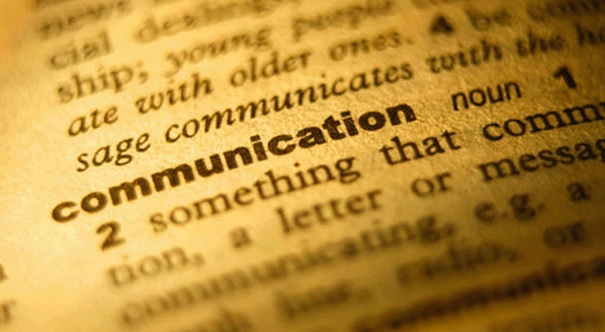
the act or process of using words, sounds, signs, or behaviors to express or exchange information or to express your ideas, thoughts, feelings, etc., to someone else

When people think communication, verbal is often the first thing that comes to mind. As the definition indicates though, communication is any form of expression. It can also be written communication, body language, and touch.

In a relationship I think body language and touch are the most important forms of communication. Sometimes you can say more with a smile, a hug, or a squeeze of the hand than any words can convey. And as I discussed in my post on sex, intimacy (which doesn’t just mean sex) is a special form of communication specific to relationships. It’s the thing that separates that special someone in your life from just another friend.

The Perfect World

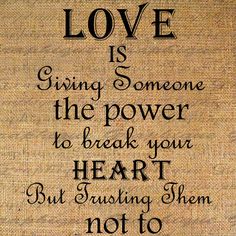
What does communication look like in a perfect world? I think this sums it up quite nicely:

LoveandTrust

You can tell the other person anything without fear of ridicule or embarrassment. You can talk about anything, good things and bad. You can deal with conflict points together without either of you getting defensive or critical, because you know that you are doing it for the betterment of the relationship. Communication used this way lets you promote understanding of each other, and help strengthen your connection.

For this to happen you need to be in a situation where you have allowed all your walls to come down, and you have let the other person in completely (or at least as much as possible); and they have done the same with you.

And Now for a Dose of Reality

Of course in a perfect world I could eat chocolate all day while having the body of an Olympic gymnast. I would speak 10 languages and spend my days travelling the world with my family; going from villa to villa on our private jet. And perhaps I would spend my weekends roaming the countryside on my pet unicorn while figuring out the cure to cancer and how to create world peace. But sadly, perfection doesn’t exist.

You see, people have feelings and emotions, and sometimes the things that need to be said aren’t easy to hear. Not just that, but how you say something is just as important as what you say.

There’s an oft cited study that found the actual words used in verbal communication only make 7% of the message. The remaining 93% of the message comes from the tone of voice and body language used when conveying the message. Recent studies have found that the spoken words are closer to 30%, but even with the new numbers it’s clear that tone and body language are still really important.

When it comes to relationships, the point is that you have to be careful how you communicate. If you have a sensitive issue you want to discuss, it’s best to try to figure out what you want to say and try to do it rationally. When emotions are running high it’s very easy for the actual meaning to get lost in the emotion. When someone is in attack mode, it’s just human nature for people to withdraw, or get defensive.

In his book “Seven Principles for Making Marriage Work”, Dr. John Gottman says that conflict is normal, and couples will fight. One of his findings is that there is no correlation between how frequently a couple fights and their level of marital success. What does have a strong link to marital success is HOW they fight. He calls criticism (where you attack their character), contempt, defensiveness and stonewalling “the four horsemen of the apocalypse” for relationships. It’s important to try and find a way to communicate while keeping those to a minimum.

Barriers to communication

Beyond worrying about how you communicate, you also have to be conscious about various things that act as barriers to communication.

One of the biggest barriers is that we all interpret things through the filters of our own expectations and experiences. I’ve talked about this a bit in a prior post.

There are also theories that women and men simply communicate differently. One of the most common differences is the way men and women approach issues. Supposedly men interrupt more, have a harder time expressing gratitude and apologizing. Men also try to “solve” things while women often just want to be heard. This last one is wonderfully illustrated in the short film It’s not about the nail (If you haven’t seen the video, check it out. Seriously, it’s priceless). I’m not sure I buy into most of the gender differences, but I can definitely relate to that one.

I think it’s fair to say that communication is one of, if not THE most important aspects of a relationship. But there are many things that can make communication difficult. Because of this, perhaps the most important thing that you can do as a couple is work on your communication strategies on a daily basis, always striving to improve them.

Different people have different ways to communicate. Learn to understand your own preferred method of communication, and learn your partners. Come up with a way of communicating with each other that works for both of you, and spend the rest of your lives making this a priority. Communication is the lifeblood of your relationship, and without it your relationship will be at risk.

Communication breakdown

In the early days of relationship, communication seems to come easy. In those early days, although you may be talking, you are really in the stage that you are still learning about each other. Eventually there will come a point in time when you know the other person well enough that there is nothing new to tell.

Let’s face it, most of life is routine. For many years you wake up and get ready for work. In most cases your job is largely the same day to day, so the stories of “what did you do today dear?” really don’t change much.

If you add children to the relationship, by the time your work day is done and the children are in bed one or both or you are often exhausted. Many couples find that a number of years go by where they have had very little time to be a couple, and that can take a toll.

I was talking to a friend a few months back who has two primary school aged children. Often their couple time was limited to a few hours here and there when the kids were at a party or something, and they would use that time to run errands or catch up on things on their to do list. One day he decided that instead of that, they would go on a date. No errands, and no talking about the kids. They went out for dinner, and he found they didn’t really know what to do, or how to talk to each other. Their lives had been built around being parents for so long that they had lost sight of how to be a couple.

I think this is a common problem, and it’s a transition many parents go through when their kids get old enough that they are no longer completely dependent on them. For many couples this is a very difficult transition. Even without kids, it is something that most couples will face eventually. There simply comes a point in time where you know each other so well there isn’t a lot to say.

Because of this, it’s important that you never get so caught up in the routines of day to day life that you stop being a couple. Make each other a priority in your lives, and never stop talking. It’s important that each of you has your own interests to give your relationship space to grow, but you should also try to find an activity that you can do together (preferably one that gets you out of the house), and ensure you make that a priority.

Over time, routine will always set in. But set goals together and ensure you are working towards those goals. Never stop talking to each other, and letting each other into your hearts and souls. Sometimes silence is beautiful and peaceful. Like those times when you are side by side, and no words are needed. When you can say more with a simple look, or a squeeze of the hand then words could ever convey. Other times, silence can be deafening and be the most painful feeling there is.

In the words of Robert Smith of The Cure:

Side by side in silence
They pass away the day
So comfortable, so habitual…
And so nothing left to say

And side by side in silence
Without a single word…

It’s the loudest sound
It’s the loudest sound…

It’s the loudest sound I ever heard

Would You Be Your Friend?

I’ve never reblogged something before, but I think this is important. It is a big part of what I was trying to get at in my Identity Crisis series of posts.

I really believe that when a relationship ends, frequently for the person who “fell out of love” the problem wasn’t the relationship, but it was that they didn’t love themselves enough to sustain a loving relationship.

Anyhow, read on. It’s pretty great.

heartbeatapp's avatarThe Fickle Heartbeat

would you be your friend

Shared by Michele Bolitho.

Think on this.

If I ask you what sort of a person you are, you may tell me: ‘I’m powerful. I’m thoughtful and kind.’ You effectively tell me you’re a good person.

Powerful. Thoughtful. Kind. This is what you want me to think of you. You want me to think of you as a person of value. You want me to think you’re ‘Worth it’. I may well do this. I may take your self-assessment on face value and don’t sense any deeper. That’s fine with me.

But are you being honest?

Powerful. Thoughtful. Kind.  How true is this? It may be the appropriate way you tell yourself to inter-relate with me but is this what you really think of yourself?

Yes, you are powerful because you are running your own life. Powerful is accurate as I see it, but do you think you are…

View original post 1,232 more words

Just Along for the Ride

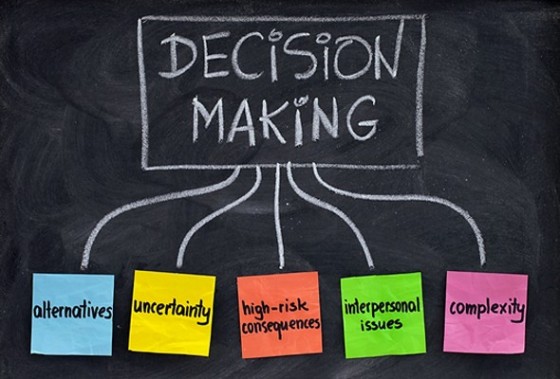
Decision-Making-Strategies

A buddy of mine recently sent me a pretty interesting article on relationships.

The article talks about a study of couples that was done where they looked for a correlation between marital satisfaction and how couples handled relationship “milestones”. Here’s an explanation of what it means by milestones:

Every relationship goes through milestones, or transitions, that mark how serious the relationship is getting. Going on a first date is one; a first kiss is another. Other milestones might include the “define the relationship” talk—the moment a couple says they are actually a couple—sex, engagement, marriage, and children.

What they found was that there are couples who, as they put it, “slide through these milestones”; and there are couples who made conscious decisions on these milestones. Not surprisingly, the couples who made conscious decisions on the milestones reported a higher degree of marital satisfaction then the couples where things just kind of happened.

Happiness and Choice

If you’ve read any of my previous entries hopefully it’s clear that I believe life is all about choice. Life is a journey where we are faced with choices every step of the way. Some are small (what should I have for dinner tonight?), and others are a bit more significant (do I want to marry this person?). Some choices are easy, while others are very difficult to make. Each choice we make closes certain doors and opens other ones.

I believe one of the keys to happiness is being active in decision making. Sometimes you make good decisions, and other times you wish life had a rewind button. But as long as you have consciously made the decision, you own it, and it’s up to you to make the best of it. Because at the end of the day, the only person that you have control over is yourself.

One of the things I really like about the article is it suggest that when we actually put some thought behind “why” we do things, we are able to get more enjoyment out of things.

Think of marriage. Generally marriage is something that people do by choice. But what are the reasons behind the decision? Did you get married because you were pregnant, and felt you had to? Did you get married because you felt it was time to “settle down”? Or did you get married because you looked at your partner and you knew that you wanted to build your life around theirs?

All of those reasons result in marriage, but I think there is a big difference between wanting to be with someone, feeling that you probably should be with the person, or just not wanting to be alone. It stands to reason that doing something because you “want” it will result in more satisfaction then doing something because…

…well, just because.

Choosing Milestones

Something I’ve talked about before is that I don’t believe romantic love is really love. Romantic love as portrayed in poems and movies is a wonderful thing, but it’s really just the first stage of love and it’s largely a biochemical response. Real, mature love can only blossom after that infatuation stage has passed.

At that point love becomes a choice. Do you accept the other person as they are, flaws and all? Because they *will* have flaws, but you’ll be largely blind to them during the infatuation stage. Do you look at the positives, and value them for who they are, instead of who they aren’t?

Looking at the milestones listed earlier, only things like the first kiss and the first time you have sex seem like things that you shouldn’t plan. Somehow that seems a little bit too calculated. I can just picture it:

“So, we haven’t kissed yet. Do you think we should? Yes? Well upon contemplation I’m inclined to agree. What are your thoughts on tongue? No? Fair enough. Alright, let’s count to three and then do this.”

That’s probably not the way you want your first kiss to go, never mind the first time you have sex (at least not unless you are someone like Sheldon from “The Big Bang Theory”. In that case I could see the conversation).

But even for things like your first kiss and sex, you both should feel that you are at a place in your relationship where you are emotionally ready for it. You may not discuss it with each other, but you should at least have had the discussion with yourself. Those aren’t things you should be doing just because you feel you have to.

Placing Importance on the Relationship

One of the indicators of success in a relationship is the importance people place on the relationship itself. Especially when it comes to marriage, studies have shown that people who value the concept of marriage have both higher satisfaction and success in their marriages.

The article talks about the same sort of idea:

Deciding rather than sliding revolves around commitment. Not just to each other, but to the decision itself. Making a decision, research shows, sets individuals up for better follow-through.

I think this is all about buy-in. When you make a conscious decision to do something, you have a greater emotional investment in it. You have greater incentive in seeing it succeed.

Ultimately love is a choice, and commitment is a choice. In any long term relationship, there will be times when it is tested. When you are having a hard time liking each other, it’s hard to see why you should be committed to each other. But if you see the relationship as something larger than just the two of you, having commitment to your Commitment (capital “C”) can help you get through the tough times.

Meeting Someone New (while you still have someone old)

Couple

In addition to writing about love and relationships, I read a fair number of other articles and blogs about them. I’m always open to new ideas, and even if I don’t agree with someone it’s always interesting to read what other people think.

One thing I’ve noticed is that there are a surprising number of women blogging about how they are in a relationship, but they have met someone else and they have either started an affair or they are musing about whether or not they should leave their current relationship for the new one.

I’m not knocking women here, as I’m sure guys find themselves in these situations too. I just haven’t come across articles like that, or the guys just don’t write about it (in fact, I seem to be one of the few guys writing about relationships).

A common theme is that the new person excites them more, or they feel more valued or fulfilled by the new person. Often the person writing is convinced that the new person is a “better match” for them.

Reading the comments section, most readers advise the person to follow their heart, and do whatever it is that makes them happy.

Maybe I’m just jealous because my readers rarely comment (though I suppose I would actually need readers for that), but this stuff drives me crazy!!!

If you’ve read any of my previous entries, you know that I believe people give up on their relationships far too easily, often because they have focused on what they don’t have instead of appreciating what they do. In some ways this post is a bit of a recap of what has come before, but I think it warrants talking about one more time before I move on to different topics.

Purpose of Relationships

Relationships usually start by being all about you. Going into a relationship there are things you are looking for and things you want to get out of it. Why are we in relationships? There’s are all sorts of reasons, and here are a few of the common ones I’ve seen:

  • Loneliness. Don’t want to be alone.
  • Safety and security.
  • Emotional, and sexual fulfillment.
  • Want to have a family, and feel it’s best in a “stable” relationship

Pursuit of your own happiness is important, but the complexity of relationships is that they involve two people. In order to be successful they can’t be just about you, they have to grow into more than that.

They become a partnership where you are sharing your life with someone, so the other persons needs have to become as important as your own. Alright, let’s be honest here – people are inherently selfish so your own needs will always take precedence. But your partners needs have to be pretty high up there. Hopefully it’s fairly balanced, but it’s a pretty safe bet that there will be times where your needs and wants will have to take a backseat to your partners.

Your Favorite Movie

Think of movies (I would say books, but sadly few people seem to read anymore). There are lots of them out there, and everyone has their own tastes. You probably have a movie that you love, and go back to again and again.

When you watch a movie a second or third time you may gain a new appreciation for it as you may pick up on a few things that you didn’t notice the first time around. But after a few times there is nothing new. You still enjoy the story and appreciate it for what it is, but it won’t have the same excitement it did when it was new because you already know everything that’s going to happen.

Relationships are like that too. Part of the excitement in relationships comes from discovery. There comes a point where the mystery of learning the other person is gone, because you already know everything about that other person.

A problem is when this happens it’s very easy to get comfortable, and you tend to take the other person for granted (hopefully unintentionally). You still care for each other and enjoy each others company, but that magic from the early days is gone.

Excitement of “The New”

I opened this with a scenario where someone is in a committed relationship, yet they have either stepped out or are considering stepping out because they feel a connection to someone new.

I think the very nature of long term relationships makes this a risk. The excitement and energy of the early days of a relationship feels great, but it’s unsustainable over the long term. Eventually every relationship settles into certain patterns, or rhythms.

And guess what, as time goes on there is a chance that you will meet new people. They may be new co-workers, or friends of a friend. Being in a committed relationship doesn’t mean you don’t find other people attractive. So you meet someone new, and hey, they’re kind of cute. As you start to learn more about them you may start to feel some sort of connection (especially if your own relationship is in a rut). And depending on the state of your own relationship you may start to imagine what life “could be like”. Maybe life could be better with this other person?

If this happens, it’s important to remember that we are always drawn to the new. Is that person really a better match, or are you just starting to get lost in the discovery state? There is excitement in the unknown, because you can’t see it’s flaws. All you see are the possibilities and the potential. And the reality rarely matches our romanticized view of things. A new movie cannot be new forever.

Is Better Really Better?

Hopefully I’ve established that the new exciting person in your life might not actually be your soul mate (or at least a better match). Hopefully you can agree that maybe, just maybe it’s actually the lure of excitement that is attracting someone to the new person in their life.

Just for the sake of argument, lets say the new person really IS a better fit for you. To that I say, so what?
If you ever find yourself in that situation I would recommend you ask yourself to instead take a look at your existing relationship. Are you actually unhappy, or are you just in a rut? If you are unhappy, take a good look and ask yourself why?

There are a lot of reasons to be unhappy. They may have nothing to do with your current relationship. And if they do, they may be resolvable. For your current relationship there was something that drew you together in the first place. Go back, and explore that.

Depending on where you are at in a relationship, I really believe that the relationship becomes bigger than either individual. Yes, your happiness is very important, and I don’t believe people should ever “settle”.

But another perspective is that walking away from something because something else appears better sets you on a dangerous path. There will always be better. Perfection doesn’t exist. Sometimes it’s alright to say “there may be better, but what I have is enough”.

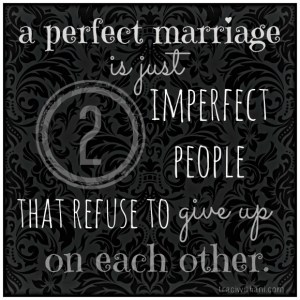
perfect-marriage

Keeping the Spark Alive

If you go back to my comparison between people and movies there is one big difference that I purposely left out. A movie is always the same (well, until they make a directors cut). But people are always growing, and changing. We aren’t constants. Sometimes we change in small ways, sometimes in larger ones. We are always having new experiences. In long term relationships I think a HUGE mistake couples make is that they fail to recognize that.

So if your relationship is in a rut and you are thinking of moving on to something new, take another look at what you have. Don’t assume that because you already know everything about someone there is nothing else to learn. Rediscover them. Grow with them. Learn each other, and continue to learn each other as your relationship grows. Allow yourself to continue falling in love with the same person over and over again as time goes by.

For any readers in long term relationships (I would define that as more than 2 years), I would love to hear from you. What are the things that have worked for you in “keeping the spark alive”? What do you do to continue to show your partner that you love them? What does your partner do for you that makes you feel loved?
You can either comment below or email me at thezombieshuffle@outlook.com. With any feedback, I would love to hear how long you’ve been together.

Love is not enough

MarriageBusiness

A few years ago a family member approached me about a business idea, thinking that we could potentially do a side business together. I didn’t give it chance. I told him that I believed that family and business don’t mix. My worry was that it would change the nature of our relationship. We would have to wear two hats, one as friends/family, and the other as business partners; and those two things could potentially conflict. Sometimes you need to make a call that’s best for the business and it might not be what’s best for the relationship. So I figured to avoid the potential of hurt feelings (and damage to a relationship I valued) it would be best to just avoid the whole situation.

Looking back, I still stand by what I said and think my reasoning was correct. However I have come to realize that I was also incredibly naive.

The Marriage Business

In a marriage you and your spouse are essentially small business owners. Your “business” just happens to be the most important business there is, your lives, your family, and your future. You and your spouse need to be friends, confidants, lovers. But on top of that you are also business partners in a sense.

All the things I said above about business impacting relationships are still true. The interests of the relationship don’t always line up with the interests of the business (marriage). And yes, this will sometimes result in hurt feelings that can potentially damage the relationship.

I guess a part of me has always known this, but I’m only fully understanding it now. Better late than never I suppose.

Causes of Conflict

Do a web search for something like “sources of conflict in relationships” and you are bound to find some combination of the following. Every couple and every relationship is different, but it’s amazing how similar the issues we run into are. Not all of these will apply to every couple, but even for the closest relationships there’s a pretty good chance that you will find yourself nodding your head to at least the first four:

  • Money/Finances
  • Children (can be whether to have, or child rearing once you have them
  • Chores/Domestic Work
  • Sexual Expectations
  • Family (dealing with extended)
  • Elderly Parents (care of)
  • Life Priorities

At some point or another, we all have differences of opinion about these things, and nothing can drain energy out of a relationship quite like a struggle over them.

This is why communication is so important. It’s very important that both parties are on the same page for these things. It may not be possible to be completely on the same page, but at the very least couples should discuss these things and be sure that they understand each other.

CoupleConflict

I recently came across an article saying that couples should talk about all of these things before they get married, and I think that’s true. Depending on the age you were when you were married it’s possible that you may have. But it’s more likely that you didn’t. Either it never even occurred to you, or you thought you could “figure it out” as you went.

In addition to discussing these things, I think they are things couples should periodically revisit. Let’s face it, we all change, and our life situations change. In order to remain happy over the long term, it’s important that ensure that our expectations and understandings of each other in these potential conflict areas change along with us.

All You Need Is Love?

We all seem to grow up believing that when it comes to relationships, just like the Beatles song says, all you need is love.

Once you find that person that you connect with, and you find love, then things will work out. We will all have that beautiful, magical romance. One day it will culminate in marriage and we will drive off into the sunset, to live happily ever after.

Yes, we know that a lot of marriages don’t last, but maybe they were never “meant to be”, or maybe it wasn’t “true love”. This is where the glamorized Hollywood version of relationships fails us.

In one of my early posts I talked about the different stages of love. The Hollywood version of love charts the exciting times. It shows us the moment when people meet, when their eyes first make contact across a crowded room. It shows us the excitement as people start to learn about each other, and fall in love. It shows us the passion/infatuation stage, where they can’t get the other person out of their head and the connection is mostly physical. And it shows us the promises that this is real, and that they will always be together. Then the screen fades to black, as the couple drives off into that metaphorical sunset

Hollywood shows us the easy parts and the fun parts. We are led to believe that as long as we love each other, everything will work out.

I hate to say it, but the Beatles were wrong. Love is important, and you need it as a starting point. But love alone won’t get you though the conflicts and obstacles of life.

Redefining Love

The problem with the metaphorical sunset is that it’s not always sunny. There will be hard days. When no one is getting any sleep because the baby is crying or you are having a tough time making the mortgage payments, it’s easy to get frustrated with the other person.

All relationships have ups and downs, and the longer you are together the more “opportunities” you have for downs. Chances are, you will have times that your love is tested, and you may even question it. When this happens, what is the glue that holds people together?

Umm, well…

…actually it’s love.

I know, I know, I’m being contradictory here. I believe it IS still love that holds people together, but it’s not the Hollywood style romantic version of love that holds people together.

Just as people change over time, so does love. Personally, I think love strengthen and deepens over time. What starts as mostly a hormonal and biochemical response becomes something more. Commitment, trust, respect, devotion, caring, affection, intimacy (both physical and emotional), communication, compromise and understanding. These may not all be the stuff of poems, but they are the elements of “mature love”. And it is mature love that will give you the best chance to make it through the difficult times.

I guess the Beatles were right after all.

Disposable Love

A while back the keypad started to go on my microwave at home. First one number went, then a few months later another one, until finally I only had 2 or 3 working numbers. I have to tell you, it was REALLY annoying. I was coming up with all sorts of bizarre timing combinations in order to heat something up the way I wanted. Stuff like “Hmmm, I need to heat this for 90 seconds? Only my 3 key is working so I guess I’ll heat something up for 33 seconds 3 times, and take it out a bit early on the last time.” Yeah, it was a pain in the ass.

I talked to a buddy who is more mechanically inclined than I and he told me that for the cost of having someone come look at it and repair it I was better off getting a new one. Microwaves are pretty cheap, but I still felt guilty. The microwave itself worked perfectly fine, it was just the keypad that was broken. Yet off I went to an electronics disposal place with a microwave that was probably 90%-95% functional.

This happens all the time. What’s that, my printer isn’t working right? I guess I’ll get a new one. My couch is looking a bit tired? No problem, I’ll replace it. Issues with my camera? Ah, that one was 2 years old anyhow (gasp!!!), I can get a new one that will be WAY better, and have more features for less than it would cost to fix that one.

The Next Shiny Thing

It’s bad enough that we live in a world where it’s easier to throw things out than to fix them, but marketers have also been able to convince us that we need something new when the thing we have is still working perfectly fine.

Have you ever tried getting rid of a CRT television (tube TV)? Landfills are full of perfectly functioning ones, and no one wants them. You literally can’t give them away. Why? Because flat screen TV’s are the way to go. Heck, I know guys who had amazing TV’s and got rid of them to buy new ones because the refresh rate went from 60-120 MHZ. Any sort of feature rich gadgets are bad for this. There are probably massive landfills full of discarded mobile phones and computers/tablets.

Our society is insatiable, we are never satisfied with what we have and we always want more.

The Blame Game

Another societal shift seems to involve attitudes around responsibility. Maybe it’s always been this way, but it seems that in the past ten to twenty people have taken on the role of either passive observers or victims. Things happen, and it’s rarely our own fault. Instead, things happened because of this, or that.

North America has become infected with a litigation mentality. Late night television is full of commercials for “ambulance chaser” lawyers, telling you that all the bad things that happened to you aren’t your fault, and if you hire them they will get you money from the people who are REALLY to blame (If you’ve watched Breaking Bad, think of Saul Goodman – love that guy).

Impacts on Relationships

These attitudes have seeped into views of relationships. There seems to be a rise in the perception that problems in a relationship are unnatural, and that if a relationship is not perfect then it signifies that there is something inherently wrong with it. There is a romanticized notion that you don’t have to work at a relationship if you find “the perfect match”.

As a result people are throwing away relationships that are largely good, because they don’t want to put in the effort to work on the parts that need improving. It’s the same “disposable” attitude that occurs with consumer goods. Many people look at relationship problems and think they are unfix-able. Or they say “yeah I could fix this, but it would take a lot of effort. Besides, I can just get a newer model that’s faster, sleeker, shinier and has more features. It’s not worth the effort.” It’s too difficult to work on something and face the realities of how people got into the situation they are in. It is easier to just walk away.

I’m not suggesting that someone should stay in a relationship no matter what. But I do think that there are many relationships out there that are worth putting the effort in, worth fighting for. Yet many people can’t be bothered to put in the effort.

Instead of just landfills full of “stuff” our societies landscape has become littered with broken families, broken hearts, and lost hopes and dreams.

But He/She did it first!!!

A few months back I was listening to the radio on the way into work, and they were asking people to call in and share their thoughts on the following scenario:

The announcer had a friend who’s husband had an affair. The couple had worked through things and kept the marriage together. But now, the wife felt that because he had strayed she had a “free pass” to do the same.

I was disappointed (but not surprised) that callers largely backed the wife’s idea of having a free pass. Personally, I don’t get this. What the guy did was wrong, and it destroyed any sense of commitment and trust between the couple. For the couple to truly move forward, that commitment and trust needs to be rebuilt. I understand pain, anger and a sense of betrayal. But if your goal really is to move forward with the relationship, retaliation accomplishes nothing. If anything it’s counterproductive, as all it does is layer hurt upon hurt.

Taking Ownership

In my university days I remember a discussion on rights. It’s common to hear people talk about their rights – I have a right to this, I have a right to that!!! The professor of the class talked about how no one is ever entitled to anything, and rights come hand in hand with responsibilities. In order to claim a “right” FROM someone/something, I have certain responsibilities I must meet TO that someone/something.

I had never thought of it that way before but I loved it. Everything in life has a cost, and this applies to relationships too.

What is the “cost” in relationships? I think that’s an easy one. If you want to get anything out of a relationship, you need to be willing to put into it. In happy times, this exchange is easy and happens naturally. We want to please the other person and make them happy, so we do little things for them to show them we how much we care. And when we are giving of ourselves, we naturally receive in return.

This gets harder when times are tough. During these times we are less inclined to give of ourselves, and we can become suspicious when the other person does. Have you ever had a moment when someone was being nice to you, and you found yourself questioning what their angle was? “He bought me flowers? What did he do? What does he want?”

It’s easy to blame issues in a relationship on the other person. And realistically, there may be one person who owns a larger share of the blame for a distressed relationship. But there are still two people involved. Instead of looking at all the things the other person is or isn’t doing, people need to take a hard look in the mirror.

Take ownership of an issue. Instead of pointing a finger, ask yourself what you can do to help things. How can you help improve a situation?

Built to Last

Relationships require work. Many people say they know that, but don’t understand it and aren’t willing to put in the work when things get difficult. In a relationship, the only way forward is together. You need to communicate. You need to be able to put aside any hurt or resentment

This picture says it all:

MarriageLongevity

Our society is always looking for the quick solution, the easy way out. Think of all the diet fads that profess to allow you to eat all the foods you want and still lose weight. Think of all the get rich quick schemes. The people who market these things succeed because people don’t want to do the hard work. They want to believe there’s a magic wand out there that will make everything better.

Unfortunately there are no magic wands. Actually ever if there were, it wouldn’t matter. I’m a fan of the Harry Potter books and movies, and I’m reminded of a scene near the end of The Prisoner of Azkaban (my favorite book and film btw). There’s a scene where Harry believes something is going to happen, and he’s waiting for it. But at the last minute he realizes that nothing is going to happen, and he will have to take action himself. Even a magic wand is useless without a desire to facilitate change, and make things better.

Acceptance

All relationships hit “rough patches” eventually. And sometimes it can seem like things will never get better, and it’s easier to just walk away. But instead of looking for the “next shiny thing”, look at what you do have. Focus on the good that you do have, and see the difficult times as opportunities for improvement. In the long run, overcoming challenges together will only strengthen a relationship.

No relationships isn’t perfect. Sure it’s possible that there’s someone else out there you could be happier with. There will always be something newer, shinier, and with more features (so to speak). But does that matter? Look to work on improving what you do have, and accepting that it is “enough”.