Honesty

honesty
Honesty.

We all want it in our relationships.

But is dishonesty ever “alright”?

It seems like a simple question at first.

Of course dishonesty is not alright – we want honesty all the time. After all, if you can’t trust someone about the little things then you can’t trust them about the big things, right?

But when you really look at it, it’s not really that straightforward.

What is dishonesty? There are three main forms of dishonesty:

  1. Lies
  2. half truths
  3. lies by omission

Some people think of honesty only in terms of lies, but it seems very clear that it’s more than that. Honesty is not only about the words you say and the actions you take.

It’s also about the things you don’t say.

You can be 100% honest in everything “you say”, while still being very secretive and deceitful. Half-truths and lies by omission are as damaging (if not more) than the things that you say.
silently_lying_60

Intimacy vs. Autonomy

Intimacy is all about closeness, and the way to build intimacy is through the sharing of your thoughts and feelings.

No one shares everything however, and we shouldn’t want them to. It’s important to balance intimacy with autonomy. Even when we are part of a relationship, we are still an individual and it’s important not to lose sight of that.

When you see your partner at the end of the day, it’s common practice to ask about their day. When we do this we don’t actually want to know everything. We aren’t looking for an itemized list of what your partner did during the day, minute by minute (at least I hope not). What we are really looking for is a summary, with maybe some of the highlights and lowlights of that day. We want to know what was important to them, and by them sharing that with us they are both maintaining and building a sense of intimacy.

It’s up to each person to determine what the “relevant” details are, and this is one of the places we get ourselves in trouble. What it relevant to one person may be different from what is relevant to another.

Let’s say you had a cheeseburger for lunch.

Now let’s say you had sex with a co-worker at lunch.

Maybe it’s just me, but these seem like they are pretty different things. Having sex with your co-worker is kind of a big deal, and sharing that knowledge would probably have a different impact on your relationship then telling your partner you had a cheeseburger.

One seems a wee bit more important in terms of relevance to your relationship than the other, and although the fallout would be considerable, I think it’s a safe bet that your partner deserves to know about the lunch sex.

But what about the cheeseburger? Is there any need to tell them about that?

Normally the answer would be no. But it comes down to context.

What if you and your partner are on a diet together, and the cheeseburger was a way of “cheating” the diet?

What if you are saving up for something and you promised to brown bag a lunch in order to save up money?

Well then perhaps the cheeseburger IS actually relevant. Maybe your partner WOULD be hurt if they knew about the cheeseburger.

honestyisintimacy

Intent

When withholding information from your partner (either through half-truths or complete omission) it comes down to intent.

WHY are you withholding information?

Is it because you truly thought it wasn’t important and it didn’t even occur to you to tell them? Is it because you want to surprise them with something? Or is it because you were feeling guilty and you didn’t want them to find out?

Sometimes people have disconnects on what “is important”, and this is an area where communication comes into play. Over time these sorts of disconnects will be sources of conflict for a couple, and this is natural and even healthy conflict.

When there are disconnects on what is important you can use them as opportunities to understand your partner better, and be a better partner to them in the future.

But if you are ever withholding information or keeping secrets out of shame or guilt, then you KNOW you have done something wrong. If this happens, any withholding is intentionally being deceptive.

Drawing the Line

Is it ever alright to intentionally be deceptive?

Sure, if you want to surprise your partner with something. It’s kind of hard to surprise them with things if you can’t keep some secrets.

But what about secrets that would hurt them?

I think there probably is a bit of a grey area here as well.

We all run into problems and issues in life. And sometimes we don’t want to share those. Sometimes we need to be able to work through things on your own.

That’s understandable to a degree. We don’t want to be the person who is alarming our partner by crying wolf every time we have concern or a fear. Sometimes we realize our fears are nothing, and it’s best not to stir the waters by raising them.

It’s important to be very careful with this though.

If these fears persist for a long time, or if they start to spill over into and affect the relationship, then they are pretty damned relevant. At that point choosing to keep them to ourselves will only ever do harm. It will break down trust, and damage the integrity of the relationship. And the longer it goes on, the more damage will be done.

Being Honest

I think being honest in a relationship doesn’t mean you are always truthful. It doesn’t mean you have to share every little thing. There are cases where you will hold things back, or even outright lie in the short term (with surprises for example).

To me it comes down to three very important things:

  • Intent
  • Empathy
  • Respect

We all choose our own actions. If we are in a relationship, then we need to think about our partners in the things that we do.

If our intent is good in the sense that we are considering our partner and being respectful towards them, we may still get ourselves in trouble if there is a disconnect between what is important to one versus the other. But those sorts of conflicts are fine.

We should never hide behind lies and partial truths or omissions out of shame or guilt though. Those sorts of things will only do long term harm.

And we should never do things that are disrespectful to our partner, or we know would hurt them if they found out. If we are doing that, then our relationships are built on a rotten foundation. And eventually, they will crumble under the weight of our own deceit.

Acting with respect, empathy and good intent is always the best approach.

The truth isn’t always easy to face; but it’s always the right answer.

we-all-need-to-know-what-it-means-to-be-honest

Why and How Matters More Than Who

WhyHow2
Love.

That’s why we are all here.

It may sound cliche, but I think it’s true. Humans are social animals, and we are all looking for acceptance and belonging.

No one wants to be alone. We all want to find that “someone” we will be with for the rest of our life. And sometimes we think we’ve found the person we can imagine ourselves growing old with.

But even still, many relationships don’t work out.

When we sort through the aftermath of failed relationships, it’s always easy to find the reasons it didn’t work out.

Maybe we had different interests, or different values. Or different attitudes towards any number of things.

And looking at the differences that we had can provide validation for why it didn’t work out.

We just weren’t a good fit. They weren’t the right person for us.

Next time we just need to find a person who is a better fit for us. If we can do that, then we would have our forever.

The Right Person

The “right person”. The “one”.

These concepts are driven into us through romantic notions of love.

And there is some truth to them.

It seems obvious that “who” you are with has some bearing on the success or failure of a relationship. Some people ARE more compatible than others, and certain personality traits seem to mesh with our unique makeup better than others.

There will always be differences though. Those differences are actually one of the strength of a relationship, because although they can be sources of conflict they also allow us to complement each other and bring out different sides of ourselves.

Due to this I think the “who” is actually a smaller factor than most people think.

There are no magic wands in life. There is no one person who, once you meet will turn your life into rainbows and unicorns.

ALL relationships run into challenges over time.

Who you are with is only a piece of the puzzle. What’s more important than the who is the why, and the how.

Why are you with your Partner

I am a huge believer in intention, and the question of why you are with your partner is perhaps the most important one you can ever ask yourself.

There are two levels to this question.

The first one I touched on in my last post. What was it that drew you to them? What made you decide this was someone you wanted to be with?

Depending on where you are in life, “what” you want in a relationship may change. What matters to you at 20 or 30 may not hold the same importance at 40 or 50.

If we hope to find someone we can be with for the rest of our lives (in spite of thse changes) perhaps the more important question is:

Why did you want a relationship in the first place?

I believe an honest answer to this question goes a long way towards determining the success of any relationship.

Relationships start with our own needs.

We find someone who we enjoy being around. We hopefully find them attractive, or at least feel we have some sort of chemistry with them.

But why do we want to be with them?

Are we looking for someone who will take care of us and fulfill our needs? Someone to share bills with? To provide a safe environment (physically and emotionally)? To provide a periodic sexual outlet? To potentially raise children with?

Are we looking for someone who makes us happy?

Take a look at this quote on happiness in relationships:

bewithsomewhomakesyouhappy

I get the sentiment behind this. Obviously we want to be around people that make us feel happy. But I think the idea is actually quite messed up, and can become twisted into something it was never intended to be.

To be happy, you have to first be happy with yourself.

No matter how good your relationship is no one can make you happy all the time – and in fact, your partner shouldn’t have to. You will always have times that you aren’t happy. And if you associate your level of happiness with the quality of your relationship, then during those unhappy times it can feel like something is wrong in the relationship.

When you are looking for someone to “make you happy”, you are putting a stress on your relationship that it will never be able to meet.

So instead of looking for someone to take care of us and make us happy, we should be looking for someone to share our life with. We should be looking for someone to share experiences with, and looking to enrich each other’s lives.

When we take this approach, the concept of happiness is better represented by the following:

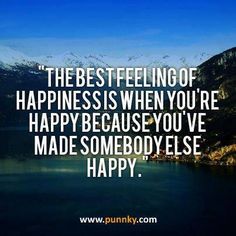
makesomeoneelsehappy

This is a much healthier state both for the individual and the relationship. In either mindset, the actions and interactions in a relationship often look the same. But there is a big difference between wanting someone to make us happy and looking to share our experiences and happiness with someone.

When we want to “be happy”, we are in a selfish state of mind. Our relationship is one where we take more than we give, because we are interested primarily in what we get out of it. Our focus becomes how the relationship is meeting our own needs, and what it provides for us.

That’s not to say that our needs aren’t important, because they are. But a relationship needs to become about more than that.

We need to truly care about our partner and their needs. Their needs should not be viewed as part of an exchange, where we are meeting their needs in order to have ours met.

We should *want* to meet our partners needs and take enjoyment from the act of doing so. We should finding happiness within ourselves from the enjoyment of sharing our life with our partner.

The “we” has to become as important as the “me”.

How do we treat our partner

The next important thing in a relationship is how we treat our partner.

I suspect this is actually related to the “why”. When our focus is ourself (and how well the relationship meets our needs) we have automatically set up an antagonistic approach to our relationship.

When this happens couples get into patterns of conflict and withholding. “Oh, you didn’t do this (for me)? Well fine, then I won’t do this (for you)”.

Everyone falls into this sort of behavior occasionally, but hopefully not often.

It’s petty, it’s destructive, and it’s about power. In fact, intentionally withholding as a form of “punishment” is generally considered abuse.

By focusing on the couple and looking at what is good for the relationship, we can see the relationship in a different light. We are definitely an important part of it, but it’s not all about us. It’s not all about our partner either. We need to be in a position where we are both able to thrive at the same time.

Think about how you interact. About how you treat each other, not just when times are good but also when times are hard.

When you are stressed, do you take that out on your partner? Or do you try to work with them to ease any burdens.

How well do you support each other?

People use “we just weren’t compatible”, or “it just didn’t work out” because it’s the easy answer. When we say this, we are absolving ourselves of any responsibility.

“Who” you are with IS very important. But why you are with them, and how you treat them is equally important.

So instead of focusing on “the one”, focus on what you can do to improve your approach to your relationship each and every day. Don’t look for someone to take care of you. Don’t look for someone to make you happy.

Instead look at the good you have, and find joy in what you are able to provide.

You may find that giving and putting in effort provides it’s own rewards, and as you build you may also receive more in return.

What Really Matters?

holding-on-to-love1

For years I ran a mens league basketball team. Running a team for what is essentially a beer league can be surprisingly difficult (it’s also a thankless job).

At first glance it seems simple:

Find some guys who like basketball, get them together and make a team.

Right? Well, unfortunately there’s a bit more to it than that.

See, there are a lot of different facets to basketball.

At the simplest level, basketball has offence and defense. With those areas, there are a number of different skills that make them up.

For example, on offence you have shooting (from different areas), post play, ball handling, setting screens, court vision, etc.

On the defensive end of the court you need to a type of awareness that allows you to anticipate and react to an opponent. Some of the “skills” on the defense include boxing out, rebounding, blocking shots and stealing the ball.

If you make a checklist of all the different skills that make up a basketball player, very few people check all boxes. Generally some people are skilled in some areas, but not in others. So when building a team you need to find a balance of skills and abilities with the different members of the team.

When building a team I look for a mix of players that bring different skills to the table. Players who complement each other, in order to maximize strengths and hide weaknesses.

And that’s just the basketball side of things.

That checklist lists the skills and abilities that make up a “good” basketball player. But basketball is a team sport.

To be a good teammate, someone had to be unselfish. They also had to be reliable, have a positive attitude, and be able to deal with adversity. It’s easy to be positive when things are going well, but it’s really important that guys stick together and not point fingers when times are tough.

Oh yeah, being able to pay was pretty important too. As the guy who had to collect from others and pay the bills, it really sucked when fees were due and someone only had $20, and would get me “next time”.

Over many years of playing and trying to build a team, I found that the “team” skills were MUCH more important than the actual basketball ones.

Someone could be an amazing basketball player, but if they weren’t also a good teammate then it was not worth having them on the team.

When building a basketball team, “basketball” was only a small part of the equation. A team is much more than just a collection of individuals.

Building the “Perfect” Partner

When meeting a potential partner, what are some things you look for? Just as there are many characteristics and traits that make up an ideal basketball player, there are also many traits people look for in a partner.

Because a relationship only involves two people (unless you are into bigamy, which is frowned upon in most parts of the world), it’s a lot harder to find a balance.

An additional complication is that the traits that are important to you may change over time.

Think about early relationships, when you are around 17-22 years of age. At that stage, most people are probably looking for someone they find attractive that they can hang out and do things with. At this point a similar sex drive is probably the most important trait.

But while hanging out and having a regular partner for sex may seem great at the time, it doesn’t really make for much of a relationship. In fact, some people actually differentiate between what they feel is acceptable in someone they will just “date” vs someone who is “marriage material”.

If you are looking for a long term relationships (with the possibility of marriage) then there are other characteristics that become very important. Commitment, loyalty and a shared vision of the future are a lot more important than just hanging out with someone who you find attractive.

And if you are at a stage that you hope to have kids, stability and responsibility are also very important.

The “Non-Relationship” Stuff

When you first meet someone there may be characteristics that you notice, and those may or may not stay important over the life of the relationship.

But those traits are only a small part of the traits that matter over time.

Self-confidence, motivation, the ability to hold a job, handle criticism and handle stress are a few things that come to mind. These aren’t things you necessarily think of when looking for a partner, but at the same time they all have a significant impact on the success of relationships.

Times won’t always be good, and they won’t always be easy.
Sometimes relationships seem to go well for years, and then *something* changes and things fall apart.
What happens then times get hard?

Does someone start to retreat into doing what is best for them? Do they start blaming the other person for any problems the relationship is facing? Do they ignore the problems and pretend they aren’t there?

Or do they try to work together, and find ways to move forward that may not be perfect for either person, but attempt to find a balance that works for both?

I believe empathy is the key.

With empathy there is both give and take. There is a recognition that although each individual is important, sometimes the couple needs to come first.

Kind of like my experiences with basketball, you find that all the wonderful characteristics and traits in the world don’t matter if someone can’t embrace the concept of team.

The Perfect Partner

So what does the “perfect” partner look like? There’s really no right answer here, and even for a single person it depends on where you are in life and what your priorities are at that time.

But there is no such thing as a perfect person. Each are different, and no one “has it all”. Well, maybe some people do. But if so, those people are like unicorns and Sasquatch.

Accepting that people aren’t perfect is not about lowering standards. It’s re-evaluating priorities.

Each of us has a different “skill set”, and the mark of a successful couple probably depends on how well they are able to accept each other for who they are, and find ways to make those skills work together.

What matters isn’t what’s perfect, it’s what’s perfect for you.

Under Pressure

pressure

Recently I discussed the idea that many (and perhaps most) relationship issues are not actually issues with the relationship, but are rather issues with coping skills and handling stress and pressure.

Sometimes life gets hard, and there is a sense of being “trapped” in a situation and a longing to be “free”.

Free from responsibility.

Free from expectation.

The things is, that sort of freedom is a fantasy and is not attainable. I would also argue it’s actually not even desirable.

Responsibility, pressure and expectations are part of life. We all have them and always will. Even at your most “free”, you had them.

People sometimes believe they will be happy if they can only find “freedom”, and life without responsibility and pressure.

And when life gets hard, people sometimes are willing to throw away the good parts of their life with the bad, just to have a taste of freedom – even if it’s just for a moment.

But any escapes from them are always temporary, and never real.

Your Life is Not Your Own

We are individuals. We can be who or what we want. We are free to make our own choices. In that sense, we are entirely free.

But just as throwing stones in a pond creates ripples, each and every choice we make has impacts, or consequences. And because of that, none of us are ever truly free.

Does that mean you should live for others and do that what want?

No. Not at all.

You should never live for someone else. You should always be able to tell other people “no”, and do what you want.

But those choices about what you want don’t only affect you. And it’s important to understand that when making them.

Are We Ever Truly “Free”?

Think of your late teens/early 20’s. Some people call these years “the best years of your life”.

I completely disagree with that notion, and think it’s actually pretty sad to think. If your life peaked at 18 or 20, there’s *probably* something wrong. Ideally your current years should be your best – whatever they are.

That said, those years from 18-25 are probably when you had the most freedom.

You were considered an adult. You may have been living with your parents still, or you may have been out on your own for the first time. But chances are, for the first time in your life you were making your own decisions. Your own choices.

You probably had a job, so you now had money to do some of the things you wanted. Maybe you were going to school, but if so it was up to you if and when you wanted to go.

Life was easy.

Your biggest concerns were whether to study, work or to go out with your friends tonight.

Your choices largely affected you.

But even then you weren’t free. You couldn’t truly do whatever you wanted.
If you wanted to go on a vacation or get something new you still needed to save for it. Or rack up credit card debt, but eventually that caught up to you.

If you were on your own you still needed to come up with money for food and rent. And if you were living with your parents, you knew that one day that would have to end.

Your choices still had impacts – it’s just that less people were impacted by them. And those impacts were more indirect.

carefree

Feeling Pressure

So where (and when) does pressure come in?

I think pressure comes in two related forms. Look at the following definitions of pressure:

– the continuous physical force exerted on or against an object by something in contact with it.
– the use of persuasion, influence, or intimidation to make someone do something.

The first definition is like responsibility. Work, mortgage, bills, parenting, our relationship. They are always there, constantly. Sure, there are weekends, and maybe a couple of weeks vacation every year. But as much as we may wish it, responsibilities don’t go away.

The second definition is like expectation. Expectation is when you feel that you need to do something, or you feel you are being measured against some sort of standard.

When you look at these concepts expectation and responsibility, pressure really comes when there is a struggle to meet one or both of them.

Expectations

While responsibility is something we all have and there is no real escape from it, expectation is a bit different.

Expectation may appear to come from others, but it is actually largely internal. Whether others expect something of you or not in many ways doesn’t matter. What really matters is what you expect from yourself, what you believe others expect of you and what you expect you should be able to do for others.

The pressure people feel from expectation comes from within. Often we “believe” that other people expect something from us, when they don’t. Or maybe they do, but not nearly to the extent that we believe they do.

Even if someone does expect something of us, that expectation has no power over us unless we also expect it of ourselves.

When we internalize this expectation, it gives us a sense of how we are being measured. And when we feel we aren’t meeting it, we experience guilt and shame as a result.

So expectation is the voice inside our head, telling us we need to do this, or that. It is the internal critic, and it is this expectation we place on our self that tells us we aren’t good enough, smart enough, or pretty/handsome enough.

Being “Free”

When the pressure of responsibility and expectation becomes too great, people break.

That’s when they feel trapped, and feel a need to be free. But when you are feeling this sort of pressure, the “freedom” you are looking for is simply an escape, and often an unhealthy one.

A few year ago a buddy of mine’s girlfriend died. They had been together for a lot of years, and had four kids together. Not long after their fourth child, things went bad. The pressure of everything got to her, and according to my buddy she talked about just wanting to “be free”. She walked out, leaving him with the kids, and ended up escaping into a world of drugs. Within six months she was dead of an overdose.

That’s a pretty extreme case, but this next one is more familiar:

Another buddy was married, and he and his wife welcomed their first child. In his mind, life was good. They had a house, cottage, and family. They both had pretty good jobs, and a great future. Then one day she told she wanted out, with no warning that there were any troubles between them. He felt blindsided, and tried getting them to counseling, but she was going through the motions. She had decided she was done before he even had a chance.

So they split up, and she went back to her “party days”. Around two years later she contacted him and told him she realized she had made a huge mistake. She wondered if it would be possible for them to try and work things out. The pressure of life had gotten to be too much for her, and she wanted to be free. But she realized that what she was chasing wasn’t real. It was simply an escape from life.

It was too late. Too much damage had been done, and he had moved on.

Pressure and Anxiety

People have different levels of stress, and we also have different ways of coping with the stresses in our life. Everyone feels pressure at some point in time, but this is accentuated for people with anxiety issues.

My buddy Gandalf is somewhat of an expert on anxiety (in my mind anyhow), and he gave me following description of how the dual pressure of responsibility and expectation affects someone with an anxiety disorder…

Most people fear failure. But when they fail most people accept something didn’t work and try a different approach. When someone has an anxiety disorder they cannot separate the failure of a task with the failure of their core being. Plus, they fear others will dislike them if they fail, especially if they value the other person’s approval. With little to no internal self-worth, their self-worth come from the people they are seeking approval from.

This makes anxiety suffers avoid responsibility, unless they can control the outcome so that it’s always a success. They pick battles that they know they’ll win before starting. But in a weird twist they also fear success, because it usually means increased responsibilities they cannot control and automatically succeed at. So the easiest path in life is to avoid responsibilities.

This is freedom, but it’s actually freedom from worrying, not responsibilities. Responsibilities cause fear, worrying, and anxiety, and all they want is for that to stop. Being unable to handle the fear of failure, the only option is to not be responsible for anything. Thus, when free of responsibilities, they are free of the anxiety that comes with it, and they are “free”.

Expectations are a subset of responsibilities. These are personal evaluations of a person by another, like a friend, family member, or coworker. They place a condition on their relationship that one tries to live up to. If the person suffering anxiety feels they are not meeting that expectation, they start to worry the other person will not like them and be angry with them. Also, if the anxiety sufferer feels they are exceeding the other person’s expectations, they want that external validation. When it’s not there, they get upset and feel like they are not appreciated.

Like responsibilities, expectations are to be avoided as well, and resentment occurs when the person suffering from anxiety feels that expectations have been placed on them by others, especially ones that they feel they cannot succeed at, or live up to. The main difference is responsibilities can usually be chosen, while expectations are usually arbitrary.

Responsibility and expectation can be hard for anyone, but when someone has anxiety feelings of guilt and shame also get mixed up in there.

Not a lot of fun.

Managing Expectations

Which brings me back to my regular topic, relationships.

Relationships inherently have both responsibility and expectations. That’s not a bad thing, but when life is hard these responsibilities and expectations can be difficult. And the pressure can take a toll on our relationships.

When we are under pressure, hopefully our partner will be understanding and try to help alleviate some of that pressure. But when the pressure persists for extended periods, then it’s important to try and understand it.

When you are feeling pressured, trapped and in need of an escape make sure you ask yourself the right questions. Is it really the relationship? Often relationships are blamed for pressure because stress spills over into them, making them an easy target.

Maybe the pressure is actually coming from responsibility.

If so, we taking too much on? Are there ways we can lessen the load, or are the responsibilities we face part of normal everyday life?

If our responsibilities can’t change, then we have to look at expectations. Expectations normally come from within. What is your inner critic telling you? Working to silence (or at least reduce) the internal critic is one of the most effective ways of managing stress.

Actively work on managing your stress and your internal critic. Your physical and mental well being will thank you for it, and so will your relationship.

Escape With Each Other

Hug

In my last post I presented the idea that relationship issues are frequently (and perhaps usually) not actually issues with the relationship. Rather, they are issues with stress management.

I think it’s safe to say the following is true:

  1. people have different amounts of stress in their lives
  2. we are different in how well we manage the stresses we do have
  3. some ways of coping with those stresses are healthier than others

We all have stress in our lives, and studies show just how damaging stress is. It’s extremely bad for your own health, and it’s also extremely bad for relationships. In fact, high stress jobs tend to also be associated with high divorce rates.

So stress management is pretty important for both your own health and the health of your relationship. We all have things we do to de-stress. Ways to escape, however temporarily, from the stresses of life.

My idea in my previous post was that over time, in our heads our partner comes to represent our stress. We start to incorrectly see them as the source of our stress instead of seeing them as someone who is dealing with the same (or at least similar) stresses as us at the same time.

In a healthy relationship, our partner is our shelter in the storm of life. They are the first person we go to in order to let go, or relax. So once we’ve started to associate them with the stresses of life, our relationships get into trouble.

It is often said that bad relationships cause stress. That may be true, but stress doesn’t only happen in “bad relationships”. People can have relationships that have all the ingredients to be amazing, but they can still be destroyed by stress.

Allowing Escapism

In my last post I talked about escaping from stress, and how many forms of escapism are unhealthy ways of dealing with stress. For example, I believe this sense of escapism is actually one of the leading causes of affairs. But there are also healthy forms of escapism.

One reader (bac4sccr) made the following comment:

I believe the trick (I am no expert though) is to allow the escapism. You may think I am crazy but if it is allowed you can get away from the stresses of life. The catch is can you do the escapism together as a couple. Zombiedrew2 already used sex as an example of escapism. I agree that it can be used but it cannot be the only form. It could be weekly dates where you are not allowed to talk about money or kids or your car breaking down. You do something with your partner to escape. You associate this escapism (positive) with your spouse and then your relationship grows because you associate it and your partner with positive thoughts and feelings.

I absolutely love this comment, and wanted to expand on it a bit – stealing some of my reply to his comment.

As a side note, many thanks for the people who write in and leave comments. I try to respond to every comment I get, and feel it is the interaction between bloggers and readers that really drives a site. If you have any thoughts on any of my posts I encourage you to write in. I am always interested in different ideas and insights, and believe we can learn a lot from each other as well as provide a bit of support for each other at the same time. Plus when you comment (or even just hit the “like” button) it lets me know someone is actually reading – which is always nice.

Back on topic, I think escaping together is probably the lifeblood of a relationship. And it’s also the area that MOST couples fail.

Miserably.

Escaping Alone

The hardest part of a relationship is balancing the “me” and the “we”. It’s not healthy to completely lose yourself in your relationship, but at the same time you don’t want to be roommates who simply share bills and sleep in the same bed.

It’s important that you maintain the couple. You should never use the excuse of there being “not enough time”, because it’s pretty damned important. Important enough that you need to MAKE time. And when you actually do have time, you need to let go of the distractions of life. Turn towards each other and focus on each other.

Yeah, you still need to do things as an individual. It’s important to have time to yourself, away from your partner. But when most or all of your escape time is as a “me”, here’s what happens…

Your escape time is when you can let go of the stress of life. So when your escape time is usually on your own (or at least away from your partner) at a subconscious level you start to associate the feelings of being relaxed, and being free from stress with the times that you are away from your partner.

If you had already started to associate the stresses of life with your partner, this just deepens it.

And if those stresses have led you to have any doubts about your relationship? Well, this will just “prove” those doubts to you.

I think this happens to couples with kids more than couples without, and there’s a reason for it that is at once sad and ironic.

Kids are awesome, but they require a lot of care and attention. Often it can be hard to find care, so one parent ends up home with the kids while the other is off having “me” time. So they are able to relax on their own.

Why?

Because they actually trust their partner with the kids.

They can relax because they know that their partner will take care of the kids. This sense of trust allows them to relax. But if they only relax when they are away from their partner, over time that negative association is made.

Hmm, I have fun and I can relax on my own. But when I’m with my partner I’m stressed and can’t relax. Shouldn’t I feel differently? Maybe this indicates a problem in our relationship? Maybe I’m better off on my own?

Yeah, when it comes to the health of the relationship that’s not really a good association to make.

Trends in Divorce

Divorces can happen to couples at any time, and for any number of reasons. But if you look at stats on divorces you will see that there are a few trends, and times in life and marriage where they happen more frequently.

The first group are marriages last less than two years. Chances are those are couples who were simply a bad match, and they couldn’t get along.

The next group is probably in their late 30’s to early 40’s. They are hitting midlife, and are probably at one of the hardest stages in life for dealing with the stresses of “day to day” life. This is when people are most likely to have young kids and tighter cash flow. But it’s also when they are most likely to question “is this it” about their relationship and life in general. If your marriage is going to fall apart, chances are this is when it happens.

And the last is after the kids have grown up and moved out. This couple was probably in trouble when they hit group 2, but due to the kids they were able to hold on and get by. Suddenly they look at each other and realize they have grown apart and the only thing they had in common over the past 15-20 years was the kids. Some stay in the marriage and live largely independent lives. Probably because they’ve invested so much time and they don’t want to start over.

Holding On

I guess my point in all this is that you start a relationship because you saw something in each other once.

Something wonderful.

Something beautiful.

Something you wanted to hold onto, forever.

But a lot of us screw things up. We lose the very things that brought us together, and we don’t realize it until things are in a bad spot – and for many it’s too late.

And when it fails, often it wasn’t the relationship that was the problem. It was the stress of daily life, and the fact that instead of tackling it together stress caused us to retreat into ourselves and focus more on being an individual.

Finding time as a couple and making it a priority is the ONLY way out in my opinion. But to do that you need to recognize the difference between relationship stresses and life stresses. The life stresses are ones you are both experiencing at the same time, and changing the relationship won’t make them any better.

So yeah, you will need to escape sometimes.

But do it together.

Focus on each other, and always make time to connect (or reconnect if need).

Remember that you are supposed to be each others shelters from life. When times are hard, don’t turn away from your partner.

Turn towards each other, and just love each other.

Coping With Life

coping

A few weeks back I had a post chronicling one guys story as his marriage broke down and he started an affair.

It’s a common story. A couple in a long term relationship gets in “a rut”. Their relationship feels stagnant, and one or both parties don’t feel particularly appreciated or valued. Then someone else shows up on the scene who shows an interest in them, and the attention feels great.

They feel valued.

They feel “alive” again.

So they start to spend more time and energy on this new person while simultaneously emotionally pulling out of their relationship.

It’s easy to see how it happens. And it seems the obvious solution to prevent this from happening is to take care of your own relationship.

But for some reason, it doesn’t seem that easy. Why can it be so hard to turn around your relationship when it’s in a bad spot?

As I was thinking about this, I had one of those “aha” moments, where it feels like a bunch of disparate pieces of a puzzle have come together in a way that I had never seen before.

Here’s my theory:

In the vast majority of cases, relationship problems and affairs are not about the relationships at all!!! Rather, they are about coping mechanism.

Let me explain…

Life Sucks

Here’s the thing. Life sucks.

Alright, not really. Life doesn’t suck – but a lot of the *stuff* we need to do sucks. Jobs, groceries, chores, bills, diapers, whatever. This is no surprise, and is something I’ve talked about before.

My idea at the time was that we get so caught up in day to day life that we stop making time for the relationship; so OF COURSE the relationship will suffer.

To turn things around, it stands to reason that you just need to start making time for each other and start having fun together again. Doing this should let people rebuild, while also strengthening the relationship against future breakdown.

Simple, right?

It seems like it should be, but for some reason it isn’t. Many couples get caught up in negative momentum, and have a hard time digging out.

You loved each other once. How hard should it really be to nurture that love?

Harder than it seem it should be.

Why?

Getting Drunk

Let’s think about drinking for a moment.

Why do people get drunk? I’m not exactly an expert on being drunk, but I can ask questions and do Google searches just as well as the next guy.

There are all sorts of reasons people give for getting drunk, but here are a few:

  • I like how it makes me feel
  • It makes me feel confident
  • It’s fun
  • I feel carefree
  • There’s no stress
  • It makes me feel like anything is possible

Looking at those answers, it seems pretty clear that getting drunk is a form of escapism. It’s a way of forgetting your worries and the stresses of everyday life. It’s a temporary escape from the real world and a way of coping with life (though perhaps it’s more accurate to say it’s a way of not coping).

There are all sorts of things people do to cope with and escape from the stresses of everyday life.

Some people get drunk. Some self-medicate. Some work out, play an instrument, a sport. Some of us read and write blogs.

We all do something. It’s just that:

  1. people have different amounts of stress in their lives
  2. we are different in how well we manage the stresses we do have
  3. some ways of coping with those stresses are healthier than others

Which brings me back to affairs…

Affairs

In many ways affairs perplex me.

Getting attention from someone feels good. I get that. Sex feels good. I get that too.

But when you read stats on affairs you hear things like he/she didn’t find the other person more attractive. They are often someone completely different from their partner – often in ways the cheater professes they do not prefer. And oh yeah, the person who cheated often still loves their spouse.

So why have an affair?

While reading the comments section of another blog recently I read the following:

Does the affair partner really listen more? Value our spouse more? I really don’t think so. I think it is the illusion of a new, illicit relationship. Two broken people, feeding each others’ egos. Sharing stories with fresh ears that haven’t heard it a dozen times already or more. Their relationship exists in an artificial bubble. They steal time from us, and when they are together with the affair partner, there is no pressure, no responsibility

Note that last bit – no pressure. No responsibility.

I think that’s the key.

Previously I thought that affairs were all about the “excitement of the new”. And I’m sure that IS part of it, but I suspect it’s really the escape from reality that is the biggest part.

Like other escapes, it’s a way to temporarily get away from the problems of life. Work, bills, the kids, all of it.

Thing is, like getting drunk affairs are illusions. They are temporary escapes. They are ways of escaping to an imaginary world where love is all about passion, your emotional and physical needs are being met, and you don’t have to deal with the “hard parts” of life.

And while they may give you a temporary escape from your troubles into the arms (and bed) of another, they sure as hell aren’t going to do anything to reduce the levels of stress that someone is trying to escape from.

Maybe I’m crazy here, but I’m pretty sure they are going to make someones stress levels worse.

A lot worse.

Long Term Love

Long term relationships are about a hell of a lot more than just love. They aren’t just going on dates and having fun together.

They include other fun things such as managing a household, balancing a budget, and potentially raising kids. All of these things add responsibility and are potential sources of stress.

One thing about stress – it breaks down empathy. When people are stressed it is a natural defense mechanism to turn inward, and focus on “me”, instead of “we”.

When relationships run into issues I think it’s frequently the responsibility and stress (and how it is managed by each person) that is the problem, and not really the relationship itself.

The problem is, over time is becomes very difficult to separate the two.

An increased focus on “me” just accentuates the stress when you are together as a “we”. So like Pavlov’s dog, your partner comes to represent all these other things. Your partner is seen as the source of responsibility and stress, instead of being seen as a person who is also dealing with the same stresses with you.

What would really happen if you took them out of the equation? Would the stress actually decrease? Would you have less responsibility?

If you constantly fight about *how* to deal with the stresses in life, then sure, that type of conflict would be removed. You would now be able to deal with the stresses of life in whatever way you felt was appropriate.

But the responsibilities and stresses remain.

Actually, one could argue that they would now increase – because instead of having someone there to offload some of the stress onto when you need, you would now have to manage it entirely on your own.

stressquote

For those having or contemplating affairs, guess what. The other person seems “perfect” because the person you are seeing isn’t real. If the relationship were to ever become serious and long term, you would have all the same responsibilities with the new person.

Well, unless they are completely rich and you are having your every whim catered to. Then maybe there’s less stress. Of course if you’re doing that you’re pretty shallow. And you’re also just putting a nice diamond and gold encrusted band-aid on a difficulty in dealing with the stresses of life. But you can always just pay someone to deal with your problems for you, so I suppose there’s that.

As a side note – I think maybe this is one of the real purposes of sex. It’s a release valve from the regular stresses of life and a way for a couple to have a temporary “escape” from the pressures of life, in a way that they can only do together.

Coping Together

Lets face it. Life is full of highs and lows. It can get really busy and stressful, and it sucks sometimes. But that’s life. You deal with it. You do your best to get by.

To me that’s actually one of the strengths of a relationship. You aren’t doing it alone anymore. You have someone with you, and side by side you are going to support each other and help each other get through these hard times.

In good times and in bad.

So one of the best ways to improve your relationship is to try and reduce your stress levels, while simultaneously improving your ability to cope with the stress you do have.

Additionally, try to separate the stresses in life from your partner.

It can be hard to realize it sometimes, but try to ask yourself if the problems are really due to your partner. If they were replaced with a newer shinier model, would things really be better? Or would most of the same problems exist?

I think this notion of associating the responsibilities and stresses of life with the other person is probably one of the biggest contributors to unhappiness in relationships.

If you can accept that it’s often NOT the other person, try to remember that your partner is in the same situation you are.

Try to bring back the idea of “us”. And try to support each other and cope with things together.

Asking the Right Questions

asking-right-question

I suspect everyone has gone to see a doctor at one point in time or another.

Let’s say you hurt your hand somehow, and it’s bothering you enough that you decide to see a doctor. What happens?

Does the doctor put your arm in a cast? Does he/she send you straight to surgery to amputate your hand? Do they remove your liver?

You know, while they may ultimately give you a cast or amputate the hand (your liver is probably safe), it’s a pretty safe bet that those (fairly drastic) measures aren’t where they start.

Instead, they start with something simple.

A question.

They start by asking why you are there – what is bothering you? Then they ask a series of questions related to your reason for coming in. Maybe they ask when the hand started hurting, and they may ask you to try moving it in different ways while describing any sensations.

I hear complaints sometimes that doctors don’t always “get it right”. But really, if you think about what they have to do I suspect their job is quite difficult.

People go to them with a list of symptoms, and based on these symptoms the doctor has to determine what the underlying issue *could* be. Sometimes there are multiple potential issues matching the symptom list, so they ask additional questions to try and narrow things down; to ultimately find the actual cause of the problem.

What does the doctor base their decision on?

They base it on knowledge gained through years of schooling and experience. We go to them because we trust that they have built up sufficient skills to help us. And if they haven’t, hopefully they refer us to someone who is better qualified.

When we have problems, it’s important that we turn to the right sources. In the example above, the “problem” was a sore hand. For a sore hand do you call an auto mechanic? A gynecologist? No, you need to turn to someone who has knowledge and expertise in the problem area. Even skilled professionals sometimes make mistakes. But by turning to an “expert” we better position ourselves for the best results.

Dealing with Problems

The human body is a pretty complicated thing. But at least it’s tangible. At least you can point to an area that “seems” to be the problem (though due to the interconnected nature of things, sometimes that is actually just a symptom and the real problem lies somewhere else).

When we are dealing with feelings and emotions though, things get much more complicated.

We all have problems and issues that we deal with, and often our hallmark of “good health” is our level of happiness. If we’re happy then things must be going well. And when we aren’t, well then that indicates some sort of issue – right?

Things like issues with anger management or chronic unhappiness let us know that something is not right in our life. So we try to figure things out, or “get by” on our own.

And that’s where we go wrong.

The thing is, we are terrible judges of our own problems because we are too close to them. We can’t see past the emotion of our involvement in order to see clearly. And because of this frequently we can’t see the difference between a symptom and the actual problem.

Sometimes we really have a splinter, and we end up doing makeshift surgery on ourselves – amputating the arm and the liver instead.

One of the areas this manifest itself the most is with relationships. Our relationships are some of the central things in our lives, so if we aren’t happy it’s easy to look at the relationships for what is wrong. All relationships have problems, so once you start looking it’s usually pretty easy to find something.

But a question you need to ask is, is the relationship issue the actual problem? Or is the relationships issue actually a symptom of something else?

Looking for Help

For most of us, there are a few people in our lives that we are able to turn to when we need to open up and talk about our problem. Ideally our partner is the person we open up to the most, and beyond that it’s usually close friends or family.

It’s great to have sounding boards, and often these people can provide a different perspective and help ground us. Even then you need to remember that they only have your side of the story, and only have what you give them.

If we go in to a doctor and say “I’m sore”, but aren’t able to (or won’t) tell them where it hurts, when it started or what it feels like, they really don’t have much to go on.

Here’s a larger issue though…

…these people have only their own personal experiences to draw upon, and this colors their ability to give you advice. Even if they have been through something similar, it doesn’t matter. Every person is different. Every situation is different. What worked for them or what was best for them isn’t necessarily what is best for you.

Shopping for Answers

Sometimes when there is a problem people have come to conclusions about what is wrong and what they need to do, but a part of them is scared to act. After all, what if they are wrong?

So they turn to others for their “opinions”. But those opinions don’t really matter, because they are really looking for opinions that match their own.

They could get multiple opinions that aren’t what they want to hear, and those are ignored. But when an opinion matches the one they want? Then it provides validation that they were right (that sort of thinking reminds me of this scene from the Lego Movie).
When you have already decided what the appropriate answer is, all the questions in the world don’t really matter.

Starting Fresh

A buddy of mine was recently divorced, and he’s loving being single again. He had been married a number of years and had a family.

When I asked him what he’s enjoying the most, he says it’s the freedom and the time to himself. He doesn’t have to answer to anyone, and has been able to pick up some new hobbies.

Well, except for when he has his kids. When he has his kids, his week revolves around them and he has no time to himself to do his new hobbies.

Oh yeah, and he’s started dating again so during his *me* weeks he has to make time to fit in his new girlfriend.

It makes me wonder, is that new freedom real or is it just an illusion? Was it really the marriage that was the problem?

Maybe.

But perhaps it was actually the sense of responsibility that came from going to work everyday and coming home to a wife and children who both put demands on his time.

Maybe he just needed to find a way to carve out a bit more time for himself. Marriage and families definitely restrict you. You aren’t “free” to do what you want. But maybe he could have found a way to get a bit of balance back in his life.

My worry is, if/when he hits the point where he’s either married or living with someone again he will find himself back in the same spot he was in before. And he’ll have broken up his family in the process.

For many people, there is often a sense of relief after a separation or divorce. A sense that “yeah, I made the right decision. I’m happier now”. And that sense really comes from the nature of changing up a stagnant situation.

Often within six months to two years though, people find that their “new” situation is really no better than the old one. Some parts are better, and others worse.

The grass isn’t greener on the other side. Both sides have patches of green and patches of brown. But unfortunately the grass often looks greener from afar, and it’s not until you actually get there that you realize it’s only green where you water it.

Keep an Open Mind

When trying to understand our problems, one of the most important things is being able to keep an open mind. It’s easy to have an idea of what is wrong and then latch onto that. But is it the problem? Or it is a symptom?

Depending on the nature of the problem you are dealing with, the consequences of mistaking a symptom for a problem can be considerable.

When dealing with issues that can have serious implications (such as issues with long term relationships or when kids are involved), I would definitely recommend looking into professional counseling services when possible.

Not all counselors are good, and even the goods ones aren’t always a good match for a couple or individual.

But it’s always a shame when someone mistook a symptom for a problem, and amputated an arm when they really had a splinter.

Forever is Now

forever

Recently there was a death in the family, and although it’s not a happy topic it’s had me thinking about mortality and loss.

Death is a strange thing. Someone is in your life one day, and suddenly they are gone. It doesn’t feel real at first. At an intellectual level you know they are gone, but it’s almost as if they have just gone away for a while. A part of you almost expects them to call, or show up at your door. But at the same time you know they never will again.

There is pain and a sense of loss that comes from their absence. Depending on how close you were to them, this absence is felt in different ways.

Different experiences bring memories of them. You have moments where you can still see them, and imagine them. You visualize the look they would have on their face if they were with you, and the things they would say. And in those moments they are still with you.

They live on, but now it’s only in memory.

Opportunity Lost

When thinking of those who are gone, there is a sense of loss from their absence. This sadness is for all the future moments that you will never get to share, as well as past opportunities that have been missed and things left unsaid.

And these past opportunities are probably the ones that hurt the most.

Why were opportunities missed and words left unspoken?

This happens because a part of us thought they would always be there. We thought there would always be more opportunities, so we never made it a priority to take those opportunities or say those words.

Chances are there were good reasons. We have jobs, families, friends and hobbies; never mind things like laundry, dishes and other chores. There are only so many hours in the day, and *something* has to give.

I suspect for many of us who have lost someone, once they are gone all of those reasons seem somewhat hollow, and we would give almost anything to turn back the clock and just have one more moment with those we cared about.

But we don’t.

In the moment we decided other things in our life were a greater priority than they were.

That’s not always a bad thing. Life does get busy and those other things do need to be done, and there are only so many hours in a day. We can’t do everything, and make time for everyone. Choices do have to be made.

But the sad reality is, often when you “know” the person is there, at a subconscious level you don’t feel you have to put in the effort.

Promises For The Future

This makes me think about marriage. When people commit to marriage, they are committing to forever.

They are making a promise to each other that they will be there for each other no matter what life throws at them. To me, there is something at once beautiful and powerful about this concept of forever.

When people talk about love and romance, often the focus is on passion and hormones. People kissing, unable to keep their hands off each other as they leave a trail of clothes on the way to the bedroom.

Being lovers IS very important, and it’s something I’ve written at length on maintaining in a relationship. But that’s not all there is to love.

To me love is deeper.

It’s rooted in commitment, trust, and being there for each other. Keeping that vow to each other to be there “no matter what life throws at you”. Growing old together, and reaching out for each other physically and emotionally each and every day.

End of a Relationship

The reality is, many couples don’t get to see forever.

They start full of love and promise, and build a life together. But somewhere along the way it goes wrong, devolving into resentment, hurt and apathy.

For those who can see past the hurt and resentment, the cause is often lost opportunity. All those times that something else was a priority. The latest show on TV, putting in long hours to get that promotion, going out with your buddies, and ironically even focusing on the kids.

All those things are prioritized over our partners, because we know our partners “will always be there”. So we spend months and years losing the connection we once had, and slowly drifting apart.

Dealing with it is akin to dealing with death – except the person is still physically there.

Reaching For Each Other Again

All too often, when a couple has lost the connection it marks the end of the relationship.

Personally I don’t think it’s ever too late (but then, I’m a bit more optimistic than most).

I hear stories about couples who were on “on the brink” and were able to rebuild their relationship – often making it stronger than it had been before in the process. It’s not easy to do, and for those that have been successful there are a lot of common characteristics.

It requires honesty – brutal honesty at times about what has gone wrong and why things have broken down. And it requires an ability to hear those things, and not treat them as criticisms or attacks, but instead see them as facts, and issues that need to be addressed in order to succeed.

It requires checking your ego at the door, and accepting that things will never be exactly the way one person wants it. Compromise is needed on the part of both partners.

It requires accepting conflict and issues as part of life. As part of the reality of two people building a life together.

If requires focusing on what you do have, and the good that exists in your life, instead of focusing what is missing or wrong.

It requires focusing again on the couple, and carving out time for each other even when life is busy.

And it requires empathy. Empathy in a relationship is about taking your partner into account, and understanding that your actions impact them. Understanding that even if something isn’t important to you, it still needs to be a priority if it’s important to your partner.

Here’s a fact for you:

Many couples who divorce wish that they had been able to “make it work”. Even when they have been able to rebuild and move on with their lives, they still wish they had put in a bit more effort and had made their partner a little bit more of a priority than they did. Many believe that they “could have made it” had they just shown a bit more empathy.

Building Forever

Forever isn’t something that just happens, and it’s not something that exists in the far off future.

No matter how strong you believe your relationships is, no future is ever guaranteed. Things happen. Tragedy or illness can strike at any time.

Don’t assume your partner will always be there, and don’t leave things unsaid. Yes, people get busy and life gets in the way. But don’t use that as a reason to not maintain and build your relationship.

People talk about drifting apart or falling out of love. That only happens if you let it. That only happens when you stop making each other a priority and putting in effort.

Forever is something you need to build into everyday life. It is built through looks, touches, smiles, and words of caring and support.

Forever is built by not just saying you love someone – but by reflecting those words with your actions each and every day.

Forever is now.

Can You Change Your Partner?

couple
In my last post I looked at whether or not you should have to change.

My take is no, no one should ever *have* to change. Your partner should be able to accept you for who you are, flaws and all.

And we do have flaws. All of us.

So if we can accept that we are all flawed, then it’s important to accept that a relationships involves two flawed people.

The notion of “the one” is a myth – there is no magical person who will make everything perfect. Yeah, some people are better fits than others. But there are many facets to people and relationships. So believing that you just need to find the right person is actually pretty unhealthy, because it implies that relationships don’t have to require effort.

We are different. We have good sides and bad sides, and sometimes this causes conflict. It’s easy to get along when things are going well, but how you deal with adversity says a lot more about your chances for future success. In fact, many seemingly “great” relationships are ruined by a lack of willingness on the part of one or both member to do the dirty work.

When we talk about “change” in a relationship, it’s not actually intended to be change in the other person. Instead it’s about change in the dynamic. In the way a couple communicates, interacts, and deals with their areas of conflict.

So while we should never have to “change”, we should all be willing to try and improve ourselves and work on our relationships. Communication is a skill. Relationships are a skill. And they can both be improved with consistent effort over time.

When we don’t? That’s when we run into problems.

The Need For Change

Relationships often fall into unhealthy patterns where they need to make some sort of changes (or at the very least it would be beneficial for the couple if they could).

If you are feeling as though you need some sort of change, you need to first ask yourself what changes you are looking for, and why you need them.

Commonly the problems a couple faces revolve around needs that are not being met. Common conflict points are sex (different drives), money (different spending habits or priorities around money), kids and time spent together.

Whatever the issue(s), it’s important to remember that relationships are a team sport. Both people matter. Both peoples needs are important.

Usually a need for change is an attempt to have your partner change to accommodate you. That’s not necessarily a bad thing, but if so, what are you doing to accommodate them?

It’s not unreasonable to want changes. But you need to be able to find a middle ground somewhere that works for both partners. It may not be ideal for either partner, but that’s better than things only working for one person.

Need vs. Want

For any conflict area, it’s important for the couple to accept that this is an issue that impacts the couple (not just one person). If it’s a problem for one person but not the other, guess what?

It’s still a problem.

When one person refuses to deal with an issue because “it’s not an issue to them”, that is disrespectful to the needs of the other person. An issue for one person IS an issue for the couple, and left unresolved can poison the relationship.

In trying to deal with issues your options are as follows:

  • Accept things as they are, recognizing that while it may not be perfect it’s good enough. If you can do this, then the issue in question is a “want” and not truly a need.
  • Alternatively you can work on any issues and try to improve them. Generally this requires communication, and an acceptance that things may be more or less important to the different people in the relationship. It may always be an issue, but it needs to be reduced to a level that is acceptable for both people.

Those are your options. That’s it.

Well, those are the only good ones. If you can’t accept the current situation and you are unable to work on it in a way that works for both people, then you are in trouble.

It either continues to be an issue and the couple will grow increasingly resentful about it, or it will cause the relationship to fail.

When there are needs that aren’t being met, you accept it, work on it or walk away. There’s not much else you can do.

Can You Change Someone?

Which brings us back to the title of the post. Can you change your partner?

Some people hold out hope that “things will change”. That they will be able to change the person they are with.

Well, guess what. People generally don’t change, and even when they do you can’t change someone. Change is hard, and people only change when THEY want to and they are ready to. They need to see a reason to change, and understand how it will benefit them.

All you can do is try and show the other person how important something is to you, and what it would mean to you. Perhaps that will influence them to try and make changes, but you can’t ever MAKE anyone change.

Any change needs to come from within them.

Setting Boundaries

Where does this leave you if you are someone who needs to see change in the relationship, but your partner isn’t buying in?

In this case the only thing you can do is set boundaries about what is okay and what isn’t.

Attachment Theory says boundaries are one of the keys to healthy attachment. I would like to think that as adults we shouldn’t need to set boundaries, but the reality is that sometimes we have to.

Boundaries are not intended as threats, or ultimatums. They are about respect, and compassion. They are about clearly stating what we want and need in our relationships.

Enabling

Although boundaries are not intended as ultimatums, you need to set them appropriately and be prepared to stand by them.

If you clearly communicate to your partner what you need and it is constantly ignored, what do you do? If you do nothing, then you are enabling the bad behavior and at the same time devaluing yourself.

People are adults, and they make their own decisions. All decisions have consequences, and people need to live with the consequences of their decisions.

As much as we may want to shield them, sometimes we have to let them go.

It can be very difficult, especially if there are children involved or you believe in the “for better or worse” side of marriage.

But think of marriage as a contract that involved conditions. Are they keeping up their end of the deal? Or are they getting the “for better” while you deal with the “for worse”?

Both people matter. Your needs matter. The relationship has to work for both people..

I’m not saying walk away at the first sign of problems. Give things time, and as long as there is steady forward progress and it is something you can accept try to hold on.

But sometimes loving yourself means you need to let go.

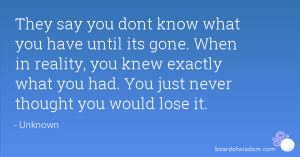
neverthoughttoloseit

Letting Go

A buddy of mine shared how he felt letting go of a long term relationship that he still wanted very badly, but it seemed to him like he was the only one.

Nothing is more difficult than watching your relationship die.

Watching someones love for you change and deteriorate while yours still burns strong.

You desperately want to understand it and make sense out of what has become of your life, but you can’t.

So you hold on, trying to repair things, and trying to rebuild what you once had and you know you could have again.

You believe with all your heart that life could be not just good, but great, if they would put in even half the effort that you are.

But they don’t.

You care so much about the other person, but it feels like they won’t even try.

Still, you stay. Even as you feel the relationship shift. As you feel them pull away and shut you out.

And it hurts all the more, because although they are physically present they are a million miles away.

And you realize they’ve left the relationship, but they don’t even have enough respect for you to end it.

So it’s left to you.

Nothing is harder than making the choice to walk away from someone you still love, even after all they’ve put you through.

Unless someone has been there, they cannot understand the pain that comes with making that choice.

Sometimes you desperately want things to work out, but your partner doesn’t show a willingness to work with you to make things better. It doesn’t matter how much you love someone.

Know your value. If you know you have done your best and things still haven’t worked out, never forget that it’s not a reflection on you.

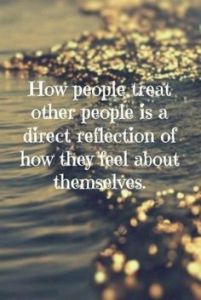
treatingothers

Should You Have to Change?

changeHeading

Love is an interesting thing. We all want to be accepted, and we all want to be accepted for “who we are”.

In fact, by definition unconditional love means is that someone is not putting conditions on their love for us. They are accepting ALL of us, the good and the bad. In fact, part of the concept of self-love is being able to look at yourself and say “I am enough”.

Being able to love yourself, and being loved unconditionally are two things we should all strive towards. And in my opinion they probably the most important building blocks to happiness, and healthy relationships.

One place people seem to get confused though is in the belief that unconditional love and accepting yourself as you are means you are a finished product. It means you can’t change, and you can’t improve.

Patterns of Behavior

It doesn’t matter who we are, we can always improve. And sometimes we really should.

I know a guy who never seems to be able to hold a job for long. He would spend a few months here, a years or so there. In all cases he would leave the job and I would hear about how awful it was at the company. Usually it was an issue with management, how terrible they were and how they treated the employees poorly. Although it must have been hard on his family, his wife was very supportive of him. She seemed to admire the fact that he was willing to stand up for himself and what he felt was “right”.

Then one day I got a job at one of the places he used to work and I met some of the managers. When I met them, I had a hard time reconciling the stories I had heard with the people I had met. That’s when it occurred to me that perhaps it wasn’t the places or the management.

Maybe it was just him.

But when he spoke about how terrible these places were, he genuinely seemed to believe it.

A few years ago I read a book by Anne Sheffield about how depression impacts relationships. She had grown up in a household with a mother who suffered from depression, and as an adult she had a few failed marriages.

All her marriages ended because of similar issues, and after the second or third (I can’t remember) she realized that maybe the problems didn’t lie with her partners. Maybe the commonality was her. It was at that point that she started to realize she also had depression, and it had been affecting her ability to maintain a relationship.

Reading that story made me think of the guy who couldn’t hold a job for long.

Each time he left or lost a job, he had a reason. And taken individually each of those reasons seemed valid and defensible. But when you look at them as a pattern of behavior, the one common item was him.

alwaysdone

Through the Looking Glass

I’ve talked about my buddy Gandalf, who spent much of his adult life without fulfilling relationships before. He ended up seeing a psychologist and related to me some of his experience:

Early in my therapy my psychologist had me list out what I thought was the perfect partner. After going through that list with him he said one word that I’ll never forget. It was “selfish”.

My mindset at the time was that I wanted and needed loving, but I didn’t think that I needed to give any love back. It never even occurred to me that I should even give any love back. To me, my thinking was that it was their duty to give me love and that I didn’t have to return anything back because just the act of loving me should be enough for them.

There was no empathy for anybody else. My mind only focused on me. It is known as the Narcissus Paradox, where it appears that I would be thinking of others, but really, my mindset was only focused on me and my needs. I was nice only to the point of where I could get other people to show me affection. My thinking was only on how to get other people to show me love, and not on how to love other people.

This leads to passive aggressive behavior and giving people the silent treatment because I didn’t understand how to deal with conflict or how to get what I wanted from other people.

I now realize that this is not only very selfish, but childish and immature. There are several factors that contributed to me having this mindset, but lack of being loved as a child is a significant factor in this. If you don’t grow up in a loving environment (both between the parents and the parents to the child) then you grow up without knowing and understanding what love is and the empathy required for a loving relationship. I am now in the process of learning this, but it takes time. However, as my friends have told me, it’s better late than never.

He had people around him who loved him, and accepted him for who he was, flaws and all. But I’m sure the people who cared about him (myself included) wanted and hoped for him to change.

Change is a difficult concept. We’ve probably all seen people who have relationships where there are parts of their partner that they don’t like, and they try to change those parts. For anyone who has seen that, you know that it never works out well. People generally don’t change.

I have children, and one of my most important roles as a parent (in my opinion) is to try and shape their behaviors in a way that they can interact with the world in a healthy fashion. When I do that, am I not trying to change them? I am the parent, and part of being a parent is teaching.

A big part of teaching as a parent is around helping your children understand their emotions and their feelings, and allow them to cope in a healthy fashion. Is that changing them? Yes, I am the parent and they are the child, so part of my role is teaching. But am I only trying to teach them because I am the parent? No, it’s because I love them and want the best for them.

Don’t we want the best for all the people we care about? We aren’t responsible for others, but isn’t it normal to want to help those who seem to need it?

It’s a fine line between wanting someone to change to better suit what YOU want from them, and wanting them to change for THEM. And the distinction between those two things is blurred, because often the types of changes that benefit the individual also benefit the people who care about them.

What makes you “You”?

The idea of change often scares the hell out of people. Even when people know their behaviors and actions are damaging and destructive, they often defend them by saying “this is just who I am”. To change would mean you are changing who you are, and by extension that would mean you are no longer “you”.

This is scary. But really, what are you? We are a collection of habits and behaviors, some good and some bad.

What if some of your habits or behaviors are broken? What if something is wrong with the current version of you?

Thinking of my buddy Gandalf story above, he recognized that there WAS something wrong with the old version of him. And although it was hurting the people around him, the main person it was hurting was himself.

This is a difficult situation, because generally we are told that people should be able to accept us as we are. We shouldn’t have to change in order to be accepted, and we should be able to be happy with who we are. So the idea that he should have to change somehow seemed wrong.

But here’s the thing, he wasn’t happy with who he was. In fact, he didn’t really like himself at all. Interestingly the people around him generally did accept him. But he didn’t see that, and he didn’t accept himself.

It was only later when he found himself chronically unhappy and falling into clinical depression that he started to realize and understand exactly how broken this thinking was. And he needed to change, because the way he approached the world was not a situation under which love or true intimacy can thrive.

Should he have had to change?

No.

But not doing so would have kept him in the same negative cycles he had been in for years.

Were there benefits to him for making changes?

Definitely. Both for him, and for those around him.

Although he saw that, he was terrified to change. Because the way he was, and the way he coped with life, was the only way he knew.

LifeChange

I think back to the guy who moved from job to job. He didn’t have to change. Although it probably put tremendous pressure on them, his family accepted him as he was.

He didn’t see a need to change, because in his mind he was never the problem.

People often deny they have a problem. Or they accept it, but say “it’s just the way I am”.

But when you deny a problem, blame others, or minimize it and fail to see how it impacts both you and those around you, you give up the power to change.