Communication Is Hard

In life, communication is probably one of the most important skills we can learn.

But it’s also one of the hardest.

I recently had a bit of a back and forth with my sister, and it became clear that we were not “getting” each other. The communication was through email, and while written communication allows people an opportunity to get their thoughts out in an organized fashion, it is also prone to misinterpretation.

See, we all have our own triggers and filters. So no matter how clear one person *thinks* they are being, they can’t control how the other person will receive the message. This idea is summed up pretty well here:
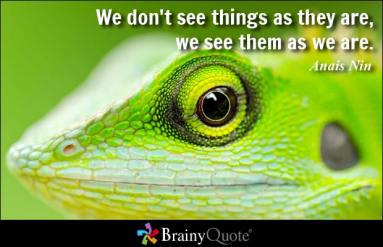
what we see

It’s true, we don’t see things as they are presented. We see things as we interpret them. These interpretations are based on our own experiences, and sometimes they can be quite different from the initial intent.

This concept was definitely played out in our interaction.

She had some thoughts and ideas she wanted to share, I received them, interpreted them in a different way then what was intended, and responded accordingly. Sadly, this sort of thing happens all the time.

What makes matters worse though is that when she saw my response, she thought she had offended me. And because she thought she had offended me, she felt it was best to apologize and not address the issue any further.

How We Can Help

Maybe it’s just me, and my own poor communication skills – but I see this everywhere. We all have moments where we are scared to say the wrong thing, or do the wrong thing, and hurt someone we care about. So often, we say or do nothing.

It’s natural, and understandable. But I feel this approach is very broken.

When you care about someone, you will hurt them sometimes. You will piss them off sometimes.

And that should be alright.  That’s part of what a relationship is about.

When you genuinely care about someone, you care when you see them hurting. And you want to support them and help them however you can. Thing is, you can’t actually “do” anything. With the people we love, we can be there to listen and support them. And we can try to make suggestions and advise them. But that’s about it.

Incidentally, this is one area that guys seem to get themselves in trouble. Guys are “fixers”. We have a hard time listening without thinking solution. Not sure why, but it seems to be something that’s hardwired into us. And from what I read/hear/see, women don’t actually like that. Sometimes they want to talk and have us guys just listen and not say anything. Ladies, I have to tell you – sometimes it’s really freaking hard to do that.

In any case, everyone has their own battles to face, and only they can face them. So even when someone you care about is hurting, or you think they are making poor decisions, or you think you can help them – you can’t actually do anything more than listen, support and advise.

It’s the advising part that gets us in trouble though.


Dealing with Advice

When offering advice, how you do it is very important. It always has to be done in a way that is about the issue or behavior at hand, and not the person. No matter how careful you are though, you still have no control over how the other person will interpret what you say.

And sometimes the recipient will not to be receptive to what you have to say.

People don’t like being criticized, told they are wrong, or feel they are being told what to do.  And advice can often feel like all of those things.

It’s important to remember advice is often an attempt at constructive criticism, and not the same as being critical of the other person. It’s only when it is poorly presented or when we are oversensitive that they things can appear the same.

If you are someone who can’t take criticism (constructive or not), consider this. People often provide advice for two different reasons:

  • they feel they know everything, and they are more than happy to share their opinions (solicited or not). Often trying to force their ideas on someone else
  • they feel they may have experiences/knowledge that gives them insight into what someone is going through, and they want to share that to try and help the other person

These are two very different approaches. And when in doubt, it’s probably a good idea to assume that someone is giving advice because they do actually care, and want the best for you.

Learning to accept criticism is very important.

Everyone’s experiences are different, and no two situations are exactly the same. Even if they were, we are all different so what works for one person won’t necessarily work for another. But we can still try to learn from each other. Learning is all about doing things, seeing flaws in our approaches and learning from them.

We can’t learn unless we accept the flaws and limitations in how we do things. And sometimes we are blind to those flaws, and need some guidance from the people who care about us.

criticismImprovement

If someone can’t take criticism, often this is more an issue with them and their own insecurities.  But it means they often remain stuck, and unable to improve on where they are.


Afraid to Offend

When people care about each other, they shouldn’t be worried about hurting each other. They should be careful about what they say and not hurt the other person intentionally, but hurting each other is part of caring about the other person. They tend to go together.

It’s only when you do care about someone that they have the capability to hurt you.

I think good communication is about being able to say what you feel is right without fear of how the other person will interpret it. And also being able to accept that your thoughts may or may not be accepted the way you want, and that’s alright.

A big issue with communication is that people worry too much, and end up scared to say the important things because they feel the other person will not see it as information/advice, and will instead take it as an attack.
So instead they say nothing.

When it comes to the people we love and the people we care about, I think one of the most important things we can do is learn to say “no”, or to say “I disagree”. If I’m being selfish, a jerk, or an idiot – I WANT the people I care about to call me out, to tell me that how I am acting or what I am doing is not acceptable.

It may hurt, and it may piss me off. But that’s alright.

To my sis, I know she cares. We won’t always see eye to eye, and that’s alright. If there’s something she wants to say, I don’t want her to ever be scared to say it. If I think she’s out of line I will tell her. But I’ll also listen, and consider what she has said.

And to me, that’s a big part of what relationships are about.

avoidingCriticism

Avoidance

AvoidanceHeader

Do you like horror movies? Some people do, others don’t. Some people love romantic comedies, others hate them. Movies, hobbies, foods, styles. It doesn’t matter what it is; we all have our own interests and preferences – things we like and things we don’t.

A natural result of this is putting our energies towards those things we enjoy (and not towards things we don’t).

Sure, there are benefits in expanding our horizons and trying new things. But if we don’t like something or we decide it makes us uncomfortable, it’s alright to avoid these things.

When things are just personal tastes and preferences, it really doesn’t matter if you like them. You can choose to ignore them without doing any harm to yourself or those around you.

But not all of life is like that.

Sometimes there are things we need to deal with, whether we like it or not. No matter how awkward or uncomfortable it makes us feel.


Responsibilities

It’s easy to say “I don’t like horror movies so I won’t watch them”. It’s a bit tougher to say “I don’t like paying bills so I won’t pay them”. I mean, you can, but over time there may be some impacts of making that choice.

Bills are just one obvious example of things we can’t ignore.

The fact is, there are a lot of things we have to do. If we live on our own, we need to pay rent or a mortgage. Which means we need some sort of income – which usually comes in the form of a job. Which means we need to show up at work and put in enough consistent effort to hold a job.

We need an income to live. And we need to both manage our income and live within it.  At the very least, jobs and bills are something we need to deal with.

We may not like the restrictions this places on us, and we may feel uncomfortable when we look at our bills and our account balance.

But it’s not something we can ignore.

Well, that’s not entirely true. I CAN ignore things that make me uncomfortable. That won’t make them go away though, and has consequences of it’s own.

In fact ignoring problems tends to backfire over time, as small problems often grow into something much larger when they are not addressed.

avoidance3

Avoidance in Relationships

If life were just about me, it would be easy to do what I want and avoid the things that make me uncomfortable. Yes, this is unhealthy and there are usually negative consequences for doing this. But if I choose to do this, hey, it’s on me.

However most people don’t want to be alone. There is a natural tendency to seek relationships with others, both as friendships and intimate relationships. With friendships you can still get away with avoidance to a degree, as your friends only see you sometimes. In intimate relationships however this will ultimately cause problems.

Intimate relationships can be wonderful and rewarding. But they can also be challenging.

Life doesn’t always go down a happy path, sometimes things don’t go the way we want. Because people are different all relationships occasionally run into conflict, and some of the most common conflict areas are the following:

  • Money/Finances
  • Children (can be whether to have, or child rearing once you have them
  • Chores/Domestic Work
  • Sexual Expectations
  • Family (dealing with extended)
  • Elderly Parents (care of)
  • Life Priorities

None of these are fun, or easy topics to deal with.  And yes, at times it would be easier to just ignore them.  But for a relationship to thrive (or even just survive) the couple needs to find a way to navigate these in some way.

Navigating them involves accepting the each member of the relationship may have different ideas, accepting each persons opinion as valid, and working through the problem to find a common ground.

When something affects the couple and has impacts on them, the issue NEEDS to be addressed and dealt with.

It doesn’t matter if we like dealing with the problem or not, if we feel it’s an issue for us personally or not, or if it makes us uncomfortable.  If it’s a problem in the relationship, it’s a problem.

This isn’t like choosing not to watch scary movies. These things matter.

In life, we can’t just pick and choose the parts we want to deal with and ignore/avoid the rest.

Avoiding problems puts stress on the individuals, on the relationship, and over time it will threaten to destroy the relationship if a different path is not found.

avoidance1


When Avoidance Becomes a Problem

No one likes to deal with difficult or uncomfortable issues, and unless you love conflict (which some do) everyone will try to avoid things sometimes.

However when avoidance becomes a pattern of behavior, or a default ways of “dealing” with issues and conflict then it has become a problem.

According to Merriam-Webster avoidance is an act or practice of avoiding or withdrawing from something.

As noted, we all do this sometimes. But why does it become a (very broken) method of coping for some people?

One explanation for this can be found in the Fear Avoidance Model.

This is a psychological model that believes avoidance is driven by pain, and fear of pain. Conflict and dealing with conflict comes to be associated with discomfort, which can be physical or psychological.

Due to this fear, over time people start to avoid situations associated with this pain in the belief that doing so will “protect” them from it. However this same act of avoidance over the long term does more damage than good – as people will increasingly restrict their life to only include things that are “safe”, resulting in disability and depression.

Fear-avoidance_model

Avoidance is strongly linked to anxiety, as anxiety is based on fear. So an anxious person will often avoid situations that make them uncomfortable, even to their own detriment.

In extreme cases, anxiety can cause people to avoid life; and they end up trapped in a cage of their own making.

These extreme cases are often referred to as Avoidant Personality Disorder. Wikipedia describes this as being characterized by the following traits:

  • Hypersensitivity to rejection/criticism
  • Self-imposed social isolation
  • Extreme shyness or anxiety in social situations, though the person feels a strong desire for close relationships
  • Avoids physical contact because it has been associated with an unpleasant or painful stimulus
  • Feelings of inadequacy
  • Severe low self-esteem or Self-loathing
  • Mistrust of others
  • Emotional distancing related to intimacy
  • Highly self-conscious
  • Lonely self-perception, although others may find the relationship with them meaningful
  • Feeling inferior to others
  • Uses fantasy as a form of escapism to interrupt painful thoughts

Communication and Avoidance

It is often said that communication is the most important thing in a relationships, and there are a number of quotes like this:
communication1

Communication builds closeness and mutual understanding. You build intimacy through letting the other person in and being vulnerable around them. This doesn’t happen without communication. In fact, in its purest for physical intimacy (sex) is really just a form of communication.

But we are all different, with different ideas and beliefs. And these differences provide the potential for conflict – especially in areas that make us uncomfortable.

I’ve written in the past on conflict, and how dealing with it is one of the most important relationship skills you can have. Conflict allows us to improve our mutual understanding of each other, and understanding is important to the long term success of any relationship.

Well what happens when you don’t communicate well, or perhaps not at all?

Avoidance is really the complete opposite of communication. Indeed, it is a refusal to communicate.

If communication is the lifeblood of a relationship, then avoidance is one of the biggest roadblocks to a happy relationship.

Avoidance often goes hand in hand with silence, or the silent treatment. What is often overlooked is that silent treatment is a form of punishment and control. In fact avoidance/withdrawal and the silent treatment are leading form of emotional abuse.

Avoidance2

A Better Way

I believe avoidance is one of THE biggest killers of relationships. But instead of ending relationships, it often leads to couples being “unhappily married” or in “bad relationships”. Because problems happen, and not only are they never addressed, but they are also never discussed and never out in the open.

Tension and body language makes it obvious problems exist, but they are avoided, leading to unhappiness and resentment.

We all have things that make us uncomfortable, and dealing with problems is never easy. But if you are someone who falls back on avoidance as way of “dealing” with issues, then your happiness and potentially your relationship depends on your ability to learn a different way.

As shown in the fear-avoidance model, avoidance is a destructive coping mechanism. By using avoidance to cope, people end up shutting down and withdrawing. As the model shows, the avoidance is due to fear. Fear of rejection. Fear of consequences.

Guess what? Life happens. And yes, things DO have consequences. This doesn’t mean you can’t deal with them and get past them though.

Avoidance goes hand in hand with anxiety, and one of the main components of anxiety is this fear of what “could” happen. Effective anxiety treatment is all about showing that yes, things can happen, and yes actions have consequences. But the consequences are almost always much less than the anxious person believes. Anxiety is about irrational fear (though it seems very rational at the time).

Like anything else in life, the only way to improve something is to do it. Avoiding is the opposite – it involves not doing. So it also involves never improving.

Take a chance, and try to overcome your fears. Try to actually tackle issues head on instead of avoiding them. Start small, and hopefully you will find the fear is greater than the reality.

Over time you can take your life back, and instead of avoiding you can start living.

avoidance5

Expectation vs. Entitlement

entitlement_header
Expectations seem to be getting a bad rap these days.

In recent posts I’ve discussed the idea of expectations in relationships (yes, they exist – and I would argue that’s a good thing). I’ve also discussed the idea that expectations are a part of setting goals, and having a vision for yourself and what you want in life.

Yet I continue to read things like “I just want people to love me without expecting anything from me”. There’s this idea that in unconditional love expectations are bad and people should just be satisfied with anything.

When exactly did “expectations” become demonized, and why? I suspect it’s due to a sense of confusion between expectation and entitlement.

Expectations are tied to our needs and wants. We need food and shelter to survive, so in the modern world some form of income is a need. Sex is a basic human instinct, and there is no clear consensus on whether it is truly a need or a want, but the fact that the argument even exists tells me that at least in some capacity sexual fulfillment is a need. The lines between needs and wants blur, and it’s pointless to try to differentiate the two; but expectation is a belief that our needs and wants are important and that we will attempt to fulfill them and that those around us will care about them.

However an expectation of something doesn’t mean it “will” happen, and periodically we find that our expectations are adjusted when reality doesn’t line up with them. But expectations are important, and there is nothing inherently wrong with them.

Life is an Exchange

When looking at expectations and needs in a relationship, I think you can draw many parallels to the world of work.

When looking at a prospective partner we are like a company doing interviews. We have a wish list of criteria and we are looking for someone that meets as many of those criteria as possible.

Depending on what you are looking for in a relationship these criteria will vary, but they usually include things like physical attraction, common interests, similar outlook or goals in life, sense of humor, reliability, sexual compatibility etc. If the relationship is serious things like outlooks on kids, responsibility and some degree of financial stability are also important. Criteria of a desirable partner is pretty subjective, but we all have *something* we are looking for which provides a perceived benefit to the relationship.

Finding someone who meets your criteria fairly well doesn’t mean you have a relationship though. Your partner has things they are looking for too. Their criteria may not be the same, but they also have to see value in what you bring to the relationship. It’s not a relationship unless both parties see some sort of benefit.

Even if the exchange is simply the enjoyment of each other’s company, both people must see some sort of value in maintaining and growing the relationship. If only one person sees value, the relationship won’t last – to suggest otherwise seems foolish to me.

Beyond criteria of what we are looking for in a partner, we also have some sort of vision of what we want our relationships to look like – with upper and lower boundaries of what is “enough”. Most people probably have not actually thought through what these boundaries are, they only know when expectations are not being sufficiently met.

I suspect most people understand that their partner could better match their “ideal” standard, but they could also be a lot worse. So this question of “what is enough” is central to determining the viability of the relationship. Relationships struggle when needs are no longer being sufficiently met on one or both sides. When this happens, each partner is really evaluating “is this still enough for me”? If not, some leave. Others believe it can it be better, and look for ways to improve things.

It is when relationships are struggling that resentment about “expectations” arise, but the expectations in question have likely always been there. It’s only now that they have become an issue.

My belief is, expectations are natural and we all have them. They are actually positive, because if we didn’t have them then how could we judge if our relationship was still working? Would we just have to put up with anything?

Entitlement

Instead of expectations being a problem, the REAL problem is entitlement.

Entitlement is all about a sense of ownership or a belief that you *deserve* something. I see entitlement as having two main forms:

  1. I should get this because I want it, “no matter what”
  2. because I have done this you now have to do that

It is fine to have expectations of someone else – but that doesn’t mean you are entitled to anything. The other person matters here, and what you want doesn’t matter if they don’t also want the same thing.

I don’t care how nice someone is, how pretty/handsome they are, how much money they have, how many people they know or how educated they are. Sure, some of those things influence the opportunities you have, but that doesn’t mean a damn thing.

entitlementowesnothing

Fulfilling Expectations

If expectations are fine and are the criteria for relationship satisfaction, but the fulfillment of those expectations is not guaranteed; how should people best position themselves to ensure their expectations are met?

The answer to that is, the only thing you truly have control over. You. Your choices, communication, and your behaviors.

This is where the golden rule comes in. People should try to live their lives in a way that their choices and behaviors are in line with their expectations.

If you want someone to treat you with love and kindness, *maybe* it would be a good idea if you were to treat them that way. If you are hoping to have your needs met in a relationship, you had better be working to understand your partners needs and trying to meet those. And it shouldn’t be a calculated “hmm, if I do this for him/her then they will do something for me” – this isn’t a financial transaction. You need to be doing it because you genuinely want to meet their needs – because you care about them and want to see them happy.

You also need to communicate your needs and wants. Many people hold resentment for unmet expectations, when they were never clearly understood by their partner in the first place. As I’ve said before, guys are dumb. Sometimes what one person thinks is clear is not clear to the other person.

So communicating expectations and reciprocating for your partner puts you in the best position for your expectations to be met. But that’s all it means. It doesn’t guarantee anything, and it doesn’t mean you will get what you want when you want it.

You may end up disappointed in some circumstances but over a period of time hopefully you will find that you and your partner are meeting each other’s expectations. In doing so, you should both find you have a high degree of satisfaction in the relationship.

When Expectations are not Met

Entitlement is believing your expectations will be met when and how you want them, or that others should conform to your needs. Yet expectations and needs are real.

If you find yourself unsatisfied in your relationship, then chances are your expectations also are not being met in some way. If this is happening in individual cases it’s not an issue. But when it becomes a pattern over extended periods it can become a significant problem. When this occurs, it’s important to understand what the problem actually is.

Are specific expectations that are not being met? If so, take a good look at them and ask yourself if they are fair expectations to have. Maybe they aren’t, and you would be best served by adjusting your expectations. If you look at your expectations and feel they are fair, then it’s important to discuss this with your partner.

Let’s look at one of the most common issues in a relationship – sex. I’ve written about sexual issues in the past, and the reality is that due to differing drives sex is always a potential source of conflict.

To be clear, no one is entitled to sex.

Entitlement is when someone expects sex “on demand”. Or believes that if they do something for their partner, they should get sex in return – regardless of what their partner wants. This is wrong.

However another version of entitlement is that if someone is not interested in sex they should not have to have it – regardless of what their partner wants. Due to the nature of a monogamous relationship I see this as equally wrong. This may not be a popular view, and I’m not saying someone should ever “have to” have sex when they don’t want to. But although a sense of entitlement around sex is wrong, an expectation of sex in a relationship is not wrong.

Entitlement says “I need sex, and it doesn’t matter what you want”. Or “I’m not interested in sex, and it doesn’t matter what you want”.

Expectation says “I need sex as part of this relationship, and I am not satisfied without it”.

These are different.

People need feel fulfilled sexually, and this requires communication. To have a successful relationship, both partners need to care about what the other one wants. Nothing should ever be entirely on one person’s terms. As discussed earlier, for all needs people have upper and lower boundaries of what is “enough”, and every couple needs to find a way to navigate these boundaries that works for them.

I use sex as an example because this is the one situation in a relationship where someone’s level of satisfaction is completely dependent on their partner (which is probably why it is a source of conflict). Most other needs can be satisfied individually or with other people. But these ideas of boundaries apply to all needs. In a relationship your partners needs should be important to you, and you should get satisfaction and enjoyment from seeing them met.

For some needs, one persons lower boundaries may be the upper boundaries the other, and this is natural. As long as their needs are still being met enough to meet the lower boundaries, there is no conflict. But when the upper boundary for one person doesn’t even approach the lower boundary for the other, over time conflict will arise.

With healthy communication, a couple will try to work on things and see if they can improve the situation. Maybe there are reasons, and if those reasons are understood there is often a willingness to adjust expectations and change these boundaries accordingly.

If the lower boundaries of needs aren’t met however, eventually this will start to poison the rest of the relationship. Expectations form our measures of success. It’s pretty simple – If expectations are being met we’re happy, and If they aren’t we aren’t

entitlementQuote

Changes Over Time

Learning to communicate and adjust expectations is important for the success of any long term relationship.

People change, and the things we are looking for may also change over time. People also go through different life events, so even if your criteria don’t change your partner may no longer meet them in the way they once did. Plus relationships start as “new and exciting”. Passion is based on this excitement, but it can be hard to maintain that when you know the other person so well that there isn’t really anything new left to say.

Due to these things all relationships will struggle at times. During those times, if you truly want to weather the storm you need to be able to deal with difficult issues. You need to communicate with each other honestly and openly, addressing problems and working through them together. This is the hardest part in any relationship, and it is something that can definitely feel like work.

When I compare relationships to work, what I am saying is that you NEED to actively work on them. And if you don’t, there is a very good chance that you will either be unhappy, or it will fail (or both).

So accept that both you and your partner have expectations of each other, and communicate those. Your expectations will differ, and this can cause conflict – but it’s important that you work to addressing these conflicts in a way that is satisfactory to both. No one is ever entitled to having their expectations met, but finding a middle ground that works for both people is needed in order for any relationship to succeed.

The Power of Belief

belief_heading

Belief.

It’s a simple and very powerful concept. Yet it’s also one many people don’t seem to buy into (or “believe”, if you prefer).

Does belief really matter? Can we truly accomplish things simply by believing enough? Or is belief just something people use to delude themselves; a form of false hope?

What is the “truth” behind belief?

For me, I believe belief is one of the most important things we can possibly have. If fact, I feel the core of happiness is being able to believe in all the things around me – my partner, my children, my family, my friends, my dreams, even my job.

Some people talk about love being one of the most powerful forces in the world, others feel faith is. Both of those are founded on belief.

However, belief isn’t some magical thing. As my 9 year old recently put it:

Daddy, believing something won’t make it happen.

If I believe I can fly and jump off a building, I’ll still be dead.

Umm, yeah. I guess it depends on the height of the building, but for the most part he’s right.

Just to be clear, we can’t defy the laws of physics and there are varying degrees of probability in the world. There’s a difference between belief and stupidity.

Belief is really important though. It allows us to imagine things that we haven’t imagined before, and is a requirement for any sort of changes in our lives.

So while simply believing in something doesn’t mean it “will” happen, it does give it a chance.

When You Don’t Believe

The reason belief is so important is because of what it means when we don’t have it. A lack of belief can be seen as doubt. When you doubt, you question things. You question if something is likely, or even possible. Doubt causes people to hesitate, or to remain passive when they should be taking action.

Even worse than doubt is negative belief – a sense that you *can’t* do something. That something is impossible. Or perhaps a sense that although it may be possible, you could never do it.

Doubting something, believing it’s impossible, or believing that it’s impossible for you ensures failure. It causes people to discount the possibility of something without giving it a chance. Or maybe they do give it a chance, but the doubt causes them to sabotage their own efforts, ensuring their own failure.

doubt

Why do people do this? Why don’t people give themselves or their dreams a fair chance?

At its root I think doubt comes down to fear – a fear of failure. We fear failure and we want to avoid the negative feelings that come with it – embarrassment, shame and guilt. So instead, we tell ourselves that something can’t be done, or that “we” can’t do it. After all, if we don’t try then we can’t fail. And if we do decide to try, then telling ourselves this cushions us from disappointment. At some level we *knew* we weren’t going to succeed, so we get the expected result.

We see this all the time with sayings like the following:

expectnothing

I think this line of thinking is so wrong, and runs completely counter to the idea of belief. This thinking involves lowering (or eliminating) expectations on yourself and on those around you. Sorry, I expect more than that out of life – from myself, and from those around me. If you lower expectations, how can you ever achieve anything? Expectations are important, and belief and expectation go hand in hand.

I will acknowledge that expectation opens you up to failure and disappointment, but that’s alright. In fact, it’s necessary. If we don’t allow ourselves to fail, how can we ever learn?

If we don’t suffer disappointment how can we ever grow?

Believe in Yourself

Most of my writing is about relationships, and I truly believe that your most important relationship is the one you have with yourself. To be happy you need to have a sense of purpose. You need goals, and dreams. Simply having goes and dreams isn’t enough though, you need to be willing to act on them. And to do that, you have to believe in yourself.

I read a lot of blogs, and it is clear to me that many people out there don’t believe in themselves. Many people look at the world and see what they can’t do, instead of what they can. Many people seem to believe that they aren’t good enough.

I’m not sure where this comes from, but I suspect a lot of it comes down to what we learn when we are young. I’m a father of two young boys, and I believe as a parent one of the worst things you can do it tells your kids they can’t do something, or try to do too much for our children – doing things for them instead of letting them try. Over time, I believe these sorts of things cause people to believe that they can’t do something. That they aren’t good enough and that they’ll just mess it up.

As parents, we need to let our children try things. We need to be able to let them fail. Our job isn’t to do things for them – that’s not how they learn. Our job is to support them, help them feel good about themselves, and give them the courage to try again.

We need to let them know that we believe in them, and teach them to believe in themselves.

Buying In

Sometimes things can seem hopeless, and it can seem hard to believe. Sometimes all we can ever see is failure, and there can be a sense that there’s no point. After all, why put in any effort if you’re just going to fail anyway.

But I never said belief was easy. Belief takes courage, and a willingness to see the best in things and see what is possible in life.

My son is right, belief is not a magic wand. Simply believing I can fly won’t help me if I decide to jump off a building. However that doesn’t mean I can’t fly. A belief that I CAN fly may give me the motivation that allows me to put in the work and effort to find ways to fly.

Many of the things we take for granted today are things that seemed impossible to prior generations. Flight, computers, cars, electricity. There are countless things that would never have happened if someone simply accepted what was possible. For many of the people who impacted the world, belief is what allowed them to keep going through failure after failure.

Most of us won’t change the world. But we CAN change our worlds. We can impact many people around us – our friends, families, and most importantly ourselves.

So have dreams, set goals, and don’t be afraid to expect more from yourself and those around you. Sure you’ll be disappointed sometimes, but that’s alright.

There are no magic wands in the world. Life is what you make it. And to make it what you want you need to put in effort, and you need to be willing to believe in your dreams.

ActAndBelieve

Does Love Have Expectations?

Couple-in-Love-Picture

Sometimes I hear people talk about unconditional love, and it seems there is a belief that unconditional love should not have any expectations. I’ll see comments like “I wish someone would just love me without expecting something in return”.

On one level, this makes sense. We don’t want to feel like we are being used. We want to feel like someone loves us for who we are, and if they have expectations then it can feel like they are placing conditions on love. Unconditional love shouldn’t HAVE conditions, right? Isn’t that what the term “unconditional” means?

I understand this line of thought, but I’ve got to go against the grain on this one. I think it’s misguided and somewhat naive to say love doesn’t come with conditions or expectations. I believe it does, and I will go even further and suggest this is actually a good thing.

What Do You Expect In Love?

In a loving relationship, what do you expect from your partner? Can you truly say you don’t expect anything from them? If you are going to be honest, we all have expectations of our partners.

I recently read a blog where someone listed a “charter of rights” in a relationship, and I think it was a great topic and idea (thanks Bugs!). I don’t want to steal her stuff, but I think at the very least in a relationship it’s fair to expect the following:

  • Your relationship should be a place of safety:
    • This includes physical safety. It is never acceptable for your partner to hit you or take out their frustrations on you in a physical manner.
    • This also includes emotional safety. People often think of abuse only in physical terms. In reality, MOST abuse is emotional, and it can be just as damaging as physical abuse (only the scars aren’t as easy to see). Physically abusive relationships are usually also emotionally abusive, but often people think as long as they don’t “cross the line” to hitting someone it’s not abuse. It still is, and should never be ok.
    • Lastly I’ll include sexual safety. I’ll talk more on sex later in this post, but sex should never be something that your partner expects when they want, on demand. If you don’t have two willing participants, even if you are in a relationship it is still rape.
  • Additionally, it’s fair to expect that your partner will be “true” to you. Adultery/affairs are never ok. Even when they are “mistakes”, something that “just happened”, or are things that occur when your partner is going through a “hard time”. There is never an excuse for infidelity.

To me these are the obvious expectations that anyone should have for their relationships, and if any of those are broken then the covenant of the relationship has also been jeopardized.

There are other expectations we all should have in our relationships that are perhaps a bit less obvious and harder to quantify. These are the “loving behaviors” that I discussed in my last post, which include things like kindness, trust, caring and empathy.

Loving behaviors may not happen ALL the time (hey, we all have bad days where we can kind of be jerks). But it IS fair to expect that these things are the regular modes of behavior in a relationship.

If you are in a relationship with no kindness, trust, caring and empathy is it really a relationship? Would you actually stay in that sort of situation?

None of these are bad things to “expect” in a relationship, and in fact are the fundamental building blocks of a relationship. So I think it’s safe to say that yes, relationships can (and should) have expectations.

Rights and Responsibilities

Most of my university days are a blur, but one of the things that has always stuck with me is a discussion we had on rights.

The idea presented was that rights are accompanied by responsibilities. If I have a “right” from you, then in exchange for that right I also have a responsibility TO you. It’s a two way process.

Furthermore, this process needs to be mutually agreed upon. I can’t just claim a “right” to something I want and then give you something. Both people need to agree to about the nature of the “exchange”, and there is no right unless this form of exchange exists.

No one is ever entitled to anything. Entitlement is the concept of having a right without believing you should have to do anything in return. Entitlement is selfish, and I would argue is wrong.

Entitlement has no place in relationships. Our relationships should be mutually beneficial. I’m not saying every interaction has to provide value to both members, or that things are necessarily going to be 50-50 (there is almost always someone who puts more into the relationship). But there must be some perceived value to the relationship for both people.

If you think of nature, a one sided relationship is referred to as a parasitic one. Mutually beneficial relationships are symbiotic, and that his what we should strive for.

Expectations vs. Entitlement

So what do rights and responsibilities have to do with relationships? Well, taking this concept we can say that if we expect something from our partner, they should also be able to expect it from us.

If we expect a relationship of safety, we need to also provide one. If we expect kindness and caring, we need to also provide that.

But let’s look at a more difficult topic (and a common area of conflict) – Sex. Is anyone ever entitled to sex in a relationship? No. Should anyone expect to get it whenever they want? Again, no. But is it fair for someone to expect that sex will be a part of their relationship? Yes, I think so. Sex is a difficult topic because relationships rightfully expect faithfulness. Most consider sex a need, and as part of the relationship their only outlet is with their partner; but different people have different levels of need.

Sex is one example of a conflict point. Other common ones are spending time together (balancing me and we time), outlooks towards money and approaches to parenting.
For any conflict of these conflict areas, there has likely been a mismatch of expectations. That doesn’t mean the expectation itself is wrong, it simply means that some form of compromise has to be found where both peoples expectations are met in way that is seen as satisfactory (or at least acceptable) to both.

Why are we in Relationships?

The truth about relationships is, we go into them with a belief that our needs and expectations will be understood, respected and at least largely fulfilled by our partner. In fact, that’s a big part of what love is. It’s a type of caring where you not only derive happiness from seeing your partner’s needs fulfilled, but you also want to be the one to fulfill them.

Think of marriage. Marriage isn’t just a legal document and a ceremony. It’s a symbol of your commitment to each other. It’s a symbol that you care about the other person, and that their needs and expectations are important to you. It’s a symbol that you are no longer just an individual, but you now view yourself as part of a “we”.

If expectations and needs aren’t being met in a relationship, eventually it will get to a point that the relationship is no longer viewed as beneficial by one or both members.

When this happens it doesn’t matter how long you’ve been together, if you are married or if kids are involved. The relationship has ceased to function.

At this point you need to make a decision. You need to either find that part of yourself that cares about the needs and expectations of your partner, and WANTS to fulfill them; or you need to accept that the relationship has failed and move on.

Expectations Revisited

Usually when I hear about expectations in love, there is a sense that we should NOT have expectations in love. There are many sayings like this:

LoveandExpectations

Perhaps “love” doesn’t have expectations, but I think a relationship definitely does. To suggest otherwise would be like saying that you should stay in a relationship with someone no matter how they treat you. Sorry, if someone treats you badly or doesn’t love you back you may still love them, but why would you stay with them?

Expectations should be agreed upon, and should be realistic. But the core of a relationship involves making your needs and expectations known to your partner and knowing that they will care about them. And them knowing that you will learn and care about their needs and expectations.

During this discovery process (which may last a lifetime) your partner may tell you that some of your expectations are out of line, and that’s all right. Hopefully you are able to adjust them. Other times those expectations may be important enough that the relationship is at risk.

Love should never have a sense of entitlement. But expectations and entitlement are different, and expectations are an important part of love. Some expectations may be unrealistic, but that doesn’t mean expectations are necessarily bad.

Learning to Love

Learning-to-love
Love. We all use the word, but there is no real consensus on what it is or what it means.

One of my first posts was my attempt at figuring out what love is, and looking back on it now I think I had a lot of things right, but at the same time it seems somewhat lacking.

Some say love is a feeling. Others say love is a choice. I think it’s probably a mix of both.

Maybe it’s best to say that love is a feeling that comes with certain choices, and the ability to maintain love (and feelings of love) over a long period is a result of continuing to make loving choices towards your partner.

I don’t think love just happens. Attraction may just happen, but you still have to choose to get to know the other person. To look at them, to listen to them, and to be with them. When you make those little choices, you are letting yourself allow love to develop.

And once love has developed, it needs to be maintained. I’ve talked before about whose responsibility love is. I truly believe that it’s not your partners responsibility to keep you feeling in love with them – it’s yours. You need to nurture your love every day, in countless little ways.

And if you choose not to express love? To turn away from love and not let it in? Or to not accept it when it’s given? They you only have yourself to blame if feelings of love fade away.

Deep Roots

I like to think of love like a tree. Trees need nurturing (sunlight, water, soil) to stay alive. When they are young they are fragile, and need more attention and care. As trees age their roots start to run deep, and they no longer need the same sort of care.

Even when their roots are established though, they still need nurturing. They still need sunlight, water and nutrients in the soil to stay alive. Established trees are strong, and can weather difficult periods. Trees can even be cut down. But as long as the roots are alive, the tree can survive, and come back. It may look a bit different, but that doesn’t make it any less beautiful.

Other times the tree can start to die from the roots, and although the tree may still appear healthy at first it has started to rot from within.

The key is the roots, and keeping those roots alive and healthy.

sapling photo

Nurturing Love

So how do we nurture love?

How do we ensure our roots run deep, to allow us to weather the storms of life?

And how do we keep the roots of our love alive?

It seems obvious to me that love requires nurturing. And this nurturing comes in the form of action.

But what actions are needed, to not only maintain but also to grow our love?

A while back I came across a great article on the characteristics of love. Look at the following quote:

Loving involves being in a relationship with another. In a functional loving relationship there are mutual expectations. If I love you and you don’t accept my love then the relationship is dysfunctional because the primary purpose of love is not easily accomplished. If you don’t let me love you, then my love will be squandered on you.

As such, to be in love is to be engaged in an activity that can be done well or not so well. One can be good at loving or poor at it depending on how good (or bad) one is at accomplishing the purpose or goal of loving someone. The statement, “I love you very much” may sometimes be a deep expression of a feeling that comes with being in love; but it can also be uttered by people who do not know the first thing about how to love another. This is because this statement, if it is meaningful, is not simply a report about a subjective feeling going on at the time that it is uttered.

To be meaningful, you must put your actions where your mouth is. This means doing things that promote the other’s happiness, welfare, and safety

So how do we nurture our love? What actions do we need to take? This article talks about love as being shown with the following core actions:

  • Being there
  • Being beneficent
  • Being considerate/non-maleficent
  • Making a commitment
  • Being loyal
  • Being consistent
  • Being candid
  • Being trustworthy
  • Being empathetic
  • Being tolerant

Let’s look at each of these…

The Actions of Love

Being there. This means you are there for the person in times of need. They know they can count on you, and they can rely on you. Sometimes they may need you at times that aren’t convenient to you, but that’s fine. Some sacrifice may be required, and you may not always be able to be there. But you should always want to.

Being beneficent. This goes one step further than just being there. This means you want to do things FOR them. You want to see them happy (in fact, I think true happiness comes not just from the things that make you happy, but from deriving happiness from seeing your actions bring happiness to someone you love). You value their welfare, and want what’s best for them.

Being considerate/non-maleficent. This is about not wanting to do things that are harmful towards the other person. Trying not to hurt them, or embarrass them. It’s about taking them, and how your actions impact them into account. Over the long term, we all screw this up occasionally. Everyone has moments that they are selfish in their actions, and they end up hurting those they love. But those sort of things should be exceptions, and should be accompanied by remorse when we realize we have hurt the other person.

Making a commitment. This is pretty obvious – you are committed to the relationship.

Being loyal. This involves being loyal and faithful to the person you love. As the article says, “loyalty is not optional if one is to enjoy a happy relationship”.

Being consistent. Consistency is very important. Love and relationships aren’t something that you only engage in when it’s convenient to you. They aren’t a part time job, and you can’t just take time off when things get tough. This goes hand in hand with commitment – and means that acting in a loving way is the normal behavior.

Being candid. Love requires openness and honesty. Lying and deception damages relationships, while honesty (even about difficult things) tends to bring people closer together. It’s important to be careful how you word things though – there’s a difference between honesty and being rude.

Being trustworthy. In loving relationships, you need to be able to confide in the other person and know that they are able to confide in you.

Being empathetic. This is about trying to see things from your partners perspective. We are all different, and “my way” isn’t necessarily the best or the only way. You need to be able to value your partners perspective an opinion even when it doesn’t line up with your own. Relationships require meeting halfway sometimes, and that requires empathy.

Being tolerant. Relationships also require patience, and the ability to let things go, forgive, and move on. Insisting things need to be “your way”, or holding on to grudges and resentment is one of the quickest ways to poison a relationship.

All of these are important characteristics in a loving relationship. And more importantly, all of them are things that can be developed and improved.

Choosing Love

I think it is these actions that people talk about when they say love is a choice. Yes, there are feelings associated with love. But these feelings need to be shown, and we show them through the actions we take and the way we treat our partner.

If you say you love your partner but you strike them out of anger, are you showing love?

If you say you love your partner but you are having an affair, are you showing love?

If you have no interest in spending time with them and connecting with them on an emotional level, are you showing love?

How does your partner know you love them? Should they “just know”? Or do they know because of the way you treat them and interact with them?

Love may involve feelings, but it is more than that. Love is actions.

It may not always be declarations of undying love and passion, but love still needs to be present in all our interactions. We can learn to love, and we can get better at it each and every day.

still learning to love

Emotional Intelligence

Emotional Intelligence

Relationships aren’t always easy. Like anything else in life, they have peaks and valleys. They have times where everything is going well, and couples are happy. At other times though conflict and problems arise, challenging and potentially threatening the relationship.

This is because we are first and foremost individuals. With our own needs, wants, and expectations for our life. And in a relationship we are trying to build a life with another individual who’s needs and wants will never perfectly match our own.

I recently read an article on dating that talked about this ideas that relationships start as looking for fulfillment of our own needs:

If you’re thinking that I’m telling you to use someone for your own benefit, you’re right: It is. But if you think dating is anything more than that, you’re confused. We date people to satisfy OUR wants and OUR needs. Once we find the right person, things get less selfish and egocentric.

This really sums up the dilemma people face with relationships. We start them because of what they do for us. We like how the person makes US feel, how well they meet OUR needs, and OUR wants.

When we are first getting to know them, we may think they are nice, or kind. But honestly, we don’t give a crap about them.

It’s all about us, and what they do for us.

But this sort of approach to a relationship is not sustainable in the long term. For a relationship to be successful, we need to become more than just two individuals spending time together. Instead of seeing the relationship as a vehicle for our own gratification, we have to start to see ourselves as part of a “we”.

And finding this balance between “me” and “we” is at the heart of all relationship problems.

This is less of an issue when you are dating, because dating is a facade. In dating, although we are *hopefully* being honest and being ourselves a part of us is also trying to be what we think they want in order to impress them.

In a long term setting this perfectly built facade breaks down, and the unedited version of the person comes out. Sometimes that person is VERY different from the one that was initially presented (in which case it’s probably a good time to get out – fast). Other times it’s largely the same person, but with a few more rough edges.

And when these rough edges start to show, it becomes apparent that this other person isn’t actually perfect (gasp!!!). They actually do have flaws, and to maintain a relationship with them our needs won’t always be met.

A Part of Something Bigger

When the flaws and problems start to surface, in order to sustainable the relationship, the focus on “me” has to change. You have to be willing to let your own ego take a back seat, and the only way to do that is if you see yourself as part of something bigger – a part of a couple, or a team.

If you look at the world of sports, there are many, many cautionary tales of people who has all the talent in the world. They were amazing athletes, and skilled from an “individual” standpoint. But their focus was them, and how the team was helping or hindering their career. This sort of focus is not conducive to a healthy team, and usually athletes who bring in this focus are eventually cut loose. To truly be successful, then need to embrace the concept of “team”.

nameonthefrontofthejersey

That may be sports, but the same rules apply in any team setting; including relationships.

What allows people to do this is sometimes referred to as Emotional Intelligence.
There are all sorts of definitions for emotional intelligence, and a high level of emotional intelligence is often correlated with high levels of success – both personally and in a career setting.

Wikipedia defines emotional intelligence as:

the ability to recognize one’s own and other people’s emotions, to discriminate between different feelings and label them appropriately, and to use emotional information to guide thinking and behavior.

One of the ways of identifying emotional intelligence is through self-awareness, self-regulation and empathy.

  • Self-awareness is being aware of your own emotional state, and knowing your strengths and weaknesses.
  • Self-regulation is about being able to control your emotions, and not allowing emotions to control your decisions and actions (in an impulsive fashion).
  • Finally, empathy is being able to understand other people’s emotions, and taking them into account when making decisions.

What is a Relationship

Dating is about having fun. It’s about having your needs met. And when they aren’t, you move on.

Relationships on the other hand are a bit more complicated. They are about building a partnership, and sharing your life with someone else. They involve both good times and bad, so they require both commitment and a willingness to work through conflict.

In a relationship, a high level of emotional Intelligence is perhaps the most important characteristic you can have. You NEED to be able to take the needs and wants of your partner into account in almost everything you do.

Does this mean you “give up you”? Does it mean your needs don’t matter? No, not at all.

You still matter. It’s not about giving up on your needs. But you aren’t the only thing that matters. Your partner also needs to matter to you. And when these needs conflict (which WILL happen at times) you need to be able to reach a common ground. That common ground may not be ideal for you, but sometimes the “we” needs to be bigger than the “me”.

Not All about you

Relationship Breakdown

When relationships start to break down, a common complaint is that one or both parties start “acting like they are single”. This doesn’t mean they are going out messing around with other people (though it could). Usually what it means is that empathy has broken down.

Empathy in a relationship is about taking your partner into account, and understanding that your actions impact them. Understanding that even if something isn’t important to you, it still needs to be a priority if it’s important to your partner.

The offending partner often stops taking the other person into account. Or maybe they still do, but only when that persons needs happen to line up with their own (in which case it doesn’t really count, does it?).

JohnGrayNeedQuote

As it says above, focusing on yourself and doing what is best for you isn’t exactly the best recipe for a successful relationship.

A truly successful (and happy) relationship requires a reasonable degree of emotional intelligence by both parties. It requires empathy – considering your partner and taking them into account at all times.

In times of stress the world tends to turn inwards, and emotional intelligence breaks down. Thankfully, like anything else it is a skill that can be worked on and developed.

If your relationship is going through a hard time, always try to keep you partner in mind. Emotional intelligence, and empathy, is the key to long term success.

The Silent Killer

A few days ago I read a great article about a guy who used Ashley Madison to research why women cheat. It’s fascinating stuff, and well worth the read.

In the article he had the following observation:

When an adulterous man is found out, there are many, many women that can get past the sex act itself.

But the real problem is where his effort has been going. As his wife sits idle, being supportive, holding down her half of the relationship, house and kids, a cheating man will put boat loads of effort into seducing the other woman: four-star restaurants and hotels, gifts, laughter, spontaneity, passion, sex.

From there, it’s a sad realization for his wife that translates to “I’m not worth the effort.” This is a fatal blow to her self-esteem and self-worth and terminal to the relationship.

I’m not worth the effort.

I think this is how relationships truly die. Sure, the discovery of things like affairs can destroy a marriage, but it’s not usually a catastrophic event like that and the same idea will apply.

Rather, it’s like death from 1000 cuts. Most failed relationships are killed slowly, over time.

And it always comes back to effort.

IfItsImportant

Action Means More Than Words

It’s easy to say “I love you”, but what matters is what you do.

How does someone know you love them? How do you show them that love, and express it to them?

Life gets busy, and people understand that. Everyone has times where they get wrapped up in work, family and whatever else life throws at them.

These sorts of things can put a drain on a relationship, but on their own they aren’t a problem.

It becomes a problem when there is a disproportionate amount of time into “me” time vs. “we” time.

Every time your partner is able to make time to do something they want to do, yet they are unable to find time for something as a couple, it adds another cut.

And over time these add up.

This sort of thing tells your partner:

hey – I can drop things to get together with the guys, or go out with the girls. I can make time to play poker with my buddies, or bury myself in my phone. I can make time to…

But you? Sorry, I see you all the time anyhow. Why should I make any effort to see you, to do things with you, or to be with you. After all, you *know* I love you.

Alone Together

If you spend enough time looking and reading you’ll find there are a lot of people out there who are unhappy with the state of their relationships. And it’s common to see an overriding sense of sadness and loneliness.

These are people IN relationships. Their partners are right there, next to them, every day.

But they still feel alone.

Common expressions are things like:

I just wanted him/her to want to be with me,
or to want to do things with me.

People want to feel wanted. They want to feel valued, and loved. And when they don’t, troubles arise.

They see their partner putting time, energy and effort into pretty much everything BUT the relationship. Each time that happens a little piece of them dies, gradually eroding their self-esteem and self-worth.

And it destroys the relationship.

Finding Balance

When hearing their partner isn’t feeling valued or wanted, the person who is not investing time in the relationship (or perhaps investing less) will often get defensive. Their response may be some variation of:

  • But we do spend time together, we see each other all the time
  • My partner is just too needy, I don’t want/need to spend every minute with them
  • It’s important to me to be able to do my own thing
  • I don’t want to do the same things they do
  • What’s the big deal? It’s not like I go out/do my own thing all that often

Or even better, they may go into attack mode and turn things around on their partner with something like:

  • So what, you are saying I should never do my own thing then?

To be clear, this has nothing to do with not wanting your partner to go out and do their own thing. Space and time away from the couple is actually healthy for a relationship, and it’s important that each person has time to themselves as an individual.

If someone wants to go and do their own thing, great. As long as what they are doing is respectful to the relationship there shouldn’t be a problem. It’s not about being with each other all the time.

However there needs to be a commensurate amount of effort put into the relationship. There needs to be a balance between “me” time and “we” time.

And no, family time or time spent doing domestic chores does not count. Family time is just that – family time. And time spent on domestic tasks is just part of co-habitation.

There needs to be time focused on being a couple. On being friends, and lovers; and both building and maintaining the connection that keeps a relationship strong.

It’s about wanting to be with each other. Wanting to do things together. Wanting to share experiences. These are the lifeblood of a relationship.

If a couple doesn’t want to do things together, then what’s the point?

Why are they together?

History isn’t enough.

loving-someone-who-doesnt-feel-the-same-way-is-like

In a relationship, “Me” time is always important, and couples don’t have to have all the same interests.

The activities someone does during their me time, and even the frequency of those activities doesn’t truly matter.

It’s all about the amount of time and effort put into “me” stuff vs. the amount of time and effort put into the couple and into the relationship.

When someone can’t be bothered to make time for the relationship because they are “too busy” with life and kids, but they can make time to do the other stuff it tells the neglected partner that they aren’t worth it.

They aren’t worth the effort.

And without that effort and a sense of feeling valued the relationship will ultimately fail. Because no matter how much someone loves the other person, eventually it will be one cut too many, and even the strongest will break.

The point where we break gets closer everyday
But where do we go?
But where do we go?

I don’t want to be here anymore

I don’t want to be here anymore (be here anymore)
I know there’s nothing left worth staying for
Your paradise is something I’ve endured
See I don’t think I can fight this anymore (fight this anymore)
I’m listening with one foot out the door
But something has to die to be reborn
I don’t want to be here anymore

(We need a better way)
(We need to let go)
– Rise Against

Living with Anxiety Part 2 – Doubting Love

anxious Love

In part 1 I talked about the fight and flight arousal response of Anxiety, and how it can cause a sufferer to be in a state of chronic stress and cause the world to “turn inwards”.

Chronic stress is unhealthy, and is also damaging to relationships.

Stress makes people irritable, tense, causes a lack of sleep (increasing irritability), etc. None of these are positive conditions for relationships.

Relationships also require empathy, and a focus on your partner and the idea of “we”. So adding the tendency to focus inwardly and think primarily about yourself compounds the issue.

But that’s not even the worst part; the worst part is probably doubt.

Anxiety can make people question love.

This can happen in two ways – doubt about the feelings someone has for you, or doubt about the feelings you have for someone else.

Doubts about what someone feels for you tends to lead to a need for constant reassurance. When there are doubts about what YOU feel however, the normal response is to withdraw. Anxiety can lead to either of these types of doubt, and in some cases it can even lead to both.

Daniel Smith talks about this doubt in his book on living with anxiety, and there are also countless other stories of this same sense of doubt.

Here’s one I found particularly poignant:

My depression/anxiety has a particularly pernicious aspect in that my negative thoughts are almost entirely focused on my boyfriend: including thoughts I don’t love him, he isn’t attractive enough, I will never find him sexually attractive and that things will never work out.

This is particularly frustrating because I will have ‘moments of clarity’ either whilst with him or apart from him where I realize all of this thinking is ridiculous, I have an amazing relationship and we have so much in common, and I find him very attractive. Whenever I get to the point of asking myself: ‘do I want to leave the relationship?’ the answer is always a very clear ‘no’ in my head.

Yet my thoughts plague me every time I see him. Sometimes I can shut the thoughts to the back-burner, other times they overwhelm me and I feel incredibly sad. We have been together for a year and half now, and I’m kind of at the end of my tether.

Because this has continued to plague our relationship since its beginning, I’m often forced to ask myself “Is it all just the relationship?” and I don’t know how to get the perspective to figure that out.

I have certainty that I love my boyfriend because I miss him when we are away, I get rushes of pleasure and happiness when we kiss, I relate to him on a really strong intellectual and emotional level. We never have conflict or disagreements, because we hold the same views.

Yet when I’m down I get plagued by recurring thoughts: Is this how I am supposed to be feeling? Do other people feel differently about their partners? I should be feeling more, shouldn’t I? Do I find him attractive? If I don’t find him attractive now, does that mean it is all a lie? Have I tricked myself into feeling this way? If the sex was average, does that mean our sex life is terrible? Maybe we have no physical chemistry? etc etc

I then feel guilt and sadness for being unable to figure out my feelings and for having doubts. After all, it isn’t really fair to him is it? Then there is a cycle of questioning: Do I really love him? Am I wasting my time?

Then when I think of breaking up with him, I get another rush of sadness and guilt because part of me really doesn’t want to, even though another part of me is sick of the doubt and would rather leave to end it all.

The problem with doubt is that it can be very destructive. Like many things, relationships are all about effort. What you get out of them is very closely related to what you put in.

When you doubt, you are less likely to invest the time or effort in a relationship that it requires. After all, why put effort into something that isn’t going to work out anyhow? But by not putting the effort in, you all but ensure the relationships failure (or at the very least minimize the level of satisfaction you are able to have).

doubt

This sense of doubt that anxiety can create is perhaps the most damaging aspect of the condition. Incidentally, the person who wrote the story above found that after trying medication (SSRI’s) the doubts cleared up, resulting in a happier and healthier relationship.

The “Dance” of Doubt

The doubt comes from the combination of catastrophizing and rumination, and creates a pattern of doubt and withdrawal:

  1. Mounting Uncertainty. Anxiety leads someone to question the feelings they have for their partner. Maybe it’s not actually love. Maybe it was just infatuation, desperation or loneliness. Maybe this relationships is not what they really want
  2. Withdrawal. Due to doubts about the relationship, you withdraw from the relationship emotionally, and stop putting any effort in. Or worse, you may become outright neglectful or hostile in a passive aggressive way of expressing unhappiness in the relationship.
  3. Blowback. The behavior displayed while withdrawing causes the relationship to start to break down. Arguments start, and the environment starts to become toxic for both partners
  4. Retreat. Realizing the damage that is being done, the anxious partner starts trying to repair the damage.

This process continually repeats, as the anxiety leads the relationship to go through cycles that do increasing amounts of damage to the relationships each time. Left unchecked, it can destroy the relationship.

In his book Daniel Smith describes his own experience with this process:

Over and over again, I pushed Joanna away and pulled her back, drawing her into an abusive four-step dance.

First, I would grow increasingly uncertain. “Was I truly in love with Joanna?” I would ask myself. How could I be when we didn’t appreciate all the same books, the same music, the same movies? Was it possible that what I called love had been merely infatuation, lust, desire?

Second, torn by my doubts, I would grow withdrawn and sullen, even openly hostile. I would ignore Joanna, make nasty little remarks, put her down in front of her friends.

Third, Joanna would start to fight back. Neglected and mistreated, she would respond with anger and sadness. Why was I being so cruel? What had she done to deserve this?

Fourth, horrified by my behavior, I would try urgently and with great remorse to repair the damage. I’d buy her flowers, send her cute messages during the day, hang on her every word.

Then, after a short respite, the dance would begin again.

The Breakdown of Intimacy

What is intimacy? Though they are often used interchangeably, intimacy and sex are NOT the same thing.

Intimacy is about closeness, and connection. It requires vulnerability, and a willingness to open yourself up to the other person. Intimacy requires trust.

Well, what is anxiety?

Anxiety is a condition that causes chronic stress and tension, and causes people to overthink and imagine the worst in situations. It causes doubt, and fear. It leads people to put up emotional walls to “protect” themselves, pushing people away instead of letting them in.

A common complaint of anxiety sufferers is the sense of being “uncomfortable in my own skin”. The hypersensitivity to the outside environment also extends itself to a sense of self, and a feeling of self-consciousness around others about how they look.

With this discomfort in your own skin there is a tendency to pull away. Touch, seen as a sign of closeness and comfort for most people, is often a source of discomfort for people with anxiety.

Anxiety can create almost the polar opposite of the conditions required for intimacy.

Behaviors impacting Relationships

Anxiety can lead to a number of different actions and behaviors which sabotage and break down love (list copied from the site referenced):

  • Cling – When we feel anxious, our tendency may be to act desperate toward our partner. We may stop feeling like the independent, strong people we were when we entered the relationship. As a result, we may find ourselves falling apart easily, acting jealous or insecure or no longer engaging in independent activities.
  • Control – When we feel threatened, we may attempt to dominate or control our partner. We may set rules about what they can and can’t do just to alleviate our own feelings of insecurity or anxiousness. This behavior can alienate our partner and breed resentment.
  • Reject – If we feel worried about our relationship, one defense we may turn to is aloofness. We may become cold or rejecting to protect ourselves or to beat our partner to the punch. These actions can be subtle or overt, yet it is almost always a sure way to force distance or to stir up insecurity in our partner.
  • Withhold – Sometimes, as opposed to explicit rejection, we tend to withhold from our partner when we feel anxious or afraid. Perhaps things have gotten close, and we feel stirred up, so we retreat. We hold back little affections or give up on some aspect of our relationship altogether. Withholding may seem like a passive act, but it is one of the quietest killers of passion and attraction in a relationship.
  • Punish – Sometimes, our response to our anxiety is more aggressive, and we actually punish, taking our feelings out on our partner. We may yell and scream or give our partner the cold shoulder. It’s important to pay attention to how much our actions are a response to our partner and how much are they a response to our critical inner voice.
  • Retreat – When we feel scared in a relationship, we may give up real acts of love and intimacy and retreat into a “fantasy bond.” A fantasy bond is an illusion of connection that replaces real acts of love. In this state of fantasy, we focus on form over substance. We may stay in the relationship to feel secure but give up on the vital parts of relating. In a fantasy bond, we often engage in many of the destructive behaviors mentioned above as a means to create distance and defend ourselves against the anxiety that naturally comes with feeling free and in love.

Anxiety and Sex

Intimacy and sex are two different things, and in a relationship intimacy is much more important. But maintaining a sex life is actually pretty damned important too.

Not surprisingly, Anxiety can also get in the way of the sexual side of a relationship.

Anxiety is an overwhelming form of daily stress. Many find that living with anxiety daily causes them to experience significant sadness and discomfort in their daily life, often leading to less enjoyment of the things that previously caused them happiness.

That’s why when you have anxiety, it’s not uncommon to also have a low libido. Your sex drive is directly affected by the way you feel, and anxiety is the type of condition that can make it hard to find your partner or the idea of lovemaking to be arousing.
calmclinic.com

When anxiety impacts the sexual side of a relationship Calmclinic.com suggests the following:

Talk Openly to Your Partner

When anxiety affects your arousal, don’t try to hide it. Trying to hide it and overcome it causes further stress, because you’ll find that you try too hard to get aroused. Arousal is an automatic function, and not something you can force, so the more you try to force it the harder it gets. If you talk to your partner about it, you’ll find that the added pressure of knowing that you’re open about the problem takes some of the stress off of you.

Try to Make Love Anyway

Extended time away from an active sex life can put strain on your relationship and potentially lead to more stress. If possible, try to make love anyway for fun. Talk to your partner, and don’t make it a stressful event. Make it something you do to keep your sex life going and try to remember the enjoyment you experience when you do get aroused. If making love isn’t physically possible, at the very least you should spend time being romantic and having fun in an intimate way to at least keep that component a part of your life.

Avoidance

In dealing with sexual problems, calmclinic.com recommends “talking openly with your partner”.

Sound advice.

Unfortunately, for people with anxiety communication is often not a strong suit. Discussing “difficult” issues causes the anxiety response, and it’s hard to deal with issues when the body is in fight or flight mode. As a result, for many anxiety sufferers the “preferred” way of dealing with problems is to simply avoid them.

Avoidance becomes the go-to communication style (though lack of communication style may be more accurate).

Many people say that communication is the foundation of a healthy relationship. Well, if communication is a mark of a healthy relationship, then avoidance is definitely a sign of trouble.

Fighting Back

Anxiety affects many people around the world to varying degrees, and it can put considerable strain on relationships. This isn’t to say that people with anxiety disorders can’t have healthy relationships, as they can. But to do that they need to actively fight back against the anxiety, and recognize that if they are in a relationship then the anxiety is not only affecting them – it also affects their loved ones.

One of the worst things an anxiety sufferer can do is resign themselves to it and say “this is just the way I am”. There is some truth to that, as anxiety sufferers will never get rid of the anxiety. Rather, they have to learn how to manage it instead of allowing it to control their life.

Accepting it will always be there is the first step to a healthy way of managing it. As one sufferer put it:

I think the issue facing many who deal with anxiety is that we want to be cured. We want to go back to that time period we can remember when it didn’t seem to overwhelm our every thought and impact us physically. We want to go back to that time in our relationships when we had no doubts and live there – because it seems as though once doubt sets in, you can’t shake it.

And sure, pills and therapy are fantastic ways to work on anxiety, but I think what we have to realize is anxiety can be managed, not cured.

I’ve found as I’ve worked on accepting that, I’m more receptive to negative thoughts associated with anxiety because I know they will pass – that yes, I have these thoughts which can ravage me emotionally, but that’s all they are – thoughts that my anxiety-distorted brain has come up with. It doesn’t take away the frustration and pain of having them, but makes them much easier to bear.

The next thing to do is educate yourself. The danger of anxiety is in that it is an automatic response or irrational thought. Increasing your knowledge of anxiety allows you to differentiate between rational and anxious thought.

One of the leading treatments for anxiety is Cognitive Behavioral Therapy (CBT). CBT takes the approach that thoughts and feelings affect behavior. Anxiety is based off of irrational thought, or cognitive distortions. So identifying these negative thoughts allows you to “fight back” against them.

There are also medications that can be used to treat anxiety and depression, and they can be helpful and even necessary at times (as anxiety is often tied to imbalances is brain chemicals like serotonin and dopamine). My personal opinion is that medication alone is never enough. It can help get anxiety down to a low enough level to start working on changing the underlying thought process. But without that work, you are simply masking the problem. And medication has a tendency to become less effective over time.

Anxiety is a very difficult condition, and not one that can be understood by non-sufferers. It’s not as simple as “don’t worry so much”, though it can often seem that way to outsiders.

But it is true that it’s “in someone’s head”, as it is a condition that originates in broken thinking patterns. Changing those thoughts and mindsets takes time and dedication. But the cost of not doing so is extremely high, as anxiety can infect all aspects of life.

Living with Anxiety Part 1 – Chased By Bears

RoaringBear

Do you ever question your relationship? Do you wonder if you really love him/her? Wonder if maybe there’s something more – someone out there that you would be happier with? Do you ever ask yourself ever questions like “is this how I am supposed to be feeling? Do other people feel differently about their partners? I should be feeling more, shouldn’t I?”

Romantic love tells us things like love conquers all, and true love will find a way.

It tells us things like:

truelove

So if you are having doubts that probably means there’s *something* wrong with the relationship, right? There must be, or these doubts wouldn’t be there.

Add to this the fact that we are often told to follow our instincts, or trust our gut. If you are having doubts, then at least at some level your brain is giving you a warning.

But what if you can’t trust your brain?

What if you can’t trust your own thoughts?

To most, the prospect of not being able to trust our own brains seems ridiculous. But it’s something that millions of anxiety sufferers around the world live with every single day.

What is Anxiety?

Anxiety is something that we all experience it at some level. And in small doses, it is probably even healthy. But it can become debilitating, and it can destroy lives and relationships.

So what is it?

One good description I found is:

Anxiety is a normal emotional response to perceived danger, and most of us experience moments of it on a regular basis. However, when anxiety becomes chronic and leads to a decline in a person’s function or quality of life, it is classified as an anxiety syndrome or disorder. Individuals with anxiety syndromes experience a wide range of excessive and uncontrollable feelings of nervousness, panic, and fear. These feelings often develop into a number of diverse behaviors and problems, including obsessive-compulsive rituals, irrational fears and phobias, social isolation and avoidance

Anxiety becomes a disorder when it is chronic, and negatively impacts a persons life. There are different variations of anxiety disorders, but they share many traits.

Some of these traits are physiological, and in fact anxiety is sometimes referred to as a state of fight or flight arousal.

With this state of arousal (no, not THAT type of arousal) the body is in a heightened state of awareness. It’s constantly alert for signs of “danger”, and when it finds them the body prepares itself accordingly.

The heart starts beating faster, the body tenses up, and breathing becomes faster and more shallow.

You are ready to either run, or fight and defend yourself.

This sort of physiological response would likely have been helpful in an older era, when life literally was a fight for survival. In a world that involved foraging for food and being chased by bears, hypersensitivity to the world around you could mean the difference between life and death.

Today though? It’s a bit less useful. It still has moments that it’s helpful, but those are outweighed by the drawbacks.

(if you’re interested in a pretty good overview of the fight or flight response check out this article)

For chronic anxiety sufferers, these physiological impacts can take a considerable toll. Sore muscles, tension headaches, irritability, problems with concentration, and difficulty sleeping (leading to chronic fatigue) are among the problems.

Catastrophizing and Rumination

Although the physiological impacts of anxiety can be difficult, perhaps the most insidious effect is what it does to your thinking.

The anxiety response is designed to protect you from danger, and keeps you in a state of alert. Well, when you are looking for danger (consciously or subconsciously) you can always find it – even when it wasn’t initially there (with anxiety it’s common to read too much into things, and misinterpret things). And over a period of time this perception of danger comes to represent threat itself.

The anxious mind will Catastrophize. Catastrophizing is an irrational thinking pattern where the mind will both imagine and come to expect the worst case scenario in a situation, leading to a constant state of stress and fear. It also commonly results in an anxious person not even trying something, because they “know” they will fail.

Catastrophizing goes hand in hand with another cognitive disorder known as Rumination.

Everyone makes mistakes. Everyone makes bad decisions or screws up sometimes. That’s just life. Most people pick themselves up, hopefully try to understand what went wrong, and try to do better next time.

For an anxiety sufferer, rumination can short circuit this. Rumination is a broken thinking pattern where people get caught up in the past. They have a hard time letting go of things, and get caught up in guilt over things they may have done, or could have done differently.

If I had only…”, or “things would be better if…” are common thoughts for someone trapped in rumination.

Rumination prevents you from moving forward in a healthy way. You are so caught up in what “could” or “should” have been that you fail to act on what ACTUALLY IS.

Rumination combined with Catastrophizing also causes people to misinterpret things. Someone may make a simple innocuous comment, and an anxiety sufferer will look for meanings, and sometimes imagine negative meanings that were never there in the first place.

over-analysing-quote

The World Turns Inward

With a heightened sensitivity to the outside world, anxiety puts the body and mind in a constant state of stress. And stress has a way of turning the world inward.

Think about the fight or flight arousal. What is “fight or flight”? It’s a mode of self-preservation. What do “I” need to do in order to escape this situation?

The focus is on “self”.

The anxious mind sees the world in how it affects them, and their needs (though in true evolutionary fashion, and anxious person can also be fiercely protective of their kids).

Daniel Smith has written on anxiety, and he talked about this inward focus in an article he wrote for CNN:

An anxiety sufferer can feel as if he too is imprisoned in his own mind, but with the demonic twist that his mind can think of nothing but itself. Anxious thoughts are radically personal thoughts. Their central concern is what affects you, what threatens you, what you need, you regret, you dread, you fear.

Anxiety is a condition of near-total self-absorption, made only worse by the fact that the sufferer typically realizes that he is being self-absorbed and grieves over his sad inability to see past himself.

I wanted to become: a good husband, a good father, a good brother, a good friend. How could I become these things when, in my towering distress, I could pay heed to no one’s existence or needs but my own?

My buddy Gandalf also experienced this sense of self-absorption in his struggles with anxiety:

I just cannot say enough times how anxiety, stress, and depression short circuit the empathy part of the brain and causes the person to only think about themselves. I know what it’s like to only think about yourself and how destructive this is in a relationship. Yet, it’s completely and totally logical for the person to be selfish at that time and in fact, I couldn’t make myself think of others.

I had to get my anxiety down significantly before I was able to empathize with other people. Now after over half a year of being more or less relaxed, my brain has gone under significant rewiring to be more empathetic towards others. It’s now becoming the natural and default state of my mind.

With a chronic state of stress, a focus on “self” and a breakdown of empathy, anxiety makes relationships (and especially romantic relationships) difficult. But it also damages relationships in additional ways, that aren’t always apparent.

In my next post I will be focusing on these issues.