Living with Guilt

Guilt-Pain

I’m a big believer in personal accountability, and feel it’s often missing today.  Too often people are looking to blame, and while that’s and easy road to take it’s also completely non-productive because blaming doesn’t allow us to grow, or change.

To me, accountability is all about accepting responsibility for those things that you should be/are actually responsible for, and only those things; no more, and no less.

Accountability doesn’t always come easily though, and there are a number of mental processes that we go through before truly accepting responsibility and becoming accountable.

I’ve written about this process before, but for a recap the idea is as follows:


Some sort of stressor occurs (an issue, and argument, a disappointment, whatever it is); and when this happens our primal brain kicks in and goes through a series of steps to determine how to deal with this stressor.

This process starts with Denial, and then moves to Blame, Justification, Shame/Obligation, and only after that does it move to Responsibility.

The first three, denial, blame and justification are easy to explain. In these, rather than taking any sort of ownership we are deflecting the issue away from us. In denial there is no problem. In blame the problem is seen, but it’s not “my” problem, it’s someone else’s. And in justification I only partially accept that it’s my problem. I am saying that yes, it’s my problem – but there are a number of reasons as to “why” it happened (and these reasons somehow absolve me of any blame).

What I’m interested in today is the next mode – when we operate out of guilt or obligation.


Operating out of Guilt

In many ways acting from a state of shame or obligation is worse than denial, blame or justification. When you do any of those, you are deflecting an issue away from yourself.  With shame or obligation though, you are doing something but you feel as though you are being compelled to do it by some external force.

It’s almost as though your choice to do something is being made under duress.  You aren’t doing it because you want to, or because you believe it’s the right thing to do.  You are doing it because of a fear of consequence.

With guilt and obligation the consequence we are trying to escape is usually other people’s perception.  Saying I need to do this because so and so expects me to is really saying I need to do this or I will disappoint so and so.  And really, that’s a crappy reason to do something.

When this happens you are liable to build up resentment that you “have to” do something, and you are also liable to build up resentment for the person that you are trying to not disappoint.

Doing something from a state of shame or obligation is fine when done occasionally, but if it is a common state for you then are liable to give up or quit.


Guilt and Shame

Brene Brown (a prominent writer who has researched shame and guilt) says:

I believe that guilt is adaptive and helpful – it’s holding something we’ve done or failed to do up against our values and feeling psychological discomfort.

I define shame as the intensely painful feeling or experience of believing that we are flawed and therefore unworthy of love and belonging – something we’ve experienced, done, or failed to do makes us unworthy of connection.

I don’t believe shame is helpful or productive. In fact, I think shame is much more likely to be the source of destructive, hurtful behavior than the solution or cure. I think the fear of disconnection can make us dangerous.

Brene Brown


According to her guilt is positive, and is a way of telling yourself “I have done something bad”.  Shame is negative, because instead of just believing we have done something bad, we start to believe that we are bad as a result.

With shame, it’s like we have internalized the action and believe it comes to represent who we are.  So shame starts to touch on self worth, and feelings of adequacy.


I think I understand what she’s saying about guilt and shame, but there is one problem with the idea that guilt is positive.

If guilt occurs when you are doing something that you know is wrong, then it’s dependent on what you have been taught.

Unfortunately, right and wrong aren’t that straightforward.


The Problems with Guilt

There are some “big” things I suspect most will agree on.  Killing others is bad.  Stealing from others is bad.  Hurting other people is bad (though we seems to have a lot less of an issue with hurting people emotionally than we do physically).  Those are fairly obvious.

Guilt is tied to morals though, and morals can get very murky.

LGBT (lesbian, gay, bisexual, and transgender) rights are in the news a lot these days, and many LGBT people struggle a lot in their early years because they are taught that the way they feel is not normal.  There is a lot of guilt and shame that has to be overcome in order to accept who they are.

Going beyond LGBT issues, anything to do with sexuality is often a HUGE source of guilt and shame for people, and most of us struggle with feelings of embarrassment when the topic comes up.  Why?  It’s a natural act, and none of us would even be here today without sex.  But we are taught that it is “adult stuff”, and therefore taboo; so many people struggle with accepting that they are sexual beings.


Another area where people struggle with what they have been taught is emotions.

Men are often looked as emotional Neanderthals, and sadly we often are.  To me, this is an example of misdirected guilt.

Little boys (and girls, but more commonly boys) are often taught they are supposed to be “strong”, and that crying is for “sissies”.  This causes them to try and hold negative emotions in, and over time feelings of sadness will make boys feel guilty.  Holding things in can lead to suppressing emotions, and can cause people to start to disassociate themselves from emotions in general.

Emotions are natural responses to external stimuli.  Yet they are often suppressed, or associated with guilt – simply because of what someone has been taught.


An additional problem with guilt is that it is often rooted in comparison, or perception instead of in reality.  Often guilt is related to not wanting to disappoint another person.  Yet the feelings of guilt are based on our own interpretation of how the other person would feel about us; and that interpretation is often completely flawed.  It’s something that WE project.  So it really comes from us more than from the other person.


Lastly there is the subjective side of guilt.  Look at some of the areas that are often considered major conflict areas in relationships:

  • Money
  • Sex
  • Work
  • Children and Parenting
  • Chores

In each of these areas, conflicts are usually because each person has different ideas about what is right and what is wrong.  The problem is, there IS no right way or wrong way to deal with any of those topics.  It’s easy to believe that our way is the right way – after all, it’s what we know.  But when we insist on things being our way (because it’s better), we are saying that our partners approach is inferior to ours.  And that can cause feelings of guilt (and shame) in our partner.


Letting Go of Guilt

The way I see it, guilt does have some value.  As Brene Brown has said, guilt provides us with psychological discomfort when we do something that goes against our values.  Essentially it’s our conscience saying “hey, should you really be doing this” or “c’mon, you KNOW you shouldn’t have done that”.  That side of guilt can be helpful, as it can help guide us to make better choices in the future.

It’s important though to remember our understanding of right and wrong is based on what we have been taught, and due to this I think it’s always valuable to question our beliefs and be willing to adjust them as needed.

So a huge element of guilt is really about identity, and self-acceptance.  If you accept yourself, love yourself and believe in yourself then it really doesn’t matter what other people think.  If you KNOW you are making good decisions, and are doing the right thing then what is there to feel guilty about?

Are you worries about disappointing parents?  Disappointing your partner?  Realistically, if you can honestly say you accept yourself, and try to do the right thing (balancing your needs with the needs of others) than any disappointment on their part is their issue – not yours.


I don’t understand doing things out of guilt or obligation.  If you REALLY don’t want to do something, then don’t do it.

Don’t get me wrong, we all have times that we need to do things we don’t really want to do.  That’s part of life, and part of being an adult.  But doing something you don’t want really want to because it needs to be done is doing it from a position of responsibility.

If someone finds themselves continually doing things out of guilt or obligation, then it seems there is at least some part of a person that believes they should be doing this.  Either that or they have been taught to believe something they don’t truly agree with.

So question things.

Accept yourself.

Accept that “your” way isn’t necessarily the “right” way.

Accept that others won’t always agree with you, and that’s alright.


When you do that, if you accept that sometimes things have to be done (even though you don’t want to) then approach them from a position of responsibility.  If you determine that it’s not something you should have to do, then don’t do it.

If you do that knowing you have done the right thing for you, then you can let go of guilt.

Doing What You Want

Oscillating

In life, we are individuals first and foremost.  And as individuals, we are able to do anything we want.

Other people can suggest things to us, and they may have a level of influence over us; but we ultimately control our own choices and actions.  No one can force us to do anything we don’t want to do.

So my question is should we ever have to do anything we don’t want to do?


At first glance, the answer seems obvious:

No, of course not.

If you don’t want to do something, why in the world would you do it?  Right?

Unfortunately things aren’t that simple.


Your Life is Not Your Own.

We are individuals.  And yes, we CAN do what we want.  But we do not live in a vacuum.

Our choices and decisions impact others.  If you are in a relationship, or have children; your actions often have a significant impact on those people (whether you like it or not).

There’s no escaping this.  Even if we are single, living on our own and fully independent – there are still going to be times that our actions impact others.  Maybe it’s co-workers, or neighbors, or even just friends.

So no, I don’t think it’s fair to say that someone can ever just do what they want.  Short of removing ourselves from civilization, moving to an isolated island and returning to a hunter/gatherer lifestyle, our actions ALWAYS impact others.


Most of us don’t want to live on an island by ourselves though.  We are social creatures, and we all crave social connection.

Actually, even if we WERE on an island by ourselves we would still desire/need connection.  In the movie Castaway, Tom Hanks was stranded for years, and the only thing that kept him sane was having his volleyball buddy Wilson to talk to (for those that haven’t seen it, Wilson actually was a volleyball).  Yeah it was a fictional movie, but it struck a chord because people are social animals – I suspect that’s why solitary confinement is considered a form of punishment.

So we seek out connection.  We look for people who we can talk to and listen to.  People who make us feel valued, seen, and heard.

And for many of us, this is what leads us to look for a partner in life.  Someone to build a life with, and someone we can envision one day “growing old” with.


Building a Relationship

Looking at romantic relationships (marriage/partner), one of the unwritten rules is that the other person has to matter to you.  Your choices affect them, and their choices affect you.

That doesn’t necessarily mean you need to change anything about the way you live or the choices you make.  After all, for the relationship to work you still need to be you and your partner needs to be able to accept you as such.

Being in a relationship doesn’t mean you aren’t an individual anymore, but it does mean you are more than just an individual.

Because of this you need to keep in mind how your choices will impact your partner.  Relationships require caring, empathy, and accepting influence.  And taking your partner into account is part of that.


This brings me back to my initial question:

Should we ever have to do anything we don’t want to do?

If your partner wants you to do something and you don’t want to do it, should you be willing to do it for them?  Or do you just say I don’t want to, or that’s not my thing?

It’s a difficult question.


Clearly that depends on what it is, and on the perceived expectation from your partner.

If your partner wants you to be their getaway driver for a bank heist, then it’s pretty easy to just say no.  If they want you to have an orgy with the neighbor and a goat, again, pretty easy to say no.

But what if it’s a fairly reasonable request?


Let’s say your partner loves opera and wants you to join them, but you don’t like it.  Should you go with them?  How about if you are planning a vacation and struggling to find a place you both want to go, or even just trying to pick a movie to see?

Are relationships only about finding a person with similar interests, and then only doing things together that you both enjoy?  Or are there time that you should do things you may not really be interested in doing?


In my opinion, for a relationship to be successful there HAS to be give and take.  You need to be able to go outside your comfort zone and do things with your partner that isn’t necessarily your thing.  If I go to the opera with my partner (and I don’t enjoy opera), it has nothing to do with opera.  Instead, it’s about sharing moments and experiences with your partner that are important to them.  You aren’t showing interest in opera – you are showing interest in your partner.

It doesn’t mean you should have to go with them all the time.  But sharing moments that are important to them is about accepting influence from them.  In some ways you can think of it as investing in your relationship, and in your future.


Doing Your Own Thing

In relationships, the balance between individual and part of a couple can be hard, and there are often conflicting messages.

Sometimes you hear things like “happiness is found in doing things for others”.  Other times you hear things like “there’s nothing selfish about putting yourself first, taking care of yourself and making yourself a priority”.

So which is it?  Is it best to do things for others all the time or should you just look out for yourself?

The challenge is, both of these are true.  Looking out for yourself may SEEM selfish, but in some ways it’s not.  YOU MATTER!!!  Your needs, your wants and your desires are important.  They need to matter, whether you are in a relationship or not.

Once in a relationship however, the other person needs to matter too.  And when needs and wants conflict, it can’t just be about you.

Relationships aren’t just about getting your way, and doing what you want.  They don’t only apply when both people’s needs/wants happen to line up.


If you don’t want to do something and feel you shouldn’t have to do anything you don’t want, then that’s fine.  That’s an individual choice that you can make.

But if someone in a relationship feels they should be able to do whatever they want without taking into account how it will impact their partner, then that’s not a relationship.

They are looking for someone to be there on their terms only, and to care of their needs.  What they really want is to pick and choose the parts of the relationship that work for them.

In that situation there isn’t much accepting influence, caring or empathy.

And without that, there isn’t much love.

selfish

Doing the “Right Thing”

morals-630x286

A little while back someone at my work was fired for theft.  I’m sure this sort of thing happens all the time everywhere in the world, but I was still a bit shocked by it.  I work for a pretty good company (benefits, wages, environment), so I didn’t understand why someone would put their job at risk; especially when this guy lost his job over theft of an item worth around $25.  I mean, really?

I was talking this over with one of my co-workers, telling her I didn’t understand why someone would do it, especially when this will now be attached to his employment record and can impact his future.  My co-workers response was that this guy simply figured he wouldn’t get caught.


The Fable of Gyges Ring

This situation made me think of The Fable of Gyges Ring, from Plato’s Republic.  Just to be clear, I don’t normally go around reading things like Plato.  I HAD to read it for school years ago (but have to admit it was actually pretty good).  The Republic presents Plato’s ideas on justice and morality, and the part I remember the most is the fable of Gyges Ring.

In this story a shepherd finds a ring that makes him invisible and somehow this invisibility means the shepherd can take actions without consequences.  Ummm, invisibility means no consequences?  That seems like a bit of a stretch (and perhaps inspiration for Tolkien).  But hey, the story was written over 2000 years ago so I guess we’ll have to cut it some slack.

Anyhow, with his newfound power the shepherd seduces the queen, kills the king and takes over the kingdom (because of course, that’s what we would all do if there were no consequences, right?)

Now here’s the interesting part.  In discussing this tale, Plato theorized that if two of these rings existed, and one was found by a “just” man and the other by an unjust man, the ability to do what he wanted without consequence would cause the just man to become corrupted.

His suggestion was, it’s really only consequences that keep us in line and at our core we are all unjust.


What is Justice?

Are we inherently unjust?  And what exactly does that even mean?

Merriam Webster defines justice as “the process or result of using laws to fairly judge and punish crimes and criminals”.

I’ll acknowledge that sometimes there is a disconnect between law and justice, but for the moment let’s accept that law is an attempt at placing rules around what is “right” or “moral”, and setting consequences for the violation of those rules.

Based on that, is Plato right?  Is it really only the threat of consequences that keeps us in line and makes us act in a moral way?

Without consequences will people really just do whatever they want?


Learning Right From Wrong

In some ways I think Plato was right.  After all, I do think we are born selfish.  If you think about it, as infants all we understand is our own needs and other people are basically vehicles for this need fulfillment.

As a parent, my experience has been that right and wrong needs to be taught.

Children initially don’t understand why they can’t just do what they want, or take something they want.  They need to learn about boundaries, and ownership.  They need to learn the concept of exchange.  Hell, even empathy seems to be something that is largely learned.

I may wish my children would just “understand” right and wrong, but they don’t.  And while learning this, consequences are a practical way of helping them understand why they need to do the right thing.

Eventually I think people have to get to a point where we are no longer doing something to avoid consequences.  Instead, they need to do something because they have come to believe it’s the right thing to do.

There’s a distinction between these two things (avoiding consequences vs. doing what we believe is right); and although it may seem subtle I believe it’s extremely important.

When we are doing something because we believe it’s the right thing to do, we have internalized that value.  It has become part of our belief set.

At that point, the consequences from other people for violating that value aren’t important anymore.  Because overriding any fear of what other people will think is the betrayal of our own core valuesThe disappointment in ourselves far outweighs any concern about being caught.

After all, we can hide things from others – but not from ourselves.


Integrity

Which brings me to one of my favorite topics – integrity.

Integrity is all about how we live our lives.  It’s about whether we actually live the values that we profess.

It’s really easy to SAY things.  But to walk the talk, and to do it consistently?  That’s a lot harder.

integrity

Now, I’m not trying to push my sense of morality on anyone here.

I readily acknowledge no one is perfect.  We all have a darker side to us.  We all have moments that we do things we later regret.  We are all sometimes petty, selfish, stupid, ignorant – whatever.

Having integrity doesn’t mean you never do those things.  Instead, it’s about how frequently do we stick to our values, and how badly do we stray from them when we don’t.

And because we know we ARE going to screw up sometimes, an important element of integrity is accountability.  When we screw up (and yes, it’s a WHEN and not an IF) how do we handle it?  Do we try to hide it?  Do we blame?  Justify?  Or do we own it, accept any consequences from our actions and then try to use the moment as an opportunity for growth?


Shared Values

In relationships, it’s important to find someone with whom you share similar values.  And I think a mistake people often make is they don’t actually get to know who their partner really is.  Instead, they just assume their partner shares a lot of the same beliefs.

Unfortunately, the world isn’t black and white and right and wrong can at times be subjective.  So when it comes to core values, simply assuming someone shares them can often lead to disappointment.

Here’s a little rule of thumb I have.  If someone does something “bad”, and you are shocked because it seems so out of character for them – that’s probably a good thing.  It means they either don’t do things like that often or they just rarely get caught (I’m a glass is half full kind of guy, so I’ll take it to mean they don’t do things like that very often).

If they do something and you find yourself going “sigh, again?”, then maybe that’s just who they are (or more accurately who they CHOOSE to be).  And in that case, you’ve got to ask yourself if that’s a person you really want to be with.

Of course, WHAT they do is also pretty significant.

If someone is “mostly” awesome, but oh yeah they also happen to be a serial killer?  That MAY be a problem for you.

Or maybe not, after all different people have their own boundaries on what’s acceptable and what’s not.

Murderer/sex offender/drug dealer are fairly universally accepted as “deal breakers” for relationships.

For many, finding out their partner is an adulterer/cheater is also a deal breaker (though many who believe that find things are a bit more murky than expected when actually faced with that situation).


To me, affairs show a complete lack of integrity.  I see them as the ultimate selfish act, as they are all about choosing “me” at the expense of “we”.

I understand the conditions that lead to affairs.  I understand when a couple is struggling, when someone feels unhappy in their relationship and/or with themselves.  I understand that having other people show interest in you feels good, and when in a bad spot mentally/emotionally people want more of that feeling.  I understand the dopamine rush that comes with new relationships, and the sense of freedom that comes with being able to do what you want, and not have to worry about the restrictions that come with relationships.

When you hear stories of people who have affairs, there are a lot of things they are feeling and a lot of reasons they do what they do.  And I think I kinda/sorta get that.

Even still, I KNOW I would never have an affair (even if I had Gyges ring allowing me to escape consequences).

Because if you truly care about and respect the person you are with, an affair is completely disrespectful to that person.  So I would NEVER do that to someone else.

And beyond that what I would be doing to someone else, I simply think that it’s wrong.  And I know I could never live with ME if I were to do that.


Being You

I guess that’s the point of doing the right thing.  It’s not about someone else.  It’s not about consequences, and what other people would think if they found out.

It’s about you.

It’s about what you truly believe, and what beliefs you are willing to stand up for.

In the past while I’ve written about being authentic, and being true to yourself.  Well, integrity and doing the right thing is a huge part of that.

Not saying one thing, yet doing another.  Not hiding parts of yourself and presenting a different version of yourself to different audiences.  Not denying fault, blaming or rationalizing your actions when you screw up.

But knowing who you are, and owning your choices and actions.  Being who you are in all aspects of your life, and living a life you believe in.

integrity3

Happiness is Overrated

asian young Couple not talking after  fight  in living roomThere seems to be a huge focus on happiness these days, specifically in relationships.

I’m at an age now where a lot of long term relationships/marriages are failing, or people are starting new relationships (after their marriage has failed).  And in these failed relationships, unhappiness is almost always cited as the main reason.

I hear things like:

  • I just want to be happy
  • Everyone deserves to be happy
  • Lifes too short to not be happy
  • I’m happy now (in the new relationship)

This focus on happiness worries me a bit, and in fact I think happiness is kind of a dangerous and even subversive concept.  And although I understand what people are getting at, I think they’re often missing the point.

Of course people “want to be happy”.  Really, does anyone actually go around and claim the opposite?  Unless you’re Grumpy from the seven dwarves, I don’t think anyone really wants to be unhappy (though I will admit there are some people who almost seem to thrive off negativity).

Yes, there are different emotions and generally the positive emotions are seen as preferable experiences to negative emotions (which is probably why some are classified as positive and others as negative).

I totally get all that.

Here’s my problem – what exactly is happiness?

Do you know?  Because I sure don’t; and I spend a lot of time thinking and writing about this stuff.  I do however know that happiness is more than just a feeling.  Further no one is always happy, and even when someone IS happy, they aren’t going to be happy in every aspect of their life.

Happiness is not like a light switch that is “on” or “off”.  You can be happy at home, but not in your job.  Or happy when you get a bit of down time, but feel overwhelmed when faced with all the things that need to be done as part of domestic life.

Happiness is complex, and the aspects and levels of it aren’t consistent over time.


“Unhappy” Relationships

So what does this really mean to relationships?

When people leave (or thinking about leaving) a relationship because “they aren’t happy”, I don’t think it’s really about happiness.

Instead, I think it’s about conflict that a couple has been unable to resolve.

Over time, unresolved conflict creates an environment of hurt, and likely resentment.  That in turn creates tension in the relationship, as one or both members feel their needs aren’t being met and they aren’t being heard.  A few posts ago I talked about connection, and a big component of connection is feeling valued, heard, and seen.  So if you feel you aren’t being heard, this will cause the connection to break down.

Over time this leads to a perpetual state of tension within the relationship, which is emotionally draining.

With broken connection and a state of tension, a couple will have a harder time finding joy even in the good parts of the relationship and instead will often focus more on the problems as they become magnified.

And THIS will result in…

(ready for it?)

…unhappiness.


I know what you’re thinking –“but ZombieDrew, isn’t that the same thing?  Doesn’t it still boil down to the couple being unhappy?

Nope, and the distinction here is really important.


First, it’s important to remember that having conflict doesn’t mean you have a bad relationship.  It means you’re normal.  Conflict is as unavoidable as death and taxes, and is a byproduct of two different people building a life together.  You won’t always agree and you won’t always get along, and that’s alright.

Another important thing is unhappiness isn’t the problem, it’s a SYMPTOM of a different (and truly, a larger) problem.

And understanding that?  THAT really matters.

Because you can’t solve a symptom, you can’t solve unhappy.  You need to understand the actual problem.  And if you can understand the actual problem, THEN you can do something about it!!!


The Search for Happiness

My issue with people leaving relationships because they are unhappy (or searching for happiness) is that often they don’t really know WHY they were unhappy.  They stopped at the symptom, the feeling.

They knew they were “having problems”, and found themselves in a situation where they were unhappy for so long they believed the only way out was to leave the relationship.

They want to be happy again (after all, everyone “deserves” to be happy, life is too short to not be happy, blah blah blah).  So they leave, in order to find that feeling again.

(Actually often they go in search of the feeling before leaving the relationships, having emotional and or physical affairs that provide the “feeling” of happiness, which only solidifies their belief that there was something wrong with the relationship they are/were in.  But that’s a topic for another day.)

In any case, pursuit of a feeling leaves them looking for something they will likely never find.


Building Relationships

One of the big fallacies of relationships is that you just need to find the right person.  I absolutely hate this thinking, because it absolves people of responsibility in relationships.

Oh, our relationship failed because he/she wasn’t the right person.  I just need to find someone more compatible.

Sorry, that’s a load of crap.  Don’t get me wrong, there is an element of compatibility involved in relationships (though I believe it’s a much smaller factor than most people would think).

But here’s the thing – relationships are a skill.  And like any other skill, we can always improve the skill side of a relationship.  No matter how bad (or good) your relationship is right now, it can get better.

And THAT should be good news.

The catch is, you need to be willing to work to develop that skill.  And both parties need to be willing to do this.

It doesn’t necessarily have to be equal (no relationships are), but both people need to be trying.  And if they are?  Then ANY issue can be improved upon.

Notice I didn’t say fixed, some things can’t be fixed.  But all problems can get better.


Believing Change Can Happen

Its really important to believe that all problems can get better, because sometimes a couple DOES look at why they are having issues, they start to understand the problems; and then they give up.  They feel overwhelmed by the issues and take the attitude that they are “too big to fix”, or they can’t be changed because “this is just the way I am”.  And as a result they don’t really try.

This approach of quitting without really trying is called Learned Helplessness, and unfortunately it is a common approach for people who struggle with conflict resolution, people with mental health issues, as well as people who just aren’t very happy.

It’s a belief that someone has no control over the situation they are in, so why bother trying.  But it’s a broken thinking pattern, because people ALWAYS have control over their own choices and their own actions.  As I said, ANY issue can be improved.  But you have to be willing to put in the work.

learnedHelplessness


Going back to the “unhappy relationship”, this is almost always a question of conflict resolution.  Problems can’t be ignored, avoidance never works.  And you are NEVER helpless to make change.

It’s may seem easier at first to ignore things and avoid them, because dealing with things has an emotional cost.  But avoidance is a short sighted approach, because nothing gets resolved and the long term emotional costs of trying to deal with things when they’ve hit a critical mass are always higher later.

Plus, even when you are “avoiding” issues, they are always there.  These issues find ways to come out, normally through passive aggressive behavior by one or both parties, and that will only deepen the environment of hurt and resentment (making things worse).


The way out of this mess is through communication.  REAL communication.

When people talk about communication being the key to successful relationships, they aren’t just referring to talking.  Communication is about actually listening, trying to understand each other, and dealing with conflict in ways that are beneficial to the team.

If you aren’t actively working on making things better, then you aren’t really communicating.

CommunicationIssue


Happiness is Mostly About You

One thing I don’t like about this focus on happiness is, it’s an individual act.  It’s a focus on what a relationship does (or doesn’t do) for YOU.  While that is obviously important, I personally don’t think any relationship can thrive if that’s the focus.

Relationships should never just be about what one person is getting out of it. Both people’s needs and wants have to be respected and valued, even when they don’t completely match up. There has to be compromise.

For relationships to be successful the focus needs to shift from what the relationship does for me to what it does for us.  It needs to be a partnership that is mutually beneficial; and where people are just as interested in what they can add to it as what they get out of it.

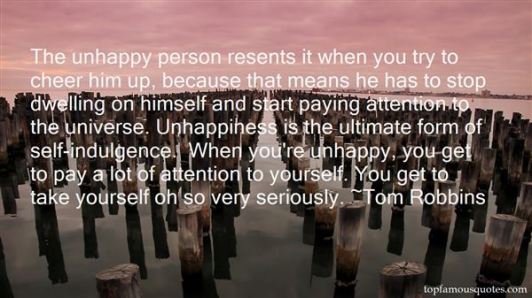
unhappy-person-quotes-1.jpg

Communicating and building your relationships skills is difficult, because it can’t just be about you.  It requires facing the mirror and accepting your own part in the relationship issues.  It also requires truly letting go of past hurts and resentment in order to move forward.

But although these skills are difficult to build, they are the most important skills you will ever build in your lifetime.  They are worth the effort, and worth the stumbles that will happen along the way.

In my mind, as long as both partners are showing consistent effort towards building them, and being conscious about sliding back into avoidance and passive aggressive behavior, ANY relationship can not only succeed, but thrive.


Built to Last?

Happiness is a feeling, and feelings come and go.

Healthy relationships on the other hand have a number of components to them; pleasure, joy, appreciation and contentment.

And importantly, an acceptance that negative emotions are normal, and that conflict is a natural and even needed part of trying to grow both individually and as a couple.

Sometimes happiness is missing, and that should be alright.  Because if you can communicate, and resolve conflicts together without holding on to anger and resentment you will always find it again.  In fact it’s working through these difficult times that ultimately brings a couple closer.


So when people leave a relationship because they aren’t happy, I think it’s a cop out.  An excuse.

I understand leaving the relationship because you had communication issues and unresolved conflicts that were creating a toxic environment, and you reached a point that you gave up hope that things would ever improve.

I even understand leaving a relationship because you realized that addressing the issues was scary, and you weren’t prepared to do the work to make things better.

At least those reasons are honest.

They involve a level of self-awareness, and a realization that there is no magic wand or perfect person out there.  That those issues will still come up again, and will need to be addressed in the future or they could happen again.


But simply saying it’s because you were unhappy without understanding why, and chasing that feeling?  That simply sets you up to repeat the same mistakes again, and all but guarantees more unhappiness in your future.


meantToBe

Connect by Disconnecting

PhoneConnectionHeader

Over the last 20+ years, perhaps the single most significant technological change (in terms of the number of people it touches daily) is the rise of the internet.

It impacts all sorts of areas of daily life; from marketing, to how many jobs are done, and even how we interact on a daily basis.  One of the newer ways the internet is used is social media.  A few years ago I had never even heard of social media, but now “social media” has become part of the social consciousness.

One of the catchphrases of this change is that we are now living in the “connected” era.

The Connected Era.

I saw a recent study that said in North America the average person has almost three devices that connect to the internet.  Initially most people connected to the internet with a computer, and although they are still commonly used they are increasingly replaced by tablets and smartphones.  Devices that allow us to continue to be “connected” wherever we are, 24-7.

The internet and social media allows us to connect with almost anyone in the world.  We can keep up with them and know what is going on in their lives in ways we never could before.

But this seems to come with a cost.

One of the ironies of today’s world is that through technology we have many more opportunities to be “connected”.  Yet at the same time, depression and anxiety levels are increasing dramatically, and many people seem to feel more disconnected in their lives than ever.  And there is a growing belief that technology is playing a significant role.


The Social Media Age

Over the years I lost touch with one of my closest childhood friends, and due to Facebook I now have a bit of a window into his life that wouldn’t have otherwise been possible, which is great.

I have a brother on the other side of the country, and although he doesn’t post much I am able to periodically see my nephew and niece due to social media.

Hell, I have another brother who lives in the SAME city as me, and I find out more about him through social media than I do through actually talking with him (which is pretty damned sad if you think about it).

Furthermore, this blog is only possible due to online connectivity.  It’s a great outlet for me, and through it I’ve come to get to “know” a handful of people around the world that I wouldn’t have known otherwise, and hopefully my words have been able to give hope to some people, or at least let them know that they aren’t alone.

So yeah, there’s a lot of good that can come from this world of online connectedness.  It’s just a tool though, and all tools have both positive and negative sides.


The Importance of Connection

In my last two posts I have talked about the importance of connection.  True connection with another person is a feeling of being seen, heard and valued by that person (and feeling the same for them in return).  It’s an intangible energy that can be thought of as closeness, or intimacy.  And it’s a key component of love.

I believe that kind of connection is a basic human need.  But it can be difficult to achieve, because it requires us to be able to be in the moment and it also requires us to be vulnerable with another person.

And this  is where the dark side of online connectedness comes in.


The Highlight Reel

We all crave connection, but connection isn’t easy because it requires us to be vulnerable with someone else and to allow them to see our true self.

And that can be scary as hell.

For many, a fear of rejection and of not being accepted causes them to keep others at arm’s length; either limiting intimacy in the relationships they do have, or keeping them alone.

Social media gives us an avenue to partially fill this void, without all the risk associated with it.

fearofintimacy

One problem is, with an online persona we can be whoever we want to be.  And I’m not talking about the whole “your internet girlfriend is really a 40 year old man” type of fake persona, or retouching images like they do for models.

What I mean is, we get to be very careful about how we portray ourselves.  We are selective in what pictures we put up of ourselves, and what sort of things we post.

Thing is, it’s not real.  Well it is, but it’s more like a highlight reel of a person’s life.  Their life doesn’t always look like that!!!

I recently went on a car trip and posted pictures from it to my facebook account.  The pictures are the sanitized version of the trip, with everyone “smiling and happy”.

There are no pics of my kids continually arguing in the backseat while I drove, or my son getting carsick (that was fun).  There are no pictures depicting my stress level when my check engine light came on in the mountains and I was about an hour away from the nearest service station.

But that stuff was all part of my trip, and it’s part of life.  And when looking at online profiles, it’s easy to forget that.

It’s easy to look at the highlights of other people’s lives, and either consciously or subconsciously compare them to your own.  And since you know about all the details of your own life, it’s easy to imagine that everyone life is better than your own.  Funner, more exciting, and happier.

And our own life will often feel lacking by comparison.


Fear of Missing Out

Another problem with social media is a fear of missing out (yeah, that’s actually “a thing”).

Fear of missing out (FoMo) is related to anxiety, and is where someone has a desire to continually see what others are doing due to a fear on what they could be missing out on.  Instead of being able to live in the moment there is a fear of making “the wrong choice”, and time spent ruminating about “how things could be different”.

Wikipedia describes this as follows:

On one hand, modern technologies (e.g., mobile phones, smartphones) and social networking services (e.g., Facebook,Twitter) provide a unique opportunity for people to be socially engaged with a reduced “cost of admission”.  On the other hand, mediated communication perpetuates an increased reliance on the Internet. A psychological dependence to being online could result in anxiety when one feels disconnected, thereby leading to a fear of missing out or even pathological Internet use.  As a consequence, FoMO is perceived to have negative influences on people’s psychological health and well-being, because it could contribute to people’s negative mood and depressed feelings.

FoMO may drive someone to constantly look for a better or more interesting connection with others, abandoning current connections to do so, without realizing that what they move to is not necessarily better, just different.

For people who grapple with FoMO, social media involvement could be attractive because it serves as a convenient tool to be socially connected with a relatively low cost. However, social media could not completely substitute face-to-face communication. Therefore, people with FoMO end up with a higher level of loneliness and isolation, which leads to more FoMO.


The Golden Triangle

One of my life philosophies (stolen from the business world) is the Golden Triangle.  Basically, everything in our life is fighting for limited resources.  We only have so much time and energy, and the quality of everything we do is impacted by how much time and energy we are able to devote to things.  As a general rule, if we want something to be good (or great), we need to put time into it.  And the more time/effort we put into something the better it can be.

This has huge implications for our connections and the world of social media.

Look, back in grade two I may have been great friends with little Billy who lived a few houses away.  And yeah, in todays world I can probably look him up, send him a friend request and catch up on his life.  And yeah, it’s would probably be great to see him again and laugh about the things we did.

But every time I do that, I am taking away from time I am able to devote to something else.

Do I REALLY need to spend a bunch of time looking at the lives of people I would likely never see or hear from outside of social media?  It may seem like a harmless diversion, and it often is.  But it can also start to negatively impact our lives and relationships.

A while back I wrote a post called You can have anything (just not everything).  We CAN’T have everything, and attempting to means we stretch ourselves too thin while reducing the quality of the things we DO have.

disconnect-quotes-1

We need to pick and choose what’s really important to us, and allocate our energies accordingly.  And sometimes that means letting go of things that we would like.  It’s unfortunate, but that’s just life.


The connected era can make it really hard though, especially when the tools we use for it are literally designed to make us “feel good”.  Companies spend a ton of money on trying to understand human psychology, and the way our brains reward system works.  And this trickles down to the products they create and market.

The “ding” of a message coming in, seeing the number of “likes” that you get on a picture or a post, the friend request.  All these mechanisms are designed to release dopamine, and make us “feel good”.  And that sort of instant gratification is often easier than the effort required sustaining our relationships in everyday life.  Kind of like escaping into substance abuse and affairs, it’s so much easier to escape into the world of online connection than it is to face the connections we have in real life.


With that I’ll leave you with two questions to ask yourself:

  1. What REALLY matters to you?
  2. Do your actions reflect that?

I’ll guess that for most of us, if we look at how we are actually spending our time – we will find we aren’t spending it on the things, or with the people we say matters.

And if that’s the case, what does that tell us about ourselves?


Love and Connection

broken mask

In my last post I talked about connection, and how connection requires you to be able to be in the moment.

Increasingly I think connection is what we are all looking for.  In family, in friendships, and especially in romantic relationships, connection is the key that binds us together.  Brene Brown describes connection as:

connectionquote


Connection is intangible; but at the same time you know when it’s there and you know when it’s missing.  We all want connection, and because humans are social animals I think it’s just as much of a need as food and shelter.

Intimacy (closeness) and love, these are all about connection.


Learning about Love

Growing up, we are taught the wrong things about love.  I realize I’m stereotyping here (so feel free to ignore this if you disagree), but little girls seem to be taught that love is all about passion and romance – flowers, kisses and hearts that pound at the sight of the other person.  And many women seem to internalize this, and come to believe that’s what love is.  Intensity.  Passion.

In fact, I recently saw a blog post talking about how the author wants her love to be like a hurricane.  Passionate, and furious.

And I get that in a way.

But hurricane’s tend to not last very long.  They burn out quickly, and leave a lot of damage in their wake.


Boys?  I’m not sure if we are really taught anything about love.  We see the same stories about love that the girls see, but we are never really taught that love should be a goal, or something to strive for the way girls are (it’s pretty common to see little girls dressing up as a bride for Halloween – but how often do you see a little boy dressing up as a groom).

For us love seems to start as more of a physical/hormonal response, as we’re often oblivious to girls until one day we realize “damn, she’s pretty hot”.  Maybe because of this, for many of us it seems we come to associate sex with love.

I think this is why you hear that women need to feel connection in order to have sex, while men need to be having sex in order to feel connected.  And this fundamental difference in how we think (due to how we have been taught) is the source of a ton of problems.


In any case, I think we both learn the wrong things.  We are learning about the early phases of love, and thinking that’s what love actually is.

At its core though, I think we’re all really looking for connection.

We all want to find someone we feel connected to.  We feel safe with, we feel we can be ourselves, and they will hear us, and respect us, and value us.  And we’ll want to do the same for them.  Connection is what is truly important.


The Problem with Connection

As much as we really strive for connection however, many people are afraid of it.

Because real connection requires vulnerability, it requires letting someone else in.

And that can be scary as hell.


Many of us, and perhaps most of us, struggle with letting other people in.

True connection requires allowing someone else to see all of you – the good sides and our darker sides, the parts of us that we hide from other.  And it requires allowing that other person to love us anyways.

Allowing.

My wording here is very deliberate.

As people, we often sabotage ourselves because we are afraid.

Afraid of rejection.  Afraid that we aren’t enough.  We don’t accept ourselves, and love ourselves enough.  And if we can’t even love ourselves, then how is someone else ever going to love us?

So we hold back, and we build walls.  We try to only ever let the other person see the parts of us that we want them to see.  We build these walls subconsciously with the intent of protecting ourselves from being hurt.

In doing so, we don’t allow that other person the opportunity to truly know us.  We don’t give them the chance to accept us for all of us, good and bad.

We’re scared they won’t, so we don’t give them the opportunity.

And in the process we ensure that we will never have the connection that we truly crave.

deadinside

Emotional Disconnection

We all limit how close we let people get to us.  We all have things that we hide from both ourselves and others.

In fact I’m not sure if it’s even possible to let the other person in 100%, as doing so would require a level of self-awareness that most of will never achieve.

But for emotionally healthy relationships, we have to be in a situation where both parties are able to let the other person in and feel safe doing so.

Emotional disconnection happens when people won’t let others in.  They will have healthy relationships on the surface, but will hide their feelings and not allow someone to get too close.

Sometimes this happens due to upbringing and a person’s attachment style, but it can also be brought about due to problems with depression or anxiety.

Both depression and anxiety can cause anhedonia, a state where a person feels as though they have no emotions, positive or negative.  For sufferers of anhedonia there is an absence of emotion and they often feel dead inside.  Sufferers do still feel some emotions, but they are primarily negative emotions or a pervasive sense of sadness.  Positive emotions are not felt very strongly, and they find it hard to feel happiness.

During these dead or flat periods, external relationships frequently suffer, as connection breaks down.

Calmclinic.com describes this as follows:

Emotional detachment is usually an issue caused by severe, intense anxiety – most notably panic attacks, although any form of severe anxiety can cause emotional detachment.

While it’s not entirely clear what causes this detachment, it most likely is a coping mechanism for the brain. Severe emotions are not only mentally stressful – they’re also physically stressful, and your brain actually experiences very real stress and pressure that can be somewhat overwhelming.

So your brain may shut off or turn down those emotions, because dealing with no strong emotions at all may be easier for your brain to handle than intense emotions.

Also, don’t forget that your emotions really do change your brain chemistry. Sometimes those changes stick around for a while. Your anxiety may have caused your brain to produce less “positive emotion” neurotransmitters, which in turn causes you to experience emotional distance.


Allowing Love and Connection

We all need connection.  Without it, couples aren’t a “we” and instead are just two people occupying the same space.  Without connection, you aren’t able to truly share life, and experiences.

Connection however requires you to accept your emotions (good and bad), share them, and be vulnerable.  It doesn’t happen unless you allow it, and allow the other person in.

Without that there is no intimacy, and only a hollow, dispassionate version of love.

vulnerability

People are scared to be vulnerable because they are scared to be hurt.  Scared to be rejected.  And so they hold back – both consciously and subconsciously.

But all holding back does is limit your ability to connect with another person.

It’s true, people can’t hurt you if you don’t let them.  And allowing yourself to be vulnerable means you will be hurt sometimes, by those you love.

That’s part of life though, and you need to be willing to accept it as part of the tradeoff.


Given a choice between being vulnerable and allowing myself to be hurt, or walling myself off from potential hurt and instead feeling nothing, I know what I pick.  And really, it’s an easy choice.

Because without connection, you can’t really have love.

Living in the Moment

BeingPresentHeader

Where are you right now?

If you’re reading this you’re probably staring at a computer so maybe you’re at a desk, or on a couch.  With tablets and phones you could be anywhere I suppose.

I’m not talking about where you are physically though, I’m asking where are you right now mentally?

Are you here?

Is your mind present on reading this post?  Or are you in a number of different places at once?

Increasingly it seems people struggle with remaining “present” in their day to day lives.  So you may be reading this while thinking of any number of other things that are going on.

Maybe you are thinking about what to cook for dinner tonight, where to go on the weekend, what to wear, what the kids need, when you are going to find time to…

…well, anything really.

The list is often endless.

There are always a million things that need to be done, and thought of, and planned.  And it’s very easy to get overwhelmed in all of the “stuff” that needs to happen.


The Myth of Multi-tasking

When the brain is doing a number of different things at once, this is often referred to as multi-tasking.  And for a number of years multi-tasking was being talked about as this great thing.  Multi-tasking was the future of productivity, and companies wanted to hire people who could handle multiple tasks at once.

Well, it turns out multi-tasking isn’t what it was cracked up to be.  In fact, studies show people can’t actually multitask – the human brain just doesn’t work that way.

What appears to be multitasking is actually the brain quickly switching from one task to another and then back again.

And doing this comes with a cost.

A Wikipedia post on multitasking states:

Multitasking can result in time wasted due to human context switching and apparently causing more errors due to insufficient attention.


We all know this, and it is the reason many places are starting to bring in laws and heavy fines for things like texting/using your phone while driving.

When you are distracted, it’s much easier to make mistakes.  If you’re behind the wheel of a car, the consequences of those mistakes can be significant.  But the inattention and potential for error exists no matter what you are doing.

The Wikipedia post goes on to discuss another form of multi-tasking that it calls “continuous partial attention”.  This involves:

skimming the surface of the incoming data, picking out the relevant details, and moving on to the next stream. You’re paying attention, but only partially. That lets you cast a wider net, but it also runs the risk of keeping you from really studying the fish.


The Need for Connection

I write about relationships, so what does multitasking and being present have to do with anything?

Why does this matter?

I think this is hugely important, because when we talk about relationships we are really talking about connection.

Take a look at this quote from Brene Brown:

connectionquote

Feeling seen, heard, and valued.  THAT is what we are all looking for.  THAT is what we need.  In relationships, we want to feel like we matter to the other person.

Without connection, a couple is not a “we”.  They are just two individuals who happen to be occupying the same space.  They are there, but they aren’t together.

And connection requires both people to be present.   Physically, emotionally and mentally.  Connection requires the ability to let go of everything else, and live in the moment.


When I talk about living in the moment I am not talking about YOLO (you only live once) or some other selfish bullshit like that.  I’m not talking about having a bucket list of things you want to accomplish and then making sure you achieve those things.

I’m talking about taking the moments you have – whatever they are, and experiencing them fully.  Slowing down, letting go of all the noise that is caused by all the “other stuff” in life.  I’m talking about allowing yourself to connect with those moments.  In in those moments telling yourself that at this moment, the experience I am having and potentially sharing with my partner, or my child, or my friend is what truly matters.


Broken Connections

I think this ability to live in the moment is something that is sorely lacking today, and I think it’s probably one of the leading causes of failed relationships because it breaks down connection.

Studies on multi-tasking show that attempting to multi-task leads to reduced levels of attention to the primary item and also leads to people missing out on what is right in front of them.

One of the growing issues in North American society today is the rise of mental health issues, with the leading issue being depression and anxiety.  Depression and anxiety

BeingPresent.jpg

In Depression people often get stuck in the past, and struggle with letting go of negative events.  We all encounter disappointments and setbacks in our lives, but instead of using them as an opportunity to grow people who struggle with depression will ruminate on them.

Anxious people allow future events (and worse, potential future events) to dominate their thoughts.  As one sufferer describes:

as an anxiety sufferer, my mind is constantly vibrating. Even if I am technically “resting,” my brain is making to-do lists or worrying. Essentially, my brain wants to live in the future. I am much more comfortable doing and acting. I have trouble simply being.


Being Present

The past shapes us and allows us to grow; and the future gives us thinks to strive towards and look forward to.

But the only moment we actually have is right now.

So be present.

An inability to be present (whatever the cause) reduces connection and damages relationships.

And it’s pointless.

The past has already happened and we can’t change it.  The future is not guaranteed, and in the current moment the little details of everyday life don’t matter (well, they matter, but they shouldn’t be allowed to distract from the present).

So look, listen, focus and breath.  Appreciate where you are, right now.  Learn to let go, be present, and live this moment fully.

What Do You Remember?

memory_header

The first time I experienced death, it was the passing of my Grandfather.

My phone rang late at night/early in the morning, and my brother give me the news.  My Grandfather hadn’t been well, but it still came as a shock to me.  My brother lived close at the time, so he picked me up we went to my Grandparents house to be with the family.

I remember seeing my Grandmother when I came in, and not really knowing what to say.  I just gave her a hug and told her I was sorry.

It’s been over 20 years, but I still remember a lot of details of that night.  And it’s not just that night, I also remember other details of that time in my life.

For example I remember what music I was listening to at that time in my life, and there is a song from that time that I have come to associate with his passing.  Whenever I hear that song now, I think of my Grandfather.


Remembering Experiences

Memory is an interesting thing.  When I look back on my life there are all sorts of moments that stand out in some way.  I remember a lot of “firsts”, and other significant occasions.

Like my Grandfathers death, they aren’t all happy moments.  Some are happy, some are sad, fun, or silly.  Hell, some are moments that I wish I could forget.

The one thing these moments have in common is that they all had an impact on me in one way or another.


Now, contrast this with the things we don’t remember.

What are those?

That’s a trick question I guess, asking you to think of the things you don’t remember.  But what we don’t remember is the mundane.  I mean, can you tell me what you had for dinner a month ago today?  I doubt it – unless a month ago today was a special day like a birthday or an anniversary (and even then I doubt it).

We don’t remember cleaning the house, grocery shopping, doing the laundry or putting gas in the car.  These things are important and need to be done; but they don’t impact us.

The routine moments of life tend to blur one into the next, and during those moments we’re kind of on autopilot.

That’s not to say these impactful moments are necessarily any better, or more important than the routine moments of our lives.  But they stay with us when the other moments don’t.


“Firsts”

Why is this important?

It’s important because memories and experiences matter.

When a couple meets, they share all sorts of firsts.  Their first date, their first kiss, meeting each other’s families and friends for the first time, the first time they have sex, the birth of a child, etc.

All of these moments matter, and as a couple builds a life together they are also building shared experience.

memory_quote

Over time though many couples find themselves in a rut, where life has become nothing more than routine.  Routine is important, and necessary; but when this happens it can make it seem like all they have left is shared history; and memories of the time when things were better and happier.

(Interestingly memory can be faulty, and our brain can rewrite our past in order to justify our present – but that’s another post for another day)

Often a big part of the problem is they have stopped sharing these impactful moments.  Life becomes all about nothing more work, kids, and maintaining a household.

With all these competing needs and limited time, they stop nurturing and growing the relationship.  After all, they already have each other right?  They’re already committed to each other, so why MAKE time for the relationship when there is another event to bring the kids to, or another load of laundry to be done.

But when the relationship stops being a focus, they stop building meaningful moments “as a couple” together.

Somewhere along the way, what started as comfortable familiarity turns into apathy, and eventually a recognition that the spark has been lost.  This realization that the spark is gone is a painful one, and can lead to questioning what it means to the relationship.


Pulling Away

Failing relationships are often characterized by two people who still love each other, but no longer know how to connect with each other on a deeper level.

And when couples find themselves in this rut, they often make a big mistake.  They each desperately crave the connection they “used to have” with each other.  But they don’t know how to get it back, and that hurts.  So in response to that pain, they shut down and withdraw.

They stop building meaningful moments together, because they have stopped engaging each other.  And without continuing to grow their relationship, all that is left is memory of “when times were better”.  And without effort, they are virtually guaranteeing the relationship will not succeed.


Building in Experience

I think this notion of remembering experiences is important to keeping your relationship alive.  And these moments don’t have to be big, elaborate or expensive.  We remember “firsts”, so add some novelty.  Take a class together, try something you’ve never tried.  Whether you like it or end up hating it, it’s still an experience you are sharing together.

Life can’t be just about work, kids, domestic chores (with some time taken out to watch TV).  Sure that stuff matters, but for the health of your relationship, you need to spend time on it.  And if you’re too busy, you need to make time

I’ve said before you can have anything, just not everything.  There are limits to the amount of time, energy and money we have.  We can’t have everything, so we need to focus our priorities on what’s truly important.  If we want our relationships to last, that should be reflected in the amount of energy we put into them.

If the relationships is always taking the hit because other stuff gets in the way, it should be no surprise when it starts to struggle.  As the saying goes, garbage in garbage out.  What you get out of something is directly correlated to what you put into it.

So show that.  Don’t let your relationship become nothing more than a memory of better times.  Make your relationship a priority.  Take time out each day to let all the distractions and busyness of life fade away, and focus on each other.

And never stop building experiences together.


What if Life had a Rewind Button?

rewindHeader

A few weeks ago I sold a car.

I’ve never sold anything worth more than a couple of dollars before, so the experience was actually a little bit intimidating.

To get the car ready to sell we needed to bring it to a shop for a safety check, and then address any issues that came from that (thankfully there’s weren’t many).  Once that was done and the car was cleaned up inside and out it was time to put it up for sale.

All that was left was the little question of price.

What was an appropriate price?  Truthfully, I had no idea.  So it was time to do some research.  I looked up other ads for the same model and year, talked to an insurance company for an estimated value, and checked a website with estimated values for cars.

I took all these numbers, factored in the condition of the car, and made a judgement call on what seemed “right”.

I posted the ad on Friday morning, hoping that the car would go within a few weeks…

…and then my phone started to ring.

I had a number of people interested in coming to take a look at it, and when I got home from work I had two people show up at my place right away.  Both were interested in the car, and I ended up selling it for exactly what I asked.  No bargaining, no haggling.

Pretty good, right?

In most ways, yeah.  But the response also makes me think I could and probably should have charged more.

I kind of wished I could have gone back in time 24 hours and added another $500 to what I was asking.  I mean, I could definitely use the money and I’m (now) pretty sure I would have got it.

Thing is, I can’t.  There is no rewind button.

Pricing the car was based on a decision that seemed like the right one at the time.  And that was all I could do.


That’s pretty much how life goes.  We are constantly making decisions, both big and small.  And when we make them, they are the decisions that appeared right to us in that moment.

Why?

Who knows.

Maybe our choice was based on careful deliberation or maybe it was an impulsive action.  Maybe we did something because we thought it was the altruistic thing to do, or maybe we were only thinking about ourselves (basically being a selfish asshole).

In some ways, our “intent” doesn’t matter as much as the result does.  Was that decision actually a good one?  And more importantly, if presented with the same choice in the future would we make the same decision?

Even if we later realize that the decision was a terrible one, we can’t change it.  Life doesn’t come with a rewind button.

Once we’ve made choice, it’s happened – and it’s up to us to own our decisions and live with the consequences – good or bad.


In psychology, rumination is a term used to describe being:

compulsively focused attention on the symptoms of one’s distress, and on its possible causes and consequences, as opposed to its solution

– Wikipedia


Generally speaking, rumination is a BAD thing.  Getting caught up in would’ve, could’ve, should’ve and what if? can trap you in the past.  Sometimes people spend so much time and energy worrying about the things they’ve done and how they should or could have done them differently that they are unable to move forward in life.

The way I see it, time spent in rumination is nothing but wasted time.

No matter how much we may wish life came with a rewind button we can’t change it.  It doesn’t matter if you would do something differently with what you know now, you didn’t.

It’s happened.

A choice we made, and now all you can do is live with the consequences.


That’s not to say the past doesn’t matter.

We are still the owners of our own decisions.  So we need to own them, and be accountable for them.

This is well summed up by the late Muhammad Ali:

LearningAndGrowth

Learning is the key here.  Life doesn’t have a rewind button.  We are always moving forward, whether we like it or not.


We should always try to learn from our choices.

I’m not the same me that I was at 20.

I’m not the same me that I was at 30.

And I shouldn’t be.


Our past is important because it shapes us.  And it provides considerable value if we look at what we’ve done, what was good, what was bad, and try to be better next time.

But it should never trap us.

We make choices, good and bad.  But we only become trapped in our past when we refuse to use it to grow.

What Does it Mean When “The Love is Gone”?

hopefails

Love.

Love is a powerful emotion/feeling, and it can drive us to do incredible (and at times terrible) things.

When people think of “love”, the first thing they think of is usually passion or romance.  Well, sex too – but that’s usually a byproduct of passion.  Either way, it’s often perceived as an intense emotional response.  Butterflies in the stomach, and an overwhelming desire to be with that other person.

Science has shown this “romance” stage of love is just that, a stage.  It has a neurochemical basis, and usually only lasts for more than six months to two years.

When we are younger we often mistake the loss of intense feeling for the loss of love, and use that as an excuse/reason to jump to another “new” relationship where everything is exciting and fresh again.  But eventually most people realize even after the intense feeling has dissipated, strong feelings can remain.  And these new feelings can be even stronger in some ways, because they are a choice and not just a hormonal response.

When we realize this, and still CHOOSE love?  Well, that’s when we have a love that can potentially last.

The thing is, even when we are choosing love and have accepted the feelings aren’t as intense, we still expect there to be feelings.

Love is still love, right?  So shouldn’t we feel something?

We can continue to choose love, but what do we do if the feeling is gone – and there is no sign that it will ever return?

Looking at this another way, if there is only choice but no feeling, do we still have love?

What do we do when we are not in love?


What if a Loss of Love is Not About Love?

Personally, I don’t understand “not in love”.  To me love has always been both an emotion and a choice, and this combination allows me to actively love.  To try to show love through my actions, maybe not everyday, but as often as I can.  By showing love, and practicing love I know I won’t allow love to die.

It’s not always that simple though.

In a fantastic article on depression in relationships, John Folk-Williams talks about the impacts depression can have on the ability to “feel” love.  He writes about psychiatrist Peter Kramer, who believes loss of feeling is often a sign of deeper issues:

Kramer often works with clients who are dissatisfied with their relationships. They want to know if leaving is the best thing to do.

When he encounters someone who is convinced that the marriage is dead, he says that he always suspects depression or another mood disorder.


Mental Illness and Relationships

Here are two statistics for you:

  • 50% of marriages fail.
  • 25% of people will directly suffer from a mental illness.


At first glance these two statistics appear unrelated.  But I wonder, what would the numbers be if you could look at the marriage statistics for people with a mental illness vs. those without?

I’m not sure, but I suspect the failure rates of marriage for those with a mental illness are considerably higher than the norm; simply because they introduce additional pressures and stresses on the relationship.

Mental illness already has a lot of stigma associated with it, and this is by no means an attempt to pile anything further on it.  Rather, this is an attempt to help share some understanding for people who may be having doubts and challenges in their relationships that maybe, just maybe its not the relationship that’s at fault here.

I realize saying “don’t worry, maybe it’s not your relationship – maybe you’re actually dealing with a mental illness” isn’t exactly going to make anyone feel better.  But it is a possibility; and for those who ARE dealing with a mental illness it may be beneficial to understand that your condition may affect your ability to feel love in ways you may not have considered.


Impacts of Anxiety and Depression on Love

The two most common mental illnesses are Depression and Anxiety disorders; and I’ve written in the past about how anxiety disorders can damage feelings of love (for a different account on anxiety’s impacts on love check the article Daniel Smith wrote for CNN, titled Can anxiety kill your ability to love?).

The Folk-Williams article above talks about a symptom of depression called Anhedonia (although anhedonia is thought of primarily as a symptom of depression it is also found in anxiety).

A common misconception about depression is that it’s characterized be people feeling down, sad, or hopeless (for extended periods of time).  This definitely happens, but anhedonia is another characteristic of depression where sufferers often lose interest in things that they used to enjoy – activities, hobbies, spending time with friends, and even sex.

Anhedonia is a state of emotional deadness, where instead of feeling down or sad someone feels nothing.  Anhedonia can cause someone to feel as though the love is dead, or they have fallen out of love.

To those who have never experienced it this seems bizarre, but If you do a simple web search for “anhedonia and love” it’s a bit frightening to see how common this seems to be.


An Account of Anhedonia

Folk-Williams describes his own experiences with Anhedonia, and how it can destroy relationships as follows:

there is another dimension of depression that can lead to the idea of escape as the answer.

It’s the one that causes depressed partners to say they’re no longer in love and have never loved their partners. It’s called anhedonia, the inability to feel pleasure or interest in anything.

For me, it was a kind of deadness. Rather than an excess of painful emotion, it was the lack of pain, the lack of feeling, that was the undercurrent of all the surface turmoil. I felt no satisfaction in life.

I believed that the relationship was holding me back, that it had become hollow, empty of the intensity I longed for. I was sure that I could only find happiness and passion with someone else. It was the fantasy of the perfectly passionate mate that was a constant lure.

And later he writes:

Anhedonia is the cause of the desire to leave to find a new, more intense life. The depressed partner’s relationship feels loveless because he can hardly feel at all.

The problem is that the unaware depressive has such a high threshold of feeling that it takes extreme arousal to evoke excitement and passion. He can erupt with anger and rage because these are more violent emotions that stir him as little else does.

Kramer says that these clients often believe that they’re perfectly capable of feeling. After all, they can go out and have fun with friends. They can feel passionate with others who likely have no constraining relationships or might be seeking the same kind of escape.

But they feel good precisely because these experiences offer exceptionally high levels of stimulation. They may also turn to addictive habits like recreational drugs, drinking, gambling or pornography for the same reason.

Fantasies of escaping into a life full of new intensity seem like the perfect answer to their inner emptiness.


The Loss of Feeling

When someone needs intensely high levels of stimulation just to feel, it’s somewhat understandable that people will be willing to engage in risky and destructive behaviors.

One of the things Folk-Williams alludes to (but doesn’t address directly) is that this lack of feeling makes actual intimacy almost impossible.  So the type of attachment characteristic of close relationships breaks down, and sufferers often can find no arousal or attachment in their partners.  Everything becomes detached and clinical.  They know they “should” feel something, and they know they once did.  But they don’t, and they can’t change that.

However they can still feel the intense emotions of “new love”, so things like affairs are increasingly likely just as a way to feel.  As is sex in casual relationships or one night stands.  Those things can be felt physically, even though there is still usually little or no emotional connection.  As noted above, people may turn to substance abuse as a way of “coping” with this lack of feeling inside.

When anhedonia isn’t understood, it becomes easy to blame external things.  A sufferer is unhappy because of their job, or their weight, or their relationship.

Happiness and hope is replaced by the lure of fantasy.  A belief that things will be better IF they can only find the right thing.  If they can get the right job, get the right body, or find the right partner.

Spoiler alert here – it doesn’t work.  Finding the perfect partner is fantasy, not reality.  They don’t exist, and the people who try often end up destroying a lot of the things in their lives that are “good” in the pursuit of this fantasy.


Mourning Love

I write about relationships, and I write about love.  To me love is a powerful and beautiful thing, and the loss of it is always difficult.

Often love is lost and relationships fail because of little things.  We take each other for granted, we focus on the bad instead of the good, we are hurt and we refuse to let go.  All these little things often add up to growing resentment and the breakdown of love.

And when that happens, it’s tragic.

None of that however compares to the loss of love not because love is actually gone, but because someone has lost the capacity to feel it.

THAT seems incomprehensibly cruel.

Especially when the sufferer doesn’t realize what is happening, and instead of seeing it as the symptom of a problem they interpret the loss of love as the problem itself.


I don’t know what anhedonia feels like, and I hope I never do.  From descriptions of it and from reading others accounts of it, it seems like a terrible soul destroying thing.

But like many other aspects of mental illness, it’s something that’s not understood, and not discussed.  And I believe many, many relationships and families are needlessly lost as a result.

So if you have thought “I don’t love you anymore” or heard those words said to you, please stop to consider that maybe there’s something else going on.  Especially if you can’t understand or explain why the feeling is gone.


To gain a better understanding of  the struggles sufferers face daily check out the following video:

No one wants to talk about or acknowledge mental illness.  And people definitely don’t want to be labelled as having one.  But when it directly affects 25% of the population, it’s at least something to consider.

When you can’t understand something, you can’t address it.  And things can never improve.  So understanding why feelings of love may be gone can be the first step in the road to rebuilding it.