Letting Go

handsLettingGo

When feelings are gone, how do you (and your partner) convince yourself to like one another again?

This question was posed to me recently by a buddy, it’s a loaded one.

He’s married, and longs for the “old days” when there was love and passion and the time they had together was special.

He and his wife have been together for many years, and one day he woke up and realized things weren’t the same. They were friends, and companions; and although there was a lot of good in the relationship still, his feelings for her just weren’t there anymore.

This lack of “feeling” led him to question what was wrong, and to start distancing himself from her (which in turn just increased tension in the relationship). He felt they had become a couple who were just going through the motions of day to day life; and although he felt it *could* get better, his heart wasn’t really in it.

And that recognition hurt.

I wish I could help him, I really do.

I wish there was a surefire answer that could solve his problems and make him fall in love with his wife again (and she with him if she’s feeling the same way).

Of course if I knew the answer to his problem, it’s a pretty safe bet I wouldn’t be writing this blog anymore. Or maybe I would be but it would look a lot more professional, and be full of product placement for my “revitalize your marriage with these quick steps” self-help program.

How Do We Get There?

My buddy’s problem isn’t unusual. He’s in a spot I think many, many people find themselves in. And often these people wish things were different, but don’t know what to do. They don’t necessarily want out of the relationship. But they aren’t happy in the spot that they are in, and they don’t know how to make it better.

I’ve spent a lot of time over the past few years thinking and writing about this type of thing, and although there is no “one size fits all” explanation for how people get there I think there are some common patterns that emerge.

Unrealistic view of love

I believe part of the problem comes from an unrealistic view of love. Love as depicted in the movies/media is all about passion; and when people remember back to the “old days” there’s a pretty good chance they are remembering those passionate times.

Here’s the thing though – excitement is based on unpredictability. When you are still learning each other there’s naturally more of a sense of excitement, because everything is new. One of the strengths of long term relationships is a sense of security, of knowing the other person will be there. There is comfort in knowing the other person completely, but comfort often comes at the cost of excitement.

That’s not to say anyone should ever accept the loss of passion. It should never completely go away in long term relationships, but it changes. And it’s up to both people to keep it alive.

More than a Feeling

Related to the above point, another problem people face is searching for a feeling.

I’ve always hated this one, because to me thinking of love as a feeling is saying that love is a passive thing. It’s something that just happens to us (or doesn’t). So if it fades, you are left feeling lost. After all, what can you do if you have no control over it?

I’ve never viewed love as just a feeling. Yeah you start with feelings, but it’s your actions that determine how well your love will be sustained. It helps when you partner is kind, caring and shows affection. But ultimately, staying in love is your own responsibility. Love isn’t passive, and keeping it alive is based on our actions.

ChoosingFeelings

Learning to Love

I’m a big believer in continuous improvement, and I think that’s another area where people get love wrong. Love isn’t just a feeling or a choice. It’s also a skill. We may have some inherent capacity to love, but we can always improve on it. We can always strive to understand each other better, and learn new ways to show and express that love to each other.

Learning to love each other is important, and we should never think that because we’ve been together for a while, we “get it”.

When I think back to what I though “love” was at 18, 20, 25, I’m struck by how little I understood it. I’m not saying I get it now, but I definitely have a better understanding of love now than I did a few years ago. And most importantly, I accept that I still have a lot to learn, and I can be better tomorrow than I am today.

Making Time

A huge issue relationships face is taking each other for granted. I think every couple probably goes through this, and some never get out of it.

Repeat the following after me:

Your relationship is important.

Seriously, it should be. And if it isn’t, why are you in one? Yet couples continually find ways to take their relationship (and each other) for granted. And we do this by not spending enough time on it, and not making it a priority.

Life will always get busy. There are always other stresses that can get in the way of taking time to focus on each other if you let them. And because they know their partner “will always be there”, many couples let their relationship slide while other things take precedence.

And then they end up surprised and saddened when they start to realize the connection has broken down. I mean, really? What do you expect?

If your relationship is truly important to you, show it. Make it a priority and put in a bit of time each and every day.

Not Accepting Each Other

In my mind, a relationship should be a partnership. Both people should feel valued, and appreciated, and feel like they are contributing to something larger then themselves.

But behind the scenes there are often power struggles. People often need to be right, or to have things work “their way”. After all, their way is clearly the best. So they put their opinions and beliefs above those of their partner.

Here’s the thing though – we’re all different. We all have different backgrounds and experiences. And what works for one person necessarily work for the other.
It’s possible for two people to walk away from the same experience with completely different understandings of it, and when that happens it’s also possible that both people are right.

Power and control have no place in a relationship, and insisting things need to be a certain way is guaranteed to cause conflict.

All of these issues contribute to couples finding themselves in a bad spot. And like my buddy, many one day wake up and ask themselves what went wrong, and where the love they once felt has gone.

Where Do We Go From Here?

One of my core beliefs is we are the sum of our experiences. If your relationship is currently in a bad spot, it is there because of whatever has come before.

Maybe you’re hurting. Maybe you’ve felt ignored and not valued for a long time. Maybe bad things have happened – apathy, cruelty, cheating, whatever.

No matter what the past is, if you want to move forward you need to let go.

lettingGo

When people talk about letting go they often talk about letting go of the relationship. Walking away, and starting fresh.

That’s one option. And truly, sometimes it’s the best one.

But it’s not the only one.

Accepting Who You Are Today

My buddy longs for the old days, when he and his wife were younger and everything was better. He needs to accept that those days are gone. Things will never be the same as they were when they first met. He’s not the person he was then, and neither is his wife. They are the people they are now, today. A little older, and perhaps a little more disillusioned.

That’s not to say he needs to accept the emotional disconnect between them and say it’s just part of getting older. They can rebuild closeness and connection. But it’s only when they accept their current reality that they can truly move forward.

Letting Go of Past Hurts

A big part of moving forward is allowing your past to remain in the past. Couples go through a lot of different things, and often they hurt each other very badly, and do things that break down trust. Sometimes those things cause relationships to fail, and I totally understand that.

But if someone truly wants the relationship to work out, no matter has happened they need to let it go. Holding onto anger and resentment will never allow a couple to heal, and move forward.

Think of your past hurt like a physical wound. The human body is an amazing thing, and left alone it will try to heal. Over time it will form a scab, and eventually that scab will fall away leaving a scar as a reminder of what happened.

Holding onto anger and resentment is like picking at the scab. When you pick at it, it can never truly heal. And worse, the constant irritation can cause the wound to fester and become infected, making the problem worse.

resentmentquote

Letting People Back In

A while back I came across an interesting study that found one of the biggest roadblocks for couples in trying to rebuild their relationship came not from a lack of effort or desire to rebuild. Rather, it came from an unwillingness to recognize and trust genuine attempts at rebuilding.

When you’ve been hurt, it’s natural to try and protect yourself from being hurt again. And if your trust has been broken, rebuilding that trust is something that takes time. But putting up walls and not letting your partner back in ensures that any attempts to improve the relationship will fail.

Accepting Differences

Another way to let go is to accepting that you (and your partner) are both different, and that’s alright. Your partner will likely have traits you don’t like, and they will likely do things differently than you would.

Maybe you’re a neat freak and they are a slob (to you). Maybe they like to live for today while you like to plan for the future. There are countless ways that people are different.

Accepting differences is about letting go of control. Accepting that “your way” is not the only way, and that different doesn’t mean less or worse. In fact sometimes differences are complementary, and accepting them can allow each of you to grow in different ways.

Holding On by Letting Go

My buddy believes he has lost the feelings of love for his wife. My guess is, he probably still loves her but his love is buried under feelings of hurt, resentment and neglect that have built up over years.

He needs to decide if he wants to make it work, or if he wants to move on. Every situation is different, and there is no right or wrong answer. Well, other than waffling forever and trying to avoid making a decision – that’s not fair to anyone.
If he decides he truly wants the relationship to work, then he’ll have let go in order to give it a fair chance.

For anyone in a bad spot, the past may be what brought you to where you are today and there may be a lot of hurt. But to truly move forward you need to let go.

The past can’t be changed. Learn from the past, but don’t let it define your present.

The Last Mistake

brokenRock

I’ve played a lot of basketball over the years, and during that time I’ve been part of many wins and loses.

Often the losses that hurt the most are the close ones. The ones where we gave up a lead in the last seconds, or the ones where we made a run that just felt short. For those games, I can still remember some of those closing moments. I can remember the mistakes made either by myself or other teammates, and I can remember the feelings of loss and disappointment that came with it.

When you lose like that, it’s easy to look for what “cost you” the game. And often the things you remember are the mistakes made in those final moments, when it all fell apart.

The thing is, those mistakes are really just the last mistakes. The final ones. They may hurt the most, but in a close game they were never the deciding factors.
Basketball is a game with many possessions. And with all these possessions one of the things that often gets lost is this – every moment you are on the court, whether you are looking to score or looking to defend, you are influencing the outcome of a game.

Every. Single. Moment.

The final score is really just the sum of all the decisions made in the whole game. Positive or negative, each one counts.

So in a close loss, was a missed shot at the end of the game really more important than a miss that happened at the beginning?

Not really.

The final mistake often takes on more meaning because you know time is running out. When you are down two points with thirteen seconds left, you can feel the weight of your decisions in those seconds. You know this is your last chance.

If you are down two with six minutes left, it doesn’t seem as real, or as immediate. You can tell yourself “there’s still time”. And one unfortunate side effect of feeling there’s still time is a tendency not to take those early mistakes seriously, and to treat them like they aren’t as important as the later ones.

But no game is ever won or lost in the last moments. And on a team, no one member is ever entirely at fault.

Breaking Down Over Time

Often when relationships either struggle or fail, there are strong feelings of loss and disappointment. So we search for answers.

What happened? How did it go wrong? When did it go wrong?

In those moments it’s easy to focus on the latest mistakes. With the immediacy of “the game running out”, they often take on greater meaning for us. But although the final mistakes can be big ones, with people checking out emotionally, and displaying selfish and destructive behaviors, no relationship fails due to the final mistakes.

stone-cutter-quote

Like the stone-cutter hammering away at a rock, the final mistake seems to be the one that causes a relationship to fail. But the failure was being built in slowly, with hundreds of little decisions and mistakes over time. All the little times someone was hurt, or didn’t feel valued or appreciated. Taken individually these instances may seems small, but when you add them all up, the relationship has really suffered death from a thousand cuts.

It’s important to understand that for good or for bad you are influencing your relationship every single moment.

When relationships fail, it’s usually due to years of little problems and neglect, combined with poor communication leading to resentment. When this happens, instead of being a place of safety and security relationships become sources of tension and struggles for control.

Sometimes I read other blogs, and I hear people talk about withholding things from their partner. Whether conscious or subconsciously, this is a passive aggressive form of punishment. Sex is a big one, but often kindness, caring and even basic signs of affection and respect are held back.

At some level I understand this. When you are upset with your partner, you probably aren’t feeling loving or affectionate. But at the same time, when this happens I mourn for the people involved. Withholding is a form of control, and love and control do not go together. When a relationship hits this point, it seems it’s just waiting for that final mistake. And that final mistake will not be the one that caused the failure.

Winning and Losing

Thankfully, while a series of mistakes over time will cause anything to break, the opposite is also true. The initial bond of a relationship may be forged in the years when you are first getting to know one another, but to keep that relationship strong you have to work at it and maintain it over time.

In one of my favorite posts I talk about using this idea that every single decision matters, and applying it in a more positive way. If you truly want your relationship to last forever, it doesn’t just happen. You need to work forever into your life with the actions you take each and every day.

Time-decides-your-life

Behaviour. Decisions. These are choices that we make.

Don’t wait until your relationship is in the brink before you start fighting for it. Fight for it by not letting the little things go unsaid. Fight for it be accepting that no matter where things are, they can always get better. Fight for it by trying to let go instead of holding onto hurts and withholding affection. Fight for it with consistent effort, each and every day.

Every moment counts.

And it’s up to you to decide what you want to do with them.

A New Beginning

2016 is almost here – the start of a new year.

Often, this changing of the calendar year is seen as a clean slate and a time for change. People make new years resolutions (often around exercise and diet). This will be the year that they get in better shape, take that course, quit smoking/drinking, get that promotion or find that special someone. Whatever it is, this will be the year that things change, with the perception that these changes will bring improvements in their life.

And people do make changes.

For a while.

For many years I was a regular at a local gym, and the first few weeks after new years were the busiest times of year. The number of attendees would jump by 20-30% in those first few weeks, and then would start to taper off again. And by February the new group of “regulars” looked pretty similar to the group that was there before the new year began.

See, making changes is easy.

Sustaining them on the other hand? Now that’s another story.

Real, sustainable change requires commitment, dedication, and effort. But as much as people often talk about wanting changes, we don’t want to have to work for it. We’re looking for instant gratification. The easy button, and magic wand solutions. We are looking for the best of both worlds – ways to get the changes we want without having to sacrifice or change what we do now.

The thing is, why are we actually looking for change? Will those changes really improve our life? Will they really make us happier?

I won’t deny that many changes have benefits. For example, getting into better shape is generally a good thing. Often though, we don’t really need to make changes. Often what we are actually looking for is right there in front of us and has been the whole time. We have just become blind to it.

What we really need isn’t always change, but a change in perspective.

I’ve told this story before, but there are two events I can point to in my life that changed my perspective.

When I was in my early 20’s I spent a month in a poor country, staying with people who lived there. That month, I realized just how much I truly had back home, not only in terms of material items but also in terms of opportunity. Growing up middle class in Canada I knew there were some that were better off than me, and others that were worse off. But my life was my norm, and because of that I never appreciated it. Taking that trip allowed me to see my world in a new light.

Another moment was one of the first walks in the neighborhood that I took my first child on when we was learning to walk. It took us around an hour just to make it a few houses away, as he was fascinated by everything around him. Cracks in the sidewalk, bugs, the texture of trees and grass. Everything was new and magical for him. And allowing him to explore while doing that walk at his speed allowed me to appreciate just how much beauty I failed to notice each and every day.

January 1st does mark a new year. And it can be a time for change.

But instead of just making changes to ourselves and those things around us, also think about the things we already have. The world we know is our norm, and it’s very easy to take for granted.

So try to slow down, and see your existing world with new eyes. See the good and the beauty in what you already have instead of focusing on flaws and the things that are missing. When we are more appreciative and thankful for what we have, we are more satisfied in life.

To any readers out there, I wish you a happy close to 2015 and a wonderful start to the new year.

No matter where you are and what your situation, it is a magical world – if we let it be.

The Best of Both Worlds

easybutton

One of my co-workers is a first time grandfather, and recently spoke on how much he’s been enjoying the experience. In his words:

Being a grandfather is great, I get to have all of the fun but I have none of the responsibility.

It was said in humor, but there’s a lot of truth to this.

A grandparent is able to have a small window into the life of their grandchildren. They only see them occasionally, so it’s easier to make those limited moments special. It’s much easier to put in the energy to keep things special when the grandkids are only there for an afternoon, or maybe overnight and then they are back to their parents. And in those limited moments the grandkids are more likely to be on their best behavior.

Parents still have fun moments, but they also have to worry about all the little things. Food, care, homework, discipline, etc. And they need to do this on a consistent basis. Parents have all the little tasks that can be exhausting and thankless. As my co-worker said, grandparents get the fun parts and have the knowledge that they can return the grandkids when things get hard.

Think about that for a moment.

All of the fun with none of the responsibility.

In some ways, isn’t that the holy grail in life? At some level, aren’t we are all looking for the big “Easy” button?

Look around today, and you see all sorts of advertising that preys on this. Everywhere you turn you can find testimonials like:

  • my friend earned (insert some crazy amount of money) last week while working from home
  • This diet pill will let you lose weight fast (likely while still eating whatever you want)
  • Build muscle fast with this product
  • Make someone fall in love with you with these quick easy steps

Even politicians sometimes provide some variation on this, with platforms like “I’m going to decrease taxes, while increasing social services.” Which sounds great, until you take into account the fact that social services cost money, and if you decrease taxes you have less money to pay for things.

All of the fun with none of the responsibility.

We would all love to have a job where you can come and go as you want, have no responsibilities, and get great pay and benefits. We would all love to eat whatever we want without putting on weight. We would all love to look like models or athletes without having to exercise.

But that’s not how things work.

Usually higher pay is reserved for jobs that have higher responsibilities and educational requirements. Cheeseburgers and Doritos are delicious, but if you eat too many of them you WILL gain weight. And looking athletic and fit requires a combination of diet and hours of dedication to exercise.

Sure, there are some cases where people are just lucky. They are in the right place at the right time, or are they hit the genetic jackpot. It does happen sometimes.

Hell, the whole lottery industry is built on the idea that if you make the cost of entry small enough, a LOT of people will take a chance in the hopes of winning the big prize.

But the odds are astronomically stacked against you. In the real world there are no short cuts, no easy buttons and no magic wands.

When something seems too good to be true, it probably is.

Responsibility in Relationships

If you take the premise of “All of the fun with none of the responsibility” and apply it to the world of relationship, you know what you get?

Dating.

Isn’t that really what dating is? It’s the early stages, where everything is new and exciting. You get to go out and just “have fun” – which can mean anything from a walk through the park to dinner and movie to casual sex. There are hopes and expectations on the part of both people, but there is no pressure on anyone to meet them. If you don’t feel like going out you don’t have to. And if things aren’t going well you can just walk away. No commitment, and no responsibility.

When things start to get more serious, two individuals start to become an “us”. Suddenly it’s not just about you any more. Responsibility starts to come in. The needs and wants of your partner have to matter as much as your own. Plus you are usually building towards something, which involves having to make some sacrifices in the short term for long term game.

Now when conflict occurs you can’t just walk away. Commitment forces you to work on issues – hopefully addressing them and sometimes acknowledging them as simply differences between people that you need to accept.

Add managing a household, a budget, maybe a couple of kids; and suddenly, it’s not all about “fun”, and doing what makes you happy.

And this is where the challenge comes in.

Stuck in a Rut

People often talk about wishing that things were “like they used to be”. They want to recapture those feelings of the early days of a relationship.

In long term relationships it’s easy to get so caught up in day to day life that we take each other for granted and lose track of what brought us together in the first place – things like fun, attraction and excitement. In fact, this is probably one of the biggest issues with long term relationships. So I understand wanting to recapture the early days, and think it’s understandable and even admirable.

It’s a positive thing when you realize you are in a rut where you have lost sight of each other as a couple, and you want to work to rebuild that connection and spark. This is a time when some couples start carving out more time for each other, maybe plan some date nights, try to have fun together again and reintroduce an element of romance that has been lost.

Unfortunately, some people take different approaches.

Instead of working to improve the relationship, some people look for easy ways to find that excitement again, so they look for it outside the relationship.  Some have affairs, others propose things like “open relationships” (which to me is simply an affair where you have asked permission first).

These are simply escapes. Ways of trying to escape from the pressures of life into an imaginary world where they can have all the fun without any of the responsibility.

Best of Both Worlds

I don’t think people who have had affairs are necessarily bad people. But they are people who have made bad choices.

Selfish choices.

In my last post, I listed 3 keys for a successful relationship. Love each other, don’t be selfish, and communicate.

I think affairs (or pushing for open relationships) pretty much lead the pack in selfish behaviors.  Often the people who do these things DO actually love their partner/spouse. It’s the selfish part they struggle with (and probably the communication).

So they try to have “the best of both worlds”. The comfort and stability of home and family, while also having the freedom to do what they want.

Instead of putting the effort into improving their relationship they take the easy route and look for the fun and excitement on their own terms. They want the relationship, but they also want to be able to act like they are single.

relationshipandsingle

When you take the easy way out, you are escaping into an imaginary world, and one that is not built to last.

Most affair relationships last less than two years. When they fall apart it’s usually because the imaginary bubble has been burst. They realize that the new person also has flaws. They were exciting and new, but now they are known.

Their escape may have started as all fun, but it started to have responsibility, problems and expectation as well.

Some people are serial adulterers, because they are always searching for the easy way out. The quick fix, the easy thrill.

But eventually most people realize there are no magic wands. There are no easy buttons.

Putting in Effort

Success in life isn’t an accident. It takes planning, and dedication.

People seem to understand that to get a good job they (usually) need to put in time to get schooling or learn a trade. They understand that if you want to excel at a sport or a musical instrument, you need to put in time to learn. And the more time you put in, the better you get. Olympic athletes don’t achieve that level by chance. Sure, they may have good genetics but it still requires dedication and sacrifice.

It’s a pretty simple formula – what you get out of something is dependent on what you put into it. You may not be able to guarantee your level of success, but you CAN guarantee that additional effort improves your chances of success.

Yet many people seem to believe that a successful relationship should “just happen”. That you shouldn’t have to work at it. That if you simply love one another, everything should be rainbows and butterflies.

I think that’s insanity.

A relationship is no different than anything else – shortcuts don’t work.

So if your relationship is in a rut or in a bad spot, it’s up to you to decide how you want to proceed. You can wait, and hope it magically gets better. You can check out on the relationship and start living largely independent lives (pretty much assuring things never get better). You can tell yourself that “this is just what happens in long term relationships”, and accept it as normal. You can escape the relationship issues by having an affair. You can even end the relationship, and tell yourself that things will be better in the future if you just find the “right person”.

There are all sorts of paths you can take.

And one of those paths is to work on things. To focus on the three keys – love each other (even when it seems hard), don’t be selfish, and communicate.

There are no easy buttons.

You only get out what you put in. If you work at your relationship, it can improve. So instead of trying to have the best of both worlds, work to make the world you do have the best it can be.

committment

3 Keys to a Successful Relationship

Couples-holding-hands

When I started writing about relationships a few years back, I started with a simple premise and a question.

My premise was, in most cases when people get married they truly love each other and expect it to last. They believe they are committing to forever.

But many marriages fail. And many that “succeed” end up as unhappy marriages where people no longer love each other and live largely independent lives.

My question was, why? Why does this happen? What are we doing wrong, and how do we prevent it? How do give our marriages the best shot to last?

Over the past few years I’ve spent a lot of time thinking and writing about this. I’ve read other people’s stories, and I have to say I find it remarkable how although every situation is different there are many commonalities. I think we’re all doing the same things, and screwing up in the same ways.

People go into a relationship thinking Hey, we love each other. That’s what matters right? Isn’t love enough?

We all start with love, or at least what we think is love (more on this later). Yet divorce rates continue to hover around 50%. So while I think love is an important starting point, it’s clearly not enough.

I believe there are three basic rules needed for a strong relationship:

  1. Love each other
  2. Don’t be selfish
  3. Communicate

With a bit more focus on these three things, I think any relationship can be better. Thing is, you need all three. And when you don’t, problems arise over time.

Rule 1 – Love Each Other

Loving each other should be the easy part. However, depending on our age and experience I’m not sure if we really understand what love is. I recently saw a great line:

People don’t understand what love is, and they confuse the combination of sex and excitement for love

I truly believe that most of us don’t understand love, we really don’t “get it”.

We start in relationships that are mostly lust and excitement, and hopefully it grows into more over time. Learning to love one another takes time, effort and understanding.

But loving each other all the time isn’t easy.

It’s important to accept that loving someone and liking them are two different things. People have good days and bad days. Sometimes people are jerks. Sometimes people we care the most about hurt us.

In a relationship I think it’s fair to say that you won’t always like the other person. But for the relationship to be successful you need to always love them. And you need to understand that loving someone doesn’t mean you have to always like them.

How do we do that? Love isn’t just a feeling, and it’s not just a word. We need to love people through our actions. And we have to be vigilant against getting complacent and taking them for granted.

Rule 2 – Don’t be Selfish

If loving each other is fairly easy, than being unselfish is a bit harder.

We all come into our relationships as individuals. The relationship starts because of what it does for us, and what we get out of it. Yes, we want to do things for our partners because we care about them, but also because we like how it feels to see them happy.

The thing is we had our own lives before. Our own interests. Our own friends. Now we are fitting this new person into our life, and finding that balance that will allow the relationship to flourish while maintaining our own identity can be very difficult.

People say you need to put your partner’s needs before your own. That’s a noble sentiment, but I think it’s flawed. You matter too, and if you believe you always need to put your partners needs before your own then that is kind of like saying you should live for them or do things the way they want.

Ummm, no.

A relationship has to be mutually beneficial. For that to happen, you need to be willing to put your partners needs at the same level as yours. Not above, and not below. And doing that consistently is very difficult.

A relationship is a partnership. Both people need to be feel valued, appreciated, and happy. Any time one person is putting themselves above the other, they are creating an imbalance in the relationship.

Rule 3 – Communicate

I know it’s cliché, but the key to keeping a relationship healthy is communication.

communication_is_needed

I heard this for years and thought that I “got it”, but it’s only recently that I have truly started to understand this.

Imagine for a moment that in a marriage, people are like two ships heading for a destination. If you haven’t shared your vision of where you want to go, and you just assume the other person wants the same things, sometimes you find out you aren’t actually heading to the same place. And often by the time you find this out, it’s too late.

That’s a pretty fundamental flaw to start with.

But lets imagine that both you and your partner did actually start out with a shared vision of where you wanted to go. You are still two separate ships.

If one or both of you are off course by a little bit, the longer you go on this way the more impact it has. And in a long term relationship, we all get off course once in a while. Or maybe our course changes.

This is where effective communication has to come in. An ability to listen without anger, criticism, defensiveness or ego (something much easier said than done), and to respond with empathy.

relationshipcommunication

Effective communication allows a couple to have periodic course corrections, preventing problems from getting too big and preventing them from getting too far apart.

Communication is freaking hard though. No one teaches us how to do it, so we try to learn it on our own. And because it’s hard, it’s easy to convince ourselves that avoiding problems will work. If we avoid things, maybe they’ll get better on their own.

Without those course corrections though, we just get farther and farther apart. And by the time we are willing to acknowledge there is a problem it is often too late.

Another issue with poor communication is that all relationships have problems and people can’t hold them in forever. So people turn to close friends either for advice, or simply to vent. But one of the biggest mistakes people make is having them come out with the wrong people.

This is a very dangerous thing to do. First, in doing so it can be very easy to violate trust. Additionally, the very act of opening up to someone is a large component of how intimacy is built in the first place. So opening up to the wrong person can place additional stresses on your relationship.

Someone is having problems at home, so they open up to a friend or a co-worker who lends a sympathetic ear. The opening up is a form of intimacy, and when the other person listens and understands, a bond is formed. Then they in turn start to open up. And suddenly, in addition to a troubled relationship at home you are building a bond with someone else.

This is how many affairs start.

And it’s something that could easily be avoided by simply working on communication in the relationship.

CommunicateWithYourPartner

Making it Work

As people, we are always only one half of a relationship. We have no control over the other person and their actions (and shouldn’t want it), so there is no way to “divorce proof” a relationship.

But we do have control over ourselves and our own actions. And these three actions are the ways to give our relationship the best chance at success.

Love each other, don’t be selfish, and communicate.

Simple, and obvious rules. But although they are easy to understand, they aren’t always easy to do.

But if we can accept that and work on them every day, we give our relationships their best chance of long term success.

Passive Aggression

gasmask_header

In my last post I talked about Avoidance, and how avoidance is one of the most destructive things you can do. It limits quality of life and personal happiness while also doing damage to relationships.

Relationships require communication – even (perhaps especially) about the difficult things in life, while avoidant people withdraw or check out when confronted with anything difficult or uncomfortable.

The avoidant approach is, why deal with something if you can ignore it? After all, if you ignore something long enough it will just go away on its own right?

Spoiler alert – it doesn’t. Actually, things just get worse. And here’s one of the main reasons why…

Avoidant people may do their best to avoid conflict, and they may “think” they are succeeding. But everyone has emotions, and feelings; and eventually these frustrations find a way out. But since they have never developed healthy ways to express and deal with emotions and feelings, they find “subtle” ways to express them.

Ways that are very, very damaging.

The Four Horsemen

In his book The Seven Principles for Making Marriage Work John Gottman says he can predict with a fairly high degree of accuracy whether or not a couple will succeed or fail. And one of his beliefs is the existence or amount of conflict itself has nothing to do with the success of a relationship.

What matters is HOW a couple fights.

He describes the following “corrosive negative behavior patterns” as being the strongest predictors of divorce, or as he put it – “The Four Horsemen of the Apocalypse”.

  • Criticism: No relationship is perfect, and we all have things about our partners that make us unhappy. Complaints are fine and are about behaviors you want to change. A criticism is a way of expressing the complaint that becomes an attack on the other person. With criticism, the issue isn’t the behavior – it’s the other person.
  • Contempt: This is the use of things like threats, name calling and insults. Contempt is when there is an air of superiority, and the offending person focuses on their partners mistakes instead of appreciating them and seeing the good. The existence of contempt is the highest predictor or divorce in a marriage
  • Defensiveness: This is when any attempt at discussion of issues becomes interpreted as an attack. When people get defensive, they attempt to “protect themselves” by doing things like counter-attacking, denying, or re-directing the conversation away from the topic at hand. There is no acceptance of the issue, or acceptance of responsibility. If you think back to my post on accountability, defensiveness is the first few steps – denial, blaming/justifying
  • Stonewalling: This is when in a discussion the listener emotional withdraws or “checks out” on the discussion. They likely are feeling emotionally overwhelmed, or flooded by the discussion; so they don’t engage. They may listen, but they don’t focus or give any clues they are actually paying attention. For the person trying to have a discussion, they feel ignored.

The first two are predictors of early divorce (supposedly 5.6 years after the wedding), while the next two predict later divorce (16.2 years after the wedding). Defensiveness and Stonewalling are the hallmarks of avoidance, and they are classic signs of passive aggressive behavior.


What is Passive Aggression?

Passive aggression is perhaps the worst thing you can do in a relationship. If you aren’t familiar with passive aggression, here’s another term for it – treating your partner like crap (I’m not sure if that’s the official scientific term. If not it probably should be).

What does passive aggression look like?

I found a great description of it at this site:

Passive Aggressive behavior can be defined as conduct which is conflict avoidant. Anger is not openly expressed but manifests itself by way of covert resistance, procrastination, withdrawal, sarcasm and more.

Broken agreements, withholding emotional support and/or sex, sabotage, sulking and silent treatment are all common features of passive aggressive behavior.

Many Passive Aggressive people simply refuse to contemplate that they might be doing anything wrong and simply do not believe their conduct to be anything untoward.

Basically it’s “conflict avoidant” behavior, where the real feelings of conflict (anger/frustration/resentment) leak out in other ways.

Passive Aggressive Behaviors

Here are a number of common passive aggressive behaviors (cobbled together from a number of sources):

Refusing to say what you mean. This is when someone will say one thing (usually what they believe the other person wants to hear) even when they don’t actually mean it. Sometimes they will say Yes when they really mean No. Or they will say “We’ll See” instead of saying No outright. But then they show what they “really mean” through their behavior.

Putting on a false face. This is similar to the previous one, but at a bit different. Passive aggressive people will often appear to be kind and agreeable, while inside they are actually hurt, angry or resentful.

Afraid to be alone, but also afraid of being dependent. There are difficulties with communication due to a fear of rejection that make relationships difficult. At the same time emotional walls are built to keep close relationships at a distance because there is a fear of dependence. Passive aggressive people do want relationships, but only on their terms. There is a strong need for control.

Learned Helplessness/Victimization. When conflict arises (which it will), the inability to deal with it often leads to anger and resentment. However instead of recognizing the problem is due to a lack of communication, it is perceived as being the other persons fault. “They” did this, or that. They caused the conditions that led to the anger (which of course is seen as justified). There is no ownership by the passive aggressive person. They are a victim of others being hard on them, unreasonable or expecting too much.

Resenting Demands/Expectations of others. Relationships have expectations, and these expectations form the boundaries of relationships. Passive aggressive people will often view others demands/expectations as unfair or unjust. But rather than expressing this and trying to find a path that works for both people they will hold things in and allow resentment for the other person to build.

Procrastination. Everyone procrastinates sometimes, but for a passive aggressive person procrastination is a form of control and punishment. They don’t like “having” to do things, especially when this is related to the expectations of others. So they won’t. But instead of saying they won’t, they make them wait and come up with excuses on “why” they haven’t been able to. When someone calls them out on their lack of follow through on things they either promised of agreed to, the passive aggressive person will often find ways to turn it around and blame the other person for why things aren’t done.

Not giving honest answers. When dealing with uncomfortable topics passive aggressive people will usually try to change the subject. When they can’t, they often say a lot of things without actually saying anything. Often no real answer is given. Or instead of being truthful, they will withhold information, and be selective in what they say and how they respond. They may not “lie”, but honesty is not just about the words you say. The ones you don’t say are often just as important.

Sulking/Withdrawing/Pouting. When things aren’t going their way, or they are unhappy about a situation passive aggressive people will shut down emotionally and withdraw. They will withhold affection, kindness (and empathy really) as a way of “showing displeasure”. Again, this is about punishment and control. Silent treatment and “walking away” are common ways of “dealing” with issues. This may sound a lot like tantrums. Well guess what, they are. This sort of behavior is basically an adult tantrum by someone who has never learned to communicate and deal with emotion in a healthy way.

Keeping Score. Passive aggressive people have a very difficult time letting things go. We all have times people hurt or disappoint us. Instead of confronting the issues, dealing with it and letting it go; passive aggressive people will hold onto things. Not only do they not let go, they also often feel someone doing something to them entitles them to do something in retaliation/response. In relationships (especially ones that matter to us) taking this approach is destructive, and will only escalate things.

Silent Treatment. This is one of the hallmarks of passive aggression, as well as being one of the great killers of relationships. When someone is upset they withdraw – emotionally and/or physically. Passive aggressive people often tell themselves they do this to ensure they don’t “say something they will regret”, and there is some truth to that. But they never return, and never deal with the issue at hand. They avoid it, and this becomes both a way of dealing with things as well as a form of punishment and control.

passiveaggressivequote

Take a good look at the items in the above list.

I’m pretty sure any rational person will accept these are all COMPLETELY TERRIBLE things to do to your partner. Hell, they’re terrible ways to treat people who you DON’T like; never mind ones you are supposed to be building a life with.

That said, we ALL do these things once in a while. But people with healthy communication and conflict skills realize they are being an asshole when they do it, while passive aggressive people don’t seem to see a problem with it – or they have a long list of excuses and reasons (usually someone elses fault) as to “why” they are doing it.

At least at some level though, even the people exhibiting these behaviors have to KNOW these are self-destructive behaviors that are damaging their relationships; as many of these behaviors are selfish, petty and cruel. These behaviors don’t belong in a “loving relationship”.

So why?

Why willfully engage in behaviors that at some level they know are destroying their relationships?

Why do it?

An Inability to Cope

There are two main reasons people are passive aggressive.

  1. They don’t realize they are doing it
  2. They don’t know any other way.

One thing to be clear on…

…when you look through these behaviors it can make it seem like passive aggressive people are horrible monsters. They’re not.

Often they are good, kind people “most” of the time. They simply been taught conflict is bad, so they have spent their lives repressing feelings and negative emotions, and have never learned how to effectively communicate and deal with conflict. As a result they are emotionally crippled, and shut down in the face of negative emotions.

Passive aggressive behavior often goes hand in hand with anxiety and avoidance, because at it’s root it is about a fear of conflict, and a feeling of powerlessness and helplessness that comes with being unable to deal with conflict.

Conflict happens though. It’s a natural (and needed) part of life. So passive aggressiveness is really about an inability to cope with the reality of life. This is why many passive aggressive people try to present an image of perfection. It allows them to create and escape to a fantasy world where conflict doesn’t exist.

Healthy Conflict

At the beginning I talked about John Gottmans book, and how he believes there are behaviors that are good predictors of divorce. Passive aggression is one of the biggest ones.

Well, what does a “healthy” relationship look like according to him? Gottman says the signs of happy couples are:

  • Couples who behave like good friends and handle their conflicts in gentle, positive ways.
  • Couples who are able to repair negative interactions during an argument, and are able to process negative emotions fully.

See the key words in those two things?

Handles conflict.
Deal with negative emotions.

These are things the avoidant and passive aggressive person either can’t or won’t do.

There is good news though.

People are not avoidant or passive aggressive by nature. It is a communication and coping style that is learned. Because of this, it is also something that can change.

I’ve written on change in the past, and although it’s not an easy thing to do is CAN happen. But for it to happen, the person making the change needs to truly understand how their behavior is hurting them. They need to face the mirror, and realize the way they have approached things has not been working.

If you are someone who defaults to avoidance or passive aggression as your default coping mechanisms, here’s something to consider:
Avoidance and Passive Aggressive behavior are among the most damaging behaviors one can have. When you look up “Toxic Behavior” the behaviors listed are usually lists of both passive aggressive and avoidant behavior.

If having your default coping mechanisms defined as “toxic” doesn’t convince someone to try and change, I not sure what will. However avoidance and passive aggressive behavior ARE toxic. They are behaviors we all should be aware of, try to recognize when we do, and try to minimize.

For our relationships, our happiness and for those around us.

Does Love Have Expectations?

Couple-in-Love-Picture

Sometimes I hear people talk about unconditional love, and it seems there is a belief that unconditional love should not have any expectations. I’ll see comments like “I wish someone would just love me without expecting something in return”.

On one level, this makes sense. We don’t want to feel like we are being used. We want to feel like someone loves us for who we are, and if they have expectations then it can feel like they are placing conditions on love. Unconditional love shouldn’t HAVE conditions, right? Isn’t that what the term “unconditional” means?

I understand this line of thought, but I’ve got to go against the grain on this one. I think it’s misguided and somewhat naive to say love doesn’t come with conditions or expectations. I believe it does, and I will go even further and suggest this is actually a good thing.

What Do You Expect In Love?

In a loving relationship, what do you expect from your partner? Can you truly say you don’t expect anything from them? If you are going to be honest, we all have expectations of our partners.

I recently read a blog where someone listed a “charter of rights” in a relationship, and I think it was a great topic and idea (thanks Bugs!). I don’t want to steal her stuff, but I think at the very least in a relationship it’s fair to expect the following:

  • Your relationship should be a place of safety:
    • This includes physical safety. It is never acceptable for your partner to hit you or take out their frustrations on you in a physical manner.
    • This also includes emotional safety. People often think of abuse only in physical terms. In reality, MOST abuse is emotional, and it can be just as damaging as physical abuse (only the scars aren’t as easy to see). Physically abusive relationships are usually also emotionally abusive, but often people think as long as they don’t “cross the line” to hitting someone it’s not abuse. It still is, and should never be ok.
    • Lastly I’ll include sexual safety. I’ll talk more on sex later in this post, but sex should never be something that your partner expects when they want, on demand. If you don’t have two willing participants, even if you are in a relationship it is still rape.
  • Additionally, it’s fair to expect that your partner will be “true” to you. Adultery/affairs are never ok. Even when they are “mistakes”, something that “just happened”, or are things that occur when your partner is going through a “hard time”. There is never an excuse for infidelity.

To me these are the obvious expectations that anyone should have for their relationships, and if any of those are broken then the covenant of the relationship has also been jeopardized.

There are other expectations we all should have in our relationships that are perhaps a bit less obvious and harder to quantify. These are the “loving behaviors” that I discussed in my last post, which include things like kindness, trust, caring and empathy.

Loving behaviors may not happen ALL the time (hey, we all have bad days where we can kind of be jerks). But it IS fair to expect that these things are the regular modes of behavior in a relationship.

If you are in a relationship with no kindness, trust, caring and empathy is it really a relationship? Would you actually stay in that sort of situation?

None of these are bad things to “expect” in a relationship, and in fact are the fundamental building blocks of a relationship. So I think it’s safe to say that yes, relationships can (and should) have expectations.

Rights and Responsibilities

Most of my university days are a blur, but one of the things that has always stuck with me is a discussion we had on rights.

The idea presented was that rights are accompanied by responsibilities. If I have a “right” from you, then in exchange for that right I also have a responsibility TO you. It’s a two way process.

Furthermore, this process needs to be mutually agreed upon. I can’t just claim a “right” to something I want and then give you something. Both people need to agree to about the nature of the “exchange”, and there is no right unless this form of exchange exists.

No one is ever entitled to anything. Entitlement is the concept of having a right without believing you should have to do anything in return. Entitlement is selfish, and I would argue is wrong.

Entitlement has no place in relationships. Our relationships should be mutually beneficial. I’m not saying every interaction has to provide value to both members, or that things are necessarily going to be 50-50 (there is almost always someone who puts more into the relationship). But there must be some perceived value to the relationship for both people.

If you think of nature, a one sided relationship is referred to as a parasitic one. Mutually beneficial relationships are symbiotic, and that his what we should strive for.

Expectations vs. Entitlement

So what do rights and responsibilities have to do with relationships? Well, taking this concept we can say that if we expect something from our partner, they should also be able to expect it from us.

If we expect a relationship of safety, we need to also provide one. If we expect kindness and caring, we need to also provide that.

But let’s look at a more difficult topic (and a common area of conflict) – Sex. Is anyone ever entitled to sex in a relationship? No. Should anyone expect to get it whenever they want? Again, no. But is it fair for someone to expect that sex will be a part of their relationship? Yes, I think so. Sex is a difficult topic because relationships rightfully expect faithfulness. Most consider sex a need, and as part of the relationship their only outlet is with their partner; but different people have different levels of need.

Sex is one example of a conflict point. Other common ones are spending time together (balancing me and we time), outlooks towards money and approaches to parenting.
For any conflict of these conflict areas, there has likely been a mismatch of expectations. That doesn’t mean the expectation itself is wrong, it simply means that some form of compromise has to be found where both peoples expectations are met in way that is seen as satisfactory (or at least acceptable) to both.

Why are we in Relationships?

The truth about relationships is, we go into them with a belief that our needs and expectations will be understood, respected and at least largely fulfilled by our partner. In fact, that’s a big part of what love is. It’s a type of caring where you not only derive happiness from seeing your partner’s needs fulfilled, but you also want to be the one to fulfill them.

Think of marriage. Marriage isn’t just a legal document and a ceremony. It’s a symbol of your commitment to each other. It’s a symbol that you care about the other person, and that their needs and expectations are important to you. It’s a symbol that you are no longer just an individual, but you now view yourself as part of a “we”.

If expectations and needs aren’t being met in a relationship, eventually it will get to a point that the relationship is no longer viewed as beneficial by one or both members.

When this happens it doesn’t matter how long you’ve been together, if you are married or if kids are involved. The relationship has ceased to function.

At this point you need to make a decision. You need to either find that part of yourself that cares about the needs and expectations of your partner, and WANTS to fulfill them; or you need to accept that the relationship has failed and move on.

Expectations Revisited

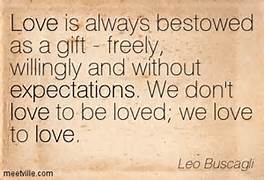
Usually when I hear about expectations in love, there is a sense that we should NOT have expectations in love. There are many sayings like this:

LoveandExpectations

Perhaps “love” doesn’t have expectations, but I think a relationship definitely does. To suggest otherwise would be like saying that you should stay in a relationship with someone no matter how they treat you. Sorry, if someone treats you badly or doesn’t love you back you may still love them, but why would you stay with them?

Expectations should be agreed upon, and should be realistic. But the core of a relationship involves making your needs and expectations known to your partner and knowing that they will care about them. And them knowing that you will learn and care about their needs and expectations.

During this discovery process (which may last a lifetime) your partner may tell you that some of your expectations are out of line, and that’s all right. Hopefully you are able to adjust them. Other times those expectations may be important enough that the relationship is at risk.

Love should never have a sense of entitlement. But expectations and entitlement are different, and expectations are an important part of love. Some expectations may be unrealistic, but that doesn’t mean expectations are necessarily bad.

Learning to Love

Learning-to-love
Love. We all use the word, but there is no real consensus on what it is or what it means.

One of my first posts was my attempt at figuring out what love is, and looking back on it now I think I had a lot of things right, but at the same time it seems somewhat lacking.

Some say love is a feeling. Others say love is a choice. I think it’s probably a mix of both.

Maybe it’s best to say that love is a feeling that comes with certain choices, and the ability to maintain love (and feelings of love) over a long period is a result of continuing to make loving choices towards your partner.

I don’t think love just happens. Attraction may just happen, but you still have to choose to get to know the other person. To look at them, to listen to them, and to be with them. When you make those little choices, you are letting yourself allow love to develop.

And once love has developed, it needs to be maintained. I’ve talked before about whose responsibility love is. I truly believe that it’s not your partners responsibility to keep you feeling in love with them – it’s yours. You need to nurture your love every day, in countless little ways.

And if you choose not to express love? To turn away from love and not let it in? Or to not accept it when it’s given? They you only have yourself to blame if feelings of love fade away.

Deep Roots

I like to think of love like a tree. Trees need nurturing (sunlight, water, soil) to stay alive. When they are young they are fragile, and need more attention and care. As trees age their roots start to run deep, and they no longer need the same sort of care.

Even when their roots are established though, they still need nurturing. They still need sunlight, water and nutrients in the soil to stay alive. Established trees are strong, and can weather difficult periods. Trees can even be cut down. But as long as the roots are alive, the tree can survive, and come back. It may look a bit different, but that doesn’t make it any less beautiful.

Other times the tree can start to die from the roots, and although the tree may still appear healthy at first it has started to rot from within.

The key is the roots, and keeping those roots alive and healthy.

sapling photo

Nurturing Love

So how do we nurture love?

How do we ensure our roots run deep, to allow us to weather the storms of life?

And how do we keep the roots of our love alive?

It seems obvious to me that love requires nurturing. And this nurturing comes in the form of action.

But what actions are needed, to not only maintain but also to grow our love?

A while back I came across a great article on the characteristics of love. Look at the following quote:

Loving involves being in a relationship with another. In a functional loving relationship there are mutual expectations. If I love you and you don’t accept my love then the relationship is dysfunctional because the primary purpose of love is not easily accomplished. If you don’t let me love you, then my love will be squandered on you.

As such, to be in love is to be engaged in an activity that can be done well or not so well. One can be good at loving or poor at it depending on how good (or bad) one is at accomplishing the purpose or goal of loving someone. The statement, “I love you very much” may sometimes be a deep expression of a feeling that comes with being in love; but it can also be uttered by people who do not know the first thing about how to love another. This is because this statement, if it is meaningful, is not simply a report about a subjective feeling going on at the time that it is uttered.

To be meaningful, you must put your actions where your mouth is. This means doing things that promote the other’s happiness, welfare, and safety

So how do we nurture our love? What actions do we need to take? This article talks about love as being shown with the following core actions:

  • Being there
  • Being beneficent
  • Being considerate/non-maleficent
  • Making a commitment
  • Being loyal
  • Being consistent
  • Being candid
  • Being trustworthy
  • Being empathetic
  • Being tolerant

Let’s look at each of these…

The Actions of Love

Being there. This means you are there for the person in times of need. They know they can count on you, and they can rely on you. Sometimes they may need you at times that aren’t convenient to you, but that’s fine. Some sacrifice may be required, and you may not always be able to be there. But you should always want to.

Being beneficent. This goes one step further than just being there. This means you want to do things FOR them. You want to see them happy (in fact, I think true happiness comes not just from the things that make you happy, but from deriving happiness from seeing your actions bring happiness to someone you love). You value their welfare, and want what’s best for them.

Being considerate/non-maleficent. This is about not wanting to do things that are harmful towards the other person. Trying not to hurt them, or embarrass them. It’s about taking them, and how your actions impact them into account. Over the long term, we all screw this up occasionally. Everyone has moments that they are selfish in their actions, and they end up hurting those they love. But those sort of things should be exceptions, and should be accompanied by remorse when we realize we have hurt the other person.

Making a commitment. This is pretty obvious – you are committed to the relationship.

Being loyal. This involves being loyal and faithful to the person you love. As the article says, “loyalty is not optional if one is to enjoy a happy relationship”.

Being consistent. Consistency is very important. Love and relationships aren’t something that you only engage in when it’s convenient to you. They aren’t a part time job, and you can’t just take time off when things get tough. This goes hand in hand with commitment – and means that acting in a loving way is the normal behavior.

Being candid. Love requires openness and honesty. Lying and deception damages relationships, while honesty (even about difficult things) tends to bring people closer together. It’s important to be careful how you word things though – there’s a difference between honesty and being rude.

Being trustworthy. In loving relationships, you need to be able to confide in the other person and know that they are able to confide in you.

Being empathetic. This is about trying to see things from your partners perspective. We are all different, and “my way” isn’t necessarily the best or the only way. You need to be able to value your partners perspective an opinion even when it doesn’t line up with your own. Relationships require meeting halfway sometimes, and that requires empathy.

Being tolerant. Relationships also require patience, and the ability to let things go, forgive, and move on. Insisting things need to be “your way”, or holding on to grudges and resentment is one of the quickest ways to poison a relationship.

All of these are important characteristics in a loving relationship. And more importantly, all of them are things that can be developed and improved.

Choosing Love

I think it is these actions that people talk about when they say love is a choice. Yes, there are feelings associated with love. But these feelings need to be shown, and we show them through the actions we take and the way we treat our partner.

If you say you love your partner but you strike them out of anger, are you showing love?

If you say you love your partner but you are having an affair, are you showing love?

If you have no interest in spending time with them and connecting with them on an emotional level, are you showing love?

How does your partner know you love them? Should they “just know”? Or do they know because of the way you treat them and interact with them?

Love may involve feelings, but it is more than that. Love is actions.

It may not always be declarations of undying love and passion, but love still needs to be present in all our interactions. We can learn to love, and we can get better at it each and every day.

still learning to love

Emotional Intelligence

Emotional Intelligence

Relationships aren’t always easy. Like anything else in life, they have peaks and valleys. They have times where everything is going well, and couples are happy. At other times though conflict and problems arise, challenging and potentially threatening the relationship.

This is because we are first and foremost individuals. With our own needs, wants, and expectations for our life. And in a relationship we are trying to build a life with another individual who’s needs and wants will never perfectly match our own.

I recently read an article on dating that talked about this ideas that relationships start as looking for fulfillment of our own needs:

If you’re thinking that I’m telling you to use someone for your own benefit, you’re right: It is. But if you think dating is anything more than that, you’re confused. We date people to satisfy OUR wants and OUR needs. Once we find the right person, things get less selfish and egocentric.

This really sums up the dilemma people face with relationships. We start them because of what they do for us. We like how the person makes US feel, how well they meet OUR needs, and OUR wants.

When we are first getting to know them, we may think they are nice, or kind. But honestly, we don’t give a crap about them.

It’s all about us, and what they do for us.

But this sort of approach to a relationship is not sustainable in the long term. For a relationship to be successful, we need to become more than just two individuals spending time together. Instead of seeing the relationship as a vehicle for our own gratification, we have to start to see ourselves as part of a “we”.

And finding this balance between “me” and “we” is at the heart of all relationship problems.

This is less of an issue when you are dating, because dating is a facade. In dating, although we are *hopefully* being honest and being ourselves a part of us is also trying to be what we think they want in order to impress them.

In a long term setting this perfectly built facade breaks down, and the unedited version of the person comes out. Sometimes that person is VERY different from the one that was initially presented (in which case it’s probably a good time to get out – fast). Other times it’s largely the same person, but with a few more rough edges.

And when these rough edges start to show, it becomes apparent that this other person isn’t actually perfect (gasp!!!). They actually do have flaws, and to maintain a relationship with them our needs won’t always be met.

A Part of Something Bigger

When the flaws and problems start to surface, in order to sustainable the relationship, the focus on “me” has to change. You have to be willing to let your own ego take a back seat, and the only way to do that is if you see yourself as part of something bigger – a part of a couple, or a team.

If you look at the world of sports, there are many, many cautionary tales of people who has all the talent in the world. They were amazing athletes, and skilled from an “individual” standpoint. But their focus was them, and how the team was helping or hindering their career. This sort of focus is not conducive to a healthy team, and usually athletes who bring in this focus are eventually cut loose. To truly be successful, then need to embrace the concept of “team”.

nameonthefrontofthejersey

That may be sports, but the same rules apply in any team setting; including relationships.

What allows people to do this is sometimes referred to as Emotional Intelligence.
There are all sorts of definitions for emotional intelligence, and a high level of emotional intelligence is often correlated with high levels of success – both personally and in a career setting.

Wikipedia defines emotional intelligence as:

the ability to recognize one’s own and other people’s emotions, to discriminate between different feelings and label them appropriately, and to use emotional information to guide thinking and behavior.

One of the ways of identifying emotional intelligence is through self-awareness, self-regulation and empathy.

  • Self-awareness is being aware of your own emotional state, and knowing your strengths and weaknesses.
  • Self-regulation is about being able to control your emotions, and not allowing emotions to control your decisions and actions (in an impulsive fashion).
  • Finally, empathy is being able to understand other people’s emotions, and taking them into account when making decisions.

What is a Relationship

Dating is about having fun. It’s about having your needs met. And when they aren’t, you move on.

Relationships on the other hand are a bit more complicated. They are about building a partnership, and sharing your life with someone else. They involve both good times and bad, so they require both commitment and a willingness to work through conflict.

In a relationship, a high level of emotional Intelligence is perhaps the most important characteristic you can have. You NEED to be able to take the needs and wants of your partner into account in almost everything you do.

Does this mean you “give up you”? Does it mean your needs don’t matter? No, not at all.

You still matter. It’s not about giving up on your needs. But you aren’t the only thing that matters. Your partner also needs to matter to you. And when these needs conflict (which WILL happen at times) you need to be able to reach a common ground. That common ground may not be ideal for you, but sometimes the “we” needs to be bigger than the “me”.

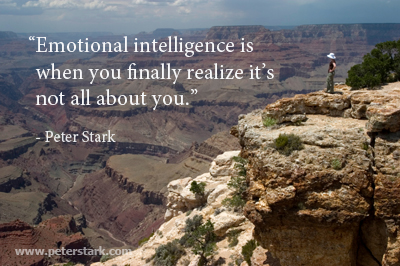
Not All about you

Relationship Breakdown

When relationships start to break down, a common complaint is that one or both parties start “acting like they are single”. This doesn’t mean they are going out messing around with other people (though it could). Usually what it means is that empathy has broken down.

Empathy in a relationship is about taking your partner into account, and understanding that your actions impact them. Understanding that even if something isn’t important to you, it still needs to be a priority if it’s important to your partner.

The offending partner often stops taking the other person into account. Or maybe they still do, but only when that persons needs happen to line up with their own (in which case it doesn’t really count, does it?).

JohnGrayNeedQuote

As it says above, focusing on yourself and doing what is best for you isn’t exactly the best recipe for a successful relationship.

A truly successful (and happy) relationship requires a reasonable degree of emotional intelligence by both parties. It requires empathy – considering your partner and taking them into account at all times.

In times of stress the world tends to turn inwards, and emotional intelligence breaks down. Thankfully, like anything else it is a skill that can be worked on and developed.

If your relationship is going through a hard time, always try to keep you partner in mind. Emotional intelligence, and empathy, is the key to long term success.

Behind the Masks

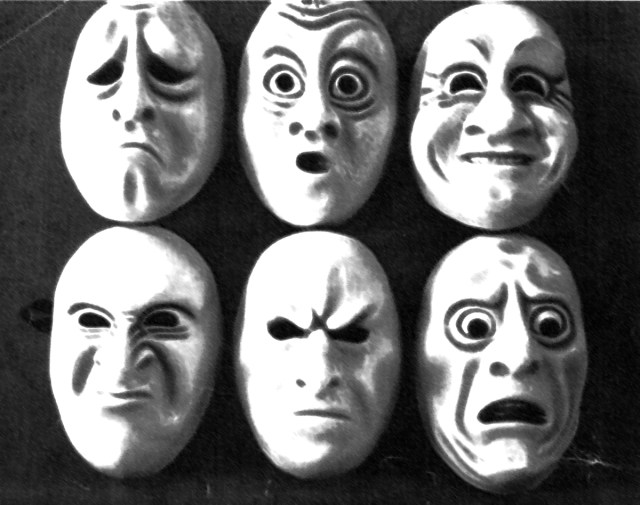
emotion-masks
Who are you?

By that, I’m referring to the “true” you.

I’ve written previously about the roles that we play, and how they impact us. We all play a number of different roles. Parent, child, sibling, friend, co-worker, lover.

Are all of these things simply roles? Are they acts that we put on, depending on our audience? Or are they components of who we “really are”?

Who are we? Is there actually a “true” you?

Who are You?

The idea of a “true you” has always interested me.

If it exists, when was it formed? Did you have the seeds of this true you when you were an infant? Did it start when you started attending school?

I guess it is the age old nature/nurture debate, but to me it seems clear that if it exists, it is something that formed over time. I suppose there may be some seeds to your personality in your genetic makeup, but your experiences definitely contribute to shaping who you are.

If we can accept that experience at least contributes to the “true you”, then the question becomes:

When (if ever) are you “complete”? When it your identity fully formed?

Did it stop when you became a teenager? When you reached the age of majority?

I definitely changed when I became a parent. And over the last few years I’ve watched my parents’ generation go from being the adults to the seniors, while I have gone from being one of the younger generation to being part of the adult generation.

During this time I have watched children grow into young adults. I have watched people fall in love, marriages fail. People get sick, loved ones die. I have watched great joy, love, anger and sadness.

These things impact you. The experiences change you.

So if I’m constantly changing, who am I? Was the “me” at 20 any more or less valid than the “me” I was at 30? Or 40?

Losing Yourself

We all have many roles we play in our lives, and each of these roles comes with a set of unwritten rules and expectations.

The behavior that is “acceptable” as a student is different from what is acceptable as a child, a friend, a parent, a co-worker, a lover. The list goes on.

Conforming to these acceptable behaviors can be like donning a mask, and sometimes we let the masks slip. For example, I don’t swear often, but have a tendency to in times of frustration or anger. Even still, there’s a part of me that knows that it’s different to swear with my buddies vs. in front of my children. I make that distinction at a subconscious level. Yet I have sworn in front of my children, and in those moments my “parent mask” has slipped.

When it does, is it the “true me” that is coming out?

I don’t think so. It’s a side of me, sure. I don’t believe the true me is someone who goes around swearing all the time. The true me also isn’t someone who never swears. I will occasionally, out of frustration or anger. But I would like to think the true me know which situations are appropriate, and which aren’t.

Sometimes juggling all the roles we play can seem overwhelming. And in doing so, at times it can seem like we have lost sight of ourselves, and we aren’t even sure who we are anymore under all those roles.

I think this sense of losing ourselves happens when we act the way we think people want us to act. People talk about “authenticity” as being true to yourself. And if we aren’t being authentic then the roles we play become just that – roles. We become like actors, trying to put on the appropriate mask for the appropriate setting.

When we do this, we lose sight of who we are.

masks-quote

Finding Yourself Again

But wait a minute? Didn’t I just say that we all have many roles to play, and there are certain expectations associated with these roles?

Shouldn’t we have to meet those expectations?

This is where the challenge comes in. We do all have roles we play in our lives, but at the same time we should never just be “playing” a role.

Instead, we need to find ways to make that role our own.

Let me explain…

I’m a father, and my dad was my biggest influence for what a father is. After all, he’s what I grew up with. But I’m not the father my dad was, or the father his dad was. I can never be him. I need to define what it being a father means to me, and that’s the father I need to be. But even this isn’t “fixed”.

The father I was to my children when they were babies is different from the father I am to my children now. I learn, adapt, and change.

I’m sure other people look at some of my parenting techniques and see things I’m doing “wrong”. Well, yeah. I’m probably doing a lot of things wrong. But hopefully I’m also doing a lot of things right. And most importantly, I’m finding an approach that works for me. It’s fluid.

A harder one is my role as a husband.

Similar to learning to be a parent, I’m probably doing a lot of things wrong. Hopefully I’m doing a lot of things right too. The thing is, I’m sure my wife has certain expectations of me. And I likewise have certain expectations of her.

This presents a challenge, because if I do something simply because it’s expected of me then I’m just playing a role or putting on a mask. But at the same time there ARE expectations, and I can’t just pick and choose the parts I want to deal with, or the ones I am comfortable with at a given moment.

As a couple, you need to be clear with each other what your expectations are. No one’s expectations will match completely, and this can be a significant source of conflict in relationships.

Bridging this gap is important to the success of a relationship.

You should never feel like you are playing a role, or doing things simply because they are expected of you. But at the same time, when you are in a relationship you do have responsibilities to the other person.

I think this is where empathy comes in.

For both members of a relationship to feel valued, there must be a belief that both members needs and expectations matter to the other person – even when they don’t match.

Accepting this allows you adjust your expectations somewhat, and fill a role without just playing the role. It allows you to make it your own, and find a way to fill the role that seems natural for you.

It is only when you do this that you are being true to yourself.

When you do this, it’s not just a role. It becomes part of you.

mask1

Embracing Change

Identity can be a difficult thing, and I don’t think there are any “easy” answers to the question of who we are.

But I don’t believe there is a “true you”. Or rather, the true you is always evolving and always changing.

We have countless roles we play in our lives, and each of them shapes us. But at the same time, we don’t have to let them define us.

So who am I?

The true me is both good and bad. It’s full of all sorts of flaws and contradictions. And all of these pieces are all still me.

I’m all sorts of things. I’m a father, a husband, a friend, a co-worker, a son, etc. All of these things are me, and all of them make up my identity. But I am not any single one of these.

And no matter which role I am playing at a given time, all of them are still “me”.