
Sometimes I hear people talk about unconditional love, and it seems there is a belief that unconditional love should not have any expectations. I’ll see comments like “I wish someone would just love me without expecting something in return”.
On one level, this makes sense. We don’t want to feel like we are being used. We want to feel like someone loves us for who we are, and if they have expectations then it can feel like they are placing conditions on love. Unconditional love shouldn’t HAVE conditions, right? Isn’t that what the term “unconditional” means?
I understand this line of thought, but I’ve got to go against the grain on this one. I think it’s misguided and somewhat naive to say love doesn’t come with conditions or expectations. I believe it does, and I will go even further and suggest this is actually a good thing.
What Do You Expect In Love?
In a loving relationship, what do you expect from your partner? Can you truly say you don’t expect anything from them? If you are going to be honest, we all have expectations of our partners.
I recently read a blog where someone listed a “charter of rights” in a relationship, and I think it was a great topic and idea (thanks Bugs!). I don’t want to steal her stuff, but I think at the very least in a relationship it’s fair to expect the following:
- Your relationship should be a place of safety:
- This includes physical safety. It is never acceptable for your partner to hit you or take out their frustrations on you in a physical manner.
- This also includes emotional safety. People often think of abuse only in physical terms. In reality, MOST abuse is emotional, and it can be just as damaging as physical abuse (only the scars aren’t as easy to see). Physically abusive relationships are usually also emotionally abusive, but often people think as long as they don’t “cross the line” to hitting someone it’s not abuse. It still is, and should never be ok.
- Lastly I’ll include sexual safety. I’ll talk more on sex later in this post, but sex should never be something that your partner expects when they want, on demand. If you don’t have two willing participants, even if you are in a relationship it is still rape.
- Additionally, it’s fair to expect that your partner will be “true” to you. Adultery/affairs are never ok. Even when they are “mistakes”, something that “just happened”, or are things that occur when your partner is going through a “hard time”. There is never an excuse for infidelity.
To me these are the obvious expectations that anyone should have for their relationships, and if any of those are broken then the covenant of the relationship has also been jeopardized.
There are other expectations we all should have in our relationships that are perhaps a bit less obvious and harder to quantify. These are the “loving behaviors” that I discussed in my last post, which include things like kindness, trust, caring and empathy.
Loving behaviors may not happen ALL the time (hey, we all have bad days where we can kind of be jerks). But it IS fair to expect that these things are the regular modes of behavior in a relationship.
If you are in a relationship with no kindness, trust, caring and empathy is it really a relationship? Would you actually stay in that sort of situation?
None of these are bad things to “expect” in a relationship, and in fact are the fundamental building blocks of a relationship. So I think it’s safe to say that yes, relationships can (and should) have expectations.
Rights and Responsibilities
Most of my university days are a blur, but one of the things that has always stuck with me is a discussion we had on rights.
The idea presented was that rights are accompanied by responsibilities. If I have a “right” from you, then in exchange for that right I also have a responsibility TO you. It’s a two way process.
Furthermore, this process needs to be mutually agreed upon. I can’t just claim a “right” to something I want and then give you something. Both people need to agree to about the nature of the “exchange”, and there is no right unless this form of exchange exists.
No one is ever entitled to anything. Entitlement is the concept of having a right without believing you should have to do anything in return. Entitlement is selfish, and I would argue is wrong.
Entitlement has no place in relationships. Our relationships should be mutually beneficial. I’m not saying every interaction has to provide value to both members, or that things are necessarily going to be 50-50 (there is almost always someone who puts more into the relationship). But there must be some perceived value to the relationship for both people.
If you think of nature, a one sided relationship is referred to as a parasitic one. Mutually beneficial relationships are symbiotic, and that his what we should strive for.
Expectations vs. Entitlement
So what do rights and responsibilities have to do with relationships? Well, taking this concept we can say that if we expect something from our partner, they should also be able to expect it from us.
If we expect a relationship of safety, we need to also provide one. If we expect kindness and caring, we need to also provide that.
But let’s look at a more difficult topic (and a common area of conflict) – Sex. Is anyone ever entitled to sex in a relationship? No. Should anyone expect to get it whenever they want? Again, no. But is it fair for someone to expect that sex will be a part of their relationship? Yes, I think so. Sex is a difficult topic because relationships rightfully expect faithfulness. Most consider sex a need, and as part of the relationship their only outlet is with their partner; but different people have different levels of need.
Sex is one example of a conflict point. Other common ones are spending time together (balancing me and we time), outlooks towards money and approaches to parenting.
For any conflict of these conflict areas, there has likely been a mismatch of expectations. That doesn’t mean the expectation itself is wrong, it simply means that some form of compromise has to be found where both peoples expectations are met in way that is seen as satisfactory (or at least acceptable) to both.
Why are we in Relationships?
The truth about relationships is, we go into them with a belief that our needs and expectations will be understood, respected and at least largely fulfilled by our partner. In fact, that’s a big part of what love is. It’s a type of caring where you not only derive happiness from seeing your partner’s needs fulfilled, but you also want to be the one to fulfill them.
Think of marriage. Marriage isn’t just a legal document and a ceremony. It’s a symbol of your commitment to each other. It’s a symbol that you care about the other person, and that their needs and expectations are important to you. It’s a symbol that you are no longer just an individual, but you now view yourself as part of a “we”.
If expectations and needs aren’t being met in a relationship, eventually it will get to a point that the relationship is no longer viewed as beneficial by one or both members.
When this happens it doesn’t matter how long you’ve been together, if you are married or if kids are involved. The relationship has ceased to function.
At this point you need to make a decision. You need to either find that part of yourself that cares about the needs and expectations of your partner, and WANTS to fulfill them; or you need to accept that the relationship has failed and move on.
Expectations Revisited
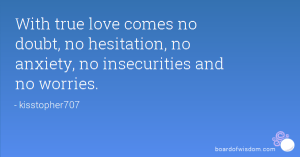
Usually when I hear about expectations in love, there is a sense that we should NOT have expectations in love. There are many sayings like this:
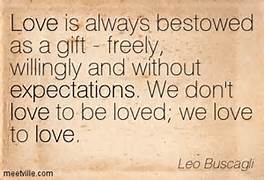
Perhaps “love” doesn’t have expectations, but I think a relationship definitely does. To suggest otherwise would be like saying that you should stay in a relationship with someone no matter how they treat you. Sorry, if someone treats you badly or doesn’t love you back you may still love them, but why would you stay with them?
Expectations should be agreed upon, and should be realistic. But the core of a relationship involves making your needs and expectations known to your partner and knowing that they will care about them. And them knowing that you will learn and care about their needs and expectations.
During this discovery process (which may last a lifetime) your partner may tell you that some of your expectations are out of line, and that’s all right. Hopefully you are able to adjust them. Other times those expectations may be important enough that the relationship is at risk.
Love should never have a sense of entitlement. But expectations and entitlement are different, and expectations are an important part of love. Some expectations may be unrealistic, but that doesn’t mean expectations are necessarily bad.













 thezombieshuffle