Finding Passion – Part 1 1/2

passion7

In part 1 I discussed the loss of passion in relationships, and how I believe it is the leading contributor to affairs, divorce, and unhappy relationships (or at least relationships that are less happy than they could be). Loss of passion is somewhat inevitable in long term relationships, but that doesn’t have to be the case, and there are ways to try and rebuild it when it’s diminished or gone.

I was planning on talking about “ways to rebuild” in part 2, but as I started writing I realized there was something important to cover first about loss of passion. So I’m going to cheat a bit here. Instead of part 2, I now present you with Part 1 1/2!!!

Team Building

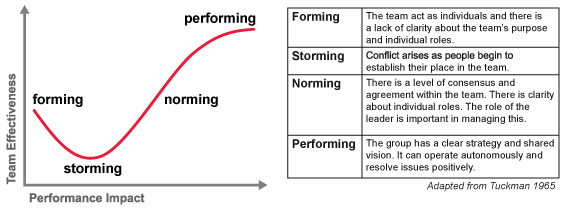
Relationships are like small groups, or teams, and in the mid 60’s a guy by the name of Bruce Tuckman came up with a theory on the stages of group development. Tuckman believed there were four stages that all groups or teams can go through; forming, storming, norming and performing. Here’s a brief explanation of each stage:

  • Forming. This is when a team comes together. This stage is characterized by excitement, optimism and anticipation of what the future will bring.
  • Storming. At this stage reality sets in and it doesn’t quite match what was expected. Members may become dissatisfied and/or frustrated. There is some anxiety as they are adjusting to the fact that the team isn’t working out quite the way that they thought it would. At this point there is a resistance, conflict and emotions tend to run high. Members may start looking out for themselves instead of doing what is best for the team.
  • Norming. At this stage the team has worked out most of the issues. They understand the idea of shared goals, and have learned to cope and accept each other. There is a sense of relief and lowered anxiety, as the members are engaged and supportive of each other.
  • Performing. At this stage the team is performing at a very high level. They truly understand each other, and have a strong sense of teamwork and cohesiveness.
tuckman-model

If all teams go through these stages, isn’t a relationship really just a special type of team? Let’s take a closer look at these stages in the context of a relationship.

The Forming Stage

All of us have our own idealized views of what our perfect relationship looks like. Looking at traditional gender roles (which by the way I don’t buy into), young girls may have this idea that they will meet their “handsome prince”, who will sweep them off their feet and lead them off to a life of romance. That’s how the fairy tale romances are depicted by Disney anyhow. The traditional gender roles for guys are a wife who takes care of both them and all the domestic stuff.

Whether or not you buy into the “traditional roles” we all have some sort of idealized view of things. One problem about with an idealized view is that it is almost always a selfish view. It is about “what this relationship will do for me”.

In the early years of a relationship, there is the excitement of the new, and the promise of what the future could look like. In the early stage of a relationship things seem perfect, and it’s easy to overlook the “flaws” in your partner.

It seems clear that this love is real, and will last forever. And if nothing else we all expect that no matter what happens in our life with our chosen partner, we will always be happy together. Eventually reality sets in, and we find that reality doesn’t quite match what we expected.

The Storming Stage

This is where the fun begins. In this stage we realize that our chosen partner is actually a regular person. They may still be wonderful, and a great match for us. But they have flaws just like anyone else. And not just that, but our idealized vision of a life together isn’t quite correct. Most of our time is still taken up with jobs, and the need to pay bills. We may still have dreams that we want to accomplish together, but most of our life is actually pretty mundane.

I believe much of our enjoyment and appreciation of life is based on expectation. A while back I wrote a post on expectations in relationships. I think it’s probably one of my most important posts, but sadly is one of the least viewed. Here’s a simple analogy for expectations:

A few years ago Marvel Studios was just getting it’s start, and they put out Iron Man and an Incredible Hulk movie (with Edward Norton) in the same summer. I was in full “daddy mode” at the time so I didn’t get out to the theater much, but I heard all the hype – both from buddies and from reviews. From everything I was hearing, Iron Man was a fantastic film while the Hulk, ehhh, it was alright.

That fall I finally got a chance to see them, and I enjoyed Iron Man but I really didn’t think it was amazing. I also found that I enjoyed the Hulk much more than I expected to. You see, my expectation for Iron Man was high while for the Hulk it was low. As a result my enjoyment of the films was colored by my expectation.

We do this in all aspects of life. Our happiness or enjoyment of something in some ways is related not to what something actually is, but to how it met expectations.

ALL relationships go through this storming stage. And this storming stage is really a collision between our expectations of what we believed our partner and relationship should look like, and the reality of the situation.

Our level of disappointment at this stage is really about how big the gap is between reality and expectations. If the gap is small, then it’s not a big deal. If the gap is large though, trouble ensues. Because this gap is based on your own expectations, it will be different for each person. As a result one person may be quite happy in the relationship, while the other person isn’t.

As one or both partners become dissatisfied and frustrated they may start turning away from the relationship, and start looking out for themselves. This period of dissatisfaction can lead to conflict and high emotions, and put enormous strain on the relationship.

When a large gap exists, the question becomes why? What exactly is wrong? Is it an issue of unrealistic expectations? Or is the relationship somehow lacking? In all likelihood it is a mix of the two. The situation may actually be pretty good, but it doesn’t match up to expectations and so it is seen as unbearable.

Because our expectations are partially formed by experience you can also see the opposite happen. If someone has been treated very poorly in the past, then may find a new relationship where someone treats them marginally better (but still poorly), and this may be seen as acceptable. It’s very hard to judge things for “what they are”, as our expectations always determine our level of contentment.

All relationships go through this storming stage, and it can be a very difficult time, sometimes lasting years. In some cases people are able to close the gap between expectation and reality. People may realize their expectations were unrealistic and find a way to re-frame them, or they may find ways to improve the reality by working on improving the relationship.

In other cases the gap between expectation and reality is too large, and the relationship fails. Not all relationships make it through this stage. And honestly, not all should.

The Norming Stage

I believe the norming stage of relationships is where true love blossoms. It may not be the stuff of fairy tales, but it is a deep, mature love.

At this point in a relationship both partners have “weathered the storm”. The couple that comes out on the other side is different, but stronger. They have learned strategies for coping with their differences (which may or may not be healthy strategies), and they have come to accept each other for who they truly are, and not just who they wish they were.

Most people will agree with the idea that perfection doesn’t exist. But saying they agree, and accepting it in your own relationship are two different things. A while ago I came across a great quote that sums up the norming stage well. I didn’t write it down, but I believe it went:


Choosing a partner is about choosing a set of problems you can live with.

It sounds terrible, but it’s true. Perfection doesn’t exists, and all people have traits that are hard to get along with sometimes. But we need to find a match that works for us.

Continuing with the super hero movie analogies, there’s a great scene in X-men: Days of Future Past. Charles Xavier (Professor X) and Magneto were close friends when they were younger, but became enemies for a number of years. Now older and wiser, reflecting on the past Magneto says:

All those years wasted fighting each other, Charles… but at least we got a few of them back.

In some ways the storming stage IS wasted time. It is a power struggle and a time where the “me” gets in the way of the “we”. But it’s an important (and necessary) stage for all couples to go through. Of course some couples take longer than others, and the severity of issues may be worse in some cases then others.

The norming stage is when people realize it doesn’t have to be an either/or situation – they can be both “me” and be part of a “we”, and they are able to strengthen their bond moving forward.

Some couples slip through these stages a few more times, but for many once they have figured it out, they are able to maintain their relationships and truly commit “till death do us part”.

I’ve heard people describe this process in their own relationships, saying they came to a point where they weren’t sure if the relationship was what they really wanted. But after some time and soul searching (and usually frank conversation with their partner), they were able to recommit and make their relationship stronger than it had ever been.

The Loss of Passion

Bringing these stages back to my original topic, the loss of passion, it is in the storming stage that passion breaks down. It’s pretty hard to maintain passion for someone who at least on a subconscious level comes across as a disappointment. And it’s also hard to maintain passion when the relationship feels like a struggle.

The hard part becomes rebuilding that passion once they have been able to weather the storm and recommit to each other. The difficult in rebuilding passion is based on two factors:

First is the length of time that the storming stage has gone on, and the severity of the issues encountered and damage done during this time.

The second factor is the attitude people bring into the norming stage. Some people stay together because it’s what they know, they feel it’s best for the kids, or because they are scared to be alone. When this happens it’s almost impossible to rebuild any passion, and I think it’s better for both parties to just let the relationship end.

Others stay together because they realize that they truly do love each other, warts and all. And they want to continue to build their life with their partner. If that is the reason for staying together, then passion doesn’t have to be rebuilt. It’s already there, and it just needs to be nurtured.

The Performing Stage

You may have been wondering, hey, what about the performing stage? I left this for last on purpose. This is where the team is working at a very high level, and has a strong sense of team and cohesiveness. One interesting thing about Tuckman’s theory is he believes most successful teams plateau at the norming stage, and very few ever go on to achieve the performing stage.

I think the same can be said of marriages and long term relationships. Many go through the hard years, and come to some sort of peaceful coexistence. But how many are TRULY happy? How many achieve something closer to their initial idealized view (tempered by reality)? Or how many simply accept that what they have is “good enough”.

I’m a big believer in continuous improvement, and I believe that regardless of the state of your relationship currently, it can always be better. You can always find ways to communicate better, and come to understand each other better. Passion should never die. You should be able to feel just as passionate about your partner at 80 as you did at 20.

To me this is the goal. This is the sort of love we all aspire to. It may not be the stuff of fairy tales, but it’s the real life version of fairy tales.

So how do we get there? Next up, my ideas on this. I promise this time

Finding Passion – Part 1

passion

My post from last week on Can Guys and Girls Just be Friends has received a surprising level of response. Since statistics show around 40% of men and 30% of women will have affairs, I suppose it shouldn’t be that surprising.

I thought I was finished with this topic, but comments and emails from readers have led me to explore something I’ve only touched on a bit in the past – the loss of passion in long term relationship.

I believe that more than anything, loss of passion is THE leading contributor to both affairs and divorce. Statistics are clear, many marriages or long term relationships fail. What statistics don’t show is that many of those that “succeed” aren’t really happy relationships – or at least not as happy as they could be.

Some people accept that this is just natural, and tell themselves maybe this is what marriage really is. Or they decide it is better than the alternative of being alone. So they emotionally disconnect and become roommates who live parallel lives, each person doing their own thing with maybe the occasional “duty sex” thrown in once in a while.

Other people ask themselves, is this all life is? Is this what marriage is really about? It seems obvious that the answer is no. That isn’t what anyone expected when they agreed to “in good times and in bad”. Unfortunately although this loss of passion happens gradually, once it has happened it can seem hopeless to get out.

Living parallel lives is one way to deal with the pain, but ultimately that will lead to an affair, divorce, or acceptance of an unhappy existence. That pain does not go away though. It gnaws away at you, and will start to permeate all aspects of your life. One reader described it to me as follows:

Nothing is more painful than a broken relationship. Nothing is more painful than feeling love for the person sitting next to you, and feeling nothing in return. Knowing they are right there, but they are a million miles away.

Affairs allow someone to feel as though they have reignited the passion, and allow the person to convince themselves that yes, it WAS the relationship that was the problem (after all, they can feel passion for someone else, right?). But all the evidence shows that after a year or two the passion in the new relationship fades and the person is back in the same exact spot.

Divorce is another way out, but it is also a way of blaming the relationship. And like affairs, there is no guarantee that any future relationship will be any better.

Short of things like physical and emotional abuse it seems clear that improving the current relationship is the best option if possible – especially if kids are involved.

Commitment involves what you are putting into the relationship, and remaining as roommates isn’t healthy for anyone. So if you have emotionally disconnected you should either start actively working on the relationship or you should get out.

I believe in both love and marriage, and I don’t believe passion has to be lost. If it has been lost, I believe passion can be found again. Marriage can be wonderful, loving, fulfilling and passionate. It should be a place of personal and emotional safety. If yours isn’t, I don’t believe it’s ever too late to change that.

What is Passion?

The first thing to look at is passion. What exactly is it? When I think passion in a relationship, I think of sex (or at least the feelings that lead to sex). I think of people who can’t keep their hands off each other. People who are fumbling with each other’s clothes when they are barely through the door.

I’m sure most people have experienced that, however briefly, and it’s a great feeling. It’s also how passion is sold to us in romance novels and movies. But is that really what passion is?

Science has shown that the intense emotions of the early stage of a relationship are really hormone induced infatuation, and that this emotional intensity is unsustainable for longer than 6 months to 2 years (incidentally the average length of an affair – hmmmm).

Does that mean long term relationships are destined to be sterile and passionless? I don’t believe that to be the case at all. Quoting myself here:

Being passionate about something means REALLY enjoying it, and having strong positive feelings for it. You can be passionate about all sorts of things: cooking, traveling, a sports team, whatever. When people talk about passion in a relationship it’s the same thing. You are passionate about the other person. They are very important to you, and you care greatly for them. Seeing them happy is a source of happiness for you.

The hormone induced early passion may be destined to fade, but a healthier passion can and should stay in long term relationships. Unfortunately, that often fades too.

Loss of Passion

Why do we lose passion? Where does it go? There are all sorts of possible answers to this question, but for one of the big ones (in my opinion) I’ll turn to the movies. Have you ever seen the movie Analyze This? It’s a great film, with Robert DeNiro playing a mob boss who is going to see a counselor/psychologist (played by Billy Crystal). Here’s an exchange from the film:

AnalyzeThis

Crystal:  What happened with your wife last night?
De Niro: I wasn’t with my wife, I was with my girlfriend.
Crystal:  Are you having marriage problems?
De Niro: No.
Crystal:  Then why do you have a girlfriend?
De Niro: What, are you gonna start moralizing on me?
Crystal:  No, I’m not, I’m just trying to understand, why do you have a girlfriend?
De Niro: I do things with her I can’t do with my wife.
Crystal:  Why can’t you do them with your wife?
De Niro: Hey, that’s the mouth she kisses my kids goodnight with! What are you, crazy?

I thing this amusing exchange touches on something very important. I’ve talked about roles before, and how we have different aspects to our selves. In my view, our partners have at least three distinct roles that they need to play in our lives. They need to be friends, lovers and family.

In long term relationships, all of these roles need to be nurtured and maintained. Time and effort needs to be spent on being both friends and lovers. When that doesn’t happen, it’s easy to start seeing your partner only through the roles that you do maintain, and that’s when trouble begins.

This becomes especially pronounced when kids are introduced to the mix. I have kids, and I love them. They’re great, and I couldn’t possibly imagine my life without them. In theory kids act as a bonding agent for a couple. They are a product of their love for each other, and they bring the kids into the world together. Even couples who have split up will admit that in an ideal world they would have been able to raise the kids together.

But kids also require great sacrifice, and can put strain on the relationship. As awesome as they are, they are demanding little buggers in terms of time and energy. And time with them (or just as a family) is time not spent as a couple. It is very common for couples (usually the guy) to admit that they miss the time they used to have with their partner before kids.

Many women also lose themselves in being mothers. Add in hormonal and physical changes, and it can be difficult to find the energy required for being a couple. I’m a guy, so I won’t pretend to “get” this stuff. But I know that as as the kids get older it is common for women to have to find themselves again (there are a number of books written on this topic).

In the scene from the movie, De Niro’s character has lost sight of his wife as a lover. His view of “wife” has come to see her only as the mother of his kids. He may still see her as a friend, but he no longer sees her as a lover – he has stopped seeing her as desirable or sexual.

With or without kids, many couples fall into the trap of not making time and prioritizing each other as friends, and lovers. It may be not making time for each other, or taking each other for granted. Like anything else, if you don’t use it you run the risk of losing it, and over time this lack of focus on each other can lead to an emotional disconnect.

When someone says “I love you, but I’m not in love with you anymore” this is likely what has happened. For whatever reason, not enough focus has been spent on being an “us”, and the end result is a breakdown of emotional connection. This happens to varying degrees ALL the time, with many couples.

How do you solve this? From what I can see, it is a puzzle many, MANY people wish they could solve. If I *knew* the answer to this I would likely be on the talk show circuit promoting my latest relationship book instead of writing this blog, but based on a variety of sources I do have some thoughts. Stay tuned for part 2.

The Golden Rule

I’ve long had an interest in interpersonal relationships, and I spend a fair bit of time thinking, reading and writing on the topic. Interpersonal relationships are simply our interactions with other people, and a big part of that is how we treat others.

Have you ever thought about how you treat others? For me, one of my guiding principles was the golden rule. The wording I was taught was “Do unto others as you would have them do unto you”. Over the years this has been simplified, with the current wording being:

Golden rule

Treat others the way you want to be treated is another way of saying “Be kind to people and don’t treat them like crap”. That seems obvious. No one enjoys being on the receiving end of outburst of anger, or someone being cruel. So if you don’t enjoy it, it stands to reason that you shouldn’t treat other people that way.

But this rule only really applies at a high level. “I like it when someone is kind to me, therefore I should be kind to others” is obvious. But “I like onions therefore I should give you onions and expect you to appreciate it” doesn’t really work. Unfortunately, that is often exactly what we do. We take this “rule” too far, and do things for others that we enjoy. And then find ourselves shocked or disappointed when our efforts aren’t received the way we would expect.

People are different. We have different personalities and different interests. So it shouldn’t be shocking that what we want and need from each other may be different. Instead of treating others the way we want to be treated, we need to start focusing on treating others the way THEY want to be treated.

Love Languages

lovelanguages

Recently I read the “The 5 Love Languages – The Secret to Love that Lasts” by Gary Chapman, and it touches on this very idea. It’s a fairly short book (around 150 pages), and definitely worth a read, but I’ll give you a bit of a synopsis.

A while back I talked about a marital satisfaction bank account, and how the good times in our relationships act as a buffer against the bad times, allowing us to persevere when times are hard.

Dr. Chapman has a similar concept, but he calls it a “love tank”. According to him we all have love tanks, and when our relationships are in a good place these tanks are largely full. Personally I like the idea of marital satisfaction bank accounts better, but he’s the one selling books so I guess I’ll stick with his concept for now (mine’s cooler though).

We all want to feel loved and we all want to feel valued, and through years of being a counselor he felt there are five different ways couples express love to each other.

The Five Love Languages

Dr. Chapman called these different approaches to expressing love “The Five Love Languages”. They are pretty self-explanatory, but a brief overview is as follows:

  • Words of affirmation. This is when someone is open about telling you how much they care, and appreciate you. It can even just saying “I love you”
  • Acts of service. This is taking on tasks, or doing things for the other person
  • Quality time. This is about being together, but being fully present and in the moment with each other. Watching TV together probably doesn’t count, but talking, going for walks together and just “being” with each other does.
  • Gifts. This is… umm… giving gifts. Gifts can be anything from a day pass at the spa to coming home with flowers
  • Physical affection. This encompasses everything from hugging and holding hands to sex.

Primary Languages

Looking at the 5 love languages it seems safe to say that they are all different ways to express love. All of them seem valuable, and I would even argue needed in a relationship. We all need to *know* that we are loved, we all need to feel it. If you don’t feel loved in your relationship, it can lead to doubts, and it can cause things to start to break down.

We are all different though. Some people need more expressions of love while others need less. Beyond that though, what Dr. Chapman identified is that we each have our own “Primary” love language.

In counseling many couples, he found that often the couples seemed to be doing the right things. But although they were, one or both of them weren’t happy. They may not have been unhappy, but their “love tanks” weren’t full. In talking with the people individually he found that for some people, one love language is much more important and has greater impact on them then the others.

This is where the problem of the Golden Rule comes in. We tend to treat others the way that we want to be treated, and that applies to our expressions of love. But what happens when your preferred expression of love doesn’t match your partners? Well, then you have a recipe for a couple who may truly love each other, but still not be very happy.

Ask yourself how you show love to your partner. Do they just *know* you love them? If so, how? Look through the love languages and figure out which ways you actively show your partner love. If you aren’t actively doing any of them, I’ll make a guess that your relationship could use some attention.

Identify Each Others Love Languages

Instead of treating others the way we want to be treated, we need to treat others the way THEY want to be treated. And that requires a bit of self discovery.

In order to fully embrace your relationship, you need to understand your own love language. Take a look at the list above, and figure out what the most important languages are for you. There may be more than one that stands out, and that’s fine. But whatever stands out to you is the way that you like to have love expressed to you, and the way that you feel the most valued.

If you are struggling with figuring out your love language, one clue may be areas of conflict between you and your partner. The books states:

People tend to criticize their spouse most loudly in the area where they themselves have the deepest emotional need

Once you have identified your primary love language, think about times that you haven’t had it expressed to you and how it made you feel.

Have your spouse do this exercise too, and then share your love languages. Maybe you already know them, and you have been speaking to each other in the right languages. But maybe you haven’t.

Choosing Love

One question that is addressed in the book is “what if my partners love language is one that is not natural to me”?

I’ve talked a lot in the past about how long term love is a choice. Some people don’t like that idea because it doesn’t seem to fit how love is portrayed in pop culture. Love is usually portrayed as all hormones and emotion.

But choosing love? Somehow that seems cold, and calculated, and not very romantic at all. Maybe it’s just me, but I think choosing love can be very romantic.

It’s easy to be in love when things are going well, or when it “works for you”. But a relationship involves two people. If your primary love languages aren’t matches then taking actions that you know will be meaningful and have greater impact for your partner shows a deeper love and commitment than just doing the things that are more natural to you. And if your partner knows that those aren’t natural expressions of love for you? Chances are they will appreciate it even more.

Taking another quote from the book:

The object of love is not getting something you want, but doing something for the well-being of the one you love.

I still think the Golden Rule is a good guideline in life. But it’s just a starting point. We are all different, and we all have different needs. For the people who you are closest to, and especially for you partner you need to go deeper. You need to take the time to understand them and their needs, and treat them the way they want to be treated. By doing that you show that THEY matter, and that you value them.

Depending on your own love language it may be a stretch at first, but your relationship will likely be happier for it.

Accountability Part 2 – Taking Ownership

accountability_header

What is the one and only thing you have control over in your life? Your job? Nope. Your friends? Nope. Your kids? Uh, definitely nope.

The only thing you have control over is you. You control your actions and your decisions. You have the ability to “influence” other things and other people. But just as you make your choices, they make theirs. And trying to control anything else is a bad idea anyhow .

Likewise there are things that influence you and your decisions. Some things have greater influences than others. But ultimately you choose which influences you will allow to impact you, and you make the choices that lead to your decisions.

In part 1 I went over the Responsibility Process. It talked about consciously choosing to be responsible, and the mental process that happens as we move through various states from denial to consciously choosing responsibility. Choosing responsibility is only part of accountability however.

Accountability is about owning your life, your decisions and your actions. The only person who controls those is you.

For some people this idea is liberating, while for others it’s terrifying. It’s not always easy to make a decision, because what if you make the wrong choice? When you make a choice, you are responsible for the outcomes or consequences of that choice. That’s fine when things go well, but what about when they don’t? Having to “own” bad choices can be a very scary thing to face.

Because of this it’s easier to try and deflect the decision making on to someone else. Denial, Blame and Justification are all examples of deflecting decision making away from yourself. Another approach is to simply not make a decision. However NOT making a decision IS a decision. It is essentially the same as denial. The following quote sums this up beautifully:

Accountability_inaction

It’s important to understand that no one acts from a position of accountability all the time. All of us have moments that we try to deny, blame, justify, or act due to shame or a sense of obligation.

Periodically that is fine, but some people rarely hold themselves accountable. Instead their default mode of operating is denial, blame, justification, shame and obligation.

It seems obvious that these are negative modes of operation, so would anyone want to operate from these modes? I don’t believe anyone really “wants” to operate from any of these modes. Rather, these modes are primal responses to issues, and it is easy for your mind to accept them as acceptable responses.

Learned Helplessness

Have you ever heard of Learned Helplessness? There’s a lot of valuable literature on it, but in summary Learned Helplessness is when someone has lost the belief that they are able to change their situation. They actually CAN impact their situation, but due to a belief that they can’t, they don’t even try. This creates a self fulfilling prophecy, where the lack of belief leads to an inability to attempt change (or in some cases a half hearted attempt). But this inability to attempt change is the actual driver behind the lack of change.

Learned Helplessness often goes hand in hand with Victim Mentality. This is a learned trait where someone tends to:

  • Blame others for a situation that they have either created or contributed to. They don’t take responsibility for their own role in the situation
  • Assume the worst, incorrectly attributing negative intentions to other people
  • Compare themselves to others, believing that other people are happier than they are

Impacts on Mental Health?

Learned Helplessness and Victims Mentality can have serious consequences. People who exhibit these characteristics generally don’t hold themselves accountable for their actions and decisions. They also tend to have low levels of happiness. More alarming, there is a strong correlation between these and things like clinical depression and mental illness.

Thankfully, because these are learned mindsets they can be corrected. For many psychologists and counselors significant effort is spent trying to correct these negative mindsets and replace them with healthier ones.

Unfortunately studies show that these mindsets and the issues related to them are on the rise. I’ve seen numbers showing anywhere from a tenfold to a thirty-five fold increase in the last two generations.

Here is an interesting quote I found about this (in this case specifically on depression):

There is 10 times more major depression in people born after 1945 than in those born before. This clearly shows that the root cause of most depression is not a chemical imbalance. Human genes do not change that fast.

Let’s re-examine a few of these points:

  • There are significant increases in major/clinical depression and other mental illnesses or disorders. The speed of the increases suggests some sort of cultural or social cause
  • These conditions show a high correlation to characteristics like Learned Helplessness and Victims Mentality. Both of these are learned behaviors, characterized by low levels of happiness and personal accountability

Looking at this makes me wonder about the relationship between personal accountability and issues such as depression. Is it possible that not learning personal accountability predisposes you to future issues? If so, what are some of the societal changes that have led to this shift?

Culture Shift

One possible contributor is that we seem to have become a culture of blame and entitlement. We see this in the legal world, where frivolous lawsuits have become the norm. But we also see it in other aspects of life.

What’s that, little Suzie didn’t do well in school? Well it must be because she has a poor teacher. You aren’t getting the playing time for your sports team? It’s because the coach doesn’t like you. You don’t have a good job? It’s because of the economy. Your relationship fell apart? Well that’s because you and the other person just weren’t compatible.

Where is the sense of ownership? Where is the sense of pride in immersing yourself in something and knowing that your success or failure is largely under your own control?

Accountabilityandblame

Accepting Failure

One possible contributor to this shift is an unreasonable focus on results, or success. There is considerable pressure to “be the best”. One slogan I remember going around (at the Olympics no less) was:

Second place is just the first loser.

I’m all for improving yourself and trying to be the best that you can be, but there is just so much that is wrong with that slogan. It’s always good to have other people to measure yourself against, but what’s more important is how you are improving and growing personally.

One problem with this focus on success and being the best is that is has created a fear of failure. Failure may be disappointing, but it’s a good thing. Failure is the opportunity to begin again, this time more intelligently. It is our reaction to failure that matters. Failure is how we learn.

Is everything going to go your way in life? You think you’re on the Earth and everything you want to happen to you is going to happen to you positively? The measure of who we are is how we react to something that doesn’t go our way. – Greg Popovich

Over Parenting

One additional item that I believe contributes to a lack of accountability is us, and how we parent. The world has changed. Kids no longer get out and play the way they once did. I think back on some of the things I did as a child, and based on today’s approach it’s amazing I’m still alive (and I’m not THAT old). I played, I fell, and I got hurt. A lot. But my cuts and bruises healed, and I got up to play another day.

With two working parents, busy schedules and a perception of a more dangerous world, you don’t see kids out in parks and playgrounds the way they once were. Today many kids are largely in scheduled events. When they are there at the playground at all usually parents are a few feet away, watching to ensure that no one kidnaps them and that their every bump and bruise is attended to. I’m as guilty of this as anyone else. Why do we do this? We do it out of love, and concern for our children.

But in the process we are crippling them. We are removing choice, and removing the ability to fail. They need to fail, they need to learn. With the best of intentions we are stunting their growth.

As hard as it is to do, sometimes if you love someone the best thing to do is sit back and let them make their own mistakes. Let them fail. Pick your moments though (something like learning to swim is perhaps not the best time).
Ask yourself this, when we try to do everything for your children what are we really teaching them?

Taking Ownership

One of the most influential people in my life was my Grandmother. One thing that sticks with me from her was a story she would tell. She admired her father greatly, and would often seek his opinion on things. When she asked him about something he would respond “I know what I think, but what do you think?” This has always resonated with me. If someone asks your opinion and you give advice on what you would do, you are taking ownership of their issue. Maybe a better approach is to coach them, and help guide them to find their own solutions.

Accountability

Catch yourself when you are in denial, blaming, justifying or acting out of shame or obligation. Take ownership of your own life. Accept that no matter what your situation and influences are, the only person who can control you is you. The right choice is not always the easy choice. But as a buddy of mine always says:

It’s never too late to make the right decision

Accountability Part 1 – Responsibility

Responsibility

When you think of someone who is “responsible”, what is the first thing that comes to mind? Often someone who is responsible is seen as someone who is stable, and has their stuff together. They have a decent job (that they have been able to hold), they have a plan, and they are dependable.

Sometimes being responsible is seen as the opposite of being a dreamer. Dreamers live for the moment, while responsible people live a few steps ahead, and are less likely to throw caution to the wind.
But is responsibility really just about stability, structure and planning? Can’t a dreamer also be responsible?

Responsibility Process

I recently came across an approach to looking at responsibility that makes a lot of sense to me. In it, responsibility is defined as a mental process, whereby you own your ability and power to create, choose, and attract.

The idea behind the responsibility process is that there are different stages of behaviors that can culminate in responsibility.

This process starts with Denial, and then moves to Blame, Justification, Shame, Obligation, and finally Responsibility. Each of these stages represents a mode of thinking, and I’m sure every single one of us has operated from each of these modes at one point in time or another (I know I have).

Life is easy when things are going well, and these behaviors usually arise in response to some form of problem or stresses.

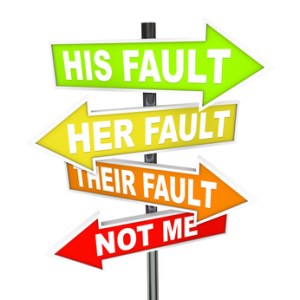
The first three, denial, blame and justification are easy to explain. In these, rather than taking any sort of ownership we are deflecting the issue away from us. In denial there is no problem. In blame the problem is seen, but it’s not “my” problem, it’s someone else’s. And in justification I only partially accept that it’s my problem. I am saying that yes, it’s my problem – but there are a number of reasons as to “why” it happened (and these reasons somehow absolve me of any blame).

Arrow SIgns - Not My Fault Shifting Blame

Shame and obligation are where I think things get really interesting. According to the responsibility process, acting from a state of shame or obligation is almost worse than the previous three. This is because in the first three you are deflecting an issue away from yourself, while for these two you are taking partial ownership. With shame or obligation, you feel as though you are being compelled to do something by some external force. When this happens you are liable to build up resentment that you “have to” do something. Doing something from a state of shame or obligation is fine occasionally, but if it is a common state for you then are liable to give up or quit.

The responsibility process is explained as follows:

When something goes wrong large or small (for example, lost keys or a lost retirement account), The Responsibility Process kicks in. The mind offers Lay Blame as a reason. If you accept blame as a sufficient reason, then you will act on that blame. If you don’t accept it, then your mind offers you an excuse (Justify). And so on. Thus taking personal responsibility is a step-wise process of refusing to act on a series of irresponsible thoughts that your mind offers up.

The Responsibility Mindset

It’s easy to be responsible when things are going well, but this responsibility process is something that largely happens in times of stress, or when things have gone wrong. So how does one shift from operating from a state of shame or obligation to a state of responsibility? Basically it’s all about mindset.

In all aspects of life there are things we “have to do” even though we may not want to, and the attitude you bring into these things is very important. It’s very easy to approach these “have to” moments from a state of obligation, but as noted above doing so runs the risk of building up resentment.

The change in your mindset from obligation to responsibility is subtle, but it’s very important. In both cases you “have to do something”. But in obligation you have to do it because you are being forced to, or because you are trying to meet some sort of external expectations. With a mindset of responsibility these expectations have been internalized. It’s no longer because someone else expects you to do something, it’s because YOU expect yourself to do it. And you expect yourself to do it because you see it as required or believe it is the right thing to do at the time.

The early states of the responsibility process (denial, blame, justification, shame and obligation) are reactionary, almost primal responses. They are also very “me” focused; only seeing a situation in terms of how it affects you personally. Operating from responsibility is different in that it is a conscious decision. Operating from this state requires three things:

  1. Intention – Intending to respond from Responsibility when things go wrong.
  2. Awareness – Catching yourself in the mental states of Denial, Lay Blame, Justify, Shame, Obligation, and Quit.
  3. Confront – Facing yourself to see what is true that you can learn, correct, or improve

Being responsible is a conscious process. You “choose” to act and respond in a certain way. You may later find out that the decision you made wasn’t a good one, but owning that decision is an act of responsibility.

responsibility-the-ability-to-choose-your-response

The “Have To’s”

To illustrate the responsibility process, let’s walk through it with a simple example. Imagine you are a parent, and your child has filled their diaper:

Denial. You can always pretend that the diaper hasn’t been filled (and hope that someone else notices and changes your child for you). But the other person may do that too, and eventually the wonderful aroma will become too much to bear. More importantly, your child will be uncomfortable and crying will probably start (it could be yours or thiers).

Blame and Justification. You can blame your child for filling their diaper, but that won’t change anything. And you may try justifying things (I shouldn’t have to change him/her, I did it last time!!!), but what does that really accomplish? The child will still be uncomfortable, and still need to be changed.

Shame and Obligation. Here you decide that yes, you will change the diaper. But you don’t “want” to do it. You’re only doing it because you have to. Are you going to get resentful with your child? Some parents actually do, and over time this can lead to things like child abuse. But those cases are fairly extreme, and hopefully rare.

Responsibility. This is the natural course of action for your mind to take. You still probably don’t “want” to change the diaper. But you recognize that the diaper has been filled, the child is uncomfortable and incapable of changing themselves. Plus you care about your child and recognize that the diaper simply needs to be changed, so you do it.

In this scenario I suspect that most of us would automatically operate from a position of responsibility. In times of high stress we may slip back into some of the other stages temporarily, but we change the diaper anyhow because it is the right thing to do. It’s an easy choice.

Many of life’s “have to’s” fall into this category. Going to work every day? You don’t always want to and you may have days you are resentful. You may even have a few “sick” days that are actually mental health days. But going to work is something that we have to do.

Making Choices

The examples above are easy ones. But now consider something like your relationship.

What if your partner loves ballet while you don’t, and they periodically ask you to go with them? In a prior post I mentioned that it’s positive for your relationship if you can show some interest in their interests, as it’s a way for you to show interest and caring for them.

You may prefer that they find a friend with some interest in the ballet to go with, but there may be times that you “have to” go with them. What attitude do you bring into those times? If you attend the ballet out of a sense of obligation, you may go in expecting to hate it, and see it as wasted time where you could be doing something else that you enjoy more.

Perhaps a better (and more responsible) approach is to see it as an opportunity to share something with your partner that is special to them. In both cases you “had to” do something. But in one case you owned the decision to attend.

Choosing Responsibility

No one is always responsible. When faced with challenges and stresses the default is for us to respond with the lower level states – denial, blame, justification, shame and obligation. That’s normal, and common. And honestly, sometimes it’s a lot easier to stay in those states. But it’s also not healthy.

If you find that you are frequently angry or resentful, then think of this process. Think of something you are upset about, and ask yourself where you fall on this scale. Are you blaming? Justifying behavior that at least a part of you knows is wrong? Are you doing things due to shame or obligation? All of these things can lead to resentment, and anger. Which of course leads to hate, which leads to the dark side of the force (ummm, wrong movie)…

In seriousness though, resentment and anger are some of the most toxic emotions you can have. So being able to switch from a mindset of obligation to one of responsibility is very important to both your own health, and the health of your relationships.

I’m not suggesting that anyone should always have to do something. If you find that you are constantly doing things because you feel obligated to, ask yourself if you really “have to” do it. Can you simply say no? Don’t be afraid to set boundaries and say no sometimes. But if you truly “have to” do something then there’s a reason for it. Try approaching it from a framework of responsibility, and you will probably be happier and healthier for it in the long run.

Dealing with Conflict

tugofwar

Conflict. The very term can trigger somewhat of an anxiety response. So what exactly is it? When I look up a definition of conflict I see terms like the following:

Serious disagreement, clash, fight, battle, struggle, collision and incompatibility.

Wow, no wonder the thought of conflict can make us anxious – all those words make it seem antagonistic! But is that really what conflict is?

I think conflict in personal relationships simply means two people disagree on something. It may not even be a disagreement, and rather is one or both people feeling as though they are not being heard.

One thing about people is that we aren’t the same. In any interpersonal relationship there are different personalities and differences of opinion, and as a result we WILL have conflict. Why is this bad? It’s a natural part of interpersonal relationships, so why do we hide it and have a hard time dealing with it?

We have a hard time dealing with conflict because we have this notion that it is a bad thing, and because of that we don’t have positive ways of dealing with it.

Ask yourself truthfully, how do you deal with conflict and how did you learn the approach you take? It is one of the most important skills that we can have, but dealing with conflict also happens to be one of the things we do the worst job of. In fact many of us never develop the skills needed for dealing with conflict.

I’m pretty sure there are conflict resolution classes, but those are likely attended by people like negotiators and human resources managers (I’m guessing here, as I’m neither). Shouldn’t dealing with conflict be a fundamental skill? We all deal with it continually in our lives, so why don’t we learn it? Why isn’t it a part of the curriculum, right up there with Math and English?

Conflict Avoidance

One approach I’ve seen to conflict is avoiding it altogether. I suspect this stems from the belief that conflict is an indicator of problems, which is perceived as a bad thing. For perfectionists problems aren’t acceptable as they violate that perfection. Maintaining an outward appearance of perfection is important, so problems are ignored. After all, we ALL know that if you pretend that something isn’t there eventually it will just go away (that was sarcasm by the way, just in case you weren’t clear).

There are all sorts of issues with this approach. First, nothing is perfect. Problems will arise, but this is actually positive as they are how we learn and grow. By denying the existence of problems in your relationship you are actually stunting its growth. Getting issues out in the open and dealing with them is what allows you to improve and your relationships to thrive.

Additionally, if you hold everything in you don’t have a release valve. If you continually brush things under the carpet pretending they aren’t there, eventually that carpet gets really bumpy and it gets hard to even walk on. If things are never addressed, this becomes the perfect recipe for resentment (which is up there with jealousy as one of the most corrosive emotions to a relationship).

The Need to Win

On the opposite end of the spectrum are people who seem to enjoy conflict and see it as a competition or a battle of wills. For these people there is a need to “win”, and conflict becomes a power struggle that is more about dominance and control than the issue at hand. There’s one big problem with winning though. If you always need to win, in the long term you are going to lose.

Every relationship has a more dominant personality, and that personality tends to be the one who drive things. But there needs to be some balance. The less dominant person needs to feel engaged and feel like they are part of the team. They need to know they are being heard and their opinions are valued. If that doesn’t happen? Guess what, you’ve got another breeding ground for resentment – yay!!! The constant need to be right and control will end up driving the other person away.

Finding a Balance

Both avoidance and dominance are really about control, and both are equally damaging to relationships. To approach conflict in a healthy way you need to find some balance between these approaches. It’s difficult to say exactly what that balance should look like, and I find most people tend to lean one way or another.

Personally I lean towards avoidance. I tell myself that I just pick my battles and that I will fight for the things I really believe in. And that’s true. But I also I don’t do conflict very well. The good thing is I realize that, and know that it’s something I need to work on.

In his book Seven Principles for Making Marriage Work Dr. John Gottman states that the frequency with which people fight doesn’t say anything about their chances at marital success. What important is *how* they fight. So there must be better and worse ways of dealing conflict.

Finding A Better Way

In university I took Philosophy classes. A big part of Philosophy was trying to look at things logically, and objectively. We would look at different topics, often emotionally charged ones like abortion and the existence of God; and we would have to put our own feelings aside in order to present logical arguments both for and against something. It was a ton of fun, and really – who doesn’t love Epistemology?

I think the approach of trying to look at things analytically is positive (in most cases) and puts you in the best position to make decisions. There’s just one problem though…

We aren’t robots, and we do have emotions. And sometimes those emotions can override everything.

Emotional Flooding

Have you ever heard of emotional flooding? Here’s a description of it (from this site) in the context of conflict in a relationship:

Emotional flooding is the term given to the feelings of one partner who are so overwhelmed by their partner’s perceived negativity and their own reaction to it that they become swamped by dreadful and intense feelings.

Any person who is engaged in and experiencing emotional flooding cannot hear without distortion or respond with clarity in a dispassionate way. They find it hard to organize their thinking and they instead fall back on primitive reactions. They just want things to stop, or want to run or, sometimes, to strike back. They react and do not relate.

I think we have all experienced this feeling at one time or another, but it becomes a major issue when it happens with regularity. For many anxiety sufferers this sort of emotional flooding is a part of everyday life.

If someone is experiencing emotional flooding any sort of rational attempts at dealing with conflict are gone, and you run the risk of having things escalate. Because of this it is important to recognize when this is happening, as there is no point continuing a discussion.

Conflict Agreements

A few weeks back I attended a conference and went to a workshop on team building. One of the ideas presented was that many successful teams have formalized rules for handling conflict. I think this idea of a “conflict agreement” makes sense in any frequent interpersonal relationships (such as the one with your partner). The idea is that you come up with an agreed upon approach for handling conflict together.

For example, you may agree that you will always get all issues out in the open, but acknowledge that if things are escalating either of you can say something like “I know we need to discuss this, but I’m having a hard time dealing with this right now. Let’s stop here and pick this up later”. The key to making this work is that you have to have some rules about what “later” means. I recommend that you agree to pick things up in a few hours if possible, and never let anything go for more than 24 hours.

When approaching any sort of issues, remember to focus on the point. Your goal should be to get issues out in the open to try to improve mutual understanding and ensuring that you are heard. It is important to not make things personal and to be conscious of “how” you approach conflict.

I can’t speak for all relationships, but I suspect people will be more receptive to something like “when you did X, it made me feel Y” than “you are an inconsiderate jerk”. When John Gottman talked about “how” people fight, a big part of it was softening your approach and de-escalating. There is a significant difference between constructive criticism and plain old complaining.

When you are the person on the receiving end, remember that this isn’t (or shouldn’t be) an attack on you personally. It’s very easy to hear “you did something wrong” and interpret it as “you are a bad person”. Remember, it may have been hard enough for someone to raise an issue with you. Try not to perceive it as an attack, and instead treat conflict as an opportunity to learn and improve.

Continuous Improvement

Dealing with conflict is a skill like any other. It can be developed and improved over time, with practice. And guess what – you’re going to have plenty of opportunities to practice. If you claim that you don’t have conflict in your interpersonal relationships, there’s a pretty good chance you have a really lumpy carpet.

We need to stop thinking of conflict as a negative, and instead view it as a way of improving mutual understanding. When dealing with conflict remember the point. Think of what really matters and check your ego at the door. Be willing to compromise, and don’t keep score. And lastly, be willing to apologize and admit when you are wrong (guys, I know that last part can be hard).

The more you can improve your communication skills and deal with conflict in a positive manner, the healthier you relationships will be.

Relationships and Possession

possessiveness

I read a fair number of relationship articles and blogs, and one thing that I see again and again is that women don’t like it when men become possessive. Um, yeah. That seems like it should be fairly obvious (women do this too, but men seem to be bigger jerks about it).

The word possession implies ownership, and no one likes to think of themselves as property. Plus when you hear stories about it, they are commonly accompanied by stories of someone trying to control the other person. That seems like bad news all around.

Then I got thinking, don’t we all kind of think of our partners as “ours”? We don’t necessarily think of them as our property, but think of some of the things you’ll see on cards:

ImYoursYourMine

I’m yours? You’re mine? Those terms are actually kind of creepy when you think about it. We use them as terms of endearment, and they need to go both ways. But it does seem like there’s a degree of ownership there.

Are Relationships Possessive?

So are committed relationships inherently possessive? I don’t think so. I believe they are built on commitment and trust (which go hand in hand). But this commitment and trust NEEDS to be mutual. For you to truly commit to someone you have to believe you can trust them, and you must also believe they are committed to you.

Fear

Have you ever thought about fear? Fear is largely a learned emotion. There are instances where fear is believed to be innate and related to perception (there’s a classic study with babies and “visual cliffs” that you can read about here). But by and large fear is a defense mechanism that develops when we experience things that we come to recognize as threats.

As we learn that things are threats, these threats elicit the fear response, accompanied by physiological changes such as increased heart rate, breathing and potentially shortness of breath. Here’s a Wikipedia link to it if you want to learn more (it’s pretty fascinating stuff when you think about it).

So fear is a good thing. It’s a rational response to a perceived threat, and is one of nature’s built in ways of protecting us.

Anxiety

Fear is rational, however it can also become irrational. When this happens it moves into the realm of phobias and anxiety. Everyone has their own phobias (spiders creep me out). Anxiety is more subversive though, because it is like the fear of fear. It’s irrational, but seems very rational to the person experiencing it.

I have plans to write more on Anxiety in the future, but for now I’ll just steal a somewhat amusing description from a book I read on it (paraphrasing as I don’t have the book handy).

Imagine you are on an African safari, and you are sleeping in a tent on the savannah. You hear a noise and wake up and you suddenly worry that it may be a lion, and you may be eaten by a lion. That is fear.

Now imagine you are sitting at a bar in New York. You hope to one day go on an African safari, and suddenly you find yourself experiencing the physiological fear responses because you believe that if you go you may be eaten by a lion. That is anxiety.

Anxiety is more complex than that and I don’t mean to downplay the seriousness of it. But generally anxiety is an irrational response to perceived threat, situation or even future situation.

Perceived Threat

Alright, so you may be wondering what the heck all of this has to do with relationships, commitment and possessiveness.

If you are in a truly loving, committed relationship with another person, then you are in a position of mutual trust and respect. When your partner is out you don’t even think about it as you trust them implicitly.

Fear is learned though, so if you have been hurt or betrayed by someone close to you before then it is a natural defense mechanism for you to experience fear if you perceive a threat to the relationship through your partners actions or behaviors.

When people start to feel threatened in relationships it can cause them to either pull away, or start to hold on too tight. Jealousy is fear that you are losing the relationship to someone else, and it can turn into control and possessiveness as someone is trying to hold on and try to regain some control over the relationship they feel they are losing.

Rational and Irrational Fear

When it is based on tangible evidence, Jealousy can be a rational fear response. There are all sorts of warning signs when a relationship has taken a negative turn, and you can usually “feel” the shift. You know something has changed. Counselors will often tell you to trust your instincts on these things, and that if you feel something is wrong you are probably right.

But what if it’s really an irrational fear response? People who are insecure or who have been hurt in the past are more likely to experience this. They are more likely to be hyper vigilant for any sign of threat to the relationship, and run the risk of perceiving threat when it’s not actually there.

Love and Trust

Jealousy can be a normal reaction to things, and I believe even the most emotionally secure of us have felt it at one point in time or another. But whether it’s rational or not, jealousy is still very corrosive to a relationship.

Relationships aren’t based on possession and control They are based on commitment and trust, and jealousy involves a breakdown of these. This is one of the many reasons communication is so important in relationships.

We all will do things to hurt our partners from time to time (hopefully inadvertently). But it’s important that we don’t let things fester and grow. We all have our own insecurities, and being honest and upfront about those insecurities is important. Get issues out in the open. If your partner understands the ways you have been hurt in the past then they may be more conscious of things that could be seen as threats by you.

One of the dangers of being hurt is that it can cause us to build up walls to “protect ourselves” from being hurt again. But those very walls that we build up are also likely to be the things that push people away from us. To truly love, you need to let those walls come down. It’s not easy, but you need to allow yourself to be vulnerable to being hurt again.

And you may be. Life has no guarantees. You may be hurt again, and love may break down. But possessive behavior won’t help anything. The simple fact is, you can’t control someone else and you can’t make them love you. The only one you have control over is yourself. There’s a line from a U2 song that says:

You can hold onto something so tight, you’ve already lost it

Being possessive and trying to control won’t help anything; it will just push someone further away. Try to operate from trust instead of fear. If you believe someone is violating that trust then communicate. It may just have been your own insecurities and irrational fear. And if it was a legitimate breach of trust, it may be a situation you are better off getting out of.

The Pursuit of Happiness

happiness

Are you happy? We all want to be happy, and we are all deserving of happiness.

Previously I’ve touched on what I believe happiness is. Unfortunately, happiness is not like a switch, where you are either happy or you aren’t. It’s more like a sliding scale where you can fall anywhere on the spectrum between happiness and unhappiness. But it’s complicated further because there are different areas in your life where you can be happy, and chances are good that you land on different spots in the “happiness spectrum” in each of those areas.

Think of some of the main areas of your life. I’m guessing most of us break our lives down into something like the following:

  • Committed relationship (spouse or partner)
  • Immediate families (parents, siblings, children, grandchildren)
  • Extended families
  • Social Networks (friends and acquaintances)
  • Jobs
  • Personal interests/hobbies
  • Additional organizations/memberships

Those are the first things that came to my mind, and you can add and subtract from that list in whatever way best applies to you. If you think of all the different roles that you play, you can have a different level of happiness in each of them. For example, you may not be happy in your job (which will affect your overall level of happiness), but still consider yourself happy.

Looking at the different roles that you play, how can you really measure happiness? If you are largely happy, or at least content, then it’s probably not something you even think about as it’s just a natural state.

The Search for Happiness

If you characterize yourself as an unhappy person, it seems obvious that you need to do something about it.

FindingHappiness

It’s clear that you need to change something. But what should you change? It’s probably best to try changing the “small” things first. Maybe take up a new hobby, or join a club or a team. If there are people in your life that are bringing you down, try talking to them about it, and if that doesn’t work spend less time with them. The same applies to family.

But what if it’s something bigger, like your job or your relationship with your partner/spouse? If you aren’t happy in your job, you can (and perhaps should) change your job. If it’s your relationships, then there are some bigger questions to answer. A few posts back I talked about questioning your relationship, so I won’t go over that again (in summary you either communicate and try to work on things or you move on).

One problem is that people who are in search of happiness often don’t know how to go about trying to achieve it. To make matters worse, they often go about searching for it in the wrong way.

There are countless cautionary tales of people who have embarked on self destructive behaviors, or made questionable life choices in the pursuit of happiness. In the search of happiness people often start engaging in activities either to make them “feel good” or to mask the pain of the unhappiness they feel.

Things like shopping, comfort eating, gambling or sex become outlets that give them a bit of a high. People may also turn to an actual high through drugs and alcohol. A more recent trend is turning to social media, and measuring happiness by the number of friends, likes, or complimentary remarks to posts.

Unfortunately these things are only temporary fixes, ways of numbing the pain and emptiness that they are feeling inside. They are like putting a band-aid on a gaping wound. And guess what? In most circumstances these people don’t actually end up any happier.

Happiness comes from within

One of the most difficult things about the search for happiness is that there is no magic pill; and you can’t “find it”. All the money and fame in the world can’t make someone happy. Just think of all the rich and famous people who make the news for things like addictions, behavioral issues or even suicide. Nothing can “make you happy”, you have to find it within yourself.

One problem with the pursuit of happiness is that I believe people aren’t actually pursuing happiness. They are really looking for meaning and fulfillment. There is a correlation between happiness and meaning, as people who find meaning in their lives generally are people who would describe themselves as happy (or at least leaning towards happiness on the happiness spectrum).

Ideally you find meaning in all aspects of your life – your committed relationship, your family, your social networks, job, and your personal interests. The reality is, very few people have a job that they love. Hopefully you find some fulfillment in your job, but many people find themselves in jobs that they don’t like, and they stay due to complacency and/or a need to pay the bills. Sometimes it’s worth taking a pay cut to find something more fulfilling, but if you have dependents then it’s easy to feel “stuck” in your job.

If you aren’t happy in one aspect of life (such as your job) it becomes especially important to find meaning in other areas. One of the most common areas that people neglect is their personal interests, and self nurturing. We all have talents and interests and it is important to take some time out for ourselves to nurture these. Often this involves engaging your creative side, such as music, art, writing, crafts, mechanical “tinkering” or cooking. It could also be things like volunteering, joining a sports team, or taking up some sort of regular activity.

I read somewhere that taking me time is necessary, as it provides the space needed to allow your relationships to flourish and grow. Without it you unfairly put all of your needs on your partner, and that holds them to a standard that they will never be able to meet.

That’s true, but there are different types of me time, and it is important that you choose things that provide meaning and help “feed your soul”. Taking time to watch your favorite TV show is great, and we all do it. But it doesn’t exactly provide the sort of fulfillment that will improve your happiness. Doing things to improve yourself is one of the best ways to provide meaning, and help build happiness from within.

happiness-is

Appreciation

In the workplace, employers have found that salary increases are ineffective tools for employee retention. Similar to drugs and alcohol from above, the effects are short lived. When someone gets a raise, they have an initial moment of excitement at the increased pay. But after a few pay periods that new pay becomes their norm. Unfortunately it is human nature to take the things we have for granted, and we do this in all aspects of our lives.

I live in Canada, and Canada is often cited as one of the best countries in the world by various measures. Wikipedia states that it “ranks among the highest in international measurements of government transparency, civil liberties, quality of life, economic freedom, and education, and stands among the world’s most educated countries”. Sounds great right? And it is. But it’s also been my home for my whole life so it is my norm, and as a result I often don’t appreciate it for what it is.

When I finished university I went on a trip to Vietnam, and I stayed with a family in Ho Chi Mihn city (the locals still call it Saigon) for a month. It was an incredible experience and it was the first time I had ever left North America. There were good and bad moments on the trip, but they were all new experiences and I loved every minute of my trip. Well, maybe not every minute. Getting into an argument with a customs agent because I refused to pay a bribe and almost missing my flight home wasn’t so great. But that’s a whole other story.

One of the most important things about my trip was that when I returned it gave me a different point of reference and allowed me to see Canada in a different light. It allowed me to truly appreciate my home in a way that I never would have had I not gone on the trip.

Another moment that made me appreciate things in a different way was an early experience as a new dad with my son. I’ll never forget the first time I took him for a walk in the neighborhood. He had just turned one, and was still a little unsteady on his feet. It was summer, and it was his first time exploring the outside world. Everything was new to him and we had to stop everywhere. He’s ten now, but I can still picture the sheer joy on his face as he touched and played with grass, felt the texture of the bark on trees and watched ants walking down the sidewalk. I picked some up and let them walk on his arms (which was cute, until he tried to eat them). He even explored the cracks in the concrete of the sidewalk. It took us almost an hour to make it two houses down, but it was a beautiful magical hour.

I looked at the yard and I saw grass that needed to be cut and weeds that needed to be pulled. Looking at the sidewalk I saw the cracks as flaws, signs that the concrete would need to be repaired or replaced. My son saw those things, and I won’t pretend to know what was going through his head (he was one). But from his expressions, it was wonderment. For him the world was shiny and new, and experiencing it with him allowed me to see the world that way again. I had forgotten the beauty that we have all around us, and stopped seeing it. All I saw were the flaws and the work that needed to be done. That day my little man taught me a lesson I have tried hard not to forget.

Relationships and Appreciation

As we age we lose that innocence and we fail to appreciate the little things in life. We have all this beauty and wonder around us all the time. We have people who love us. And we don’t even see it or appreciate it. We take for granted what we have.

We stop to see the good because it has been right in front of us for so long that is has become our norm. Once that has become our norm, we don’t appreciate it and instead we see the problems and the flaws.

If you talk to counselors or look at relationship books, one of the most commonly prescribed things is to try to focus on the positive. They will tell you to do things like make lists of the positives in a situation or a relationship and remind yourself of them.

This is all about looking at what you have and trying to appreciate it again. Rather than focusing on the positive I think it’s more accurate to say that this is trying to find again the positive that we have taken for granted over time.

I generally focus on relationships, but I believe this applies to all aspects of your life. Chances are there is a lot of good that you simply have lost the ability to see.

Finding Inner Peace

People do deserve to be happy, and by no means am I suggesting that people should stay in relationships or jobs that make them unhappy. People should be free to pursue interest that make them happy, and be around friends that bring them joy.

But sometimes we have simply lost the ability to see what has been around us the whole time. Sometimes instead of seeing the good all we are seeing is the cracks, and the flaws.

Change can be very positive. But sometimes it can’t be undone. If you are unhappy and looking to make changes in your life, first look at the things you have in your life and try to see them in with new eyes. Try to appreciate the good and the wonder in the things in your life. Try to see the world through the eyes of a child again.

If you are a parent, think back to the wonder your children showed as they first explored the world. If you aren’t a parent then find a kid between one and two that you can borrow for a while. Just make sure you get permission first (local law enforcement tends to frown upon it if you don’t).

If you can’t do that, just go out on your own and slow down. Take your time to look at things again for the first time. Feel the texture of the grass, and the bark of the trees. Don’t eat the bugs though, because that’s pretty gross.

You won’t necessarily “find” happiness, but you can try to take pleasure in the little things in life and try to let happiness in again.

Setting Goals

Goals

Have you ever seen the Pixar movie Up? It’s a great movie and in my opinion it was the last of the great Pixar films. Seriously, if you love movies look at the films Pixar released prior to that. Monsters Inc, Finding Nemo, The Incredibles, Cars, Ratatouille and WALL-E. These weren’t just “kids movies”. Sure they had cute colorful characters and funny moments; but they also dealt with serious topics and had a lot of heart.

Even from Pixar Up was unique. It was about an old man who is stubbornly holding on to his house, his last connection to a wife who died years ago. When he’s about to be evicted and sent to a seniors home he embarks on the adventure he had always dreamed of.

The opening sequence of the movie really stands out for me. In it you see two children meet due to a shared love of adventure. They fall in love, get married and start a life together with the dreams of the trip they will take. But “life” keeps getting in the way, and find that they are never able to achieve their dream together. I’ve seen Up a few times now, and that opening sequence still makes me cry like a baby. Laugh if you want, I don’t care. I’m secure in who I am. You can check out most of the opening sequence here. If that doesn’t move you in some way then sorry, you’re either a robot or an alien.

Part of the reason Up resonated with me is because of my own grandfather, and my memories of the last time I saw him. That night we sat in his kitchen talking about all sorts of things, and the topic of traveling came up. My grandfather was a very religious man, and he told me he had always dreamed of seeing Vatican City. I hadn’t known that, but honestly I didn’t know very much about him. It’s amazing how people can be part of our lives yet we can know so little about them. He was my grandfather and that was how I knew him. Sadly, I really didn’t know much about my grandfather the man.

At the time I didn’t know that would be the last day I ever saw him, but he passed away a few days later. That last conversation has stuck with me, and I can still picture how wistful he was that night for dreams never achieved and opportunities lost. There are always defining moments in your life that shape you, and that was one of mine.

Dreams

The capacity to dream is one of the things that differentiates humanity from other animals. It allows us to have science, art and culture.

Everyone has dreams. We all have things that we want to see, do, and accomplish; and a bucket list is really just a list of things that we want to do in our lifetime.

In the early days of a relationship, sharing of bucket lists is often part of the process of getting to know the other person and finding out if the two of you are a good fit. It helps build connection, as there is intimacy in opening ourselves up to another person and letting them in to our hopes and dreams. And when those hopes and dreams seem to align, it makes it easy to imagine a future with the other person. After all, you want the same things and are on the same path. So why not do it together?

Dreams vs Goals

There is a difference between dreams and goals though, and sharing similar dreams does not mean you have similar goals.

A friends marriage broke down a few years back, and when I talked to her about what had happened one of her biggest disappointments was she felt her husband had no ambition. When they first met they shared their hopes and dreams, and she had visions of the future they would share. But as the years went by she felt it was all talk, as he didn’t actually do anything or take any action to achieve those dreams.

I knew the guy fairly well, and he did have dreams. But it’s easy to have dreams, and it’s easy to have a bucket list. What isn’t easy is prioritizing those dreams and making them happen. Goals are based on dreams. The difference is that they are something you are actively working towards, and you have planned out a way to make them happen.

Goal-Setting-300x224

One thing many people don’t seem to understand about goals is that they don’t just happen on their own. They involve planning and sacrifice. In order to achieve something you generally have to give something else up. It may be time, money, or other opportunities, but you can’t have everything.

As an individual it is important that you have goals, as they show you have initiative. When you go for a job interview one of the most common questions interviewers ask is where you see yourself in 2-5 years. Often they don’t really care *what* your answer is. They are simply looking for proof that you have a vision for yourself and where you want to go.

Planning Together

In a relationship one of the most rewarding things you can do is not only sharing dreams, but sharing goals and working towards them together.

It’s very easy to get caught up in the daily routines of life, so it is important to have both long and short term goals (like the 2 & 5 year plans that interviewers ask) as both an individual and a couple to look forward to.

Is there a big trip you want to do? A house? Renovations on the existing place? Courses you want to take? As I mentioned earlier, you can’t have everything. All of this stuff involves a commitment of both time and money. You need to prioritize which ones are most important to you (both individually and as a couple) and come up with a plan on how you will go about achieving these goals.

If there are individual goals for you or your partner that are a priority it’s important that you support each other in those goals, because it’s just as important for each of you to grow as individuals as it is to grow as a couple. You should have periodic checkpoints where you talk about these goals and see how you are doing, or if there is anything you want to change.

Knowing that you are working towards both your individual and common goals together shows commitment to the future. It also helps build and strengthen the connection you share. And accomplishing goals together builds experiences that you can never take away.

Be Flexible

One reminder about goals is that life is unpredictable. An unexpected pregnancy, a lost job, a broken relationship. Any number of things can happen to you that can completely derail your long and short term plans. Life throws curveballs at you, and you need to adjust accordingly.

In the movie Up the couple never was able to make their trip together, and not achieving that dream filled the main character with a sense of loss. They had a photo album that they planned on filling with the pictures and memories of the trip they never took. Near the end of the movie there is a beautiful moment where the husband looks in the photo album and realizes his wife has filled it with pictures of their life. They didn’t have the adventure they expected, but their life together was their adventure.

My grandfather never made it to Vatican City, he never achieved that dream. At the end he had regrets about it, but what would he have traded? I honestly don’t know, but I would like to think nothing. I like to think he gave that up because he prioritized other things, and he was happy with the decisions he made in his life.

So set goals. Dream together and plan together. And no matter what life throws at you, do it together.

When is it too late?

crossroads1

Relationships will always run into troubles. They are an unavoidable outcome of two different personalities working together. Traditional wedding vows even come with that warning built in. When your commitment is supposed to be “in good times and in bad”, the implication is that bad times will exist. We all know this intuitively. But sometimes the bad times can overshadow the good times, threatening the relationship.

Think of your relationship as a bank account. A while back I posted something about a marriage box, but a bank account works better because it can hold a negative balance. All the good moments in your relationship are deposits into the “Relationship Satisfaction” account, while the bad moments are withdrawals.

Good times act as a buffer against bad times, and ideally your account “balance” always stays positive. During hard times your account may run into a negative balance, and it’s normal for this to happen occasionally. But if the account is in the negative for extended periods then some sort of action is required.

Maybe the account owners can take a good look at how they got there and come up with a plan to get out of the hole together. Maybe they want to get out of the hole but are having a hard time doing it so they need to bring in outside help to come up with a plan. But sometimes the only recourse seems to be declaring bankruptcy.

When your relationship is in a critical spot you may find yourself wondering if it’s possible to save the relationship, or if it’s too late. If this happens, it’s time for some serious reflection.

Reflect

Before making any decisions it is a good idea to reflect on where you are and how you got there. The saying “those who don’t learn from the past are doomed to repeat it” is very true.

What are the problems? Can you identify the issues that are causing conflict for the two of you? Often the surface problems are really only symptoms of deeper issues, and it can be difficult to look at a situation impartially when you are emotionally invested in it.

If you are having difficulty identifying the issues then try to focus on the good. There has to be at least some good, or you wouldn’t be together. So what has been good? What have you learned? Is there anything that you would do differently if given the chance, and if so is it too late to do that?

One of the many challenges long term relationships face is that it is natural for people to drift apart over time. Caught early enough this can be an opportunity for a couple to throw out what hasn’t been working, and strengthen their bond for a better future. But sometimes it is caught too late and it marks the end of the relationship.

Things to think about

In addition to reflecting on the specifics of your relationship there are a few other things that are important to consider.

Statistically, first marriages are the most successful with divorce rates rising considerably for second and third marriages (I haven’t seen stats on non married long term relationships, but I suspect the numbers are similar).

I found this surprising. I expected people learning from their mistakes and wanting to “be better” next time to result in improved marital odds the second time around. So why is that not the case? The main reason is that a marriage is about more than just the two people in the relationship. They are the key players, but additional factors act as the glue holding a relationship together.

Children (if present) are the biggest one. But even in the absence of children there are things like families, joint friends and shared history. In leaving the relationship you are often leaving behind much more than just the other person, and that can be very difficult. Obviously the length of the relationship plays a big factor here, but in subsequent long term relationships this glue that holds people together is often weaker.

Another important point is, the reasons the first relationship failed often impact the success of future relationships. Frequently people who can’t make a first marriage succeed fail at future relationships because they are either looking for something that doesn’t exist, or they bring the same baggage that destroyed their first marriage into subsequent relationships.

Statistically speaking your first marriage is really your best shot, so it’s important to make it count.

Moving on

If you decide to move on, it’s important that you understand why you are moving on. What do you hope to change? What do you hope will be different next time?

One thing I would strongly recommend is that you leave the relationship on it’s own merits (or lacktherof), and not because you already have another relationship lined up, or because you have started another relationship already. Too often people it seems people stay in a situation where they weren’t happy only because there is nothing better available, and then they leave when something “better” comes along.

There are countless stories of people who leave a relationship for something new only to wake up six months to a year later and realize they made a mistake. If you have entered another relationship or have one waiting in the wings, you can’t fairly judge your current situation.

Don’t expect the next relationship to be “better”. It may be, but chances are you contributed to the demise of your current. So take a look at yourself and see what you can do better next time, and use this as an opportunity to grow as a person. If you bring the same baggage in, you will often end up with a similar result.

When a relationship ends there are hurt feelings, and often a period of grieving is needed. It’s natural to need to vent and want to lash out, but try not to cast your ex in a negative light. Treat the relationship as a chapter in your life. You once cared deeply about each other, so try not to let the hurt override the fact that you did have good times.

And remember that giving up doesn’t mean you are weak. Sometimes it means that you are strong enough to let go.

Rebuilding

In order to rebuild, both people have to truly want it. If two people still love each other then it’s never really too late to rebuild a relationship. Anything can be worked out. But rebuilding is often the hardest path.

If you need to rebuild, then there have obviously been issues that have put your relationship in jeopardy. But in order to move forward together, you have to let it go. This doesn’t mean you forget about something and pretend it never happened. You must address it, forgive, and be willing to start fresh.

I can’t recall where I found this passage, but it says it beautifully:

Forgiveness is the only way to heal your emotional wounds. Forgive those who hurt you no matter what they’ve done because you don’t want to hurt yourself every time you remember what they did. When you can touch a wound and it doesn’t hurt, then you know you have truly forgiven.

In rebuilding, you will need to redefine your relationship and the future will be different from the past. It has to be. Years of established patterns can be hard to break, so it is likely best to find a skilled counsellor to help you find a new path forward together.

Rebuilding is very difficult. But it can also be very rewarding to know that you were able to persevere and stick together when times were the hardest.

Making a decision

So when is it too late to save a relationship? There’s really no magic formula, and no right or wrong answer to that question.

The one thing I will say though is that if your relationship is at a crisis point, the worst thing you can do is nothing. If you recognize there is a serious problem you can’t just ignore it and hope that it will pass. Problems don’t solve themselves, and they don’t go away on their own. You need to either roll up your sleeves and go to work as a couple, or accept that the relationship has ended and move on with the process of healing.

Whatever decision you make, the fun part is that you will never know if it was the right one. But you can’t let yourself dwell on that. Don’t ask yourself if there was anything more that you could have done, because there always will be. Instead ask yourself if you have done enough.

Life will work out

Life is a journey, and most of us hope we can find that special someone to share our journey with. But your journey is exactly that, yours. It’s a personal journey, and there is no single correct path.

We can’t know the future, and there are no guarantees in life. You will never know if the decision you made was the “right” one or not. The only thing you can ever say is that it was the right one for you at the time that you made it.

In the words of James Mercer (of the Broken Bells):


But I’ve been turned around
I was upside down
I thought love would always find a way
But I know better now
Got it figured out
It’s a perfect world all the same

It IS a perfect world.  It’s complicated, and broken, and perfect all at once.  Life doesn’t always work out the way you expected it to, but that’s alright, because it WILL work out. You only have one life, so make the best of it.