Accountability Part 1 – Responsibility

Responsibility

When you think of someone who is “responsible”, what is the first thing that comes to mind? Often someone who is responsible is seen as someone who is stable, and has their stuff together. They have a decent job (that they have been able to hold), they have a plan, and they are dependable.

Sometimes being responsible is seen as the opposite of being a dreamer. Dreamers live for the moment, while responsible people live a few steps ahead, and are less likely to throw caution to the wind.
But is responsibility really just about stability, structure and planning? Can’t a dreamer also be responsible?

Responsibility Process

I recently came across an approach to looking at responsibility that makes a lot of sense to me. In it, responsibility is defined as a mental process, whereby you own your ability and power to create, choose, and attract.

The idea behind the responsibility process is that there are different stages of behaviors that can culminate in responsibility.

This process starts with Denial, and then moves to Blame, Justification, Shame, Obligation, and finally Responsibility. Each of these stages represents a mode of thinking, and I’m sure every single one of us has operated from each of these modes at one point in time or another (I know I have).

Life is easy when things are going well, and these behaviors usually arise in response to some form of problem or stresses.

The first three, denial, blame and justification are easy to explain. In these, rather than taking any sort of ownership we are deflecting the issue away from us. In denial there is no problem. In blame the problem is seen, but it’s not “my” problem, it’s someone else’s. And in justification I only partially accept that it’s my problem. I am saying that yes, it’s my problem – but there are a number of reasons as to “why” it happened (and these reasons somehow absolve me of any blame).
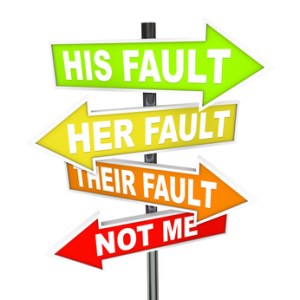
Arrow SIgns - Not My Fault Shifting Blame

Shame and obligation are where I think things get really interesting. According to the responsibility process, acting from a state of shame or obligation is almost worse than the previous three. This is because in the first three you are deflecting an issue away from yourself, while for these two you are taking partial ownership. With shame or obligation, you feel as though you are being compelled to do something by some external force. When this happens you are liable to build up resentment that you “have to” do something. Doing something from a state of shame or obligation is fine occasionally, but if it is a common state for you then are liable to give up or quit.

The responsibility process is explained as follows:

When something goes wrong large or small (for example, lost keys or a lost retirement account), The Responsibility Process kicks in. The mind offers Lay Blame as a reason. If you accept blame as a sufficient reason, then you will act on that blame. If you don’t accept it, then your mind offers you an excuse (Justify). And so on. Thus taking personal responsibility is a step-wise process of refusing to act on a series of irresponsible thoughts that your mind offers up.

The Responsibility Mindset

It’s easy to be responsible when things are going well, but this responsibility process is something that largely happens in times of stress, or when things have gone wrong. So how does one shift from operating from a state of shame or obligation to a state of responsibility? Basically it’s all about mindset.

In all aspects of life there are things we “have to do” even though we may not want to, and the attitude you bring into these things is very important. It’s very easy to approach these “have to” moments from a state of obligation, but as noted above doing so runs the risk of building up resentment.

The change in your mindset from obligation to responsibility is subtle, but it’s very important. In both cases you “have to do something”. But in obligation you have to do it because you are being forced to, or because you are trying to meet some sort of external expectations. With a mindset of responsibility these expectations have been internalized. It’s no longer because someone else expects you to do something, it’s because YOU expect yourself to do it. And you expect yourself to do it because you see it as required or believe it is the right thing to do at the time.

The early states of the responsibility process (denial, blame, justification, shame and obligation) are reactionary, almost primal responses. They are also very “me” focused; only seeing a situation in terms of how it affects you personally. Operating from responsibility is different in that it is a conscious decision. Operating from this state requires three things:

  1. Intention – Intending to respond from Responsibility when things go wrong.
  2. Awareness – Catching yourself in the mental states of Denial, Lay Blame, Justify, Shame, Obligation, and Quit.
  3. Confront – Facing yourself to see what is true that you can learn, correct, or improve

Being responsible is a conscious process. You “choose” to act and respond in a certain way. You may later find out that the decision you made wasn’t a good one, but owning that decision is an act of responsibility.

responsibility-the-ability-to-choose-your-response

The “Have To’s”

To illustrate the responsibility process, let’s walk through it with a simple example. Imagine you are a parent, and your child has filled their diaper:

Denial. You can always pretend that the diaper hasn’t been filled (and hope that someone else notices and changes your child for you). But the other person may do that too, and eventually the wonderful aroma will become too much to bear. More importantly, your child will be uncomfortable and crying will probably start (it could be yours or thiers).

Blame and Justification. You can blame your child for filling their diaper, but that won’t change anything. And you may try justifying things (I shouldn’t have to change him/her, I did it last time!!!), but what does that really accomplish? The child will still be uncomfortable, and still need to be changed.

Shame and Obligation. Here you decide that yes, you will change the diaper. But you don’t “want” to do it. You’re only doing it because you have to. Are you going to get resentful with your child? Some parents actually do, and over time this can lead to things like child abuse. But those cases are fairly extreme, and hopefully rare.

Responsibility. This is the natural course of action for your mind to take. You still probably don’t “want” to change the diaper. But you recognize that the diaper has been filled, the child is uncomfortable and incapable of changing themselves. Plus you care about your child and recognize that the diaper simply needs to be changed, so you do it.

In this scenario I suspect that most of us would automatically operate from a position of responsibility. In times of high stress we may slip back into some of the other stages temporarily, but we change the diaper anyhow because it is the right thing to do. It’s an easy choice.

Many of life’s “have to’s” fall into this category. Going to work every day? You don’t always want to and you may have days you are resentful. You may even have a few “sick” days that are actually mental health days. But going to work is something that we have to do.

Making Choices

The examples above are easy ones. But now consider something like your relationship.

What if your partner loves ballet while you don’t, and they periodically ask you to go with them? In a prior post I mentioned that it’s positive for your relationship if you can show some interest in their interests, as it’s a way for you to show interest and caring for them.

You may prefer that they find a friend with some interest in the ballet to go with, but there may be times that you “have to” go with them. What attitude do you bring into those times? If you attend the ballet out of a sense of obligation, you may go in expecting to hate it, and see it as wasted time where you could be doing something else that you enjoy more.

Perhaps a better (and more responsible) approach is to see it as an opportunity to share something with your partner that is special to them. In both cases you “had to” do something. But in one case you owned the decision to attend.

Choosing Responsibility

No one is always responsible. When faced with challenges and stresses the default is for us to respond with the lower level states – denial, blame, justification, shame and obligation. That’s normal, and common. And honestly, sometimes it’s a lot easier to stay in those states. But it’s also not healthy.

If you find that you are frequently angry or resentful, then think of this process. Think of something you are upset about, and ask yourself where you fall on this scale. Are you blaming? Justifying behavior that at least a part of you knows is wrong? Are you doing things due to shame or obligation? All of these things can lead to resentment, and anger. Which of course leads to hate, which leads to the dark side of the force (ummm, wrong movie)…

In seriousness though, resentment and anger are some of the most toxic emotions you can have. So being able to switch from a mindset of obligation to one of responsibility is very important to both your own health, and the health of your relationships.

I’m not suggesting that anyone should always have to do something. If you find that you are constantly doing things because you feel obligated to, ask yourself if you really “have to” do it. Can you simply say no? Don’t be afraid to set boundaries and say no sometimes. But if you truly “have to” do something then there’s a reason for it. Try approaching it from a framework of responsibility, and you will probably be happier and healthier for it in the long run.

What Does a “Real Person” Look Like?

barbie-proportions

If you’re a regular at thezombieshuffle, you know that I’m a big proponent of accepting yourself for who you are, while always striving for self-improvement. At first glance those two concepts may seem contradictory. If you accept yourself for who you are why should you strive to be something more? Rather than being contradictory, I see them as complementary.

By accepting yourself, I mean that it’s important to truly be able to love yourself for who you are, as you are. The person you are today may not be perfect, but you are “enough”. This doesn’t however mean you can’t improve, and strive to be something more. And in fact I think we should always strive to improve ourselves in all aspects of life. Saying you are enough simply means you are measuring your self-worth against who you actually are, instead of some ideal of who you believe you should be. It’s saying I don’t NEED to be more to be worthy of love and acceptance by myself and others. I am worthy of love and acceptance as I am right now.

Body Image

In order to accept yourself for who you are you need to be able to accept all of yourself for who you are. But when we look in the mirror, we don’t see our hearts and souls – we see our bodies. Think of our bodies, and our ideas of beauty for a moment.

People magazine has an annual “sexiest man alive” issue. Over the past few years the winners were Adam Levine, Channing Tatum, Bradley Cooper, Ryan Renolds, Johnny Depp, Hugh Jackman, Matt Damon and George Clooney. In 1989 it was Sean Connery, who was 60 at the time. That list has considerable diversity among both age and body type.

Now look at the equivalent for women. Esquire has a “sexiest woman alive” list, and over the past few years they have Scarlett Johansson, Mila Kunis, Rihanna, Minka Kelly, Kate Beckinsale, Halle Berry and Charlize Theron. The women all seem to be between their early 20’s and early 30’s, and they all share a similar body type. The cover photos of the women are much more sexualized, with greater focus on their… shall we say “physical attributes”. The mold women need to fit to meet the standard of beauty seems very rigid. Let’s face it, you sure don’t see any 60 year old women on that list. Why not? Why is age fine for men, but not for women?

In most movies or TV shows, if there is a female character that is supposed to be “ugly” they are always someone who is beautiful by most standards. They just have less makeup, or are dressed in frumpy or quirky clothes.
If you think about age, in movies it is so common to see an older male protagonist with a much younger woman that you don’t really notice it. But if an older woman is with a younger man then it’s likely some sort of plot device. Older men are seen as “distinguished”, while older women are just seen as old.

Seeing all this, I have to admit sometimes I’m really glad I am a guy. I can only image how hard it is for a woman to constantly be bombarded with this sort of media imaging of what is beautiful, and how it must impact their self image.

You are More Beautiful Than You Think

A few years back, Dove had an ad campaign that touched on body image issues for women. In one ad women sat down with a police forensic artist who couldn’t see them, and he drew them based on how they described themselves.

Afterwards the women left and a second drawing of the person was done based on the descriptions provided by a person who had met them in the lobby.

The women tended to be critical of themselves, while the person who had met them in the lobby was more inclined to be positive in their descriptions of the woman. As shown the in commercial, the second drawing depicted the woman in a more flattering light (and also seemed more accurate). At the end of the ad, after seeing the two different pictures of her one woman noted:

We spend a lot of time as women analyzing and trying to fix the things that aren’t quite right, and we should spend more time appreciating the things we do like.

Body Transformation

Thinking of this unrealistic standard of beauty and negative body image reminds me of a mini controversy that erupted on social media a while back. An extremely fit mother of three posted a photo of herself in workout gear with her children, and a heading at the top that said “What’s your excuse?”

When it happened there was an outcry of people who felt that her image was an example of body shaming, and people saying that she didn’t represent what “real people” look like. Things took a nasty turn as photos of obese people started circulating social media in response with headings like “Is this what a real person looks like?”

It ended up making national news, and there was an ABC News interview where she said:

No matter how many children you have, especially when you’re working and trying to maintain your shape, you don’t have to lose yourself in becoming a mother. You can still maintain a sense of self physically and professionally. If I can do it, you can do it.

I think that instead of using “What’s your excuse” she probably should have used something like “You can do it too”. But part of me agrees with her. You CAN do it. Heck, I can do it too (though I may look somewhat ridiculous in a sports bra). You own your life, and make your own decisions. If you want changes in your life, the only way to do it is by taking ownership and making changes on your own.

So yes, you can get in great shape. But guess what? It requires work, time, and effort. And you have to ask yourself, what do you have to give up? What are your priorities?

What Do You Want?

If you want to get into better shape, stop and ask yourself WHY you want to get into better shape. What do you hope to accomplish? Be introspective and honest here. Are you trying to fit an arbitrary mold of beauty?

If so, let me give you perhaps a different perspective on body image. A buddy of mine plays competitive volleyball, and to keep playing as he has aged, he had a workout routine tailored to his needs. He made a comment to me that made a lot of sense. He said it was more important that he had functional muscles for what he wanted to do with his life than it was to have the sort of muscles that would attract attention in a bar.

We aren’t all competitive athletes, but the same idea applies. Instead of comparing yourself to fashion models and movie stars, ask yourself what are the things you enjoy doing? Travelling? Swimming? Bike riding? Softball? Keeping up with your children? Going for walks in the park? Are you able to do the things that you enjoy, or does your body and your physical conditioning hamper your ability to do these things? I think THAT should be the most important thing. Not trying to fit the mold of what society says is beautiful.

There are health risks associated with being overweight, so from a health perspective alone it is important to take care of yourself. But how your body “looks” isn’t necessarily an indicator of the sort of shape you are in. I’ve seen people with heavier builds power through high intensity aerobic classes while thinner and more “fit looking” people struggled to keep up.

Accepting yourself

Going back to what I said at the beginning, we all need to accept ourselves for who we are. That doesn’t mean giving up, or saying that I can’t get “better”. But we shouldn’t measure ourselves against the current standard of beauty. It’s also important to remember that your beauty starts from the inside, not the outside. There are many men and women whose outward appearance may be beautiful, while inside they are anything but.

Although we all do this, it’s best not to compare ourselves to others. There are different body types out there, and that’s fine. I won’t pretend to speak for all guys, but based on a sample of myself and a sizable group of male friends, I have to tell you ladies there isn’t a single mold of what is beautiful. People are all different, and just as our personalities are different so are the characteristics that we find attractive. Instead of trying to be someone else, strive to be the best “you” that you can be.

So what does a real person look like? You see them every day. Your neighbor, your best friend, your co-worker, and most of all you. We are all real people.

Dealing with Conflict

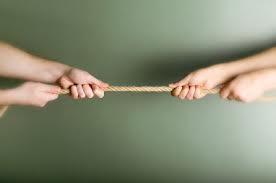
tugofwar

Conflict. The very term can trigger somewhat of an anxiety response. So what exactly is it? When I look up a definition of conflict I see terms like the following:

Serious disagreement, clash, fight, battle, struggle, collision and incompatibility.

Wow, no wonder the thought of conflict can make us anxious – all those words make it seem antagonistic! But is that really what conflict is?

I think conflict in personal relationships simply means two people disagree on something. It may not even be a disagreement, and rather is one or both people feeling as though they are not being heard.

One thing about people is that we aren’t the same. In any interpersonal relationship there are different personalities and differences of opinion, and as a result we WILL have conflict. Why is this bad? It’s a natural part of interpersonal relationships, so why do we hide it and have a hard time dealing with it?

We have a hard time dealing with conflict because we have this notion that it is a bad thing, and because of that we don’t have positive ways of dealing with it.

Ask yourself truthfully, how do you deal with conflict and how did you learn the approach you take? It is one of the most important skills that we can have, but dealing with conflict also happens to be one of the things we do the worst job of. In fact many of us never develop the skills needed for dealing with conflict.

I’m pretty sure there are conflict resolution classes, but those are likely attended by people like negotiators and human resources managers (I’m guessing here, as I’m neither). Shouldn’t dealing with conflict be a fundamental skill? We all deal with it continually in our lives, so why don’t we learn it? Why isn’t it a part of the curriculum, right up there with Math and English?

Conflict Avoidance

One approach I’ve seen to conflict is avoiding it altogether. I suspect this stems from the belief that conflict is an indicator of problems, which is perceived as a bad thing. For perfectionists problems aren’t acceptable as they violate that perfection. Maintaining an outward appearance of perfection is important, so problems are ignored. After all, we ALL know that if you pretend that something isn’t there eventually it will just go away (that was sarcasm by the way, just in case you weren’t clear).

There are all sorts of issues with this approach. First, nothing is perfect. Problems will arise, but this is actually positive as they are how we learn and grow. By denying the existence of problems in your relationship you are actually stunting its growth. Getting issues out in the open and dealing with them is what allows you to improve and your relationships to thrive.

Additionally, if you hold everything in you don’t have a release valve. If you continually brush things under the carpet pretending they aren’t there, eventually that carpet gets really bumpy and it gets hard to even walk on. If things are never addressed, this becomes the perfect recipe for resentment (which is up there with jealousy as one of the most corrosive emotions to a relationship).

The Need to Win

On the opposite end of the spectrum are people who seem to enjoy conflict and see it as a competition or a battle of wills. For these people there is a need to “win”, and conflict becomes a power struggle that is more about dominance and control than the issue at hand. There’s one big problem with winning though. If you always need to win, in the long term you are going to lose.

Every relationship has a more dominant personality, and that personality tends to be the one who drive things. But there needs to be some balance. The less dominant person needs to feel engaged and feel like they are part of the team. They need to know they are being heard and their opinions are valued. If that doesn’t happen? Guess what, you’ve got another breeding ground for resentment – yay!!! The constant need to be right and control will end up driving the other person away.

Finding a Balance

Both avoidance and dominance are really about control, and both are equally damaging to relationships. To approach conflict in a healthy way you need to find some balance between these approaches. It’s difficult to say exactly what that balance should look like, and I find most people tend to lean one way or another.

Personally I lean towards avoidance. I tell myself that I just pick my battles and that I will fight for the things I really believe in. And that’s true. But I also I don’t do conflict very well. The good thing is I realize that, and know that it’s something I need to work on.

In his book Seven Principles for Making Marriage Work Dr. John Gottman states that the frequency with which people fight doesn’t say anything about their chances at marital success. What important is *how* they fight. So there must be better and worse ways of dealing conflict.

Finding A Better Way

In university I took Philosophy classes. A big part of Philosophy was trying to look at things logically, and objectively. We would look at different topics, often emotionally charged ones like abortion and the existence of God; and we would have to put our own feelings aside in order to present logical arguments both for and against something. It was a ton of fun, and really – who doesn’t love Epistemology?

I think the approach of trying to look at things analytically is positive (in most cases) and puts you in the best position to make decisions. There’s just one problem though…

We aren’t robots, and we do have emotions. And sometimes those emotions can override everything.

Emotional Flooding

Have you ever heard of emotional flooding? Here’s a description of it (from this site) in the context of conflict in a relationship:

Emotional flooding is the term given to the feelings of one partner who are so overwhelmed by their partner’s perceived negativity and their own reaction to it that they become swamped by dreadful and intense feelings.

Any person who is engaged in and experiencing emotional flooding cannot hear without distortion or respond with clarity in a dispassionate way. They find it hard to organize their thinking and they instead fall back on primitive reactions. They just want things to stop, or want to run or, sometimes, to strike back. They react and do not relate.

I think we have all experienced this feeling at one time or another, but it becomes a major issue when it happens with regularity. For many anxiety sufferers this sort of emotional flooding is a part of everyday life.

If someone is experiencing emotional flooding any sort of rational attempts at dealing with conflict are gone, and you run the risk of having things escalate. Because of this it is important to recognize when this is happening, as there is no point continuing a discussion.

Conflict Agreements

A few weeks back I attended a conference and went to a workshop on team building. One of the ideas presented was that many successful teams have formalized rules for handling conflict. I think this idea of a “conflict agreement” makes sense in any frequent interpersonal relationships (such as the one with your partner). The idea is that you come up with an agreed upon approach for handling conflict together.

For example, you may agree that you will always get all issues out in the open, but acknowledge that if things are escalating either of you can say something like “I know we need to discuss this, but I’m having a hard time dealing with this right now. Let’s stop here and pick this up later”. The key to making this work is that you have to have some rules about what “later” means. I recommend that you agree to pick things up in a few hours if possible, and never let anything go for more than 24 hours.

When approaching any sort of issues, remember to focus on the point. Your goal should be to get issues out in the open to try to improve mutual understanding and ensuring that you are heard. It is important to not make things personal and to be conscious of “how” you approach conflict.

I can’t speak for all relationships, but I suspect people will be more receptive to something like “when you did X, it made me feel Y” than “you are an inconsiderate jerk”. When John Gottman talked about “how” people fight, a big part of it was softening your approach and de-escalating. There is a significant difference between constructive criticism and plain old complaining.

When you are the person on the receiving end, remember that this isn’t (or shouldn’t be) an attack on you personally. It’s very easy to hear “you did something wrong” and interpret it as “you are a bad person”. Remember, it may have been hard enough for someone to raise an issue with you. Try not to perceive it as an attack, and instead treat conflict as an opportunity to learn and improve.

Continuous Improvement

Dealing with conflict is a skill like any other. It can be developed and improved over time, with practice. And guess what – you’re going to have plenty of opportunities to practice. If you claim that you don’t have conflict in your interpersonal relationships, there’s a pretty good chance you have a really lumpy carpet.

We need to stop thinking of conflict as a negative, and instead view it as a way of improving mutual understanding. When dealing with conflict remember the point. Think of what really matters and check your ego at the door. Be willing to compromise, and don’t keep score. And lastly, be willing to apologize and admit when you are wrong (guys, I know that last part can be hard).

The more you can improve your communication skills and deal with conflict in a positive manner, the healthier you relationships will be.

Relationships and Possession

possessiveness

I read a fair number of relationship articles and blogs, and one thing that I see again and again is that women don’t like it when men become possessive. Um, yeah. That seems like it should be fairly obvious (women do this too, but men seem to be bigger jerks about it).

The word possession implies ownership, and no one likes to think of themselves as property. Plus when you hear stories about it, they are commonly accompanied by stories of someone trying to control the other person. That seems like bad news all around.

Then I got thinking, don’t we all kind of think of our partners as “ours”? We don’t necessarily think of them as our property, but think of some of the things you’ll see on cards:

ImYoursYourMine

I’m yours? You’re mine? Those terms are actually kind of creepy when you think about it. We use them as terms of endearment, and they need to go both ways. But it does seem like there’s a degree of ownership there.

Are Relationships Possessive?

So are committed relationships inherently possessive? I don’t think so. I believe they are built on commitment and trust (which go hand in hand). But this commitment and trust NEEDS to be mutual. For you to truly commit to someone you have to believe you can trust them, and you must also believe they are committed to you.

Fear

Have you ever thought about fear? Fear is largely a learned emotion. There are instances where fear is believed to be innate and related to perception (there’s a classic study with babies and “visual cliffs” that you can read about here). But by and large fear is a defense mechanism that develops when we experience things that we come to recognize as threats.

As we learn that things are threats, these threats elicit the fear response, accompanied by physiological changes such as increased heart rate, breathing and potentially shortness of breath. Here’s a Wikipedia link to it if you want to learn more (it’s pretty fascinating stuff when you think about it).

So fear is a good thing. It’s a rational response to a perceived threat, and is one of nature’s built in ways of protecting us.

Anxiety

Fear is rational, however it can also become irrational. When this happens it moves into the realm of phobias and anxiety. Everyone has their own phobias (spiders creep me out). Anxiety is more subversive though, because it is like the fear of fear. It’s irrational, but seems very rational to the person experiencing it.

I have plans to write more on Anxiety in the future, but for now I’ll just steal a somewhat amusing description from a book I read on it (paraphrasing as I don’t have the book handy).

Imagine you are on an African safari, and you are sleeping in a tent on the savannah. You hear a noise and wake up and you suddenly worry that it may be a lion, and you may be eaten by a lion. That is fear.

Now imagine you are sitting at a bar in New York. You hope to one day go on an African safari, and suddenly you find yourself experiencing the physiological fear responses because you believe that if you go you may be eaten by a lion. That is anxiety.

Anxiety is more complex than that and I don’t mean to downplay the seriousness of it. But generally anxiety is an irrational response to perceived threat, situation or even future situation.

Perceived Threat

Alright, so you may be wondering what the heck all of this has to do with relationships, commitment and possessiveness.

If you are in a truly loving, committed relationship with another person, then you are in a position of mutual trust and respect. When your partner is out you don’t even think about it as you trust them implicitly.

Fear is learned though, so if you have been hurt or betrayed by someone close to you before then it is a natural defense mechanism for you to experience fear if you perceive a threat to the relationship through your partners actions or behaviors.

When people start to feel threatened in relationships it can cause them to either pull away, or start to hold on too tight. Jealousy is fear that you are losing the relationship to someone else, and it can turn into control and possessiveness as someone is trying to hold on and try to regain some control over the relationship they feel they are losing.

Rational and Irrational Fear

When it is based on tangible evidence, Jealousy can be a rational fear response. There are all sorts of warning signs when a relationship has taken a negative turn, and you can usually “feel” the shift. You know something has changed. Counselors will often tell you to trust your instincts on these things, and that if you feel something is wrong you are probably right.

But what if it’s really an irrational fear response? People who are insecure or who have been hurt in the past are more likely to experience this. They are more likely to be hyper vigilant for any sign of threat to the relationship, and run the risk of perceiving threat when it’s not actually there.

Love and Trust

Jealousy can be a normal reaction to things, and I believe even the most emotionally secure of us have felt it at one point in time or another. But whether it’s rational or not, jealousy is still very corrosive to a relationship.

Relationships aren’t based on possession and control They are based on commitment and trust, and jealousy involves a breakdown of these. This is one of the many reasons communication is so important in relationships.

We all will do things to hurt our partners from time to time (hopefully inadvertently). But it’s important that we don’t let things fester and grow. We all have our own insecurities, and being honest and upfront about those insecurities is important. Get issues out in the open. If your partner understands the ways you have been hurt in the past then they may be more conscious of things that could be seen as threats by you.

One of the dangers of being hurt is that it can cause us to build up walls to “protect ourselves” from being hurt again. But those very walls that we build up are also likely to be the things that push people away from us. To truly love, you need to let those walls come down. It’s not easy, but you need to allow yourself to be vulnerable to being hurt again.

And you may be. Life has no guarantees. You may be hurt again, and love may break down. But possessive behavior won’t help anything. The simple fact is, you can’t control someone else and you can’t make them love you. The only one you have control over is yourself. There’s a line from a U2 song that says:

You can hold onto something so tight, you’ve already lost it

Being possessive and trying to control won’t help anything; it will just push someone further away. Try to operate from trust instead of fear. If you believe someone is violating that trust then communicate. It may just have been your own insecurities and irrational fear. And if it was a legitimate breach of trust, it may be a situation you are better off getting out of.

The Pursuit of Happiness

happiness

Are you happy? We all want to be happy, and we are all deserving of happiness.

Previously I’ve touched on what I believe happiness is. Unfortunately, happiness is not like a switch, where you are either happy or you aren’t. It’s more like a sliding scale where you can fall anywhere on the spectrum between happiness and unhappiness. But it’s complicated further because there are different areas in your life where you can be happy, and chances are good that you land on different spots in the “happiness spectrum” in each of those areas.

Think of some of the main areas of your life. I’m guessing most of us break our lives down into something like the following:

  • Committed relationship (spouse or partner)
  • Immediate families (parents, siblings, children, grandchildren)
  • Extended families
  • Social Networks (friends and acquaintances)
  • Jobs
  • Personal interests/hobbies
  • Additional organizations/memberships

Those are the first things that came to my mind, and you can add and subtract from that list in whatever way best applies to you. If you think of all the different roles that you play, you can have a different level of happiness in each of them. For example, you may not be happy in your job (which will affect your overall level of happiness), but still consider yourself happy.

Looking at the different roles that you play, how can you really measure happiness? If you are largely happy, or at least content, then it’s probably not something you even think about as it’s just a natural state.

The Search for Happiness

If you characterize yourself as an unhappy person, it seems obvious that you need to do something about it.

FindingHappiness

It’s clear that you need to change something. But what should you change? It’s probably best to try changing the “small” things first. Maybe take up a new hobby, or join a club or a team. If there are people in your life that are bringing you down, try talking to them about it, and if that doesn’t work spend less time with them. The same applies to family.

But what if it’s something bigger, like your job or your relationship with your partner/spouse? If you aren’t happy in your job, you can (and perhaps should) change your job. If it’s your relationships, then there are some bigger questions to answer. A few posts back I talked about questioning your relationship, so I won’t go over that again (in summary you either communicate and try to work on things or you move on).

One problem is that people who are in search of happiness often don’t know how to go about trying to achieve it. To make matters worse, they often go about searching for it in the wrong way.

There are countless cautionary tales of people who have embarked on self destructive behaviors, or made questionable life choices in the pursuit of happiness. In the search of happiness people often start engaging in activities either to make them “feel good” or to mask the pain of the unhappiness they feel.

Things like shopping, comfort eating, gambling or sex become outlets that give them a bit of a high. People may also turn to an actual high through drugs and alcohol. A more recent trend is turning to social media, and measuring happiness by the number of friends, likes, or complimentary remarks to posts.

Unfortunately these things are only temporary fixes, ways of numbing the pain and emptiness that they are feeling inside. They are like putting a band-aid on a gaping wound. And guess what? In most circumstances these people don’t actually end up any happier.

Happiness comes from within

One of the most difficult things about the search for happiness is that there is no magic pill; and you can’t “find it”. All the money and fame in the world can’t make someone happy. Just think of all the rich and famous people who make the news for things like addictions, behavioral issues or even suicide. Nothing can “make you happy”, you have to find it within yourself.

One problem with the pursuit of happiness is that I believe people aren’t actually pursuing happiness. They are really looking for meaning and fulfillment. There is a correlation between happiness and meaning, as people who find meaning in their lives generally are people who would describe themselves as happy (or at least leaning towards happiness on the happiness spectrum).

Ideally you find meaning in all aspects of your life – your committed relationship, your family, your social networks, job, and your personal interests. The reality is, very few people have a job that they love. Hopefully you find some fulfillment in your job, but many people find themselves in jobs that they don’t like, and they stay due to complacency and/or a need to pay the bills. Sometimes it’s worth taking a pay cut to find something more fulfilling, but if you have dependents then it’s easy to feel “stuck” in your job.

If you aren’t happy in one aspect of life (such as your job) it becomes especially important to find meaning in other areas. One of the most common areas that people neglect is their personal interests, and self nurturing. We all have talents and interests and it is important to take some time out for ourselves to nurture these. Often this involves engaging your creative side, such as music, art, writing, crafts, mechanical “tinkering” or cooking. It could also be things like volunteering, joining a sports team, or taking up some sort of regular activity.

I read somewhere that taking me time is necessary, as it provides the space needed to allow your relationships to flourish and grow. Without it you unfairly put all of your needs on your partner, and that holds them to a standard that they will never be able to meet.

That’s true, but there are different types of me time, and it is important that you choose things that provide meaning and help “feed your soul”. Taking time to watch your favorite TV show is great, and we all do it. But it doesn’t exactly provide the sort of fulfillment that will improve your happiness. Doing things to improve yourself is one of the best ways to provide meaning, and help build happiness from within.

happiness-is

Appreciation

In the workplace, employers have found that salary increases are ineffective tools for employee retention. Similar to drugs and alcohol from above, the effects are short lived. When someone gets a raise, they have an initial moment of excitement at the increased pay. But after a few pay periods that new pay becomes their norm. Unfortunately it is human nature to take the things we have for granted, and we do this in all aspects of our lives.

I live in Canada, and Canada is often cited as one of the best countries in the world by various measures. Wikipedia states that it “ranks among the highest in international measurements of government transparency, civil liberties, quality of life, economic freedom, and education, and stands among the world’s most educated countries”. Sounds great right? And it is. But it’s also been my home for my whole life so it is my norm, and as a result I often don’t appreciate it for what it is.

When I finished university I went on a trip to Vietnam, and I stayed with a family in Ho Chi Mihn city (the locals still call it Saigon) for a month. It was an incredible experience and it was the first time I had ever left North America. There were good and bad moments on the trip, but they were all new experiences and I loved every minute of my trip. Well, maybe not every minute. Getting into an argument with a customs agent because I refused to pay a bribe and almost missing my flight home wasn’t so great. But that’s a whole other story.

One of the most important things about my trip was that when I returned it gave me a different point of reference and allowed me to see Canada in a different light. It allowed me to truly appreciate my home in a way that I never would have had I not gone on the trip.

Another moment that made me appreciate things in a different way was an early experience as a new dad with my son. I’ll never forget the first time I took him for a walk in the neighborhood. He had just turned one, and was still a little unsteady on his feet. It was summer, and it was his first time exploring the outside world. Everything was new to him and we had to stop everywhere. He’s ten now, but I can still picture the sheer joy on his face as he touched and played with grass, felt the texture of the bark on trees and watched ants walking down the sidewalk. I picked some up and let them walk on his arms (which was cute, until he tried to eat them). He even explored the cracks in the concrete of the sidewalk. It took us almost an hour to make it two houses down, but it was a beautiful magical hour.

I looked at the yard and I saw grass that needed to be cut and weeds that needed to be pulled. Looking at the sidewalk I saw the cracks as flaws, signs that the concrete would need to be repaired or replaced. My son saw those things, and I won’t pretend to know what was going through his head (he was one). But from his expressions, it was wonderment. For him the world was shiny and new, and experiencing it with him allowed me to see the world that way again. I had forgotten the beauty that we have all around us, and stopped seeing it. All I saw were the flaws and the work that needed to be done. That day my little man taught me a lesson I have tried hard not to forget.

Relationships and Appreciation

As we age we lose that innocence and we fail to appreciate the little things in life. We have all this beauty and wonder around us all the time. We have people who love us. And we don’t even see it or appreciate it. We take for granted what we have.

We stop to see the good because it has been right in front of us for so long that is has become our norm. Once that has become our norm, we don’t appreciate it and instead we see the problems and the flaws.

If you talk to counselors or look at relationship books, one of the most commonly prescribed things is to try to focus on the positive. They will tell you to do things like make lists of the positives in a situation or a relationship and remind yourself of them.

This is all about looking at what you have and trying to appreciate it again. Rather than focusing on the positive I think it’s more accurate to say that this is trying to find again the positive that we have taken for granted over time.

I generally focus on relationships, but I believe this applies to all aspects of your life. Chances are there is a lot of good that you simply have lost the ability to see.

Finding Inner Peace

People do deserve to be happy, and by no means am I suggesting that people should stay in relationships or jobs that make them unhappy. People should be free to pursue interest that make them happy, and be around friends that bring them joy.

But sometimes we have simply lost the ability to see what has been around us the whole time. Sometimes instead of seeing the good all we are seeing is the cracks, and the flaws.

Change can be very positive. But sometimes it can’t be undone. If you are unhappy and looking to make changes in your life, first look at the things you have in your life and try to see them in with new eyes. Try to appreciate the good and the wonder in the things in your life. Try to see the world through the eyes of a child again.

If you are a parent, think back to the wonder your children showed as they first explored the world. If you aren’t a parent then find a kid between one and two that you can borrow for a while. Just make sure you get permission first (local law enforcement tends to frown upon it if you don’t).

If you can’t do that, just go out on your own and slow down. Take your time to look at things again for the first time. Feel the texture of the grass, and the bark of the trees. Don’t eat the bugs though, because that’s pretty gross.

You won’t necessarily “find” happiness, but you can try to take pleasure in the little things in life and try to let happiness in again.

Setting Goals

Goals

Have you ever seen the Pixar movie Up? It’s a great movie and in my opinion it was the last of the great Pixar films. Seriously, if you love movies look at the films Pixar released prior to that. Monsters Inc, Finding Nemo, The Incredibles, Cars, Ratatouille and WALL-E. These weren’t just “kids movies”. Sure they had cute colorful characters and funny moments; but they also dealt with serious topics and had a lot of heart.

Even from Pixar Up was unique. It was about an old man who is stubbornly holding on to his house, his last connection to a wife who died years ago. When he’s about to be evicted and sent to a seniors home he embarks on the adventure he had always dreamed of.

The opening sequence of the movie really stands out for me. In it you see two children meet due to a shared love of adventure. They fall in love, get married and start a life together with the dreams of the trip they will take. But “life” keeps getting in the way, and find that they are never able to achieve their dream together. I’ve seen Up a few times now, and that opening sequence still makes me cry like a baby. Laugh if you want, I don’t care. I’m secure in who I am. You can check out most of the opening sequence here. If that doesn’t move you in some way then sorry, you’re either a robot or an alien.

Part of the reason Up resonated with me is because of my own grandfather, and my memories of the last time I saw him. That night we sat in his kitchen talking about all sorts of things, and the topic of traveling came up. My grandfather was a very religious man, and he told me he had always dreamed of seeing Vatican City. I hadn’t known that, but honestly I didn’t know very much about him. It’s amazing how people can be part of our lives yet we can know so little about them. He was my grandfather and that was how I knew him. Sadly, I really didn’t know much about my grandfather the man.

At the time I didn’t know that would be the last day I ever saw him, but he passed away a few days later. That last conversation has stuck with me, and I can still picture how wistful he was that night for dreams never achieved and opportunities lost. There are always defining moments in your life that shape you, and that was one of mine.

Dreams

The capacity to dream is one of the things that differentiates humanity from other animals. It allows us to have science, art and culture.

Everyone has dreams. We all have things that we want to see, do, and accomplish; and a bucket list is really just a list of things that we want to do in our lifetime.

In the early days of a relationship, sharing of bucket lists is often part of the process of getting to know the other person and finding out if the two of you are a good fit. It helps build connection, as there is intimacy in opening ourselves up to another person and letting them in to our hopes and dreams. And when those hopes and dreams seem to align, it makes it easy to imagine a future with the other person. After all, you want the same things and are on the same path. So why not do it together?

Dreams vs Goals

There is a difference between dreams and goals though, and sharing similar dreams does not mean you have similar goals.

A friends marriage broke down a few years back, and when I talked to her about what had happened one of her biggest disappointments was she felt her husband had no ambition. When they first met they shared their hopes and dreams, and she had visions of the future they would share. But as the years went by she felt it was all talk, as he didn’t actually do anything or take any action to achieve those dreams.

I knew the guy fairly well, and he did have dreams. But it’s easy to have dreams, and it’s easy to have a bucket list. What isn’t easy is prioritizing those dreams and making them happen. Goals are based on dreams. The difference is that they are something you are actively working towards, and you have planned out a way to make them happen.

Goal-Setting-300x224

One thing many people don’t seem to understand about goals is that they don’t just happen on their own. They involve planning and sacrifice. In order to achieve something you generally have to give something else up. It may be time, money, or other opportunities, but you can’t have everything.

As an individual it is important that you have goals, as they show you have initiative. When you go for a job interview one of the most common questions interviewers ask is where you see yourself in 2-5 years. Often they don’t really care *what* your answer is. They are simply looking for proof that you have a vision for yourself and where you want to go.

Planning Together

In a relationship one of the most rewarding things you can do is not only sharing dreams, but sharing goals and working towards them together.

It’s very easy to get caught up in the daily routines of life, so it is important to have both long and short term goals (like the 2 & 5 year plans that interviewers ask) as both an individual and a couple to look forward to.

Is there a big trip you want to do? A house? Renovations on the existing place? Courses you want to take? As I mentioned earlier, you can’t have everything. All of this stuff involves a commitment of both time and money. You need to prioritize which ones are most important to you (both individually and as a couple) and come up with a plan on how you will go about achieving these goals.

If there are individual goals for you or your partner that are a priority it’s important that you support each other in those goals, because it’s just as important for each of you to grow as individuals as it is to grow as a couple. You should have periodic checkpoints where you talk about these goals and see how you are doing, or if there is anything you want to change.

Knowing that you are working towards both your individual and common goals together shows commitment to the future. It also helps build and strengthen the connection you share. And accomplishing goals together builds experiences that you can never take away.

Be Flexible

One reminder about goals is that life is unpredictable. An unexpected pregnancy, a lost job, a broken relationship. Any number of things can happen to you that can completely derail your long and short term plans. Life throws curveballs at you, and you need to adjust accordingly.

In the movie Up the couple never was able to make their trip together, and not achieving that dream filled the main character with a sense of loss. They had a photo album that they planned on filling with the pictures and memories of the trip they never took. Near the end of the movie there is a beautiful moment where the husband looks in the photo album and realizes his wife has filled it with pictures of their life. They didn’t have the adventure they expected, but their life together was their adventure.

My grandfather never made it to Vatican City, he never achieved that dream. At the end he had regrets about it, but what would he have traded? I honestly don’t know, but I would like to think nothing. I like to think he gave that up because he prioritized other things, and he was happy with the decisions he made in his life.

So set goals. Dream together and plan together. And no matter what life throws at you, do it together.

A New Chapter

My last entry marks both an end and a beginning to thezombieshuffle.com.

When I started blogging, I had a specific focus in mind. I asked myself the following:

No one gets married thinking “this marriage should last me a couple years, at least until I can afford a better one”. We all want this to work, we all want this to last. So why do so many fail? And for those that don’t fail, why do so many people end up unhappy or in a marriage that isn’t satisfying?

In an attempt to answer that question for myself I wrote down a number of concepts around relationships that I wanted to explore. Things like happiness, love, commitment, communication, identity and a few others. I wanted to understand what they were, and what they meant to me.

I charted out a rough flow for presenting them that I thought made sense, and over the past two years I have read, thought and written about those topics. Occasionally I’ve switched up the order, or worked additional ideas in, but I’ve managed to stay fairly close to my original plan.

My last entry When is it too late? was the final piece in my “planned” content, and my original vision is now complete. It’s been a personal journey for me, and I’ve learned a lot about myself in the process. For anyone who has joined me along the way, thanks. I hope I’ve been able to inspire somewhat, and make you appreciate what you have. If not, I hope I at least was able to make you think. This isn’t the end though.

The subtitle for the site has always been “One Guys Take on Life and Love”. Life and Love go hand in hand, but my focus has been more on love. Moving forward I am broadening my focus a bit, and writing on pretty much anything that is of interest or seems important to me at a particular time.

As I’ve said before, life is a journey. It’s time to see where it takes me next…

When is it too late?

crossroads1

Relationships will always run into troubles. They are an unavoidable outcome of two different personalities working together. Traditional wedding vows even come with that warning built in. When your commitment is supposed to be “in good times and in bad”, the implication is that bad times will exist. We all know this intuitively. But sometimes the bad times can overshadow the good times, threatening the relationship.

Think of your relationship as a bank account. A while back I posted something about a marriage box, but a bank account works better because it can hold a negative balance. All the good moments in your relationship are deposits into the “Relationship Satisfaction” account, while the bad moments are withdrawals.

Good times act as a buffer against bad times, and ideally your account “balance” always stays positive. During hard times your account may run into a negative balance, and it’s normal for this to happen occasionally. But if the account is in the negative for extended periods then some sort of action is required.

Maybe the account owners can take a good look at how they got there and come up with a plan to get out of the hole together. Maybe they want to get out of the hole but are having a hard time doing it so they need to bring in outside help to come up with a plan. But sometimes the only recourse seems to be declaring bankruptcy.

When your relationship is in a critical spot you may find yourself wondering if it’s possible to save the relationship, or if it’s too late. If this happens, it’s time for some serious reflection.

Reflect

Before making any decisions it is a good idea to reflect on where you are and how you got there. The saying “those who don’t learn from the past are doomed to repeat it” is very true.

What are the problems? Can you identify the issues that are causing conflict for the two of you? Often the surface problems are really only symptoms of deeper issues, and it can be difficult to look at a situation impartially when you are emotionally invested in it.

If you are having difficulty identifying the issues then try to focus on the good. There has to be at least some good, or you wouldn’t be together. So what has been good? What have you learned? Is there anything that you would do differently if given the chance, and if so is it too late to do that?

One of the many challenges long term relationships face is that it is natural for people to drift apart over time. Caught early enough this can be an opportunity for a couple to throw out what hasn’t been working, and strengthen their bond for a better future. But sometimes it is caught too late and it marks the end of the relationship.

Things to think about

In addition to reflecting on the specifics of your relationship there are a few other things that are important to consider.

Statistically, first marriages are the most successful with divorce rates rising considerably for second and third marriages (I haven’t seen stats on non married long term relationships, but I suspect the numbers are similar).

I found this surprising. I expected people learning from their mistakes and wanting to “be better” next time to result in improved marital odds the second time around. So why is that not the case? The main reason is that a marriage is about more than just the two people in the relationship. They are the key players, but additional factors act as the glue holding a relationship together.

Children (if present) are the biggest one. But even in the absence of children there are things like families, joint friends and shared history. In leaving the relationship you are often leaving behind much more than just the other person, and that can be very difficult. Obviously the length of the relationship plays a big factor here, but in subsequent long term relationships this glue that holds people together is often weaker.

Another important point is, the reasons the first relationship failed often impact the success of future relationships. Frequently people who can’t make a first marriage succeed fail at future relationships because they are either looking for something that doesn’t exist, or they bring the same baggage that destroyed their first marriage into subsequent relationships.

Statistically speaking your first marriage is really your best shot, so it’s important to make it count.

Moving on

If you decide to move on, it’s important that you understand why you are moving on. What do you hope to change? What do you hope will be different next time?

One thing I would strongly recommend is that you leave the relationship on it’s own merits (or lacktherof), and not because you already have another relationship lined up, or because you have started another relationship already. Too often people it seems people stay in a situation where they weren’t happy only because there is nothing better available, and then they leave when something “better” comes along.

There are countless stories of people who leave a relationship for something new only to wake up six months to a year later and realize they made a mistake. If you have entered another relationship or have one waiting in the wings, you can’t fairly judge your current situation.

Don’t expect the next relationship to be “better”. It may be, but chances are you contributed to the demise of your current. So take a look at yourself and see what you can do better next time, and use this as an opportunity to grow as a person. If you bring the same baggage in, you will often end up with a similar result.

When a relationship ends there are hurt feelings, and often a period of grieving is needed. It’s natural to need to vent and want to lash out, but try not to cast your ex in a negative light. Treat the relationship as a chapter in your life. You once cared deeply about each other, so try not to let the hurt override the fact that you did have good times.

And remember that giving up doesn’t mean you are weak. Sometimes it means that you are strong enough to let go.

Rebuilding

In order to rebuild, both people have to truly want it. If two people still love each other then it’s never really too late to rebuild a relationship. Anything can be worked out. But rebuilding is often the hardest path.

If you need to rebuild, then there have obviously been issues that have put your relationship in jeopardy. But in order to move forward together, you have to let it go. This doesn’t mean you forget about something and pretend it never happened. You must address it, forgive, and be willing to start fresh.

I can’t recall where I found this passage, but it says it beautifully:

Forgiveness is the only way to heal your emotional wounds. Forgive those who hurt you no matter what they’ve done because you don’t want to hurt yourself every time you remember what they did. When you can touch a wound and it doesn’t hurt, then you know you have truly forgiven.

In rebuilding, you will need to redefine your relationship and the future will be different from the past. It has to be. Years of established patterns can be hard to break, so it is likely best to find a skilled counsellor to help you find a new path forward together.

Rebuilding is very difficult. But it can also be very rewarding to know that you were able to persevere and stick together when times were the hardest.

Making a decision

So when is it too late to save a relationship? There’s really no magic formula, and no right or wrong answer to that question.

The one thing I will say though is that if your relationship is at a crisis point, the worst thing you can do is nothing. If you recognize there is a serious problem you can’t just ignore it and hope that it will pass. Problems don’t solve themselves, and they don’t go away on their own. You need to either roll up your sleeves and go to work as a couple, or accept that the relationship has ended and move on with the process of healing.

Whatever decision you make, the fun part is that you will never know if it was the right one. But you can’t let yourself dwell on that. Don’t ask yourself if there was anything more that you could have done, because there always will be. Instead ask yourself if you have done enough.

Life will work out

Life is a journey, and most of us hope we can find that special someone to share our journey with. But your journey is exactly that, yours. It’s a personal journey, and there is no single correct path.

We can’t know the future, and there are no guarantees in life. You will never know if the decision you made was the “right” one or not. The only thing you can ever say is that it was the right one for you at the time that you made it.

In the words of James Mercer (of the Broken Bells):


But I’ve been turned around
I was upside down
I thought love would always find a way
But I know better now
Got it figured out
It’s a perfect world all the same

It IS a perfect world.  It’s complicated, and broken, and perfect all at once.  Life doesn’t always work out the way you expected it to, but that’s alright, because it WILL work out. You only have one life, so make the best of it.

Not in Love

“I love you but I’m not in love with you.”

Ten words that no one ever wants to hear, as they usually sound the death knell of a relationship. But they are also word that I don’t really understand. If you really think about it, what does that actually even mean? What is the difference between loving someone and being “in love” with them?

The Nature of Love

Think of all the people you love. Chances are your list contains a number of family members. Parents, grandparents, siblings, and children (plus more, but I don’t want to go on forever). Who else do you love? You probably love your friends. What about acquaintances or co-workers? Doubtful, but I’m sure there is some sort of connection with them. How about your doctor or dentist? Probably not.

For the people you love there are definitely differences in the way that you love them. So what is love? I think love all about connection. Imagine for the moment that the depth of love can be measured in the degree of connection we have with someone. In that case, then not counting children and our partner, the person who we have the deepest connection with is likely our best friend (I actually think your partner and best friend should be the same person, but I’ll take this to be your best friend other than your partner).

Something I have often wondered is what does this mean for romantic love? How is the love you have for your best friend different from the love you have for your partner? The key difference between your romantic relationship and your closest non-romantic relationship seems to be intimacy. But there is emotional intimacy in your close non-romantic relationships too. So what is the difference? Is it purely physical attraction?

Let me put this another way – why is it that you will hug/kiss/have sex with your partner, but not your best friend?

Hormonal Soup

The previous question may seem a bit facetious. One big roadblock is that a persons best friend is (normally) not of the same gender that they have a sexual preference for. But even if that weren’t the case, is a romantic relationship really just about sexuality? The sexual side of a relationship is important but relationships need to be based on more than that in order to survive.

In a number of posts I’ve talked about stages of love, and how in most romantic relationships when you fall in love the passion and emotion of the early stage is not sustainable. That’s not due to anything wrong with the relationship, it’s just the way “love” affects us physiologically. Love causes our hormones to go crazy, and in the early days it can color how we perceive the other person and their actions.

But it can’t do this forever. Science tells us that this early infatuation stage is temporary, lasting from six months to two years at most.

A different perspective

I recently read a great article on the idea of “I love you but I’m not in love with you”. It’s worth reading the whole thing, but here’s the part I thought was the most interesting:

Some disenchanted partners confront their mate during marital counseling by saying: “I love you – but I am not in love with you”. They often use this declaration when they feel that their union is in jeopardy. Actually, the shift from ‘in love’ to ‘loving’ should be viewed as a normal transition from illusion to reality.

Psychologically, the end of the infatuation stage awakens the lover from viewing the love object as an idealized person to seeing him/her as a person with both assets and liabilities. This realistic perception is needed for healthy attachment and committed love. The response to “I love you, but I am not in love with you” should be: “Thank you for loving me, now we can begin a real and effective relationship”.

Relationships go through normal transitions. You initially fell in lust, now you are at the point that you need to determine if that lust will develop into love.

The Wear and Tear of Time

So when faced with “I love you but I’m not in love with you” it’s possible that it is simply the natural transition of a relationship. But it’s more likely they are using that term to describe the breakdown of the relationship. What they are really saying is:

We’ve had some good times, but I don’t want to spend my life with you anymore.

For this to happen both the romantic love and the basic connection has broken down.

Think of your relationship like a car. When you get it, it’s shiny and new. At any point in time there can be a major accident that makes the car irreparable, but it’s more common for cars to wear down over time. Parts wear down, but regular maintenance allows you to correct little problems in the car and prevent them from turning into big ones. If you don’t do regular maintenance you limit the potential lifespan of the car, and run the risk of having it completely break down.

Relationships are similar in that sometimes major incidents cause the relationship to break down. But it’s much more common for the accumulation of little hurts over many years to cause the connection to break down. Caught early enough it is possible to repair things. But if problems go unaddressed for too long, the damage may be too extensive to repair.

Preventative Measures

Relationships require regular maintenance, and the article lists a few ideas for keeping your relationship strong:

  • Hold your mate in reverence even when you do not appreciate his/her behavior
  • Assume that all of your partner’s displeasing conduct comes from pain- not dysfunction
  • Will yourself to be as compassionate as you can and your relationship will thrive

I can’t say I would use the word “reverence”, but I agree with the basic sentiment. I believe sustained love is dependent on “how” we approach love, and each other.

Love is a choice

Love is a choice. Accept that your partner has flaws, and instead of focusing on who they aren’t love them for who they are. Make your partner a priority in your life, and never stop putting in the effort or doing the little things to show them that you care.

The main preventative measure for keeping your relationship alive is communication. Always take time to talk and to listen. Be present. Don’t let little problems build up and become big ones.

To keep your relationship alive make sure you laugh together, dance together, sing together, and take time every day to appreciate each other.

Communication Breakdown

communicate1

Communication is universally regarded as one of the most important aspects of any relationship, and it is also seen as one of the best indicators of long term success.

If you look up quotes on communication in relationships it’s amazing how many you’ll find. Here is one of my favorites:

Communication is the fuel that keeps the fire of your relationship burning, without it your relationship goes cold – William Paisley

Inherently we all know how important communication is. Yet I commonly hear people talk about how they aren’t able to communicate with their spouse. Well actually that’s not true. We’re always communicating even when no words are spoken. It’s just that we often do it poorly. So the question becomes why do so many of us communicate so poorly? To understand that, we have to understand a bit more about what communication is.

The Merriam-Webster dictionary provides the following definition for communication:

the act or process of using words, sounds, signs, or behaviors to express or exchange information or to express your ideas, thoughts, feelings, etc., to someone else

When people think communication, verbal is often the first thing that comes to mind. As the definition indicates though, communication is any form of expression. It can also be written communication, body language, and touch.

In a relationship I think body language and touch are the most important forms of communication. Sometimes you can say more with a smile, a hug, or a squeeze of the hand than any words can convey. And as I discussed in my post on sex, intimacy (which doesn’t just mean sex) is a special form of communication specific to relationships. It’s the thing that separates that special someone in your life from just another friend.

The Perfect World

What does communication look like in a perfect world? I think this sums it up quite nicely:

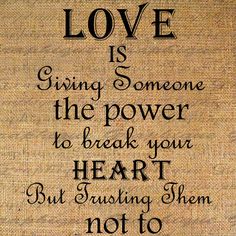
LoveandTrust

You can tell the other person anything without fear of ridicule or embarrassment. You can talk about anything, good things and bad. You can deal with conflict points together without either of you getting defensive or critical, because you know that you are doing it for the betterment of the relationship. Communication used this way lets you promote understanding of each other, and help strengthen your connection.

For this to happen you need to be in a situation where you have allowed all your walls to come down, and you have let the other person in completely (or at least as much as possible); and they have done the same with you.

And Now for a Dose of Reality

Of course in a perfect world I could eat chocolate all day while having the body of an Olympic gymnast. I would speak 10 languages and spend my days travelling the world with my family; going from villa to villa on our private jet. And perhaps I would spend my weekends roaming the countryside on my pet unicorn while figuring out the cure to cancer and how to create world peace. But sadly, perfection doesn’t exist.

You see, people have feelings and emotions, and sometimes the things that need to be said aren’t easy to hear. Not just that, but how you say something is just as important as what you say.

There’s an oft cited study that found the actual words used in verbal communication only make 7% of the message. The remaining 93% of the message comes from the tone of voice and body language used when conveying the message. Recent studies have found that the spoken words are closer to 30%, but even with the new numbers it’s clear that tone and body language are still really important.

When it comes to relationships, the point is that you have to be careful how you communicate. If you have a sensitive issue you want to discuss, it’s best to try to figure out what you want to say and try to do it rationally. When emotions are running high it’s very easy for the actual meaning to get lost in the emotion. When someone is in attack mode, it’s just human nature for people to withdraw, or get defensive.

In his book “Seven Principles for Making Marriage Work”, Dr. John Gottman says that conflict is normal, and couples will fight. One of his findings is that there is no correlation between how frequently a couple fights and their level of marital success. What does have a strong link to marital success is HOW they fight. He calls criticism (where you attack their character), contempt, defensiveness and stonewalling “the four horsemen of the apocalypse” for relationships. It’s important to try and find a way to communicate while keeping those to a minimum.

Barriers to communication

Beyond worrying about how you communicate, you also have to be conscious about various things that act as barriers to communication.

One of the biggest barriers is that we all interpret things through the filters of our own expectations and experiences. I’ve talked about this a bit in a prior post.

There are also theories that women and men simply communicate differently. One of the most common differences is the way men and women approach issues. Supposedly men interrupt more, have a harder time expressing gratitude and apologizing. Men also try to “solve” things while women often just want to be heard. This last one is wonderfully illustrated in the short film It’s not about the nail (If you haven’t seen the video, check it out. Seriously, it’s priceless). I’m not sure I buy into most of the gender differences, but I can definitely relate to that one.

I think it’s fair to say that communication is one of, if not THE most important aspects of a relationship. But there are many things that can make communication difficult. Because of this, perhaps the most important thing that you can do as a couple is work on your communication strategies on a daily basis, always striving to improve them.

Different people have different ways to communicate. Learn to understand your own preferred method of communication, and learn your partners. Come up with a way of communicating with each other that works for both of you, and spend the rest of your lives making this a priority. Communication is the lifeblood of your relationship, and without it your relationship will be at risk.

Communication breakdown

In the early days of relationship, communication seems to come easy. In those early days, although you may be talking, you are really in the stage that you are still learning about each other. Eventually there will come a point in time when you know the other person well enough that there is nothing new to tell.

Let’s face it, most of life is routine. For many years you wake up and get ready for work. In most cases your job is largely the same day to day, so the stories of “what did you do today dear?” really don’t change much.

If you add children to the relationship, by the time your work day is done and the children are in bed one or both or you are often exhausted. Many couples find that a number of years go by where they have had very little time to be a couple, and that can take a toll.

I was talking to a friend a few months back who has two primary school aged children. Often their couple time was limited to a few hours here and there when the kids were at a party or something, and they would use that time to run errands or catch up on things on their to do list. One day he decided that instead of that, they would go on a date. No errands, and no talking about the kids. They went out for dinner, and he found they didn’t really know what to do, or how to talk to each other. Their lives had been built around being parents for so long that they had lost sight of how to be a couple.

I think this is a common problem, and it’s a transition many parents go through when their kids get old enough that they are no longer completely dependent on them. For many couples this is a very difficult transition. Even without kids, it is something that most couples will face eventually. There simply comes a point in time where you know each other so well there isn’t a lot to say.

Because of this, it’s important that you never get so caught up in the routines of day to day life that you stop being a couple. Make each other a priority in your lives, and never stop talking. It’s important that each of you has your own interests to give your relationship space to grow, but you should also try to find an activity that you can do together (preferably one that gets you out of the house), and ensure you make that a priority.

Over time, routine will always set in. But set goals together and ensure you are working towards those goals. Never stop talking to each other, and letting each other into your hearts and souls. Sometimes silence is beautiful and peaceful. Like those times when you are side by side, and no words are needed. When you can say more with a simple look, or a squeeze of the hand then words could ever convey. Other times, silence can be deafening and be the most painful feeling there is.

In the words of Robert Smith of The Cure:

Side by side in silence
They pass away the day
So comfortable, so habitual…
And so nothing left to say

And side by side in silence
Without a single word…

It’s the loudest sound
It’s the loudest sound…

It’s the loudest sound I ever heard