When is it too late?

crossroads1

Relationships will always run into troubles. They are an unavoidable outcome of two different personalities working together. Traditional wedding vows even come with that warning built in. When your commitment is supposed to be “in good times and in bad”, the implication is that bad times will exist. We all know this intuitively. But sometimes the bad times can overshadow the good times, threatening the relationship.

Think of your relationship as a bank account. A while back I posted something about a marriage box, but a bank account works better because it can hold a negative balance. All the good moments in your relationship are deposits into the “Relationship Satisfaction” account, while the bad moments are withdrawals.

Good times act as a buffer against bad times, and ideally your account “balance” always stays positive. During hard times your account may run into a negative balance, and it’s normal for this to happen occasionally. But if the account is in the negative for extended periods then some sort of action is required.

Maybe the account owners can take a good look at how they got there and come up with a plan to get out of the hole together. Maybe they want to get out of the hole but are having a hard time doing it so they need to bring in outside help to come up with a plan. But sometimes the only recourse seems to be declaring bankruptcy.

When your relationship is in a critical spot you may find yourself wondering if it’s possible to save the relationship, or if it’s too late. If this happens, it’s time for some serious reflection.

Reflect

Before making any decisions it is a good idea to reflect on where you are and how you got there. The saying “those who don’t learn from the past are doomed to repeat it” is very true.

What are the problems? Can you identify the issues that are causing conflict for the two of you? Often the surface problems are really only symptoms of deeper issues, and it can be difficult to look at a situation impartially when you are emotionally invested in it.

If you are having difficulty identifying the issues then try to focus on the good. There has to be at least some good, or you wouldn’t be together. So what has been good? What have you learned? Is there anything that you would do differently if given the chance, and if so is it too late to do that?

One of the many challenges long term relationships face is that it is natural for people to drift apart over time. Caught early enough this can be an opportunity for a couple to throw out what hasn’t been working, and strengthen their bond for a better future. But sometimes it is caught too late and it marks the end of the relationship.

Things to think about

In addition to reflecting on the specifics of your relationship there are a few other things that are important to consider.

Statistically, first marriages are the most successful with divorce rates rising considerably for second and third marriages (I haven’t seen stats on non married long term relationships, but I suspect the numbers are similar).

I found this surprising. I expected people learning from their mistakes and wanting to “be better” next time to result in improved marital odds the second time around. So why is that not the case? The main reason is that a marriage is about more than just the two people in the relationship. They are the key players, but additional factors act as the glue holding a relationship together.

Children (if present) are the biggest one. But even in the absence of children there are things like families, joint friends and shared history. In leaving the relationship you are often leaving behind much more than just the other person, and that can be very difficult. Obviously the length of the relationship plays a big factor here, but in subsequent long term relationships this glue that holds people together is often weaker.

Another important point is, the reasons the first relationship failed often impact the success of future relationships. Frequently people who can’t make a first marriage succeed fail at future relationships because they are either looking for something that doesn’t exist, or they bring the same baggage that destroyed their first marriage into subsequent relationships.

Statistically speaking your first marriage is really your best shot, so it’s important to make it count.

Moving on

If you decide to move on, it’s important that you understand why you are moving on. What do you hope to change? What do you hope will be different next time?

One thing I would strongly recommend is that you leave the relationship on it’s own merits (or lacktherof), and not because you already have another relationship lined up, or because you have started another relationship already. Too often people it seems people stay in a situation where they weren’t happy only because there is nothing better available, and then they leave when something “better” comes along.

There are countless stories of people who leave a relationship for something new only to wake up six months to a year later and realize they made a mistake. If you have entered another relationship or have one waiting in the wings, you can’t fairly judge your current situation.

Don’t expect the next relationship to be “better”. It may be, but chances are you contributed to the demise of your current. So take a look at yourself and see what you can do better next time, and use this as an opportunity to grow as a person. If you bring the same baggage in, you will often end up with a similar result.

When a relationship ends there are hurt feelings, and often a period of grieving is needed. It’s natural to need to vent and want to lash out, but try not to cast your ex in a negative light. Treat the relationship as a chapter in your life. You once cared deeply about each other, so try not to let the hurt override the fact that you did have good times.

And remember that giving up doesn’t mean you are weak. Sometimes it means that you are strong enough to let go.

Rebuilding

In order to rebuild, both people have to truly want it. If two people still love each other then it’s never really too late to rebuild a relationship. Anything can be worked out. But rebuilding is often the hardest path.

If you need to rebuild, then there have obviously been issues that have put your relationship in jeopardy. But in order to move forward together, you have to let it go. This doesn’t mean you forget about something and pretend it never happened. You must address it, forgive, and be willing to start fresh.

I can’t recall where I found this passage, but it says it beautifully:

Forgiveness is the only way to heal your emotional wounds. Forgive those who hurt you no matter what they’ve done because you don’t want to hurt yourself every time you remember what they did. When you can touch a wound and it doesn’t hurt, then you know you have truly forgiven.

In rebuilding, you will need to redefine your relationship and the future will be different from the past. It has to be. Years of established patterns can be hard to break, so it is likely best to find a skilled counsellor to help you find a new path forward together.

Rebuilding is very difficult. But it can also be very rewarding to know that you were able to persevere and stick together when times were the hardest.

Making a decision

So when is it too late to save a relationship? There’s really no magic formula, and no right or wrong answer to that question.

The one thing I will say though is that if your relationship is at a crisis point, the worst thing you can do is nothing. If you recognize there is a serious problem you can’t just ignore it and hope that it will pass. Problems don’t solve themselves, and they don’t go away on their own. You need to either roll up your sleeves and go to work as a couple, or accept that the relationship has ended and move on with the process of healing.

Whatever decision you make, the fun part is that you will never know if it was the right one. But you can’t let yourself dwell on that. Don’t ask yourself if there was anything more that you could have done, because there always will be. Instead ask yourself if you have done enough.

Life will work out

Life is a journey, and most of us hope we can find that special someone to share our journey with. But your journey is exactly that, yours. It’s a personal journey, and there is no single correct path.

We can’t know the future, and there are no guarantees in life. You will never know if the decision you made was the “right” one or not. The only thing you can ever say is that it was the right one for you at the time that you made it.

In the words of James Mercer (of the Broken Bells):


But I’ve been turned around
I was upside down
I thought love would always find a way
But I know better now
Got it figured out
It’s a perfect world all the same

It IS a perfect world.  It’s complicated, and broken, and perfect all at once.  Life doesn’t always work out the way you expected it to, but that’s alright, because it WILL work out. You only have one life, so make the best of it.

Not in Love

“I love you but I’m not in love with you.”

Ten words that no one ever wants to hear, as they usually sound the death knell of a relationship. But they are also word that I don’t really understand. If you really think about it, what does that actually even mean? What is the difference between loving someone and being “in love” with them?

The Nature of Love

Think of all the people you love. Chances are your list contains a number of family members. Parents, grandparents, siblings, and children (plus more, but I don’t want to go on forever). Who else do you love? You probably love your friends. What about acquaintances or co-workers? Doubtful, but I’m sure there is some sort of connection with them. How about your doctor or dentist? Probably not.

For the people you love there are definitely differences in the way that you love them. So what is love? I think love all about connection. Imagine for the moment that the depth of love can be measured in the degree of connection we have with someone. In that case, then not counting children and our partner, the person who we have the deepest connection with is likely our best friend (I actually think your partner and best friend should be the same person, but I’ll take this to be your best friend other than your partner).

Something I have often wondered is what does this mean for romantic love? How is the love you have for your best friend different from the love you have for your partner? The key difference between your romantic relationship and your closest non-romantic relationship seems to be intimacy. But there is emotional intimacy in your close non-romantic relationships too. So what is the difference? Is it purely physical attraction?

Let me put this another way – why is it that you will hug/kiss/have sex with your partner, but not your best friend?

Hormonal Soup

The previous question may seem a bit facetious. One big roadblock is that a persons best friend is (normally) not of the same gender that they have a sexual preference for. But even if that weren’t the case, is a romantic relationship really just about sexuality? The sexual side of a relationship is important but relationships need to be based on more than that in order to survive.

In a number of posts I’ve talked about stages of love, and how in most romantic relationships when you fall in love the passion and emotion of the early stage is not sustainable. That’s not due to anything wrong with the relationship, it’s just the way “love” affects us physiologically. Love causes our hormones to go crazy, and in the early days it can color how we perceive the other person and their actions.

But it can’t do this forever. Science tells us that this early infatuation stage is temporary, lasting from six months to two years at most.

A different perspective

I recently read a great article on the idea of “I love you but I’m not in love with you”. It’s worth reading the whole thing, but here’s the part I thought was the most interesting:

Some disenchanted partners confront their mate during marital counseling by saying: “I love you – but I am not in love with you”. They often use this declaration when they feel that their union is in jeopardy. Actually, the shift from ‘in love’ to ‘loving’ should be viewed as a normal transition from illusion to reality.

Psychologically, the end of the infatuation stage awakens the lover from viewing the love object as an idealized person to seeing him/her as a person with both assets and liabilities. This realistic perception is needed for healthy attachment and committed love. The response to “I love you, but I am not in love with you” should be: “Thank you for loving me, now we can begin a real and effective relationship”.

Relationships go through normal transitions. You initially fell in lust, now you are at the point that you need to determine if that lust will develop into love.

The Wear and Tear of Time

So when faced with “I love you but I’m not in love with you” it’s possible that it is simply the natural transition of a relationship. But it’s more likely they are using that term to describe the breakdown of the relationship. What they are really saying is:

We’ve had some good times, but I don’t want to spend my life with you anymore.

For this to happen both the romantic love and the basic connection has broken down.

Think of your relationship like a car. When you get it, it’s shiny and new. At any point in time there can be a major accident that makes the car irreparable, but it’s more common for cars to wear down over time. Parts wear down, but regular maintenance allows you to correct little problems in the car and prevent them from turning into big ones. If you don’t do regular maintenance you limit the potential lifespan of the car, and run the risk of having it completely break down.

Relationships are similar in that sometimes major incidents cause the relationship to break down. But it’s much more common for the accumulation of little hurts over many years to cause the connection to break down. Caught early enough it is possible to repair things. But if problems go unaddressed for too long, the damage may be too extensive to repair.

Preventative Measures

Relationships require regular maintenance, and the article lists a few ideas for keeping your relationship strong:

  • Hold your mate in reverence even when you do not appreciate his/her behavior
  • Assume that all of your partner’s displeasing conduct comes from pain- not dysfunction
  • Will yourself to be as compassionate as you can and your relationship will thrive

I can’t say I would use the word “reverence”, but I agree with the basic sentiment. I believe sustained love is dependent on “how” we approach love, and each other.

Love is a choice

Love is a choice. Accept that your partner has flaws, and instead of focusing on who they aren’t love them for who they are. Make your partner a priority in your life, and never stop putting in the effort or doing the little things to show them that you care.

The main preventative measure for keeping your relationship alive is communication. Always take time to talk and to listen. Be present. Don’t let little problems build up and become big ones.

To keep your relationship alive make sure you laugh together, dance together, sing together, and take time every day to appreciate each other.

Just Along for the Ride

Decision-Making-Strategies

A buddy of mine recently sent me a pretty interesting article on relationships.

The article talks about a study of couples that was done where they looked for a correlation between marital satisfaction and how couples handled relationship “milestones”. Here’s an explanation of what it means by milestones:

Every relationship goes through milestones, or transitions, that mark how serious the relationship is getting. Going on a first date is one; a first kiss is another. Other milestones might include the “define the relationship” talk—the moment a couple says they are actually a couple—sex, engagement, marriage, and children.

What they found was that there are couples who, as they put it, “slide through these milestones”; and there are couples who made conscious decisions on these milestones. Not surprisingly, the couples who made conscious decisions on the milestones reported a higher degree of marital satisfaction then the couples where things just kind of happened.

Happiness and Choice

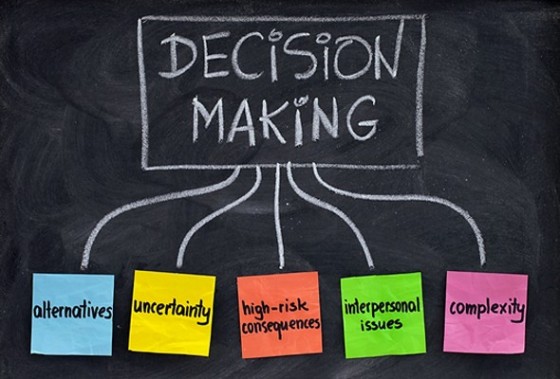
If you’ve read any of my previous entries hopefully it’s clear that I believe life is all about choice. Life is a journey where we are faced with choices every step of the way. Some are small (what should I have for dinner tonight?), and others are a bit more significant (do I want to marry this person?). Some choices are easy, while others are very difficult to make. Each choice we make closes certain doors and opens other ones.

I believe one of the keys to happiness is being active in decision making. Sometimes you make good decisions, and other times you wish life had a rewind button. But as long as you have consciously made the decision, you own it, and it’s up to you to make the best of it. Because at the end of the day, the only person that you have control over is yourself.

One of the things I really like about the article is it suggest that when we actually put some thought behind “why” we do things, we are able to get more enjoyment out of things.

Think of marriage. Generally marriage is something that people do by choice. But what are the reasons behind the decision? Did you get married because you were pregnant, and felt you had to? Did you get married because you felt it was time to “settle down”? Or did you get married because you looked at your partner and you knew that you wanted to build your life around theirs?

All of those reasons result in marriage, but I think there is a big difference between wanting to be with someone, feeling that you probably should be with the person, or just not wanting to be alone. It stands to reason that doing something because you “want” it will result in more satisfaction then doing something because…

…well, just because.

Choosing Milestones

Something I’ve talked about before is that I don’t believe romantic love is really love. Romantic love as portrayed in poems and movies is a wonderful thing, but it’s really just the first stage of love and it’s largely a biochemical response. Real, mature love can only blossom after that infatuation stage has passed.

At that point love becomes a choice. Do you accept the other person as they are, flaws and all? Because they *will* have flaws, but you’ll be largely blind to them during the infatuation stage. Do you look at the positives, and value them for who they are, instead of who they aren’t?

Looking at the milestones listed earlier, only things like the first kiss and the first time you have sex seem like things that you shouldn’t plan. Somehow that seems a little bit too calculated. I can just picture it:

“So, we haven’t kissed yet. Do you think we should? Yes? Well upon contemplation I’m inclined to agree. What are your thoughts on tongue? No? Fair enough. Alright, let’s count to three and then do this.”

That’s probably not the way you want your first kiss to go, never mind the first time you have sex (at least not unless you are someone like Sheldon from “The Big Bang Theory”. In that case I could see the conversation).

But even for things like your first kiss and sex, you both should feel that you are at a place in your relationship where you are emotionally ready for it. You may not discuss it with each other, but you should at least have had the discussion with yourself. Those aren’t things you should be doing just because you feel you have to.

Placing Importance on the Relationship

One of the indicators of success in a relationship is the importance people place on the relationship itself. Especially when it comes to marriage, studies have shown that people who value the concept of marriage have both higher satisfaction and success in their marriages.

The article talks about the same sort of idea:

Deciding rather than sliding revolves around commitment. Not just to each other, but to the decision itself. Making a decision, research shows, sets individuals up for better follow-through.

I think this is all about buy-in. When you make a conscious decision to do something, you have a greater emotional investment in it. You have greater incentive in seeing it succeed.

Ultimately love is a choice, and commitment is a choice. In any long term relationship, there will be times when it is tested. When you are having a hard time liking each other, it’s hard to see why you should be committed to each other. But if you see the relationship as something larger than just the two of you, having commitment to your Commitment (capital “C”) can help you get through the tough times.

Sorry about the Affair, it “Just Happened”

cheating2

Affairs. Cheating. Adultery. Infidelity. It doesn’t matter what you call it, it happens with an alarming frequency. If you look up statistics the numbers you find will be all over the map. But based on the numbers I’ve read, 20-25% of women, and 30-40% of men will have an affair during a marriage or other committed relationship. Even plus or minus 10%, those are staggering numbers.

Of all the issues a couple can run into, nothing is as damaging as an affair. Often they signal the point of no return for the couple. Relationships are built on trust and mutual caring and respect; and affairs tear those foundations down. Even when relationships are able to rebuild and recover after an affair, the landscape of the relationship has fundamentally shifted. As the saying goes, you can forgive, but you never forget.

Types of Affairs

In a prior post, I talked about types of sex. There’s sex as the physical act and intimate sex, where it goes beyond the physical act and is also an emotional connection. Similarly I see two types of affairs. For lack of a better term I’ll just call them “sex affairs” and “love affairs” (if anyone has better names let me know).

Sex affairs are purely about sex. This may be one night stands, or it could be a recurring sexual relationship where there are no expectations beyond the physical side of things.

Love affairs go beyond the physical. There is actual connection between the two people and they want to see each other for more than just sexual gratification.

Sex releases oxytocin, which helps facilitate feelings of trust and attachment and build connection. So sex affairs can develop into love affairs, because the sex can lead people to believe they have fallen in love with someone just based off of the sexual connection.

Although there are differences between the types of affair, there are also similarities. In both cases, the person engaging in the affair knows they are doing something “wrong”, but they figure it is alright as long as they don’t get caught. Some people get away with it for years. Sometimes their partners find out but turn a blind eye to it. Other times their partners find out and they confront the person. When forced to confront the affair, either to themselves or to their partner (when they are caught) the offender often has all sorts of reasons and excuses as to why they did it.

Rationalizations

From various relationship books, articles, blogs, and the comment sections on blogs I’ve seen many different rationalizations given for why people have affairs. I don’t believe I have ever been the “victim” of an affair, but I feel strongly about commitment and that causes me to have pretty strong feelings on affairs (you’ve been forewarned). Here are some of the common rationalizations I have seen, and my thoughts on them …

It just happened
Really? Things like that don’t “just happen”.

Imagine you are out for a walk. While walking you trip, and another person sees you falling and tries to catch you. Now let’s also imagine that while you are falling there is some strange wind vortex that causes both of your clothes to come off and at the same time makes it so instead of the person catching you with his/her hands they catch you with their genitals. Oh yeah, they also happen to catch you on your genitals, causing to two of you to get tangle up by the genital area. Then, in the process of trying to untangle yourselves the wind pushes you back together repeatedly until one or both of you orgasm. Under those circumstances I suppose yes, it could have “just happened”.

But there are a fair number of events that have to happen in a certain sequence in order for this to take place. Is it possible? Anything is *possible*, so I guess so. Is it probable? Maybe I’m crazy here, but I’ve got to say no. So no, I don’t think “it just happened” is really a viable rationalization.

It didn’t mean anything
This one is a bit better, as the person is partially taking ownership of the issue. They are acknowledging they made the decision to cheat. But they are saying it’s alright, because it didn’t mean anything. “Oh yeah, I did have sex with another person. But don’t worry, because I didn’t actually care about them. It’s really you that I care about”.

It didn’t mean anything? Umm, yeah, actually it did. The affair may not have meant anything with regards to their feelings for the other person. But it meant a lot in terms of showing how they value their partner. It meant they put their own personal desires above the commitment of the relationship. It meant commitment is something they feel they can turn on or off as it suits them.

Affairs are Romantic
Of all the rationalizations I’ve seen this one is my personal favorite. When I’m picturing a romantic setting I tend to visualize things like a candle lit dinner to the backdrop of soft music. Or holding hands and walking down the beach during sunset. Or even just curling up with my partner and simply enjoying their presence.

Maybe my thinking just isn’t as progressive as it could be, but for some reason the prospect of having sex with someone other than the person I am currently in a committed relationship with doesn’t qualify as romantic (even if it is done by candlelight, on a beach at sunset).

I suspect the person just had a poor choice of words, and what they really meant was affairs are exciting. That I can kind of understand.

As a kid I remember sneaking a peek at my Christmas presents. My brother showed me a technique where I would cut the tape on one side of the present, open it to see what it is, and then just cover it over with another piece of tape. I was often able to find out what I was getting in advance, and it was difficult to detect. Sure, it took the fun out of Christmas; but at least I could plan out which presents I would play with first! Around the same age I discovered swearing, and I would frequently swear with my buddies. I would even occasionally sneak (alright, steal) a dollar from my mom’s purse to go buy candy. There was a degree of excitement in doing something I knew was wrong. Of course I was about eight or ten at the time, and eventually I grew out of these things.

I’ll admit these aren’t exactly the same as having an affair. But there IS a bit of an adrenaline rush and excitement in doing something you know you shouldn’t be doing. If you get your kicks from the danger of being caught doing something wrong, then I can see how there would be an allure to affairs. But that doesn’t make them romantic.

We can’t control who we fall in love with
While it’s definitely possible to love two different people at the same time, it doesn’t happen overnight. It requires intimate sharing of emotions and feelings to build the connection that leads you to fall in love with someone. And that is the part you DO have control over.

If you are committed to someone else, you owe it to them to not take actions that will jeopardize your relationship. Don’t put yourself in situations where this is a risk. If you’re ever doing something and you know you wouldn’t be comfortable telling your partner about, then you know you probably shouldn’t be doing it. If it’s something like buying yourself a new outfit, then maybe those little lies by omissions aren’t that harmful. But when it involves interactions with another person? Sorry, people know when they are crossing certain lines. They just choose to do it anyways.

Let’s say it does happen and you find yourself having fallen in love with another person? Well then you have a choice to make. Have enough respect for your partner to end one relationship before moving forward with the other one.

I wasn’t happy
This is at once obvious and troubling. There’s a saying “happy people don’t cheat”. If you are happy in your relationship why would you?

One of the first questions I would have for someone in this case is “Why aren’t you happy?” All sorts of things can cause unhappiness, and it may have nothing to do with the existing relationship.

If you aren’t happy in your relationship, you are more likely to be taking actions that put you at risk of falling in love with someone else. But like I said above, if you find yourself in love with someone else pick a relationship and move on.

The Real Reasons

Alright, we’ve had a few common rationalizations. Now let’s get down to the actual reasons that people have affairs (well, according to me).

A big part of affairs is emotional immaturity. This isn’t overly surprising when someone is young (say early twenties), but it becomes a bit alarming when it persists as someone gets older. I’ve seen exchanges where a guy points out a girl and tells another guy that he’s “banged her”. To which the other guy says something like “nice”, and they fist bump. The girl in those cases is simply a conquest, another notch on the bedpost. There is no interest in a relationship; this is just hedonism.

Commonly people who have affairs have self image issues. They need the validation of another person wanting them sexually to make them feel good about themselves or give them an ego boost.

Another reason for affairs is selfishness. Someone wants the positives of a committed relationship or marriage, but they don’t want the restrictions that come along with it. They feel they should be able to have the best of both worlds. Their focus is “them”, and their pleasure. They don’t respect their partner. They may claim that they do, but if they did would they really be having an affair? Hell, I doubt they even respect themselves. Commitment involves trust, and by having an affair they are showing that they aren’t deserving of that trust.

If an affair is a love affair and not just about sex, it can be more problematic. Love affairs are often symptoms of deeper underlying issues. They may be issues with the existing relationship, or personal issues. Either way, the affair becomes a way of trying to fill a void that they are feeling. Just as some people turn to drugs or alcohol to “deal” with issues, others turn to sex.

People should work on their relationship first instead of trying to fill a void by stepping outside of it. Try to understand what’s wrong with your existing relationship. View any problems as opportunities to improve what you have, and work on it. Long term relationships aren’t always easy, and commitment shouldn’t only apply when times are good.

There are many cases where people have tried to repair their existing relationship and it hasn’t worked. When this happens, it should be decision time.

Don’t stay to “keep the family together”. That’s really just another excuse to try to have it both ways. A way to have the kids and the safety and comfort of home while doing whatever you want. If you’re having an affair chances are you have checked out emotionally on your partner. That not a good environment for the kids anyhow.

And don’t stay just for the financial stability of that comes with the existing relationship. Actions have consequences. If the current relationship was bad enough that you decided to stray, then be willing to accept the consequences. It won’t be easy, but it shouldn’t be.

Putting in your Notice

Have you ever changed jobs? With jobs, most people line up a new job before they put in their notice to quit their existing one. That’s fine, because jobs are a form of a contract where what you do outside of work time is your own business.

If you aren’t happy with your current job you can start looking for a new one, and if an opportunity comes up you take it. You put in your notice and for two weeks or so you show up to your current (now old) job, while counting down the days until the new one begins. If you don’t get the job it’s no big deal because you still have your existing one to fall back on.

Many people do the same thing with relationships. Often a relationship ends and it’s amazing how quickly one of the parties finds themselves in a new one. I suspect the “new” one was often in the works or already started before the old one ended.

Unlike jobs, the commitment of a relationship doesn’t have set hours. And it doesn’t only apply when your partner is around. If you are in a committed relationship with someone, no matter what state it is in now, at one point in time you cared about that person. If the relationship has broken down to the point that you believe it is beyond repair, or if you believe you have fallen in love with someone else, you owe it to the love you once shared to end the relationship before starting one with someone else.

Meeting Someone New (while you still have someone old)

Couple

In addition to writing about love and relationships, I read a fair number of other articles and blogs about them. I’m always open to new ideas, and even if I don’t agree with someone it’s always interesting to read what other people think.

One thing I’ve noticed is that there are a surprising number of women blogging about how they are in a relationship, but they have met someone else and they have either started an affair or they are musing about whether or not they should leave their current relationship for the new one.

I’m not knocking women here, as I’m sure guys find themselves in these situations too. I just haven’t come across articles like that, or the guys just don’t write about it (in fact, I seem to be one of the few guys writing about relationships).

A common theme is that the new person excites them more, or they feel more valued or fulfilled by the new person. Often the person writing is convinced that the new person is a “better match” for them.

Reading the comments section, most readers advise the person to follow their heart, and do whatever it is that makes them happy.

Maybe I’m just jealous because my readers rarely comment (though I suppose I would actually need readers for that), but this stuff drives me crazy!!!

If you’ve read any of my previous entries, you know that I believe people give up on their relationships far too easily, often because they have focused on what they don’t have instead of appreciating what they do. In some ways this post is a bit of a recap of what has come before, but I think it warrants talking about one more time before I move on to different topics.

Purpose of Relationships

Relationships usually start by being all about you. Going into a relationship there are things you are looking for and things you want to get out of it. Why are we in relationships? There’s are all sorts of reasons, and here are a few of the common ones I’ve seen:

  • Loneliness. Don’t want to be alone.
  • Safety and security.
  • Emotional, and sexual fulfillment.
  • Want to have a family, and feel it’s best in a “stable” relationship

Pursuit of your own happiness is important, but the complexity of relationships is that they involve two people. In order to be successful they can’t be just about you, they have to grow into more than that.

They become a partnership where you are sharing your life with someone, so the other persons needs have to become as important as your own. Alright, let’s be honest here – people are inherently selfish so your own needs will always take precedence. But your partners needs have to be pretty high up there. Hopefully it’s fairly balanced, but it’s a pretty safe bet that there will be times where your needs and wants will have to take a backseat to your partners.

Your Favorite Movie

Think of movies (I would say books, but sadly few people seem to read anymore). There are lots of them out there, and everyone has their own tastes. You probably have a movie that you love, and go back to again and again.

When you watch a movie a second or third time you may gain a new appreciation for it as you may pick up on a few things that you didn’t notice the first time around. But after a few times there is nothing new. You still enjoy the story and appreciate it for what it is, but it won’t have the same excitement it did when it was new because you already know everything that’s going to happen.

Relationships are like that too. Part of the excitement in relationships comes from discovery. There comes a point where the mystery of learning the other person is gone, because you already know everything about that other person.

A problem is when this happens it’s very easy to get comfortable, and you tend to take the other person for granted (hopefully unintentionally). You still care for each other and enjoy each others company, but that magic from the early days is gone.

Excitement of “The New”

I opened this with a scenario where someone is in a committed relationship, yet they have either stepped out or are considering stepping out because they feel a connection to someone new.

I think the very nature of long term relationships makes this a risk. The excitement and energy of the early days of a relationship feels great, but it’s unsustainable over the long term. Eventually every relationship settles into certain patterns, or rhythms.

And guess what, as time goes on there is a chance that you will meet new people. They may be new co-workers, or friends of a friend. Being in a committed relationship doesn’t mean you don’t find other people attractive. So you meet someone new, and hey, they’re kind of cute. As you start to learn more about them you may start to feel some sort of connection (especially if your own relationship is in a rut). And depending on the state of your own relationship you may start to imagine what life “could be like”. Maybe life could be better with this other person?

If this happens, it’s important to remember that we are always drawn to the new. Is that person really a better match, or are you just starting to get lost in the discovery state? There is excitement in the unknown, because you can’t see it’s flaws. All you see are the possibilities and the potential. And the reality rarely matches our romanticized view of things. A new movie cannot be new forever.

Is Better Really Better?

Hopefully I’ve established that the new exciting person in your life might not actually be your soul mate (or at least a better match). Hopefully you can agree that maybe, just maybe it’s actually the lure of excitement that is attracting someone to the new person in their life.

Just for the sake of argument, lets say the new person really IS a better fit for you. To that I say, so what?
If you ever find yourself in that situation I would recommend you ask yourself to instead take a look at your existing relationship. Are you actually unhappy, or are you just in a rut? If you are unhappy, take a good look and ask yourself why?

There are a lot of reasons to be unhappy. They may have nothing to do with your current relationship. And if they do, they may be resolvable. For your current relationship there was something that drew you together in the first place. Go back, and explore that.

Depending on where you are at in a relationship, I really believe that the relationship becomes bigger than either individual. Yes, your happiness is very important, and I don’t believe people should ever “settle”.

But another perspective is that walking away from something because something else appears better sets you on a dangerous path. There will always be better. Perfection doesn’t exist. Sometimes it’s alright to say “there may be better, but what I have is enough”.

perfect-marriage

Keeping the Spark Alive

If you go back to my comparison between people and movies there is one big difference that I purposely left out. A movie is always the same (well, until they make a directors cut). But people are always growing, and changing. We aren’t constants. Sometimes we change in small ways, sometimes in larger ones. We are always having new experiences. In long term relationships I think a HUGE mistake couples make is that they fail to recognize that.

So if your relationship is in a rut and you are thinking of moving on to something new, take another look at what you have. Don’t assume that because you already know everything about someone there is nothing else to learn. Rediscover them. Grow with them. Learn each other, and continue to learn each other as your relationship grows. Allow yourself to continue falling in love with the same person over and over again as time goes by.

For any readers in long term relationships (I would define that as more than 2 years), I would love to hear from you. What are the things that have worked for you in “keeping the spark alive”? What do you do to continue to show your partner that you love them? What does your partner do for you that makes you feel loved?
You can either comment below or email me at thezombieshuffle@outlook.com. With any feedback, I would love to hear how long you’ve been together.